
What you can usually change in a U.S. rental (and what to ask first)
A U.S. lease usually lets you live in the place, not remodel it. That still leaves a useful list: a floor lamp, removable hooks, a rug, and sometimes paint or shades — if you ask first and keep the changes reversible.
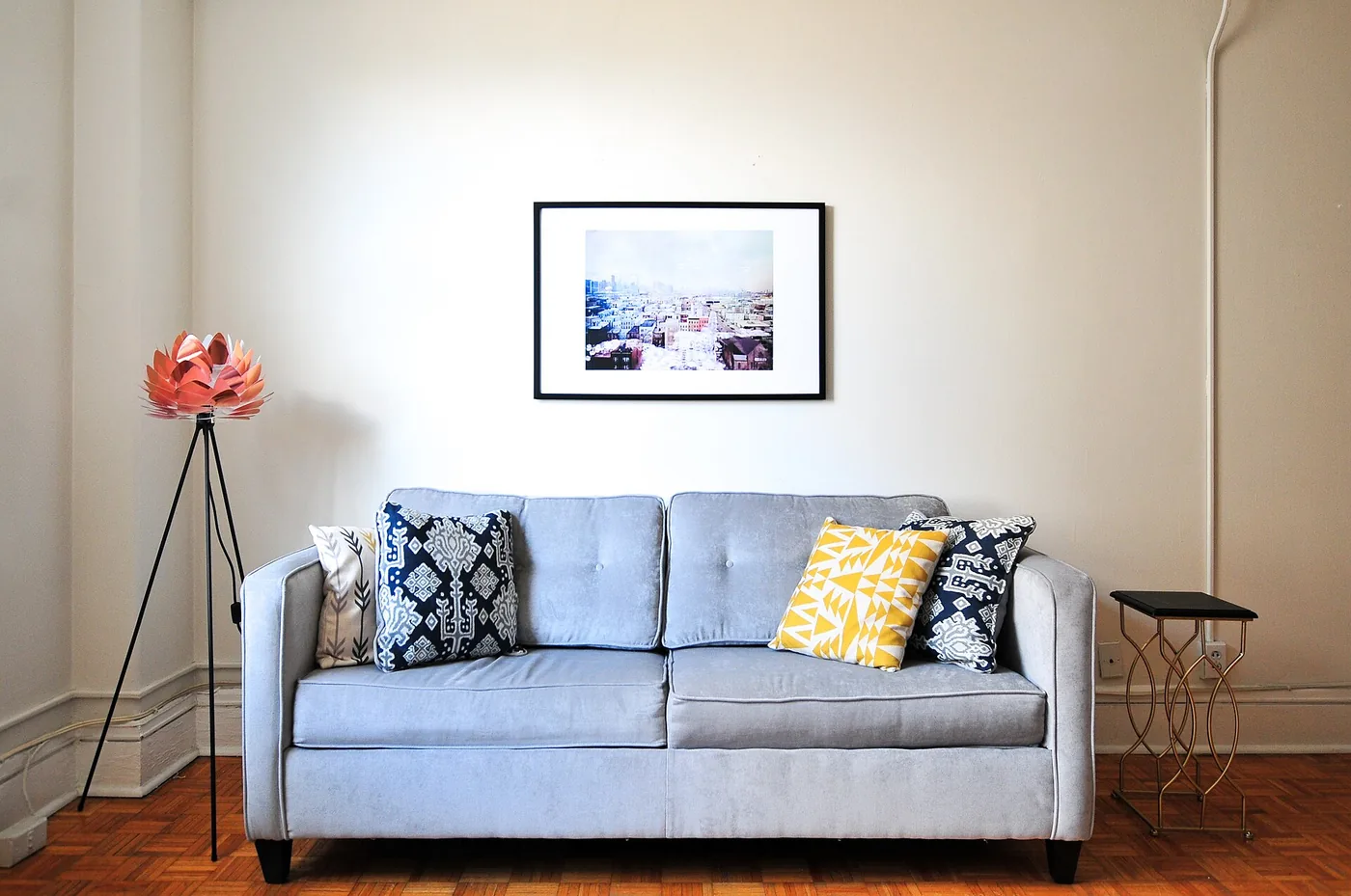
The photo above is the kind of small apartment living room a lot of people start with: a sofa, one picture, a lamp you brought yourself. Almost none of that has to be permanent.
Read the lease before you open a paint can
Many leases ban painting, or they require written approval and a return to the original color when you move out. Some allow nails; some want only removable hooks. Don't guess. The clause is usually short, and an email to the landlord or manager is enough to get a yes or no on file.
If they say yes to paint, keep the can label and a little leftover paint. You'll need both if a wall gets scuffed later, and you'll need the original color if the agreement says to restore it.
Holes, hooks, and what's easy to undo
- Removable hooks and strips: useful for frames and small shelves if the wall is clean, dry, and the surface is one the product is made for. Follow the package. They can still peel cheap paint, so test in a closet if you're unsure.
- Nails and anchors: some landlords allow a few picture hooks. Fill and touch up before you leave, unless the lease says otherwise.
- Don't drill into tile, a window frame, or anything that looks like a fire door without asking.
Lighting and window treatments
Plug-in lamps and a floor lamp are almost always yours to bring. Replacing a ceiling fixture is a different story — that's often a hard no, or a "we'll do it, you don't." Tension-rod curtains and many inside-mount shades avoid new holes in the frame; ask before you drill a bracket into the trim.
If it takes a screwdriver on a wall you don't own, get the answer in writing first.
When you move out, the bar is usually "ordinary wear and tear," not a showroom. Patching hook holes, wiping walls, and putting the original bulbs back is the unglamorous part that keeps a deposit conversation shorter.
More in Interior Club
- Shades that actually darken a rental bedroomIf you sleep in after sunrise, or you work nights, a thin bedroom shade is usually the problem you feel first. Light sneaks around the sides
- Kelvin and lumens: how to read the bulb aisleThe lighting aisle in a U.S. hardware store is easier once you ignore wattage as a brightness number. Watts tell you about energy use. Lumen
- A weekend gallery wall that goes easy on rental drywallA gallery wall looks complicated until you treat it like a paper project. You can plan the whole arrangement on the floor, move it onto the
- When your apartment kitchen doesn't have a work triangleDesign textbooks still talk about the kitchen work triangle: sink, stove, and refrigerator in a neat three-point path. Plenty of U.S. apartm
More to read on CampusDown
Practical nail guides in English for home and the salon — no fluff, just steps you can follow.
Life Up Moving, records, and household money in the U.S.Plain-English paperwork guides that point to official sources: change of address, what to keep, unclaimed funds.