
Kelvin and lumens: how to read the bulb aisle
The lighting aisle in a U.S. hardware store is easier once you ignore wattage as a brightness number. Watts tell you about energy use. Lumens tell you how much light you get. Kelvin (K) tells you the color of that light — warm and yellowish, or cool and bluish.
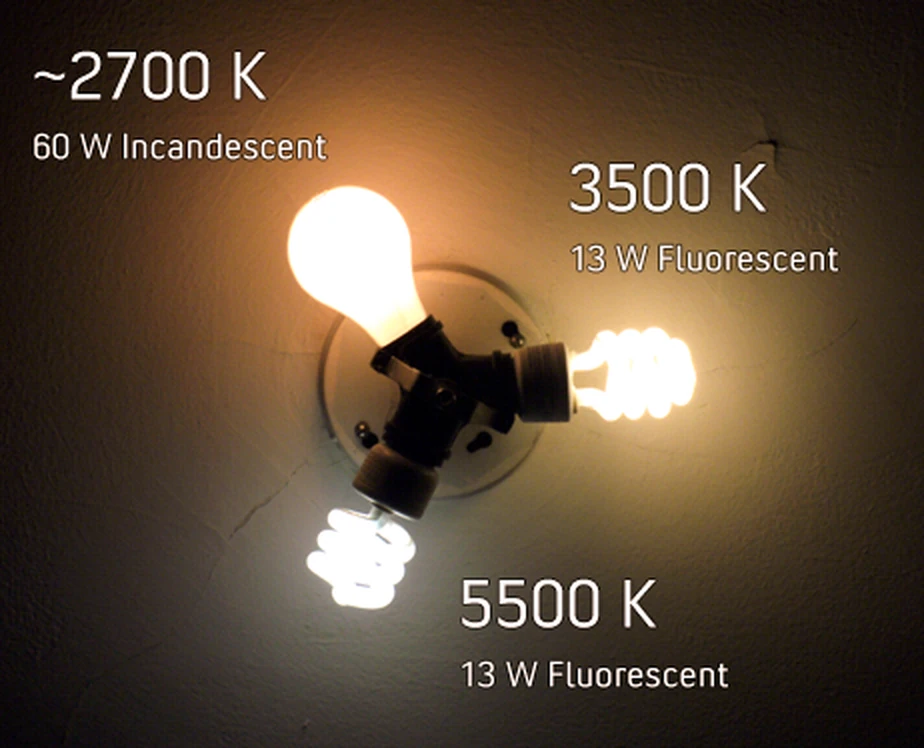
This comparison, photographed by Yerocus and released to the public domain, is a clear example. A standard incandescent at about 2700K looks warm. A 3500K compact fluorescent is noticeably cooler. At 5500K the light goes toward daylight-blue. LED packages now use the same Kelvin scale, even when the bulb shape is different.
What the common numbers feel like
- 2700K to 3000K — usually labeled warm white. Living rooms, bedrooms, and dining corners generally sit here.
- 3500K to 4000K — often labeled bright white or cool white. Kitchens and bathrooms sometimes use this when you want a cleaner work light.
- 5000K and up — daylight-leaning. Fine for a task bench, harsh for a sofa.
Those ranges are the labels you'll see on shelves, not a decorating rule you have to memorize. If you can, buy one bulb and live with it for a night before you commit the whole apartment.
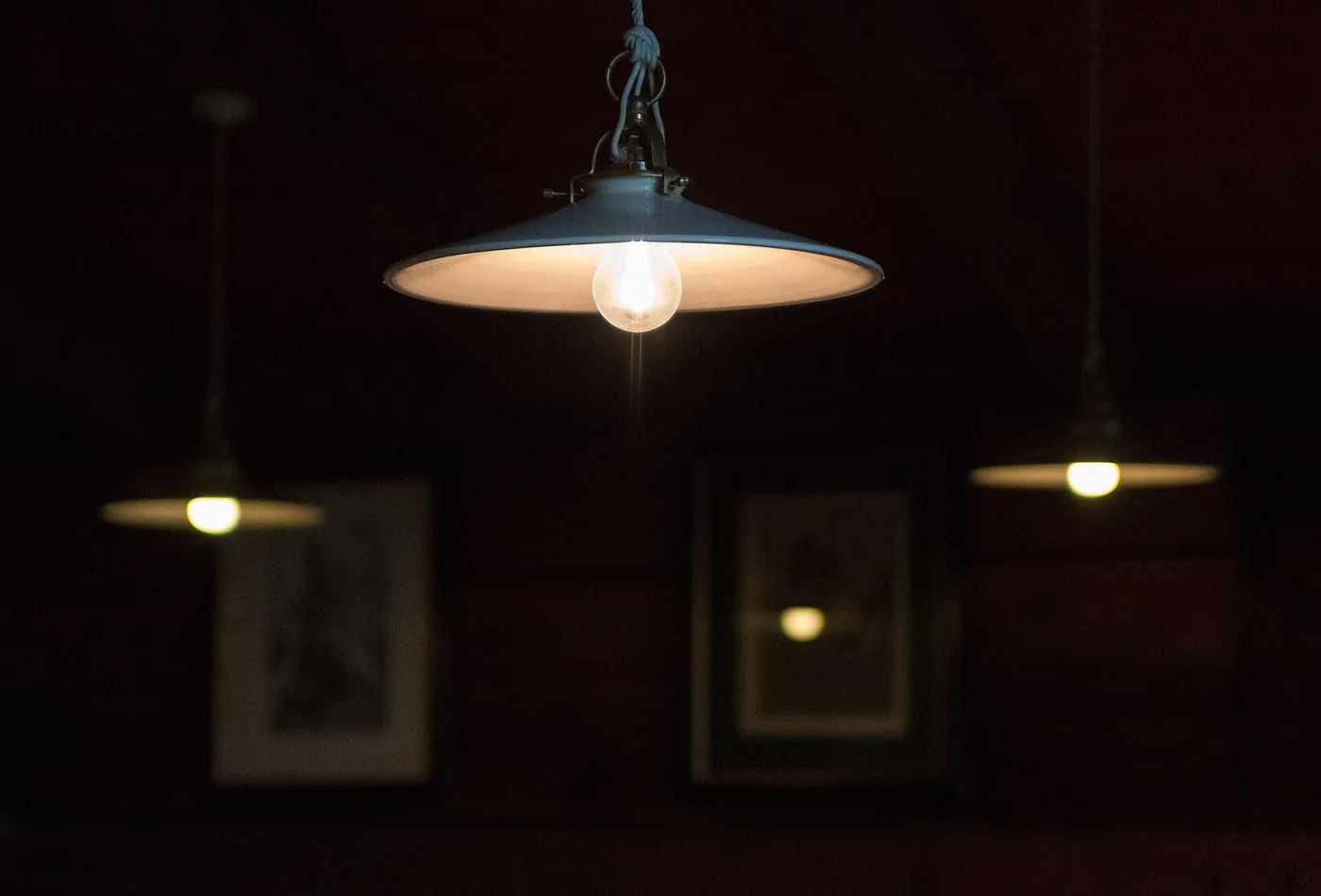
Warm light on a table or in a dining corner is what most people mean when they say a room feels settled at night. If your overhead is already cool, changing that one bulb often does more than adding another cool lamp.
Lumens, and the Lighting Facts label
A U.S. package should carry a Lighting Facts label: lumens, estimated yearly energy cost, kelvin, and watts. If you're replacing a familiar incandescent, match the lumens, not the watts. A dim lamp you have to squint at is under-lumen'd; a lamp that feels like a garage is usually too many lumens in a small shade, or too high a kelvin, or both.
One more practical check: the fixture's maximum wattage is about heat and safety, and you still have to respect it. LED bulbs typically run cooler for the same lumens, but the socket and shade still have a limit printed on the fixture.
More in Interior Club
- Shades that actually darken a rental bedroomIf you sleep in after sunrise, or you work nights, a thin bedroom shade is usually the problem you feel first. Light sneaks around the sides
- A weekend gallery wall that goes easy on rental drywallA gallery wall looks complicated until you treat it like a paper project. You can plan the whole arrangement on the floor, move it onto the
- When your apartment kitchen doesn't have a work triangleDesign textbooks still talk about the kitchen work triangle: sink, stove, and refrigerator in a neat three-point path. Plenty of U.S. apartm
- Will the sofa make it through the door? A hallway checkThe living-room wall can be wide enough and the sofa still won't enter the apartment. In walk-up buildings especially, the binding constrain
More to read on CampusDown
Practical nail guides in English for home and the salon — no fluff, just steps you can follow.
Life Up Moving, records, and household money in the U.S.Plain-English paperwork guides that point to official sources: change of address, what to keep, unclaimed funds.