
Why Roads Rut in Summer and Crack in Winter: Modified Asphalt, SBS Polymers, Superpave PG Grades and Porous Surfaces
- Asphalt is temperature sensitive, so it ruts under summer traffic and cracks in winter cold.
- Modifiers fall into six families: fillers, polymers, fibers, oxidants, antioxidants and anti-stripping agents.
- Modified and special asphalt cost 1.3 to 1.7 times more to lay but are estimated to save 16 to 67 percent over the long run.
Contents
Ordinary asphalt softens in summer heat and turns brittle in winter cold, so busy roads rut at traffic lights in July and crack in January; modified asphalt fixes this by blending the binder with polymers such as SBS, fibers, fillers or oxidation processes, and special porous asphalt adds drainage and lower tire noise. It costs more to lay, but the payoff is fewer repairs, and in the US that logic is now written into the Superpave performance-grade system that most state highway agencies use.
This guide adapts a Korean civil-engineering study summary for US and UK readers. It explains why asphalt misbehaves, the six families of modifiers, how the main modification methods compare and how American and British specifications decide which binder goes where.
Why does asphalt cause trouble every season?
Asphalt binder, called bitumen in the UK, comes either from natural deposits or from crude oil refining, and almost all paving binder today is refined petroleum bitumen with few impurities. It is wonderfully useful: plastic and workable, waterproof, sticky enough to glue stone together, electrically insulating and chemically stable. Its weakness is temperature sensitivity. Hot, it behaves almost like a thick liquid; cold, it becomes hard and brittle.
Student money tip from CampusDown Law UpCan I Sublet My Apartment for the Summer? What My Lease Actually Said
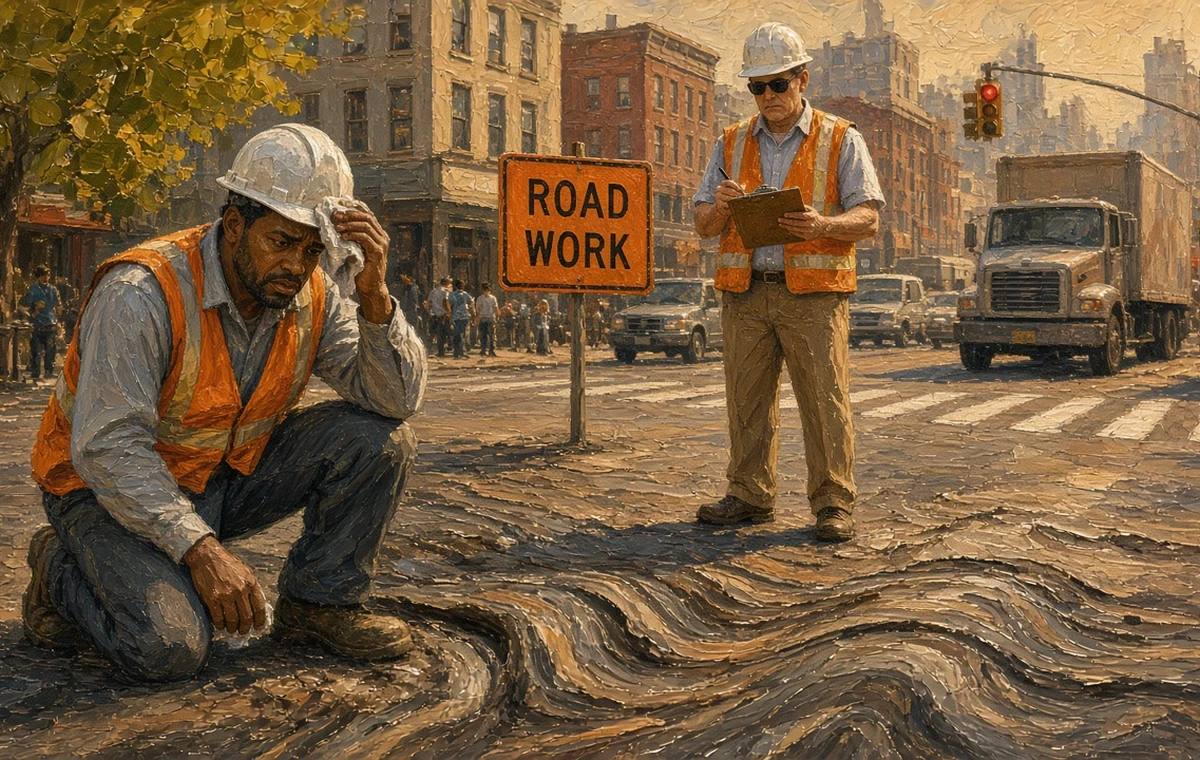
That is why the same road can show two very different kinds of damage. Under heavy, slow traffic in summer, the surface is pressed and shoved into ruts and ripples, a problem engineers call rutting or permanent deformation. In winter, contraction stresses open low-temperature cracks, which let water in and, after a few freeze-thaw cycles, help potholes form. Intersections, bus stops and truck routes suffer most because vehicles brake, stop and sit there.

How does the US grade binders for heat and cold?
American engineers stopped guessing in the 1990s. The Strategic Highway Research Program, a five-year federal research effort that began in 1987, produced Superpave, short for Superior Performing Asphalt Pavements. Its performance grade (PG) system, specified in AASHTO M 320, labels binder by the temperature range it can handle. A PG 64-22 binder, for example, is meant to resist rutting up to a seven-day average maximum pavement temperature of 64°C and to resist cracking down to a minimum pavement temperature of minus 22°C.
In practice, that means a road in Phoenix and a road in Minnesota get different binders, and heavy-traffic routes get "bumped up" to a higher high-temperature grade. Plain refined bitumen covers only a limited range; once a project needs a wide spread between the two numbers, modification, usually with polymer, becomes the practical way to reach it. Many states now also use the multiple stress creep recovery (MSCR) test under AASHTO M 332, which rates binders for traffic levels with letters such as S, H, V and E, and helps reveal the elastic benefit of polymers.
Skimming the section headings first makes a long guide much easier to map out. Try writing down one question of your own as you read.
What does modification actually change?
Modification has two goals. During construction, it keeps the binder fluid enough at mixing and compaction temperatures for the mix to be placed and compacted well. In service, it makes the finished road more resistant to rutting, thermal cracking and stripping, the loss of bond between binder and aggregate when water gets in. The Korean source groups the materials used into six families:
- Fillers such as fine mineral dust, lime or carbon black, which stiffen the binder.
- Polymers, both elastomers like SBS and SBR and plastomers like EVA, which add elasticity or stiffness.
- Fibers such as cellulose or mineral fibers, which stop binder draining off the stone in rich mixes like stone mastic asphalt.
- Oxidants, which harden the binder through controlled oxidation.
- Antioxidants, which slow aging and embrittlement.
- Anti-stripping agents, including hydrated lime and amine additives, which improve adhesion to aggregate.
Choosing among them is not just about the target property. Engineers also weigh workability on site, whether the material can be recycled with reclaimed asphalt pavement, cost and environmental or fume concerns.
How do the main modification methods compare?
The source compares four common approaches. Polymer modification with SBS (styrene-butadiene-styrene) absorbs stress, resists deformation and extends service life, but costs more. SBR (styrene-butadiene rubber) modification resists flow and wear, but is weaker against low-temperature and fatigue cracking and can make it harder to coat aggregate evenly.
| Method | Strengths | Weaknesses | Typical US/UK use |
|---|---|---|---|
| Polymer (SBS) | Stress absorption, rut resistance, longer life | Higher price | High PG grades on interstates; UK polymer-modified binders to BS EN 14023 |
| SBR (latex) | Resistance to flow and wear | Vulnerable to low-temperature and fatigue cracking | Chip seals and surface treatments |
| Metal-catalyst oxidation | Rut resistance, lower laying temperature | Cracking risk on bridge decks | Niche or proprietary products |
| Semi-blown (partial oxidation) | Viscosity three to ten times higher, suits heavy traffic | Needs separate property control | Heavy-duty routes where specified |
According to the source, catalyst-oxidized binder can be laid at temperatures about 15 to 20°C lower than conventional asphalt, while semi-blown binder is roughly three to ten times more viscous, making it a good fit for roads carrying heavy traffic.
What makes porous or special asphalt different?
Special or porous asphalt deliberately leaves connected voids between the stones so rainwater drains through the surface and tire noise is absorbed rather than reflected. The source credits it with less deformation and cracking, shorter braking distances and much less spray and skidding in the rain, all of which help road safety.

In the US, open-graded friction courses (OGFC) serve this role in states such as Arizona, Texas, Georgia and California, where they are valued for wet-weather safety and quieter highways. The UK tells a more cautious story. Porous asphalt was tried on motorways for its spray and noise benefits, but clogging and shorter life led highway authorities to favor thin surface course systems, many of them stone mastic asphalt-type mixes specified under the Manual of Contract Documents for Highway Works, Series 900. Porous asphalt itself is covered by BS EN 13108-7. The lesson matches the source: special surfaces work best where they are chosen carefully and maintained properly.
Why pay more for modified asphalt?
Modified and special asphalt cost about 1.3 to 1.7 times as much to build as conventional asphalt. Because they need fewer repairs, the source cites studies estimating long-term savings of 16 to 67 percent. The wide range is the point: savings depend on traffic, climate and how well the material fits the site.
Student money tip on CampusDown Law Up: Can I Sublet My Apartment for the Summer? What My Lease Actually Said.
American life-cycle cost analysis, encouraged by the Federal Highway Administration, frames the decision the same way, comparing not just the price of laying a road but the cost of resurfacing, lane closures and user delay over decades. The source closes with a caution that still applies: comparisons between modifiers are often made under different mix-design conditions, so standardized testing is needed before choosing the right binder for each section.
Common mistakes
- Blaming every rut on the binder when weak base layers or poor compaction may be the real cause.
- Specifying polymer-modified binder everywhere instead of where traffic and climate justify it.
- Laying porous asphalt without a plan for cleaning and winter maintenance.
- Comparing modifiers using test results from different mix designs.
Quick self-check
- Can you explain what the two numbers in PG 64-22 mean?
- Can you name the six families of asphalt modifiers?
- Do you know why the UK moved away from porous asphalt on motorways?
Compiled by the CampusDown editorial team from a Korean civil-engineering study summary on modified and special asphalt, Zhu, Birgisson and Kringos (2014) in European Polymer Journal, public material on AASHTO M 320 and M 332 and the Superpave program, and UK highway specification references. Reviewed November 2026. Educational overview, not a design specification.
FAQ
Why is modified asphalt needed?
To reduce rutting, low-temperature cracking and stripping in a binder that is naturally sensitive to temperature.
What does PG 64-22 mean?
It is a Superpave grade for a binder designed to resist rutting up to a 64°C pavement temperature and cracking down to minus 22°C.
What is the difference between SBS and SBR modification?
SBS gives strong elasticity and rut resistance at a higher price, while SBR resists flow and wear but is weaker against cold and fatigue cracking.
Is porous asphalt used in the UK?
It has been used, but many motorways moved to thin surface course systems because porous surfaces could clog and wear out sooner.
Is modified asphalt worth the extra cost?
Often yes on heavy-traffic or extreme-climate roads, because fewer repairs can save 16 to 67 percent over the life of the pavement according to studies cited in the source.