
Can My Child Get WIC or Healthy Start? Infant Nutrition Support, Risk Screening and Daycare Meal Standards in the US and UK
- WIC serves pregnant people, new mothers and children under 5 who meet income and nutrition-risk tests, while the UK's Healthy Start gives a prepaid card and fre
- Nutrition risk is checked with a hemoglobin test, growth chart measurements and a 24-hour diet recall.
- Daycare meals follow CACFP patterns in the US and EYFS guidance in England, and teachers teach best by eating with children.
Contents
- Who qualifies for WIC in the US?
- How is nutrition risk actually measured?
- What do AAP and NHS guidelines say about iron, vitamin D and allergens?
- How does the UK's Healthy Start work?
- What should daycare meals look like under CACFP and UK early-years guidance?
- What can teachers and parents do every day?
- FAQ
Infant and toddler nutrition support means public programs that screen young children and pregnant or new mothers for nutrition risk, then provide healthy food, counseling and referrals. In the United States the flagship is WIC, in the UK it is Healthy Start, and both sit next to a second, quieter system: the rules that decide what toddlers actually eat at daycare. This guide walks through who qualifies, how nutrition risk is measured, and what a good early-years menu looks like on a Tuesday lunchtime.
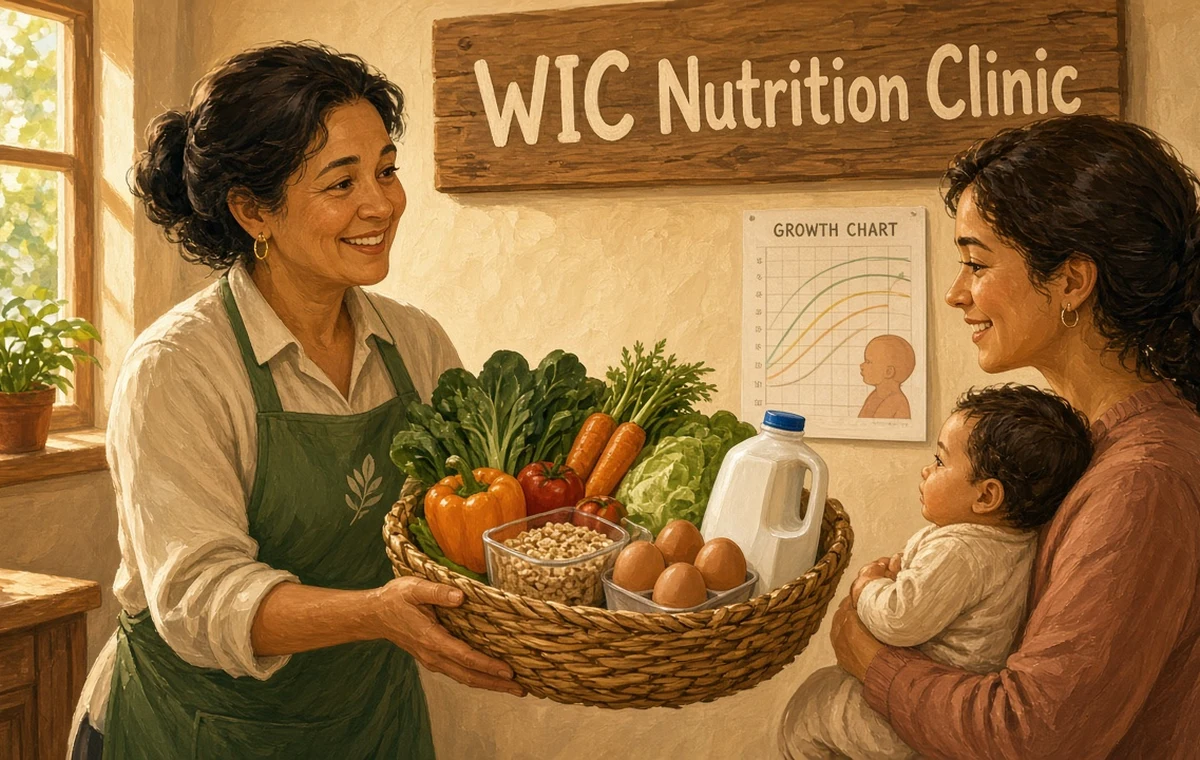
A fun fact to start: South Korea's own infant nutrition program, run through local public health centers, was openly modeled on WIC. The American original is now more than fifty years old, having begun as a pilot in 1972 and becoming permanent in 1975.
Who qualifies for WIC in the US?
WIC, the Special Supplemental Nutrition Program for Women, Infants, and Children, is funded by the USDA and run by state agencies and local clinics. Eligibility rests on four tests, and families need to pass all four, which surprises many parents who assume income alone decides.
Student money tip from CampusDown Law UpCan I Have an Emotional Support Animal in a No-Pets Apartment? — Can you have an emotional support animal in a no-pets apartment?
| Test | What it means in practice |
|---|---|
| Category | Pregnant people, postpartum mothers (up to 6 months, or up to 1 year if breastfeeding), infants, and children up to their 5th birthday |
| Residence | You apply in the state where you live; citizenship is not required |
| Income | At or below 185% of the federal poverty guidelines, or automatically eligible if you already receive SNAP, Medicaid or TANF |
| Nutrition risk | A health professional finds a risk such as anemia, underweight, poor growth or an inadequate diet |
That "adjunctive eligibility" rule is the practical shortcut: a toddler already on Medicaid skips the paperwork-heavy income check. Benefits arrive on an eWIC card in most states and cover a specific food package: infant formula when needed, milk, eggs, whole grains, beans or peanut butter, and a cash-value benefit for fruit and vegetables.

How is nutrition risk actually measured?
The clinic visit is short but surprisingly clinical. Staff weigh and measure the child and plot the numbers on WHO growth charts, which the CDC recommends for children under two. A finger-prick test checks hemoglobin or hematocrit, because iron deficiency anemia is one of the most common risks found in toddlers. Then comes a diet interview, often a 24-hour recall where the parent walks through everything the child ate yesterday.
- Blood test: a low hemoglobin value flags possible anemia
- Measurements: length or height and weight, plotted as percentiles
- Diet recall: yesterday's meals, drinks, bottles and snacks, including juice
- Other flags: prematurity, feeding problems, or a family situation that limits food
The point is not to judge parents. A toddler drinking four bottles of milk a day and refusing meat, for example, is a classic recipe for low iron, and the counselor can explain why swapping one bottle for a bean or meat dish matters more than any supplement.
Skimming the section headings first makes a long guide much easier to map out. Try writing down one question of your own as you read.
What do AAP and NHS guidelines say about iron, vitamin D and allergens?
Nutrition support programs lean on national pediatric advice, and the US and UK messages are close but not identical. Parents moving between the two countries often notice the different units first: the US talks in international units, the NHS in micrograms.
| Topic | US (AAP) | UK (NHS) |
|---|---|---|
| Vitamin D | 400 IU a day for breastfed and partially breastfed babies, starting soon after birth | 8.5 to 10 micrograms a day for breastfed babies; formula-fed babies drinking over 500 ml a day do not need extra; 10 micrograms a day for ages 1 to 4 |
| Iron | Iron supplement for exclusively breastfed babies from about 4 months until iron-rich foods are eaten; anemia screening around 12 months | Iron-rich foods such as meat, fish, eggs, beans and fortified cereal from the start of solids |
| Starting solids | Around 6 months, when the baby shows readiness | Around 6 months, alongside breast milk or formula |
| Allergens | Early peanut introduction from around 4 to 6 months, after medical advice for high-risk babies | Introduce egg and peanut from around 6 months, one at a time, in age-appropriate form |
The allergen shift is the big story of the last decade. The 2015 LEAP study found that feeding peanut early to high-risk infants sharply reduced peanut allergy, and both countries reversed older advice to wait. Whole peanuts remain a choking hazard under five, so "peanut" means smooth peanut butter thinned into puree, not a handful of nuts.
How does the UK's Healthy Start work?
Healthy Start is England, Wales and Northern Ireland's answer to WIC, and it is far simpler to use. Instead of a food package, families get a prepaid card topped up every four weeks, plus free vitamins. Scotland runs its own version, Best Start Foods.
- Who: people at least 10 weeks pregnant or with a child under 4, receiving qualifying benefits such as Universal Credit within an income limit
- How much: £4.25 a week during pregnancy and for each child aged 1 to 4, and £8.50 a week for each baby under 1
- What it buys: plain cow's milk, fresh, frozen or tinned fruit and vegetables, pulses, and infant formula
- Extras: free Healthy Start vitamins, including vitamin D for children from birth to 4
Growth monitoring in the UK happens through health visitors and the Red Book, the personal child health record every family receives, which uses UK-WHO growth charts. If you have ever seen a British parent clutching a red binder at a clinic, that is it.
What should daycare meals look like under CACFP and UK early-years guidance?
Once a toddler spends eight hours a day at a center, the daycare menu becomes half of their nutrition. In the US, the Child and Adult Care Food Program (CACFP) reimburses licensed centers, family child care homes and Head Start programs for meals that follow a federal meal pattern, updated in 2017.
| Rule | US CACFP meal pattern | England early years |
|---|---|---|
| Legal basis | Required for centers that claim CACFP reimbursement | EYFS statutory framework: meals must be healthy, balanced and nutritious, with fresh water always available |
| Juice | None under age 1; at most once a day after that | Guidance favors milk and water; juice is discouraged |
| Milk | Unflavored whole milk at age 1; unflavored low-fat or fat-free for ages 2 to 5 | Whole milk for under-2s; semi-skimmed from 2 if the child eats well |
| Grains and sugar | At least one whole-grain-rich serving a day; grain desserts do not count | Example menus limit sugary puddings and salty snacks |
How do you evaluate a daycare menu as a parent? Look for a vegetable or fruit at every meal, a protein that is not always processed (chicken nuggets three times a week is a warning sign), water offered freely, and an allergy plan that names your child. Then ask how food is served. Family-style meals, where toddlers pour their own water and scoop their own peas, build the self-feeding skills nutrition educators care about.
What can teachers and parents do every day?
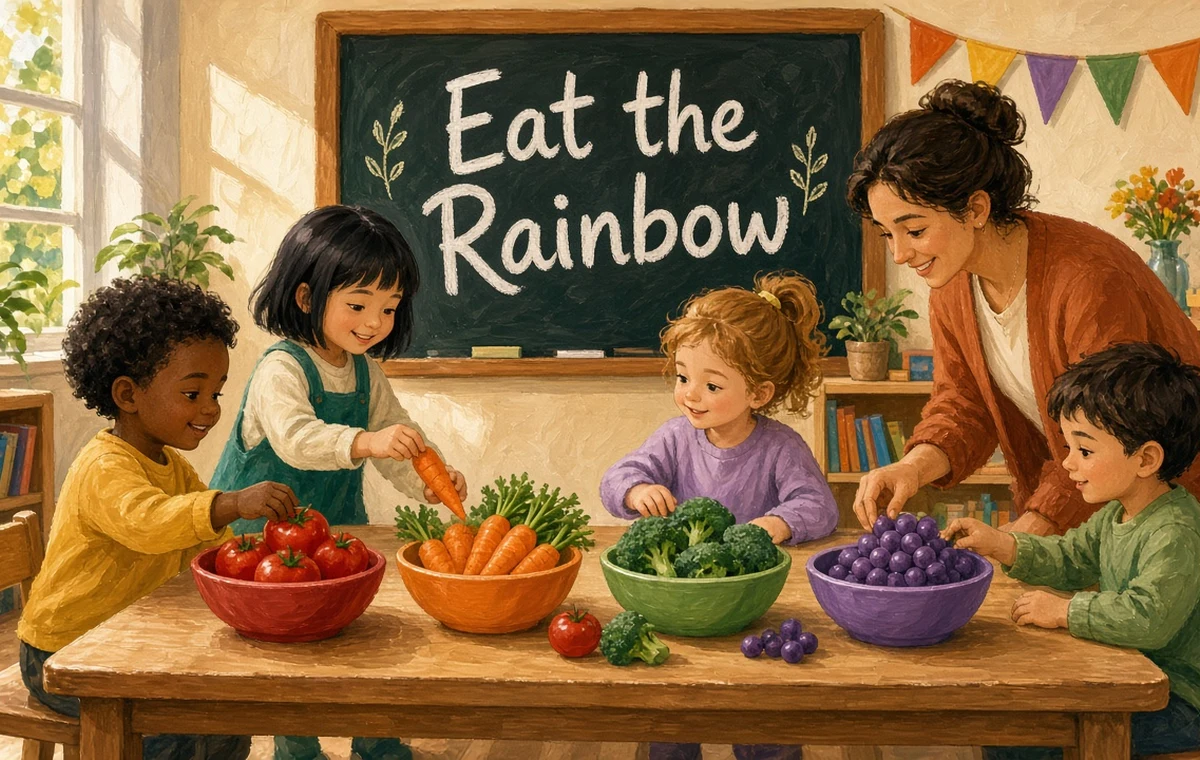
Nutrition education for toddlers is less about lectures and more about repetition. Children may need to see a new food ten or more times before accepting it, so the teacher who calmly eats the broccoli alongside them is doing real work. Good programs teach three things: food helps us grow and play, different colors carry different nutrients, and clean hands and safe storage keep food safe.
Student money tip on CampusDown Law Up: Can I Have an Emotional Support Animal in a No-Pets Apartment?.
At home, the checklist is short. Offer water and milk instead of juice and soda, keep a regular meal and snack rhythm, sit together, let children feed themselves even when it gets messy, and brush teeth after the last meal. And if money is tight, check WIC or Healthy Start eligibility before assuming you will not qualify; many working families do.
Reference: Story, M., Holt, K., and Sofka, D. (Eds.) (2002). Bright Futures in Practice: Nutrition (2nd ed.). National Center for Education in Maternal and Child Health, a classic guide to infant and child nutrition counseling.
FAQ
Can I get WIC if I work full time?
Yes. WIC looks at household income against 185% of the poverty guidelines, not at whether you work, and families on SNAP or Medicaid qualify automatically on income.
Does my breastfed baby really need vitamin D drops?
The AAP recommends 400 IU a day and the NHS 8.5 to 10 micrograms a day for breastfed babies, because breast milk alone is low in vitamin D.
When should I give my baby peanut?
Both the US and UK now advise introducing peanut early, around 4 to 6 months in the US and around 6 months in the UK, as smooth peanut butter thinned into food. Ask your doctor first if your baby has severe eczema or egg allergy.
What can I buy with a Healthy Start card?
Plain cow's milk, fresh, frozen or tinned fruit and vegetables, fresh, dried or tinned pulses, and infant formula.
How do I know if my daycare follows CACFP?
Ask the director whether the center participates in CACFP; participating centers must follow the federal meal pattern and post menus that you can review.