
What Does the Film Sicko Reveal About US Health Care? Private Insurance, Its History and Limits, and Lessons for Health Systems
- Sicko documents Americans who were denied care or payment even with health insurance.
- Apart from Medicare and Medicaid, US coverage relies mainly on private insurance.
- The film is a useful but one-sided starting point for comparing health systems.
Contents
Sicko is Michael Moore's 2007 documentary about Americans who were refused care or payment even though they had health insurance, and it remains a popular starting point for comparing private-insurance and public health systems. Imagine paying for insurance every month and still being told your treatment will not be covered. That is how the film opens. The United States spends more on health care than almost any other country, yet the film asks why that money does not translate into health for everyone. This guide, adapted from a Korean study note, covers what the film shows, how the American system took shape, why high spending does not guarantee good outcomes, how the UK's NHS compares, what other countries can learn and how to use the film critically in an assignment.
What does Sicko show?
The film opens with uninsured people forced into desperate choices, including a man who stitches up his own wound, then turns to people who did have insurance but were denied payment for one reason or another. Scenes of volunteers who worked at Ground Zero after the September 11 attacks and later struggled to get treatment drew a strong reaction from audiences.
Related on CampusDown Law UpThe ER Bill Says "Out of Network" and My Wallet Just Fainted — Hit with a surprise out-of-network ER bill on a student budget?
Moore then contrasts the US with Canada, the United Kingdom, France and Cuba, showing patients who do not receive a bill at the end of their treatment. The tone is deliberately provocative. The film was widely discussed when it came out and helped put insurance practices at the centre of the health reform debate that followed.
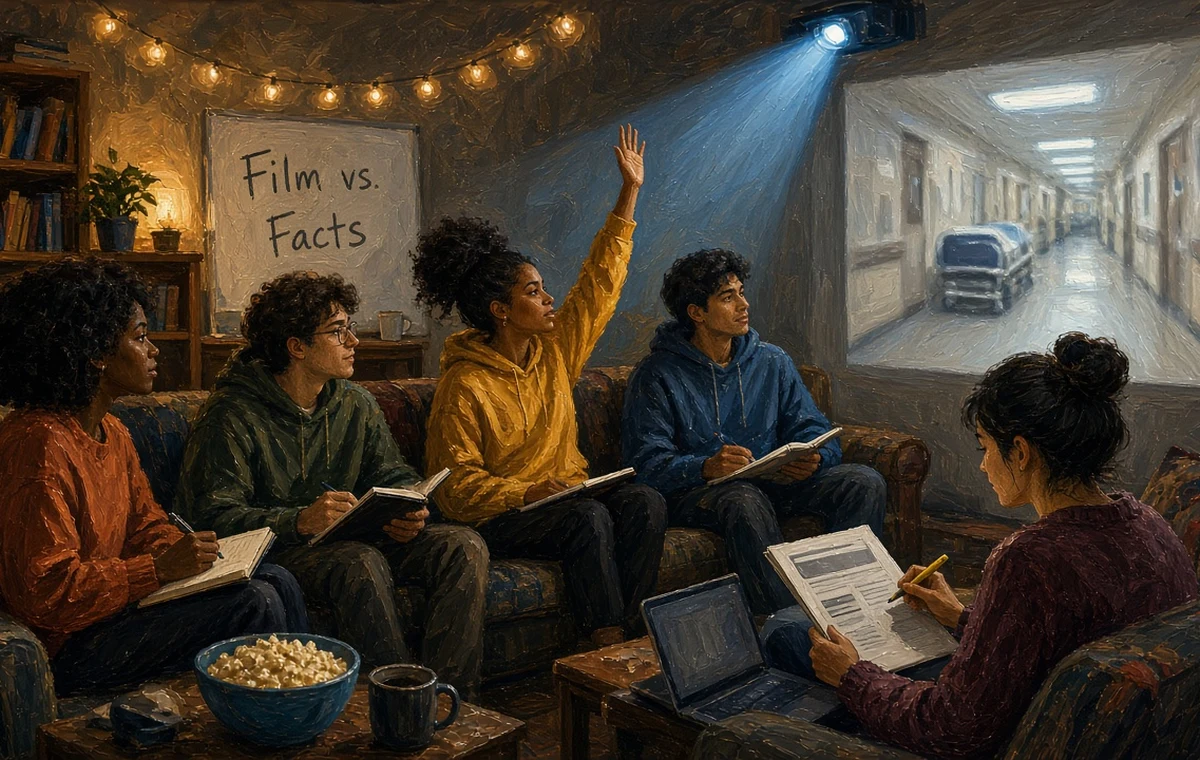
It is important to remember that Sicko is an argument, not a neutral report. Moore chose the stories, the countries and the editing. Critics pointed out that the foreign systems were shown at their best, with little about waiting times, staff shortages or taxes. That does not make the film worthless. It means students should separate the emotional case studies from verifiable facts.
A good habit is to note each claim the film makes and look for an official source that supports, qualifies or contradicts it. Doing that turns a film review into a piece of policy analysis.

Why did US health coverage become centred on private insurance?
- Strong social values of individual freedom and personal responsibility
- Repeated failures of national health insurance proposals in the 20th century
- Opposition from organised interest groups, including parts of the medical profession
- The spread of employer-provided insurance, which became a standard job benefit
In 1965 Congress created Medicare for people aged 65 and over and Medicaid for people on low incomes. Most other Americans still had to get private insurance through an employer or buy it themselves. The Affordable Care Act of 2010 expanded coverage through subsidised marketplaces and a broader Medicaid programme.
One correction matters when you use the film today. Sicko was made before the Affordable Care Act. Since 2014, ACA-compliant health plans cannot refuse to cover someone or charge them more because of a pre-existing condition. Insurers can still deny individual claims or require prior authorisation, so disputes over payment have not disappeared, but the specific practice of turning people away for past illness is now restricted.
The wiki entry on Bismarckian and Beveridgean welfare models explains the two classic ways countries fund health care: social insurance contributions or general taxation. The US does not fit neatly into either, which is part of why it is so often studied.
Skimming the section headings first makes a long guide much easier to map out. Try writing down one question of your own as you read.
Why does high spending not buy better outcomes?
| Problem | What it means |
|---|---|
| High cost | Administrative costs, high prices for services, expensive equipment and drugs |
| Gaps in coverage | Uninsured people and people whose insurance covers too little |
| Denied claims | Insurers refusing payment for treatment |
| Health outcomes | Indicators such as life expectancy lag behind other rich countries |
The latest official figures show the scale. US national health spending reached about 4.9 trillion dollars in 2023, or 17.6% of GDP, according to the Centers for Medicare and Medicaid Services. In the same year the Census Bureau reported that 8.0% of people, about 26.4 million, had no health insurance for the whole year.
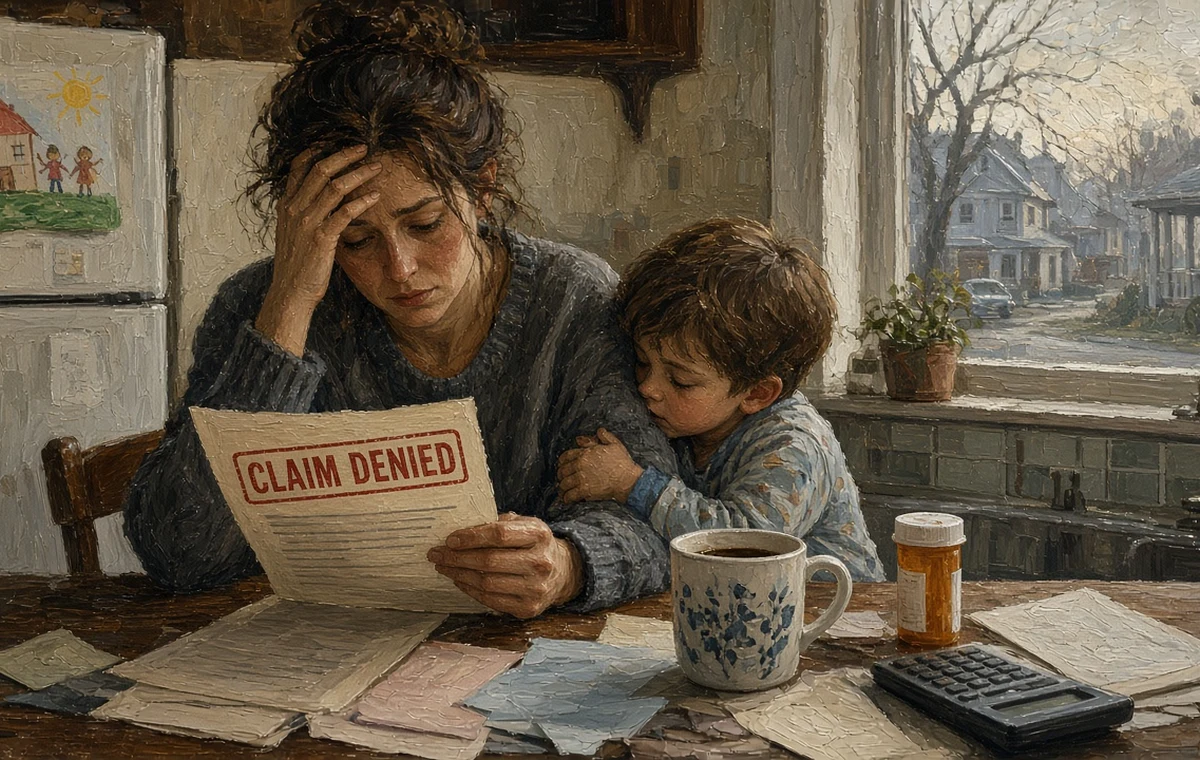
The film's central point is about incentives. A private insurer has to make a profit, so it has reasons to avoid high-risk customers and limit payouts. Social insurance works differently: membership is compulsory and contributions are linked to income, so risk is pooled across everyone. The wiki entry on principles of social insurance compares the two models in detail.
Since 2022 the No Surprises Act has also protected many patients from surprise bills for emergency care and for some out-of-network services. It shows that the system keeps changing, which is why any assignment should check the current rules rather than rely only on a 2007 film.
When you use a table like this in an assignment, back each row with an official statistic. That is what lifts the work from a film reaction to real policy analysis.
How does the UK's NHS compare?
The National Health Service was founded in 1948 on the principle that care should be available to everyone, based on clinical need rather than ability to pay. It is funded mainly through general taxation, and most services are free at the point of use. Sicko presents it very favourably, including a hospital cashier's window that pays patients' travel costs.
The real picture is more mixed. In England adults pay a fixed charge per prescription item unless they are exempt, while prescriptions are free in Scotland, Wales and Northern Ireland. Dental care and eye tests usually involve charges. And the main pressure point is time rather than money: waiting lists for planned treatment and delays in emergency departments are a recurring political issue.
| Aspect | United States | United Kingdom |
|---|---|---|
| Main funding | Employer and private insurance, plus Medicare and Medicaid | General taxation |
| Who is covered | Most people, with gaps | Everyone ordinarily resident |
| Cost at point of use | Deductibles, co-pays and coinsurance | Mostly free, some charges in England |
| Main pressure | Cost and coverage gaps | Waiting times and capacity |
Comparing the two shows that every system makes trade-offs. One rations mainly by price and insurance status, the other mainly by queue.
What can health systems learn from the film?
- Broaden coverage so that essential care is not left to private payment
- Cap out-of-pocket costs to prevent catastrophic medical bills
- Strengthen primary care so that problems are handled early and cheaply
- Keep funding sustainable through fair contributions and efficient spending
Other countries offer useful comparisons. South Korea, for example, introduced compulsory medical insurance in 1977 and reached nationwide coverage in 1989, an unusually fast route to universal coverage. Its debates today are about how much each patient still pays and how to keep public coverage strong when private supplementary insurance grows.
Raising coverage always needs money, so any reform involves a social agreement about how much people are willing to contribute and what they expect in return. Commercialising hospitals or weakening public rules tends to reopen the questions Sicko raised.
The deepest question the film asks is whether health care is a product sold in a market or a right shared by everyone. Each country's answer shapes who gets care and who is left behind.
How can you use Sicko in an assignment?
Treat the film as a case study that raises questions, then answer those questions with evidence.
Also on CampusDown Law Up: The ER Bill Says "Out of Network" and My Wallet Just Fainted.
Start by listing three or four claims from the film, such as the cost of a treatment, the number of uninsured people or how another country's system works. For each one, find a current official source: CMS for US spending, the Census Bureau for insurance coverage, the NHS or the Office for National Statistics for UK figures, and the OECD for international comparisons. Note where the film is still accurate, where it is out of date because of later reforms and where it simplifies.
Next, apply a framework. You could compare funding models, ask who bears financial risk, or look at access, quality and cost together. Be explicit about the values behind each system, such as individual choice, solidarity or equal access, because policy choices follow values.
| Step | Question to ask |
|---|---|
| Claim | What exactly does the scene say or suggest? |
| Evidence | Which official data confirm or challenge it? |
| Date | Has the law or the system changed since 2007? |
| Perspective | Whose voices are missing from the scene? |
| Values | What does the system prioritise, and at what cost? |
Finally, keep your own conclusion balanced. It is fair to say that the film exposed real hardship and helped shape public debate. It is also fair to note that it left out the downsides of other systems. A strong essay acknowledges both.
Reference: Moore, M. (Director). (2007). Sicko [Film]. Dog Eat Dog Films. Watching other countries' painful stories is often the clearest way to see why a shared health system is worth protecting.
FAQ
Is Sicko an objective documentary?
No. It uses real cases but is edited to make an argument, so check its claims against official data.
What is the difference between Medicare and Medicaid?
Medicare mainly covers people aged 65 and over, while Medicaid covers people on low incomes.
Can US insurers still refuse people with pre-existing conditions?
Since 2014, ACA-compliant plans cannot refuse or charge more for pre-existing conditions, though claims can still be denied.
Is NHS care completely free?
Most care is free at the point of use, but England has prescription charges and dental and eye care usually cost something.
How many Americans are uninsured?
The Census Bureau reported 8.0%, about 26.4 million people, uninsured for all of 2023.