
Why Do Poor People Miss Out on Welfare? Korea's Basic Livelihood Security Act Compared With SNAP, TANF and Universal Credit
- Korea's 1999 Basic Livelihood Security Act guarantees a minimum living for poor households.
- Regional costs and extra costs of disabled and older households created blind spots.
- The US relies on SNAP, TANF and SSI, while the UK uses Universal Credit.
Contents
How can someone be clearly struggling and still be told they do not qualify for help? It happens in every welfare system, and Korea's National Basic Livelihood Security Act is a textbook case of a well-designed law that still leaves people in the gaps. This guide reworks a Korean student policy analysis of the Act: its purpose, why it was created, who it covers and where its selection rules fall short. It then follows the reforms that tried to close those gaps and compares them with the safety nets of the United States and Britain.
What is the National Basic Livelihood Security Act?
The Act makes national and local government responsible for giving people who cannot maintain a living the benefits they need, guaranteeing a minimum standard of life and helping them become self-reliant. It is the flagship example of public assistance within Korea's social security system: rather than insurance paid for by contributions, it is tax-funded support for low-income households covering living costs, housing, medical care, education and self-support work programmes.
Student money tip from CampusDown Repair UpLandlord repair request letter template you can copy — what to include, how to send it, a follow-up version and how to keep a paper trail.
The report traces its origin to the financial crisis at the end of 1997. Poverty and unemployment soared, and civic groups demanded a proper guarantee for poor households. The law was enacted in 1999 as Act No. 6024 and took effect in October 2000. The crisis showed that poverty could reach almost anyone, which helped shift the view of poverty from personal failure to a shared responsibility of the state.

Who does the Act cover, and why do people fall through?
The report's examples of people in need include those who lost the ability to work through injury or illness, those who lost support because the person who supported them died, and residents of protected facilities such as homeless self-support centres and youth shelters. The groups differ so much that how accurately the rules reflect their real circumstances decides whether the programme works.
The report highlights two blind spots. First, low-income households in big cities, where living costs are higher, may be genuinely poor yet fail to meet the selection standard because regional cost differences are not fully reflected. Second, households with a disabled member or older people face extra costs, but the standard does not properly allow for differences between household types. One correction helps here: the report's critique mainly describes the original design built on a single minimum cost of living line. Since July 2015, each benefit has had its own threshold based on a share of standard median income, which eased but did not remove these problems.

The worry on her face is what policy analysis is ultimately about. A rule can look fair on paper and still miss the woman whose heating bill is higher because she is old and at home all day.
Skimming the section headings first makes a long guide much easier to map out. Try writing down one question of your own as you read.
How has Korea tried to close the gaps?
The biggest change came with the tailored benefit reform of July 2015. Before it, passing one line meant receiving livelihood, medical, housing and education benefits together, and earning slightly too much meant losing all of them at once. After the reform, each benefit has a separate threshold, so a small rise in income no longer wipes out everything. Our explainer on the poverty trap shows why that cliff edge discouraged work.
The reform followed a tragedy. In 2014 a mother and two daughters struggling with poverty in Seoul's Songpa district died, leaving behind their last rent and utility money with an apology note. They had not received help from the system, and the case became a symbol of how strict rules and the need to apply create blind spots. It also led to stronger systems for finding people at risk.
Rules on family support obligations were relaxed step by step: removed for education benefit in 2015 and housing benefit in October 2018, and effectively removed for livelihood benefit from October 2021, except where the supporting relative has a high income or substantial assets. Medical benefit still applies them, which remains controversial. Households just above the line, at or below half of standard median income, can get some help as the near-poor, and the emergency welfare support scheme pays living, medical and housing costs quickly in a sudden crisis, helping first and checking later.
| Benefit | Threshold (share of standard median income) | Family support rule |
|---|---|---|
| Livelihood | About 32% or below | Effectively abolished (exceptions for high-income or high-asset relatives) |
| Medical | 40% or below | Still applied |
| Housing | About 48% or below | Abolished |
| Education | 50% or below | Abolished |
Converting assets into income is another frequent problem: an old house or ageing car can push a household's recognised income over the line even when it has no cash to spend.
How do the US and UK safety nets work?
United States: a patchwork of programmes
America has no single equivalent to Korea's Act. Instead, several programmes overlap. SNAP, formerly known as food stamps, helps low-income households buy food. The 1996 welfare reform replaced the old cash entitlement with Temporary Assistance for Needy Families, giving states block grants, adding work requirements and setting a federal five-year lifetime limit on assistance for most families. Supplemental Security Income supports older, blind and disabled people with little income, and the Earned Income Tax Credit tops up the pay of low-wage workers. Rules and generosity vary widely from state to state, and researchers have long noted that many eligible people never apply.
United Kingdom: Universal Credit and food banks
Britain rolled several older benefits into Universal Credit, a single monthly payment for working-age people that tapers off gradually as earnings rise. That taper is designed to avoid the cliff edge Korea tackled in 2015. Critics, however, point to the wait of about five weeks before the first payment, which can push new claimants into debt even though advance loans are available. The growth of food banks run by charities and churches is widely seen as a sign of gaps in the system, and benefit advice services help people through complex forms and sanctions.
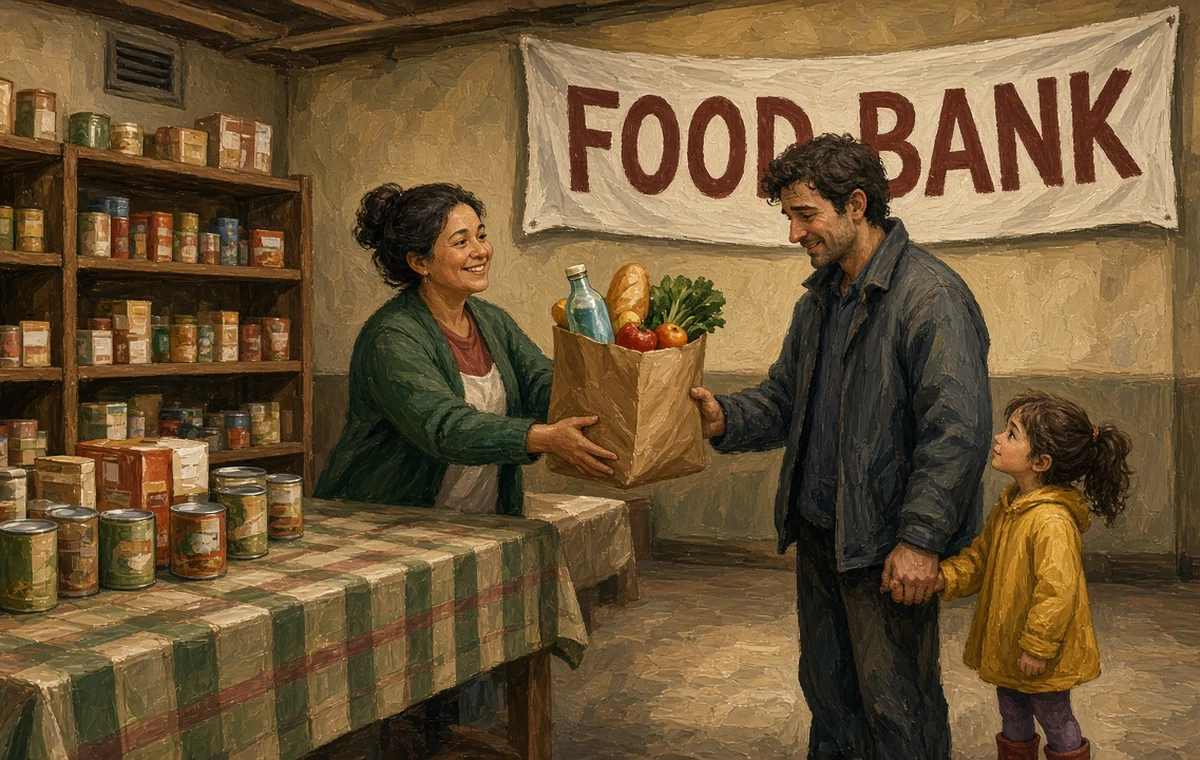
The father's mix of gratitude and embarrassment is a reminder that stigma is a barrier in its own right. Many people delay asking for help until the cupboard is already empty.
How do the three systems compare?
| Issue | Korea | United States | United Kingdom |
|---|---|---|---|
| Main framework | National Basic Livelihood Security Act, tailored benefits since 2015 | SNAP, TANF, SSI and tax credits | Universal Credit plus disability and pension support |
| How thresholds work | Share of standard median income per benefit | Programme-specific income and asset tests | Means test with gradual earnings taper |
| Family obligations | Largely relaxed, still in medical benefit | Household income counted, no wider family duty | Household income counted, no wider family duty |
| Known gap | Need to apply, asset conversion | Time limits, state variation, low take-up | Five-week wait, sanctions, food bank reliance |
The comparison shows that every system faces the same two kinds of gap. One is about the rules, when people are poor in reality but not on paper. The other is about access, when people do not know about help, find the process too hard or fear the stigma of applying.
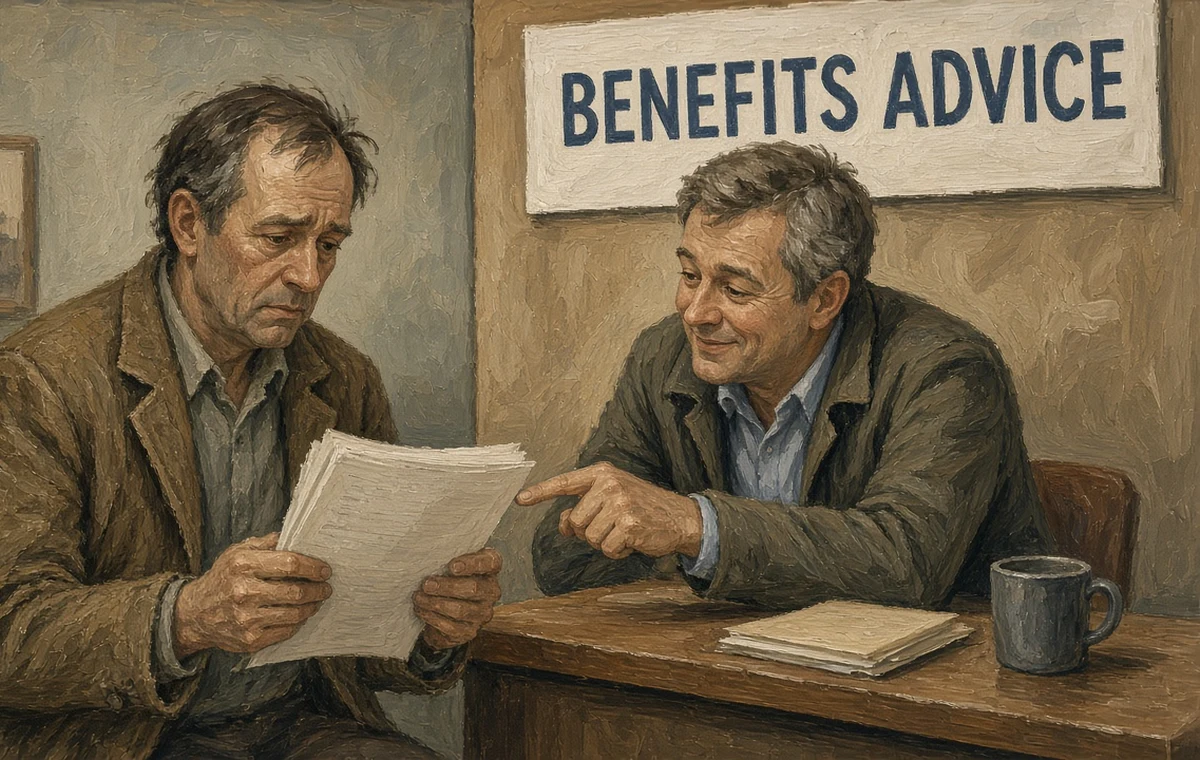
Korea now uses data on cut-off utilities, unpaid health insurance and similar warning signs to find households at risk, along with outreach from community centres and neighbours. Even so, not every crisis shows up in a database, which is why caseworkers and neighbours remain essential.
How should you write a policy analysis of this Act?
A clear structure is: why you chose the topic, background and purpose, target groups and current status, problems, then improvements. The underlying principles of state support are explained in our guide to the principles of public assistance.
Student money tip on CampusDown Repair Up: Landlord repair request letter template you can copy.
- Does the selection standard reflect real living costs, including regional differences?
- Do remaining family support rules create blind spots?
- Is the conversion of assets into income realistic?
- Does the need to apply leave people without help?
- Does working more ever leave people worse off?
End by proposing both a rule change and an access change, for example adding household-type cost adjustments and expanding proactive outreach. That shows you understand both kinds of gap.
Who will find this useful?
This approach suits students of social welfare, public administration and social policy writing a policy analysis report.
FAQ
What replaced the old US welfare entitlement in 1996?
Temporary Assistance for Needy Families, which gave states block grants and added work requirements and time limits.
What is the five-week wait in Universal Credit?
The usual gap between a new claim and the first payment; advance loans are available but must be repaid.
When did Korea's Basic Livelihood Security Act take effect?
It was enacted in 1999 and took effect in October 2000.
What changed in Korea's 2015 reform?
Each benefit got its own threshold based on standard median income, so a small income rise no longer ends all support.
Why do eligible people fail to apply?
Lack of information, complex forms and fear of stigma are common reasons in Korea, the US and the UK.