
Pressure Ulcer Stages, the Braden Scale and Preventing Pressure Sores at Home
- A pressure ulcer is damage to skin and underlying tissue caused by pressure, or pressure combined with shear.
- On the Braden Scale, a lower score means a higher risk.
- Repositioning, moisture control and good nutrition are the three pillars of prevention.
Contents
- Why do pressure ulcers develop?
- How are the stages classified?
- How is risk assessed?
- How do you prevent pressure ulcers at home?
- What should families be taught?
- Daily home checklist
- Nutrition matters more than people expect
- How do you choose pressure-relieving equipment?
- Skin care without harm
- Looking after the carer too
- FAQ
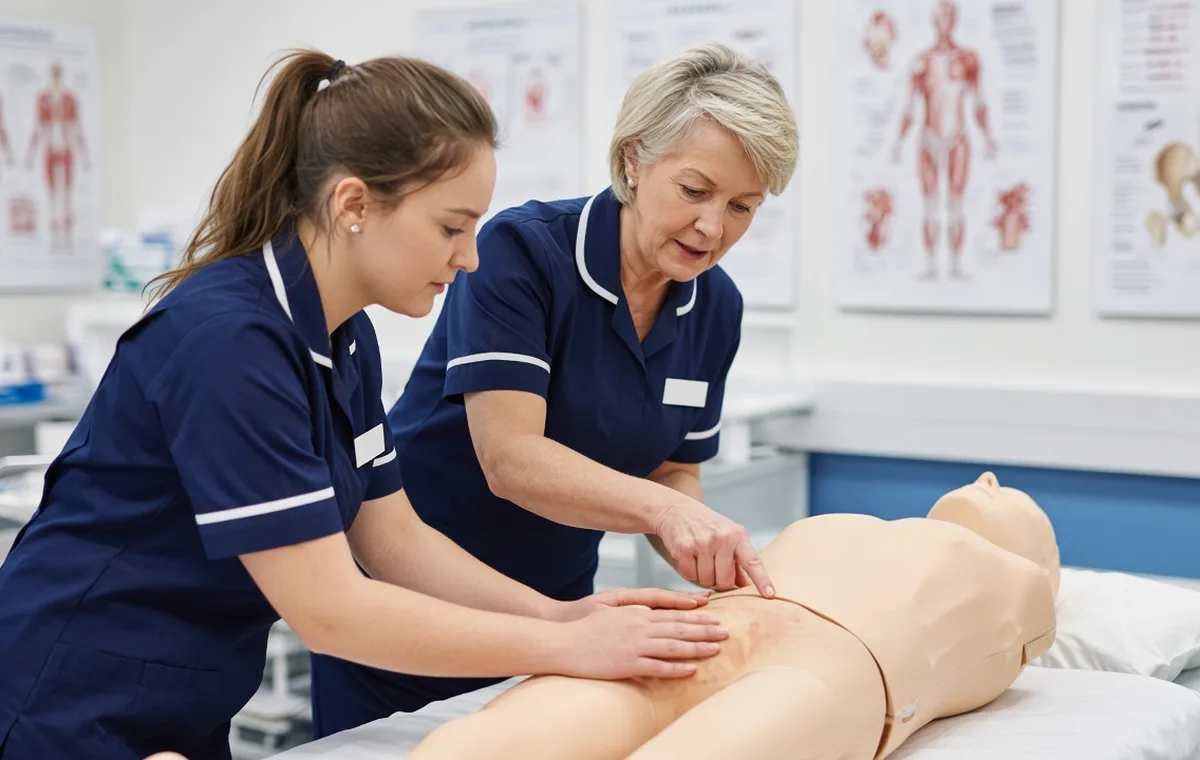
When you care at home for someone left with one-sided weakness after a stroke, pressure sores are often the first worry. Once a pressure ulcer forms it can take weeks or months to heal, yet much of the damage is preventable if you understand how it happens. These notes are written for nursing students and family carers to read together, covering the stages of pressure damage and practical prevention.
Why do pressure ulcers develop?
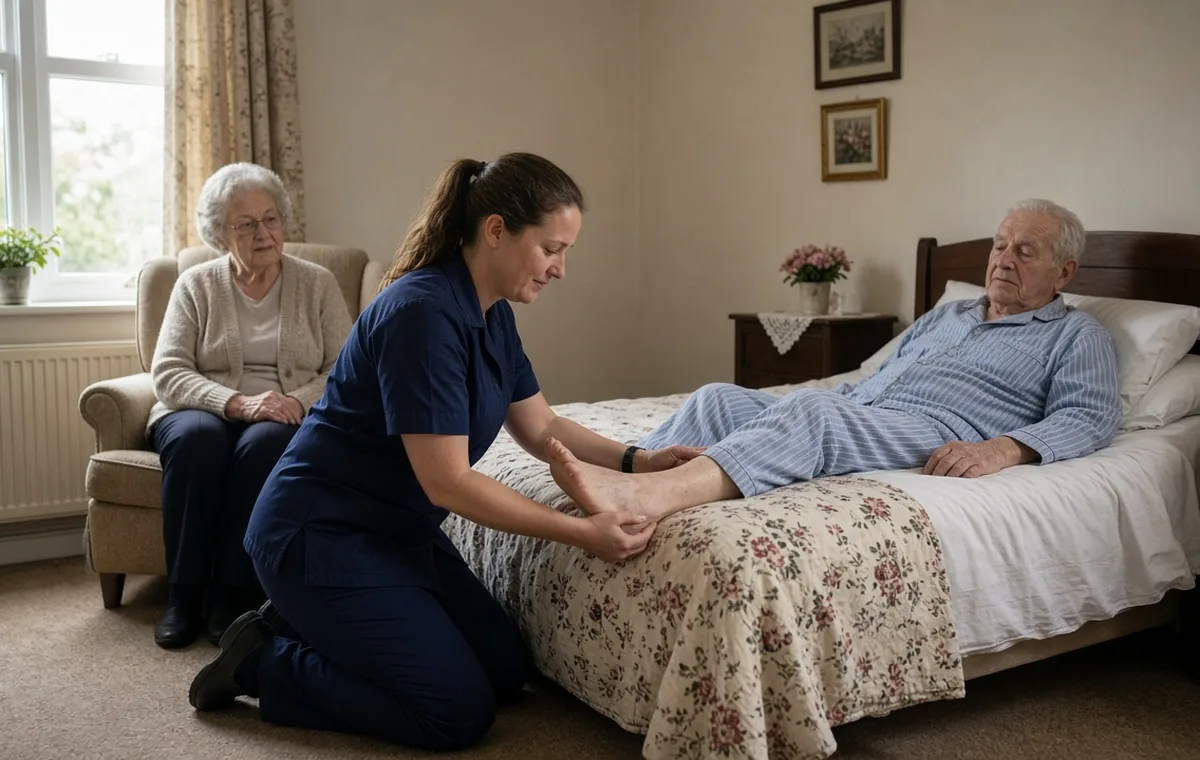
A pressure ulcer, also called a pressure injury or bedsore, is damage that develops when skin over a bony area is compressed for too long, or when pressure combines with shear, the dragging force that pulls the skin one way while the bone beneath moves another. Blood flow to the tissue is cut off and cells begin to die. People left partly paralysed by a stroke are at particular risk because they cannot easily shift their own weight.
Student money tip from CampusDown Repair UpPressure Cooker Says Burn: What It Means and What to Do — Pressure cooker showing a burn message?
The classic sites are the sacrum and coccyx, the heels, the greater trochanter at the side of the hip, the elbows and the back of the head. Skin that is damp from sweat, urine or faeces, and a body short of protein and fluid, break down faster under the same pressure. In 2016 the US National Pressure Injury Advisory Panel began using the term pressure injury, partly because damage can exist before the skin opens.

How are the stages classified?
| Category | What you see |
|---|---|
| Stage 1 | Intact skin with redness that does not blanch when pressed |
| Stage 2 | Partial-thickness loss with exposed dermis: a shallow open wound or an intact or broken blister |
| Stage 3 | Full-thickness skin loss; fat may be visible, but not muscle or bone |
| Stage 4 | Full-thickness skin and tissue loss exposing fascia, muscle, tendon or bone |
| Unstageable | The base is covered by slough or eschar, so the depth cannot be seen |
| Deep tissue injury | Skin may be intact but shows persistent deep red, maroon or purple discolouration |
The test for stage 1 is simple: press lightly with a finger and release. Healthy skin turns pale and then pinks up again; if the redness stays, the tissue is already under strain. In the UK the NHS "React to Red" campaign teaches carers exactly this check. Redness is harder to see on darker skin, so look for areas that are darker, purplish or shiny, and feel for heat, firmness or a boggy texture compared with nearby skin.
Skimming the section headings first makes a long guide much easier to map out. Try writing down one question of your own as you read.
How is risk assessed?
The Braden Scale, published by Barbara Braden and Nancy Bergstrom in 1987, scores six areas: sensory perception, moisture, activity, mobility, nutrition, and friction and shear. The first five are scored 1 to 4 and friction and shear 1 to 3, giving a total between 6 and 23. The lower the score, the higher the risk, and many services treat 18 or below as at risk. Many UK hospitals use the Waterlow score instead, and students should know that both exist; the principle of turning low sub-scores into specific actions is the same.
Reassess on admission and whenever the person's condition changes, then build the care plan around the lowest sub-scores. If moisture scores low, for example, the plan should state how often pads are checked and when a barrier cream is applied. That turns a number on a chart into care that someone can actually deliver.
How do you prevent pressure ulcers at home?
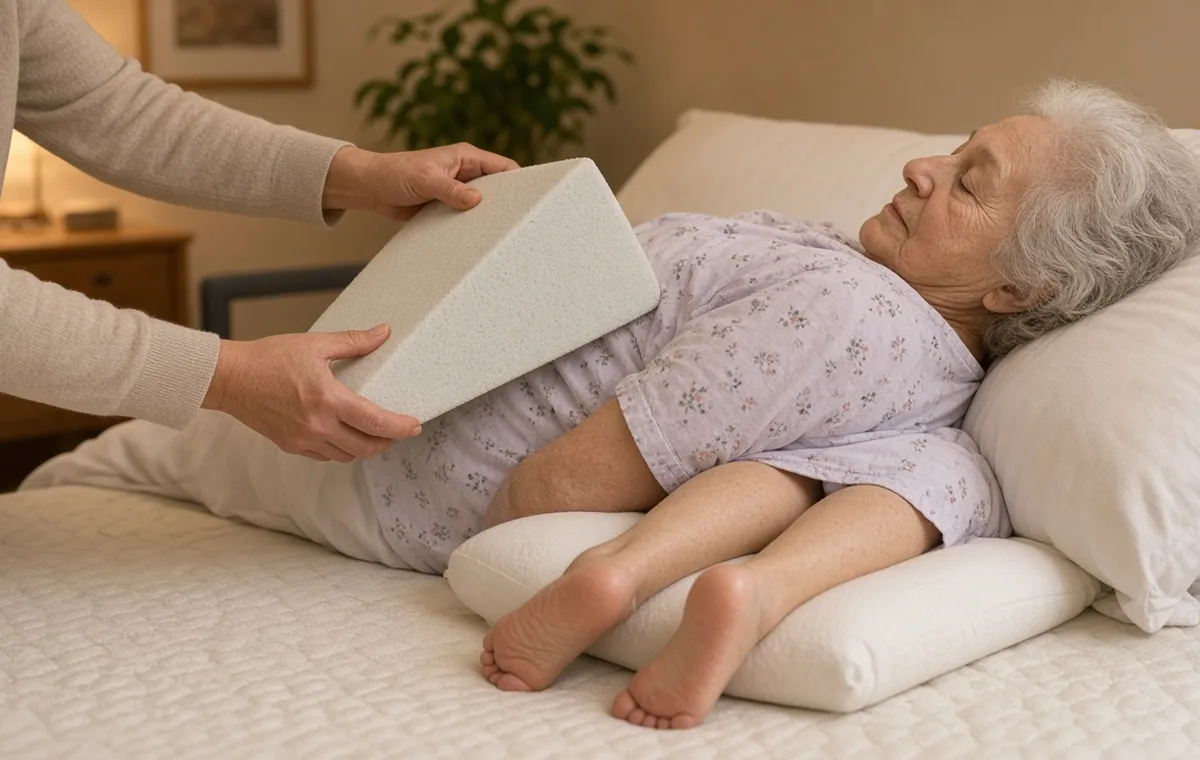
The core of prevention is never leaving pressure in one place for long. Change position at intervals set for the individual; two hours is a common starting point for someone who cannot move at all, and NICE guidance in England (CG179) recommends at least every four hours for adults at high risk. When turning someone onto their side, tilt them about 30 degrees and support the back with a pillow or wedge rather than lying them fully on the hip bone.
Keep the head of the bed at 30 degrees or lower where possible. Raising it higher makes the body slide down the mattress, dragging the skin over the coccyx and creating shear. If the head must be raised for meals or breathing, support under the knees to reduce sliding and lower it again afterwards. Float the heels by placing a pillow under the calves so the heels hang just clear of the mattress, and when moving someone up the bed, lift with a slide sheet rather than dragging.
NHS teams often teach this as the SSKIN bundle: Surface (the right mattress and cushion), Skin inspection, Keep moving, Incontinence and moisture, and Nutrition and hydration. It is an easy checklist for a family to pin up next to the bed.
What should families be taught?
Families of stroke survivors need to know that sensation on the weak side may be reduced, so the person may not feel or report pain. People with dementia may also be unable to say that something hurts. Encourage carers to look at and touch the high-risk sites at the same time every day, for example during morning washing. Plan meals together with enough protein and fluid, and explain that if a red patch does not blanch, they should keep weight off that area and contact the district nurse or GP promptly.
Daily home checklist
- Change position at the agreed interval and write down the time.
- Look at the skin over bony areas every day for colour changes.
- Clean skin wet from urine or faeces straight away and keep it dry.
- Smooth out creases in the sheets and lift, never drag, when moving the person.
- Track how much they eat and drink and make sure there is enough protein.
Nutrition matters more than people expect
When protein and energy are short, skin and muscle weaken so that the same pressure damages them more easily, and existing wounds heal slowly. For an older person whose appetite has shrunk, it is usually more realistic to add frequent protein snacks, such as yoghurt, eggs, milky drinks or a cheese sandwich, than to make each meal bigger. Dehydration dries the skin too, so keep a drink within reach.
How do you choose pressure-relieving equipment?
| Equipment | How it works | Best suited to |
|---|---|---|
| Alternating pressure mattress | Air cells inflate in turn to move pressure points | High-risk people who stay in bed most of the day |
| Foam or gel mattress | Spreads body weight evenly | Moderate risk, people who can move a little |
| Pressure-relieving cushion | Spreads pressure under the buttocks when seated | Long-term wheelchair users |
| Wedges and positioning pillows | Hold the new position steady | 30-degree tilts, floating heels |
Pressure-redistributing mattresses and cushions spread weight over a larger area. Alternating pressure air mattresses inflate and deflate in cells to shift the pressure points; high-specification foam or gel mattresses spread the load evenly. Anyone who sits in a wheelchair for long periods needs a pressure-relieving cushion. In England this equipment is usually supplied on loan through community equipment services after an assessment by a district nurse or occupational therapist. Equipment never replaces repositioning, so carers should keep turning even on a specialist mattress.
Skin care without harm
Very dry skin cracks easily, so a simple moisturiser helps, but never rub or massage skin that is already red; NICE advises against it because it can damage the tissue. For someone using pads, check often so the skin is not left damp and use a barrier product if the nurse recommends one.
Looking after the carer too
Turning someone every few hours through the night is exhausting. A care plan that lasts includes help: visits from the district nursing team, home care, respite stays, and the carer's assessment that local councils in England must offer under the Care Act 2014. Keeping a simple log of turning times, skin condition and food intake on one sheet also helps the visiting nurse see changes quickly.
Student money tip on CampusDown Repair Up: Pressure Cooker Says Burn: What It Means and What to Do.
For a family teaching sheet, pair each Braden area with an action: reduced sensory perception means more frequent skin checks; high moisture means keeping skin dry; low activity and mobility mean repositioning and equipment; poor nutrition means extra snacks; friction and shear mean teaching safe moving and handling. If a wound appears or gets worse, it always needs a professional assessment.
The CampusDown fundamentals of nursing notes cover the related assessment skills if you are revising for a placement or exam.
Written by the CampusDown editorial team, reviewed November 2026. Sources: EPUAP, NPIAP and PPPIA (2019), Prevention and Treatment of Pressure Ulcers/Injuries: Clinical Practice Guideline; Bergstrom N. et al. (1987), The Braden Scale for Predicting Pressure Sore Risk, Nursing Research 36(4); NICE CG179 (2014), Pressure ulcers: prevention and management.
FAQ
What does a stage 1 pressure ulcer look like?
The skin is intact but there is redness that does not fade (blanch) when you press it lightly. On darker skin it may look purple, blue or darker than the surrounding area and feel warmer, firmer or softer.
What is the range of the Braden Scale?
Scores run from 6 to 23. The lower the score, the higher the risk, and many services treat 18 or below as at risk.
What angle is recommended for side-lying?
A tilt of about 30 degrees, supported by pillows or a wedge, so that weight does not rest directly on the hip bone.
Should you massage reddened skin?
No. Rubbing or massaging reddened areas can damage fragile tissue further. Relieve the pressure instead and tell the nurse.