
Why One Pay Cheque Stopped Being Enough: Baby Boomers vs Dual-Earner Newlyweds and the Limits of Korea's Childcare Service
- A dual-earner family is one where both partners hold jobs and earn income.
- Korea's baby boomers could often live on one wage, but rising house prices and living costs make two incomes a near necessity today.
- The childcare service helps, but income-tested eligibility leaves some working families without affordable support.
Contents
- What was life like for Korea's baby boomers?
- What has changed for today's newlyweds?
- What problems do dual-earner families face?
- Why does Korea's childcare service leave families out?
- How do the US and UK support working parents?
- What reforms does the study propose?
- What else shapes care in dual-earner homes?
- How do Korea, the US and the UK compare?
- FAQ
Your grandparents may have bought a house and raised three children on one salary. Today two salaries can still feel tight. A Korean study tackles that puzzle by setting the baby-boom generation beside today's dual-earner newlyweds, then asks why the government's flagship childcare service still leaves many working families stuck. Along the way we compare the story with the United States and Britain, where the same squeeze has its own laws, subsidies and cliff edges.
What was life like for Korea's baby boomers?
In the study, Korea's baby boomers are people born over the nine years from 1955 to 1963, a group making up about 14.6% of the population. They entered the job market when the labour force was swelling but jobs were growing even faster, so they rode the wave of rapid economic growth. Many worked in manufacturing during the golden age of export industries, and the boom of the late 1980s and early 1990s, powered by exports, construction and the afterglow of the 1988 Seoul Olympics, carried them along.
Student money tip from CampusDown Repair UpLandlord repair request letter template you can copy — what to include, how to send it, a follow-up version and how to keep a paper trail.
That growth meant one husband's income was often enough to support a whole family. The author remembers that at school, classmates with a working mother were rare enough to count on one hand.

America and Britain have their own version of this memory. The post-war "male breadwinner" household, with a father in a factory or office and a mother at home, was held up as the norm in both countries in the 1950s and 1960s, even though many working-class women always worked. The shift to two incomes came earlier in the West, but the emotional nostalgia for a one-pay-cheque past sounds remarkably similar.

What has changed for today's newlyweds?
The study argues that after the pandemic, low interest rates and quantitative easing, meant to stop a recession, sent house prices soaring and pushed living costs up sharply. Wages did not keep pace. The source illustrates this with Korean civil-service pay, describing raises as stuck in the 1% range across 2019 to 2023. In fact the 2020 raise was somewhat higher, but the broader point stands: increases stayed modest while prices and housing costs climbed much faster.
So the study concludes that within just ten to twenty years, two incomes went from a choice to a necessity, and that this change owes more to economic structure than to shifting personal values.
Skimming the section headings first makes a long guide much easier to map out. Try writing down one question of your own as you read.
What problems do dual-earner families face?
- Falling birth rates and heavy financial pressure, named as the biggest problem
- A childcare gap when both parents leave early and come home late
- Care worries that continue after children start primary school
- Private nannies that most families cannot afford
- Family tension rooted in Confucian expectations and generational differences
The study's diagnosis is that family structures changed quickly while social customs and attitudes lagged behind, so problems pile on top of each other. The American sociologist Arlie Hochschild captured one of them in 1989 when she described the "second shift": women finishing paid work and then starting a second unpaid shift of housework and childcare at home.
Why does Korea's childcare service leave families out?
The government's best-known support is the Idolbom (child care) service, which sends trained caregivers into the home. For families where parents lack time to play, it also offers age-appropriate physical activities, storybook reading and learning programmes. The study's criticism is about eligibility: subsidised use depends on a household's income relative to the national median, so not every family could benefit. Families above the threshold can still book the service, but at a price closer to full cost.
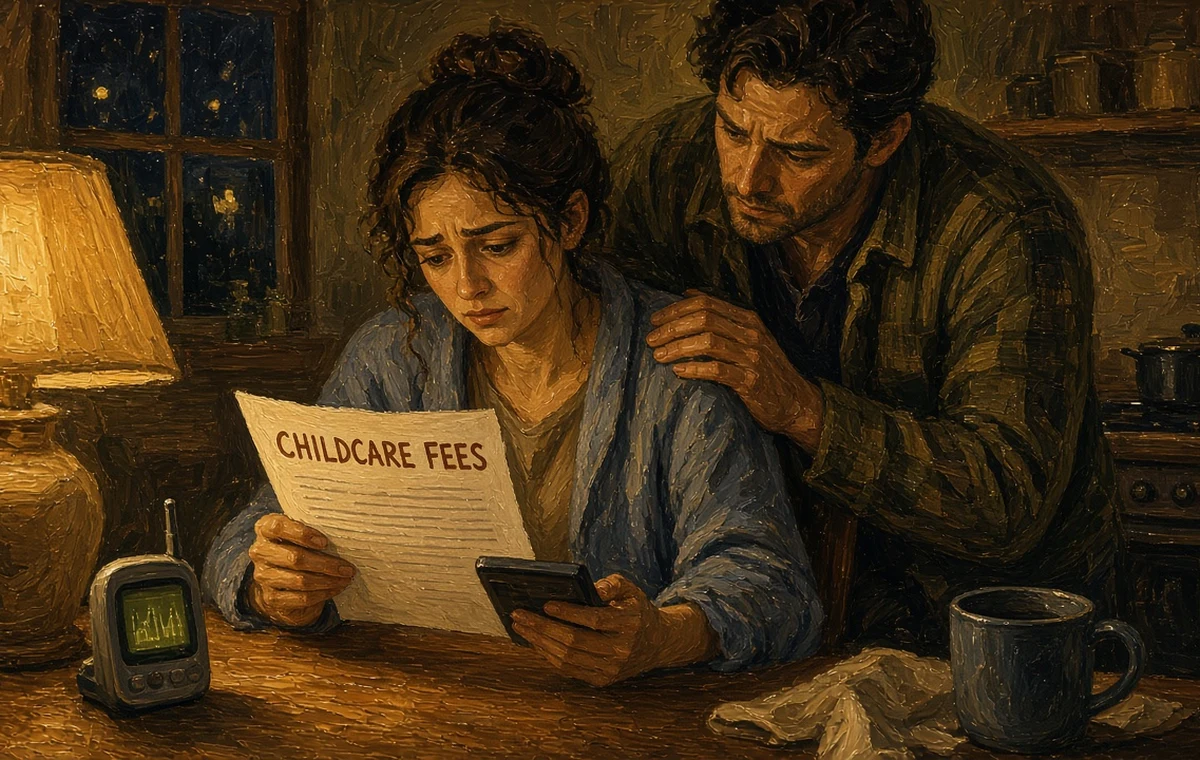
That creates a blind spot. A dual-earner couple earning just above the line may get little public help yet still find a private nanny unaffordable. The wider move to shift care beyond the family is explained in our page on defamilialization and the socialization of care.
The same trap appears elsewhere. Policy experts call it a "benefits cliff": a small pay rise can cost a family more in lost support than it gains in wages.
How do the US and UK support working parents?
United States: unpaid leave and means-tested subsidies
America has no national paid parental leave for private-sector workers. The Family and Medical Leave Act of 1993 gives eligible employees up to 12 weeks of job-protected leave, but it is unpaid, and smaller employers are not covered. A growing number of states, starting with California, have created their own paid family leave programmes. Childcare help mainly comes through the Child Care and Development Fund, whose subsidies are income-limited and capped by federal rules relative to state median income, which looks a lot like Korea's median-income test and produces similar cliff edges.
United Kingdom: free hours, Tax-Free Childcare and wraparound care
England has steadily expanded funded childcare hours for working parents, with the rollout reaching children from nine months old by September 2025. Tax-Free Childcare adds 20% to what parents pay in, up to a yearly cap per child. Both schemes, however, switch off if either parent's adjusted income goes above £100,000, a famous cliff edge. Shared Parental Leave, introduced in 2015, lets couples split leave, and a government wraparound programme is pushing primary schools to offer care from early morning to early evening, which tackles the same "after school starts" gap the Korean study describes.
Neither country has fully solved the puzzle, which is a useful reminder that childcare policy works best as a package rather than a single service.
What reforms does the study propose?
| Goal | Proposal |
|---|---|
| Close the childcare gap | Stronger after-school care for children of all ages, including primary pupils |
| Ease young couples' housing costs | More public housing and low-interest loans for dual-earner newlyweds |
| Balance work and family | Flexible working and policies that make leaving work on time realistic |
The study sees housing stability as good for both household finances and the willingness to have children, and argues that care, housing and working practices must change together before dual-earner families feel real relief.
What else shapes care in dual-earner homes?
Korea's wider toolkit helps fill in the picture. Parents can take parental leave paid through employment insurance, or cut their hours with a reduced-working-time scheme. Benefits have been raised in recent years and couples who both take leave can receive more, though exact amounts change often. Fathers' take-up has grown steadily, but it clusters in large firms and the public sector, where taking leave is less awkward. Nordic-style "daddy quotas", reserved only for fathers, are often credited with boosting male participation.

Primary school brings a new crunch, because classes end earlier than kindergarten and holidays are long. Korea calls it the "first-grade crisis" and has expanded Neulbom schools, which combine after-school lessons and care inside the school, nationwide from first grade in 2024, though worries about space, staffing and teacher workload remain. A 2024 Seoul pilot that brought in foreign domestic workers sparked debate over the value of care work and migrant workers' rights, a theme explored in our page on global care chains.
All of this points to "time poverty": families who earn an income but have almost no time left after work, care and chores, with mothers of young children hit hardest.
How do Korea, the US and the UK compare?
| Area | Korea | United States | United Kingdom |
|---|---|---|---|
| Home or centre care | Idolbom service, subsidy tied to median income | CCDF subsidies, income-limited | Funded hours for working parents |
| Parental leave | Paid through employment insurance | FMLA: 12 weeks, unpaid | Statutory and Shared Parental Leave |
| School-age care | Neulbom schools | Varies by school district | Wraparound childcare programme |
| Typical cliff edge | Median-income threshold | Subsidy income limits | £100,000 adjusted income limit |
Student money tip on CampusDown Repair Up: Landlord repair request letter template you can copy.
Every system leaves some families just above the line, which is why the study's call to reform care, housing and work together resonates far beyond Korea.
Takeaway for students
If you are writing about dual-earner families, start with the generational contrast, explain the economic forces behind it and then test a policy such as Korea's childcare service against the families it misses. Comparisons like FMLA, CCDF and England's £100,000 cliff edge make a policy critique concrete.
Reference: Hochschild, A. R., and Machung, A. (1989). The second shift: Working parents and the revolution at home. Viking. If both parents earn, both should be able to care.
FAQ
Who counts as a baby boomer in Korea?
According to the source, people born from 1955 to 1963, about 14.6% of the population.
Why can't many families qualify for Korea's childcare subsidy?
Subsidised use depends on household income compared with the national median, so families above the threshold pay much closer to full cost.
Is parental leave paid in the United States?
Not at federal level. FMLA offers up to 12 weeks of unpaid job-protected leave, while some states run their own paid programmes.
What is the £100,000 childcare cliff edge in England?
If either parent's adjusted income exceeds £100,000, the family loses funded hours for working parents and Tax-Free Childcare.
What does the study recommend?
Stronger after-school care, housing support for dual-earner newlyweds and flexible working with realistic leaving times.