
Is a Slip of the Tongue Really a Mistake? Lacan's Unconscious as the Discourse of the Other
- Lacan held that speech has two layers: intended speech and unintended speech.
- The ego's speech is what we consciously believe about ourselves, while the unconscious is the discourse of the Other.
- Language is the Other handed down over centuries, and learning it alienates every speaker from themselves.
Contents
For Jacques Lacan, a slip of the tongue is not just a mistake: every utterance has an intended layer and an unintended layer, and the unintended words come from what he called the Other. "The unconscious is the discourse of the Other," he said, because the language we speak was never ours to begin with, and learning it alienates us from ourselves. Most people have said "Thanks, Mum" to a teacher or mixed up a partner's name with an ex's, laughed it off and moved on. Psychoanalysis starts exactly where we decide not to look.

This guide is based on a Korean study note drawing on Bruce Fink's The Lacanian Subject. We have rewritten it for English-speaking students, with examples from everyday English and notes on how Lacan is usually met in UK and US universities.
Why does speech have two layers?
The source explains that speech is never one-dimensional. One layer is intended speech, made up of what the speaker meant to say. The other is unintended speech, where distorted or swapped words slip in and sometimes fuse into odd compound forms, the kind of thing English speakers call a Freudian slip.
Student money tip from CampusDown Repair UpIs a small leak worth a renters insurance claim? How to decide — compare the loss with your deductible, check who is responsible, and document it either way.
Freud collected many of these in The Psychopathology of Everyday Life (1901), from forgotten names to telling mispronunciations. Lacan took the idea further, insisting that the second layer is not noise on top of the first but a different kind of speech running through the same mouth.
Seeing speech this way helps explain why two quite different messages can sit inside a single sentence. The words you meant and the words that escaped are both, in some sense, yours, and both say something.

How do the ego's speech and the Other's speech differ?
| Aspect | The ego's speech | The Other's speech |
|---|---|---|
| Content | What we consciously think or believe about ourselves | Unexpected words that break through our intentions |
| Layer | Intended speech | Unintended speech |
| Usual reaction | Taken for granted as "what I said" | Dismissed as a mistake or tiredness |
According to the source, most people attach no special meaning to the other speech that interrupts the ego's, but that interruption is precisely where psychoanalysis begins. In the consulting room, the analyst listens less to the polished story and more to the hesitations, repetitions and odd word choices.
Skimming the section headings first makes a long guide much easier to map out. Try writing down one question of your own as you read.
Why is the unconscious the discourse of the Other?
Lacan's famous formula, often quoted from his 1950s teaching and collected in the Écrits, is that the unconscious is the discourse of the Other. The source explains that psychoanalysis starts from the assumption that this other kind of speech comes from somewhere other than the conscious self, so that sometimes something foreign and strange speaks through our mouths. For the roots of the idea in Freud and later thinkers, see the unconscious mind.
Translators usually capitalise the word: the Other, from Lacan's French grand Autre, is not another person in the room but the whole symbolic order of language, law and social expectation. The small other, petit autre, refers instead to the people we identify with or compete against.
Before asking how this other speech works, the source focuses on a prior question: how did it get inside us in the first place? The answer leads straight to language.
What does it mean to call language the Other?
The source describes Lacan's Other as the whole set of words and expressions that belong to a language. Words have come down to us through centuries of tradition, so their meanings are not set by me but by other people and the language they use. Nobody chooses whether "gay", "wicked" or "literally" mean what they meant fifty years ago; usage decides.
Lacan built on the structural linguistics of Ferdinand de Saussure, for whom meaning comes from differences between signs within a system rather than from a fixed link to things. Lacan's reading of Saussure is one strand of the wider movement explained in structuralism.
At the same time, language as Other is also the channel through which we hand each other clues about what we desire. It both shapes us from outside and lets us reach other people, which is why Lacan saw it as double-edged.
Why does learning to speak alienate us?
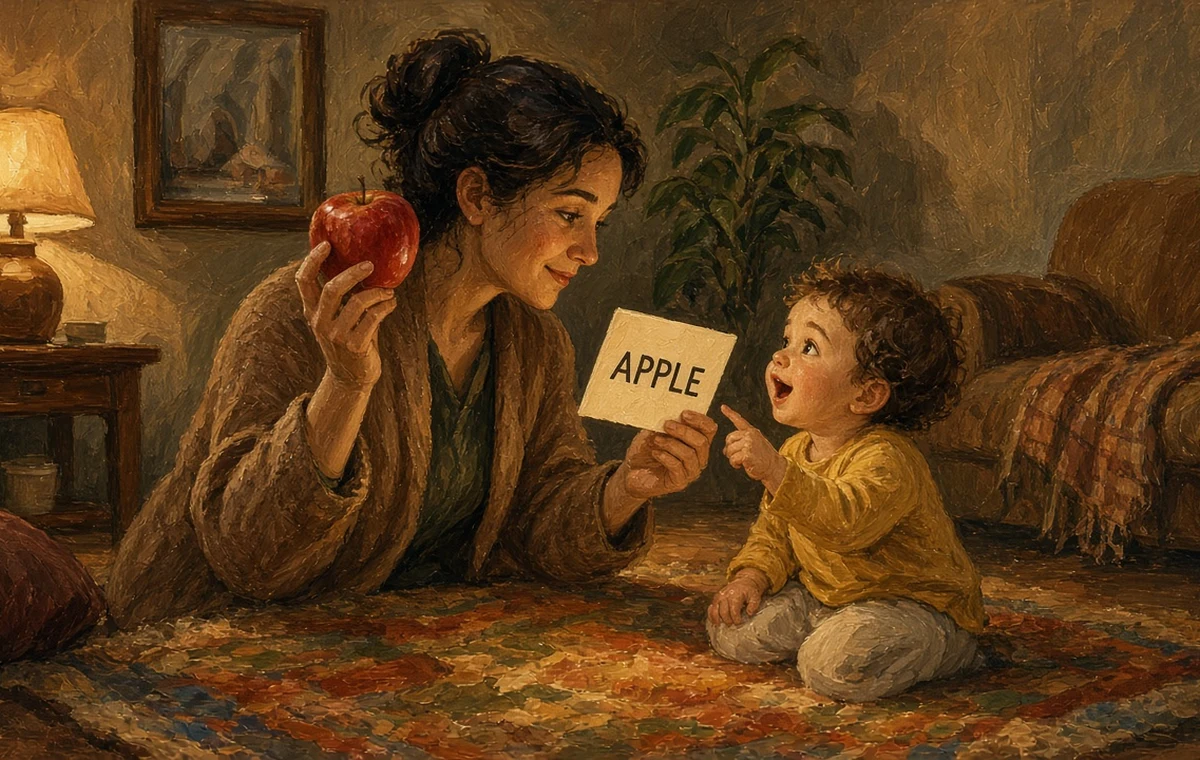
According to Lacan, every human being who learns to speak is alienated from themselves by doing so. We need language to survive in the world, but while we are learning it the Other seems to slip in through the back door. A toddler who wants something must squeeze that want into words like "apple" or "more", and something of the original want never quite fits.
- Language is not something I made; it was already there
- The meaning of my words is set within the Other's language
- So I can never be the complete master of what I say
This is not a counsel of despair. For Lacan, accepting that we are not fully in charge of our words is part of what analysis offers: the chance to hear what our own speech is telling us.
Where will you meet Lacan in the UK and US?
In English-speaking countries Lacan is more often taught in literature, film studies and critical theory than in psychology departments, where cognitive and behavioural approaches dominate. Clinical psychoanalysis in the Lacanian tradition is far more widespread in France and Argentina than in Britain or America, although small Lacanian groups exist in London, New York and other cities.
Student money tip on CampusDown Repair Up: Is a small leak worth a renters insurance claim? How to decide.
In the NHS, talking therapies are mostly cognitive behavioural, with psychodynamic therapy available in some services, so a Lacanian analyst is usually found in private practice. In psychology essays, it is wise to present Lacan as a theoretical framework rather than an empirically tested model.
| Term | Plain-English gloss |
|---|---|
| The Other (grand Autre) | Language, law and the social order that precede the individual |
| Discourse of the Other | Speech that comes through us from that order, not from conscious intention |
| Alienation | The loss involved in having to express ourselves in borrowed words |
For an essay, a clean line of argument runs from the two layers of speech, through the split between ego and Other, to the claim that the unconscious is the discourse of the Other, and ends with alienation. Listen to the words that escape you.
Compiled by the CampusDown editorial team from a Korean study note on Lacanian psychoanalysis, adapted with public information on Freud's The Psychopathology of Everyday Life, Lacan's Écrits, Saussure's structural linguistics and the place of psychoanalysis in UK and US teaching and practice. Reference: Fink, B. (1995). The Lacanian Subject: Between Language and Jouissance. Princeton University Press. Reviewed November 2026.
FAQ
What are Lacan's two layers of speech?
Intended speech, made of what the speaker meant to say, and unintended speech, where distorted or swapped words slip in.
What does 'the unconscious is the discourse of the Other' mean?
That the strange words breaking through our speech come not from the conscious ego but from the Other, the order of language we inherit.
Is the Other a person?
Not in this sense. The capitalised Other means language, law and the social order; the small other refers to people we identify with.
What is alienation through language?
Because language was given to us by the Other, learning to speak means we can never fully own or control what our words mean.
Is Lacan used in psychology courses?
Less often than in literature, film and critical theory; in psychology essays he is best presented as a theoretical framework rather than a tested model.