
Harmony (2010): A Women's Prison Choir, the Problems Women Prisoners Face and a Correctional Social Work Plan
- Harmony is a Korean film about women in prison who form a choir.
- Its characters include a mother who gives birth in prison, survivors of domestic abuse and a woman on death row.
- In a correctional social work assignment, set intervention goals according to each person's needs.
Contents
- What is the film about?
- What problems do the women carry?
- How do other countries approach women in prison?
- Needs and intervention goals by character
- What does the choir mean?
- How can life after release be supported?
- Intervention by stage of the sentence
- Don't forget the children
- How should you structure the assignment?
- FAQ
Harmony is a 2010 Korean film directed by Kang Dae-kyu and starring Kim Yun-jin and Na Moon-hee. Jeong-hye, who gave birth in prison, sets up a choir in the hope of winning more time with her baby, and women carrying very different crimes and wounds come to understand one another through singing. For students of social work, criminology and social policy, it is an unusually rich case study: almost every problem that correctional social work deals with appears somewhere in the story.
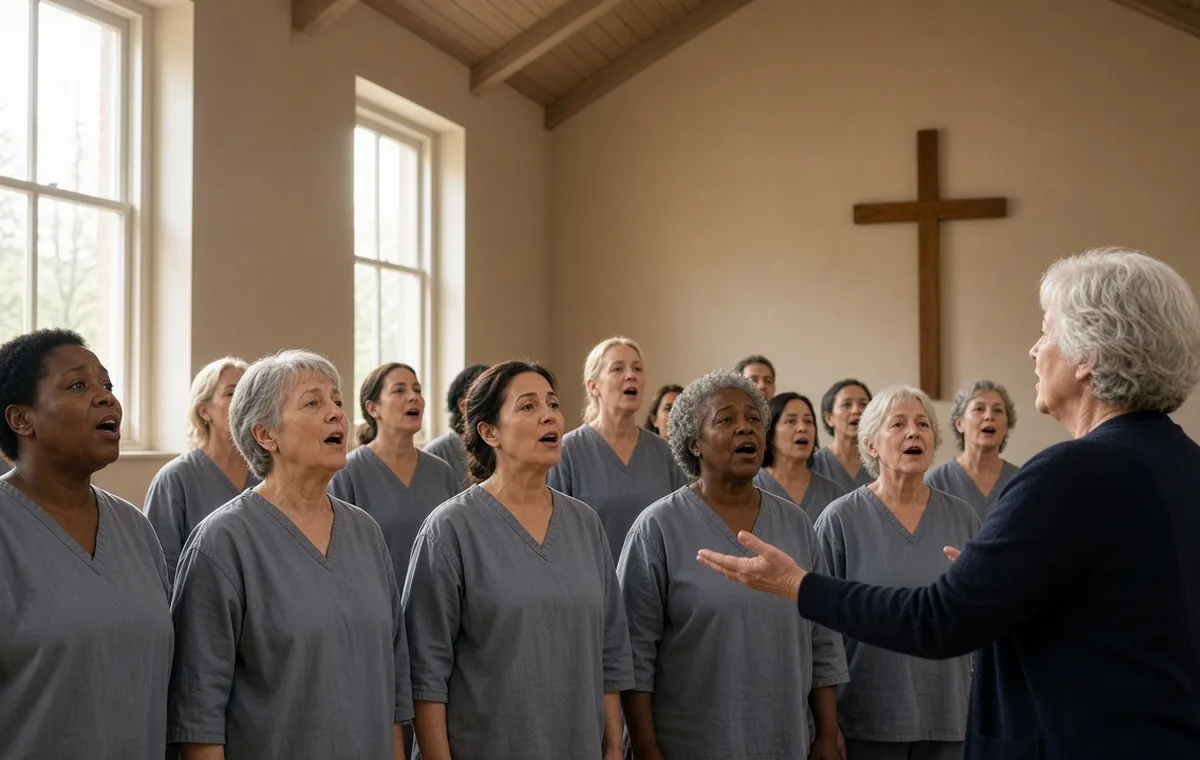
What is the film about?
Jeong-hye is in prison for killing her husband while defending herself against his violence, and she gives birth to a son there. The law sets a fixed period during which a child can stay with its mother inside the institution, and as the day of separation approaches she sees the choir's performance as a chance to win a special concession. When Mun-ok, a former music professor now on death row, takes over as conductor, the choir slowly takes shape and its members learn each other's stories.
Student money tip from CampusDown Law UpCar Warranty Claim Denied: Next Steps for a Broke Driver — Car warranty claim denied and the repair bill is huge?
The film's power lies in the way it refuses to reduce the women to their offences. Each has a history before the crime, and each carries consequences after it, not only for herself but for children, parents and partners outside the walls.

What problems do the women carry?
The characters faced complex difficulties long before their crimes: offences that grew out of years of domestic abuse, broken ties with family, worries about raising children, and the despair of a woman whose death sentence has been confirmed. These are not just individual stories. Research on women in prison in many countries finds the same pattern of high rates of prior abuse, mental health problems and responsibility for dependent children.
To see an individual's problems in relation to the many systems around her, such as family, prison and community, the framework in the Bronfenbrenner ecological systems theory entry is useful. Jeong-hye's microsystem includes her baby and her fellow prisoners; the rules on how long a child may stay in prison belong to the wider systems that shape her options without her having any say in them.
Skimming the section headings first makes a long guide much easier to map out. Try writing down one question of your own as you read.
How do other countries approach women in prison?
In England, the 2007 Corston Report, written after the deaths of six women at HMP Styal, argued that women in the justice system have distinct needs and called for a gender-specific approach. Internationally, the United Nations adopted the Bangkok Rules in 2010, the first set of standards dealing specifically with women prisoners and their children. In England, a small number of women's prisons have mother and baby units where a child can usually stay up to the age of 18 months, a limit that echoes the separation at the heart of Harmony.

Needs and intervention goals by character
| Character type | Main need | Intervention goal |
|---|---|---|
| Mother who gave birth in prison | Maintaining attachment with her child | Link to visiting and parenting programmes |
| Prisoner who survived domestic abuse | Recovery from trauma | Counselling and referral to victim support |
| Long-term or death-row prisoner | Meaning in life and repaired relationships | Family relationship support, faith and arts activities |
Intervention goals should be specific and measurable. Writing them in a form that can be checked, such as "maintain at least one family visit per month", makes a report far stronger than a vague aim like "improve family relationships".
What does the choir mean?
Choral singing is an activity that can only be completed by listening to one another, so it supports an experience of community and the recovery of self-esteem. The women in the film are wary of each other at first, but they gradually open up through rehearsal. That change can be read as one form of preparation for returning to society, something that punishment alone rarely achieves.
In an assignment, it helps to link the choir to the therapeutic factors of group work described by Irvin Yalom, such as universality (realising others share your pain), instillation of hope and interpersonal learning. Prisons in many countries run music, art, reading and meditation programmes for these reasons; in the UK, charities have long brought music projects into prisons. Comparing the film with real programmes gives your analysis a firmer footing.
How can life after release be supported?
Correctional social work covers not only treatment inside prison but the whole process of settling back into society. The first problems people face on release are somewhere to stay, a job and broken family relationships. After a long sentence, even everyday tasks such as getting a phone contract or opening a bank account can be difficult. If these are not resolved, the risk of reoffending rises, which is why support immediately after release is seen as central to preventing crime.
In Korea, the Korea Rehabilitation Agency, under the Ministry of Justice, provides accommodation, employment support and vocational training, housing support, counselling and help with family relationships. In England and Wales, probation services and resettlement charities play a similar role. Planning before release reduces the gap that so often opens up on the day someone walks out of the gate.
- Housing: a place in supported accommodation or a link to social housing
- Employment: vocational training, job placement and support for self-employment
- Family: counselling to rebuild relationships and support for prisoners' children
- Psychological: counselling and programmes to restore self-esteem
- Daily life: help with identity documents, banking and health care
These areas are connected. Stable housing makes it possible to find work, and work gives people the security to rebuild family relationships. That is why a case management approach, planning across several areas at once, is more effective than linking a single service. The steps of assessing each person's needs and connecting resources are set out in the case management in social work entry.

Intervention by stage of the sentence
| Stage | Main tasks | Examples of intervention |
|---|---|---|
| Early custody | Shock, adjustment, contact with family | Initial counselling, explaining the situation to family |
| Mid-sentence | Education, rehabilitation, keeping relationships | Vocational training, group programmes, visit support |
| Preparing for release | Resettlement plan | Housing and employment advice, referral to resettlement services |
| After release | Settling and preventing reoffending | Case management, support for family reunification |
In practice the stages overlap, and continuity matters: support planned during the sentence works best when it carries on after release.
Don't forget the children
When a parent goes to prison, a child can face a triple burden of sudden separation, financial hardship and the judgement of others. One of the most painful scenes in Harmony is the moment Jeong-hye must part from her son. After separation, who cares for the child, and how, becomes a major question; if family cannot step in, the child may go to foster care, and the risk of the bond breaking grows. Regular visits, support for the relatives caring for the child and preparation for reunification after release are therefore central tasks, and there are growing calls for support built around the rights of the child.
Social stigma is a wall of its own. Being turned down for work or shunned by neighbours because of a criminal record isolates people again. Correctional social work therefore also tries to change community attitudes, through support for employers who hire people with convictions and mentoring schemes in which volunteers support people after release.
How should you structure the assignment?
In the introduction, explain why you chose the film. In the main body, analyse the characters' circumstances and problems, then set out intervention goals and methods. In the conclusion, discuss the challenges facing correctional social work and your own view. Stressing the need for continuous support that runs from custody through to housing, work and family after release makes the plan far more realistic.
Student money tip on CampusDown Law Up: Car Warranty Claim Denied: Next Steps for a Broke Driver.
To finish, choose one character and draw up a stage-by-stage plan. For Jeong-hye, that might mean helping her keep the relationship alive through visits and letters during her sentence, arranging housing and work as release approaches, and supporting reunification with her son afterwards. The bonds the women form in the choir can also become a resource for recovery, though part of the social worker's role is to help build a healthy support network rather than one tied to offending.
Written by the CampusDown editorial team, reviewed November 2026. Sources: Harmony (2010, dir. Kang Dae-kyu); Corston J. (2007), The Corston Report; United Nations (2010), Rules for the Treatment of Women Prisoners and Non-custodial Measures for Women Offenders (the Bangkok Rules); Yalom I. D., The Theory and Practice of Group Psychotherapy.
FAQ
Who directed and starred in Harmony?
It was directed by Kang Dae-kyu and stars Kim Yun-jin and Na Moon-hee.
Why does Jeong-hye start the choir?
She hopes to win more time with the son she gave birth to in prison.
What are the key points for correctional social work intervention?
Maintaining the mother–child attachment, recovery from trauma, rebuilding family relationships and continuous support after release.
Which theory helps analyse the characters' situations?
Bronfenbrenner's ecological systems theory, which looks at a person in relation to family, institution and community.