
Bleak Night (2011) Film Analysis: Gi-tae's Death, Teenage Friendship, and a Family's Problems and Strengths
- Bleak Night is an independent film in which a father tries to trace the reasons behind his son's death.
- It shows in fine detail how misunderstanding and hierarchy between friends turn into violence.
- In family welfare assignments, the key is to identify the family's strengths as well as its problems.
Contents
- What is Bleak Night about?
- Why did the friendship fall apart?
- Why friendships matter so much in adolescence
- What problems does Gi-tae's family have?
- Does the family have strengths too?
- What does the title mean?
- Where can teenagers get help when friendships fall apart?
- What do schools do when violence occurs?
- How to plan interventions stage by stage
- FAQ
Bleak Night is Yoon Sung-hyun's first feature film, with Lee Je-hoon, Seo Jun-young and Park Jung-min playing three high school friends. After Gi-tae dies, his father goes looking for his son's friends to ask what happened. The film's sharp portrait of adolescent relationships and broken communication is why it turns up so often in family welfare and youth welfare courses. Its Korean title, Pasookkun, means 'the watchman' or 'the guardian', and that word holds the key to reading it.

What is Bleak Night about?
Gi-tae, Dong-yoon and Hee-joon were the closest of friends, but small misunderstandings and clumsy ways of expressing themselves pile up until the relationship collapses. Gi-tae wants to protect his friends, yet he tries to hold the group together through violence and coercion. The film cuts between past and present, revealing piece by piece a side of his son that the father never knew. The audience assembles the truth alongside him, and like him never quite gets all of it.
Student money tip from CampusDown Law UpMy Buddy Asked Me to Cosign His Car Loan and I Froze — A friend or girlfriend asked you to cosign a car loan?
The film began as a graduation feature at the Korean Academy of Film Arts and won the New Currents Award at the Busan International Film Festival in 2010 before its release in 2011. Lee Je-hoon's performance as Gi-tae earned him several best new actor awards and launched his career.

Why did the friendship fall apart?
Gi-tae plays the leader within the group, yet he cannot put his real feelings into words. Hee-joon chooses to transfer schools to escape being hurt, and Dong-yoon drifts away from Gi-tae amid misunderstandings. Nobody in the film is simply a villain; each boy misreads the others and responds in the only way he knows.
The hierarchy and bullying structure among peers can be organised using the bully, victim and bystander roles described in Olweus's theory of bullying. Dan Olweus, whose research in Norway shaped modern anti-bullying programmes, defined bullying as repeated negative actions within a relationship marked by an imbalance of power. That definition fits Gi-tae's group closely: the violence is not a one-off fight but a pattern that grows out of who holds power and who does not.
It is also worth noting that bullying is not only physical. Ostracism, ignoring someone and using the relationship itself as a means of control are forms of relational aggression, a concept developed by Nicki Crick and Jennifer Grotpeter in the 1990s. Pointing out that this quieter harm also counts as school violence will deepen your analysis.
Skimming the section headings first makes a long guide much easier to map out. Try writing down one question of your own as you read.
Why friendships matter so much in adolescence
Peer relationships are a central stage on which teenagers build their identity. Erik Erikson described the core task of adolescence as identity versus role confusion, and in this period being accepted by friends becomes a major yardstick for one's own worth. A conflict that looks trivial to adults can feel to a teenager like the ground giving way. Gi-tae sits at the centre of the group but does not know how to express what he really feels, so he controls and hurts his friends instead. It is a relationship pattern that teachers and school social workers will recognise from real schools.
What problems does Gi-tae's family have?
| Area | Problem shown |
|---|---|
| Family structure | The mother is absent; Gi-tae lives alone with his father |
| Communication | Almost no conversation; feelings go unexpressed |
| Attention and supervision | The father knows almost nothing about his son's school life |
| Emotional support | There is no adult Gi-tae can confide his loneliness to |
When you list problems, focus on the patterns of interaction within the family rather than on whose fault things are. That turns the piece from a text that blames the family into an analysis that looks for the possibility of change.
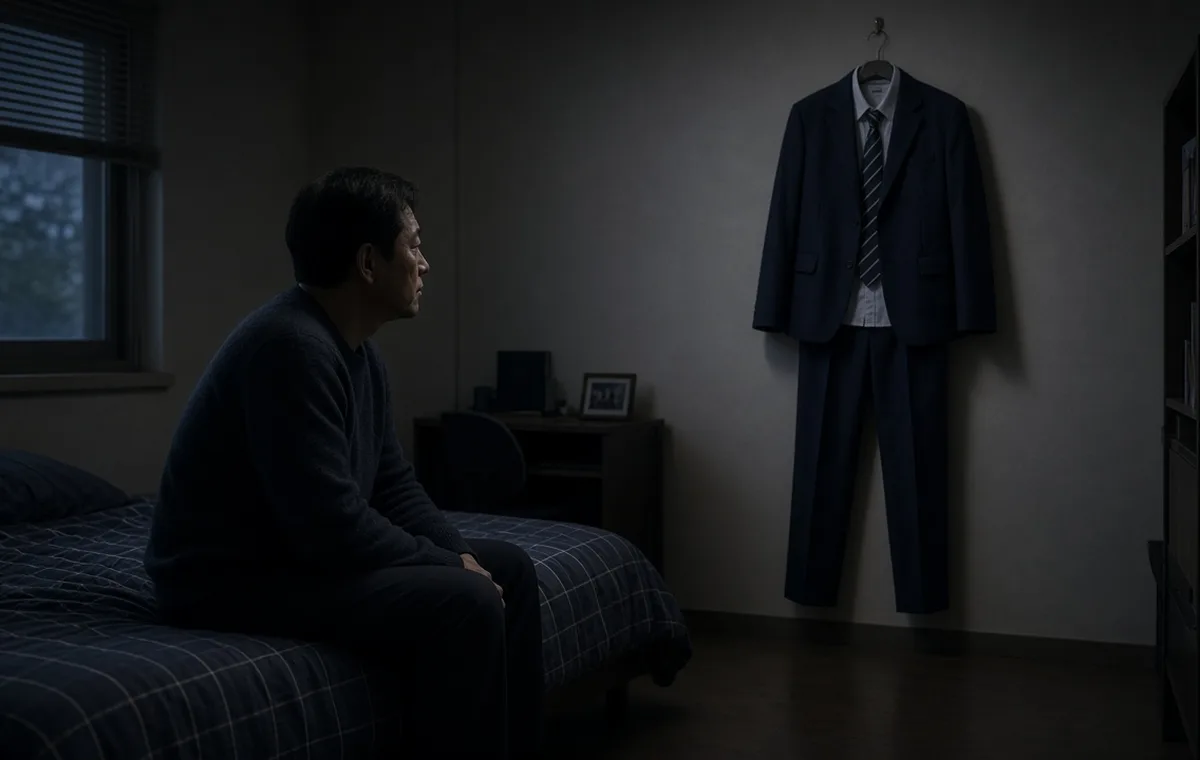
Does the family have strengths too?
Even belatedly, the father wants to understand his son's heart and goes looking for his friends. That effort shows the family still has motivation and resources for change. Gi-tae, too, cares about his friends and wants to keep the relationship alive; his methods are destructive, but the wish behind them is not. Finding such resources even within problems, and using them as the starting point for intervention, is a basic principle of social work practice. The strengths perspective sets out this way of seeing.
What does the title mean?
A watchman is someone who keeps others safe. The irony that runs through the whole film is that Gi-tae wanted to be his friends' guardian, yet there was no one to guard him. Interpreting the title in a response essay gives your writing a clear theme. The ending, in which the father is left without the whole truth, can also be read as a device that asks how early conversation within a family needs to begin.
Where can teenagers get help when friendships fall apart?
Watching the film leaves a lingering question: what if someone had stepped in? The same applies to real adolescent peer problems, so in social work and counselling assignments it is worth going on to describe what interventions might have been possible. In the United States, students can turn to school counsellors, school social workers and school psychologists, and anyone in crisis can call or text 988, the Suicide and Crisis Lifeline. Asking for help is not easy, though. Many boys see sharing their worries as a sign of weakness, so, like the characters in the film, they hide their feelings until the conflict grows. That is why the message that asking for help takes courage matters as much as listing where to find it.
Conflict in digital spaces needs attention as well. Leaving one friend out of a group chat, or spreading photos and posts to mock someone, is cyberbullying that can follow a student home and continue around the clock, leaving them nowhere to rest. In such cases, guide the student to keep screenshots as evidence and to ask for help.
What do schools do when violence occurs?
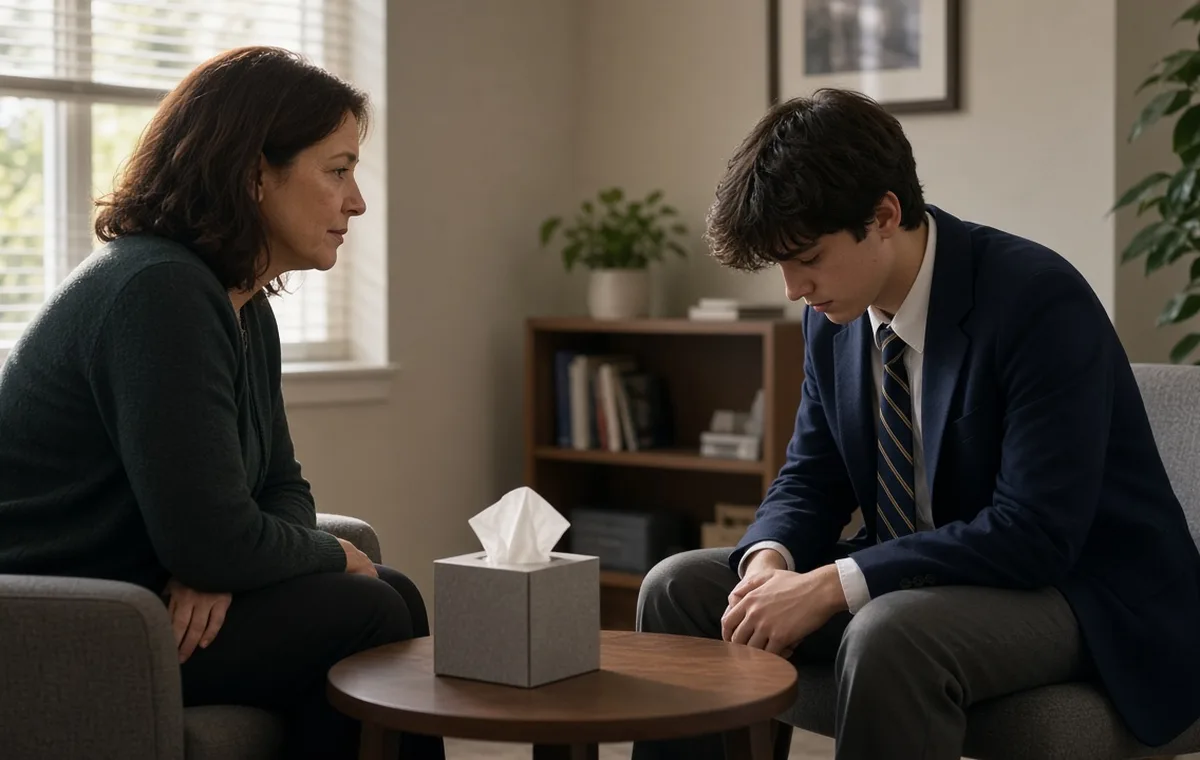
Most school systems now have formal procedures: investigating a report, protecting the student who was harmed, and deciding on measures for the student who did the harm, from a written apology to special education sessions or a school transfer. In the United States, every state has an anti-bullying law, and districts set their own reporting and investigation rules. Procedures alone do not repair relationships, however. Alongside discipline, restorative approaches are increasingly emphasised: putting the safety and wishes of the harmed student first while helping those involved understand each other's experience and settle what happened between them. Trained counselling staff need to lead this work.
Parents' role cannot be left out. The father in the film only begins to learn about his son's friendships after his death, a scene that shows how little father and son talked. In family intervention, the core is not surveillance but more everyday conversation, and practising listening without judgement when a child talks about something hard.
How to plan interventions stage by stage
| Stage | What it looks like | Example interventions |
|---|---|---|
| Early conflict | Misunderstandings and hurt feelings build up | Practising expressing feelings, peer counselling |
| Escalation | Exclusion, ignoring, control | Homeroom teacher and counsellor step in, check class relationships |
| Violence | Physical and verbal violence | School violence procedures, protecting the harmed student |
| Aftermath | Loss and broken relationships | Individual counselling, restorative programmes, family counselling |
Student money tip on CampusDown Law Up: My Buddy Asked Me to Cosign His Car Loan and I Froze.
In an assignment, pick one scene from the film and propose specifically what intervention was possible at that moment. For example, write about how things might have changed if peer counselling or a homeroom teacher's attention had been there when the first misunderstanding arose between the friends. Linking interventions to specific points in time makes the preventive perspective clear. Suggest measures that tie family and school together, such as communication training for the parent, a connection with the school social worker and a peer relationship recovery programme, and be sure to mention a system for spotting warning signs early.
Remember that the family background is an interpretation based on what the film shows. In a real case analysis, base your judgements on interviews with the people involved and on agency records. Above all, the question the film leaves is: who could have been their watchman? Friends, teachers, parents and counsellors can all share that role, and ending your essay on that point gives it a strong close.
CampusDown Editorial Team, reviewed November 2026. Sources: Bleak Night (2011), dir. Yoon Sung-hyun; Olweus, D., Bullying at School: What We Know and What We Can Do; Erikson, E. H., Identity: Youth and Crisis; Crick and Grotpeter (1995), Child Development.
FAQ
Who directed Bleak Night and who stars in it?
Yoon Sung-hyun directed it, with Lee Je-hoon, Seo Jun-young and Park Jung-min as the three friends.
What is the film's central theme?
Misunderstanding and broken communication in teenage relationships, and how they escalate into violence.
What strengths does the family have?
The father's belated effort to understand his son can become a resource for change.