
From the Checkout to the Picket Line: Women's Precarious Work and the Family in the Film Cart
- Cart follows women on non-regular contracts at a hypermarket as they fight unfair dismissal.
- Job insecurity ripples through a family's finances, care arrangements and relationships with children.
- A strong assignment links family-level hardship with the policies and services that can ease it.
Contents
- What is the story?
- Why are so many women in insecure work?
- How does it affect the family?
- What kind of family welfare support applies?
- What rights do non-regular workers have?
- How is emotional labour protected?
- Why does the cart become a symbol of solidarity?
- Building an intervention plan
- How should you conclude?
- FAQ
Cart is a 2014 South Korean film directed by Boo Ji-young, starring Yum Jung-ah, Moon Jeong-hee and Doh Kyung-soo. It tells the story of women on non-regular contracts at a large hypermarket who suddenly receive notice of dismissal and decide to fight back, and it was inspired by a real strike by hypermarket workers in 2007. On family welfare and social policy courses it is often set as a case for analysing how a working mother's job insecurity becomes a crisis for the whole family.
What is the story?
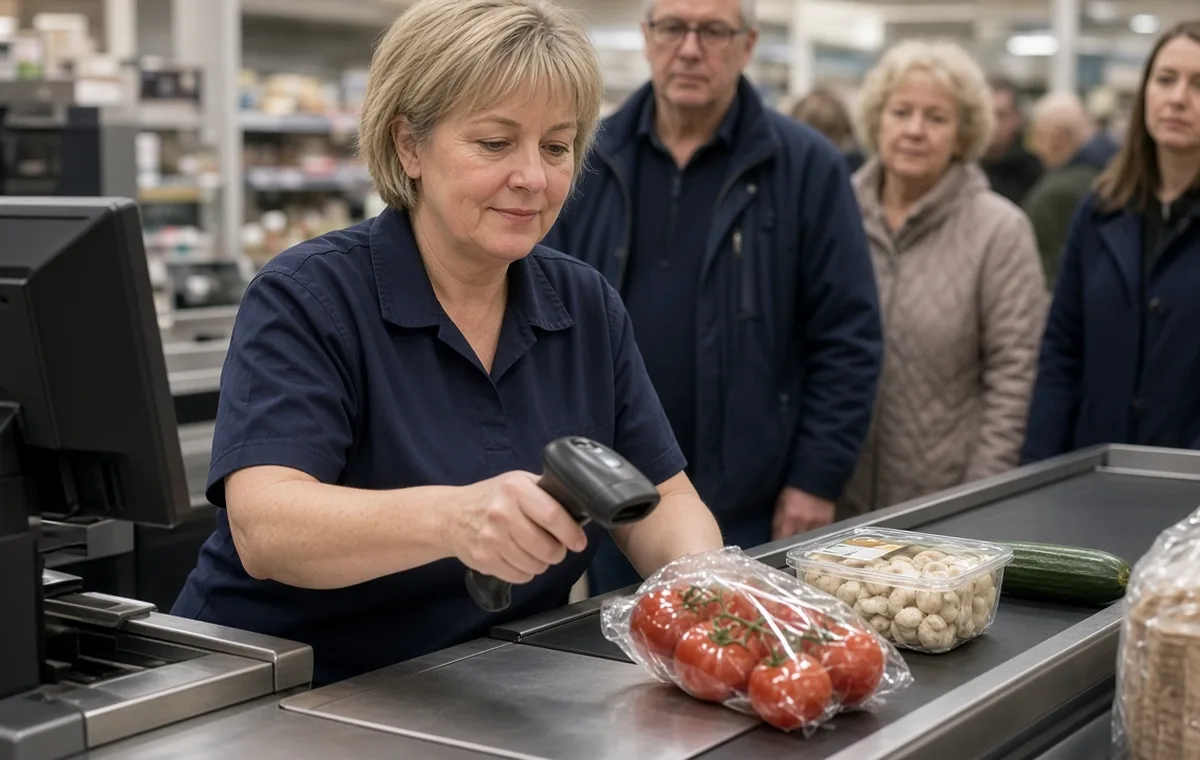
The heroine, Sun-hee, works hard on the tills and hopes to be moved onto a permanent contract. Instead the company announces, without consultation, that the cashiers' jobs will be outsourced and their contracts ended. As she and her colleagues form a union and resist, the family's finances become harder and her relationship with her teenage son, Tae-young, grows strained. Rather than a grand hero, the film shows ordinary mothers, a teenage boy and co-workers going about their daily lives, and in doing so it makes plain that a labour dispute is also a family matter.
Related on CampusDown Law UpDelivery App Deactivated My Account: A Student Driver's Game Plan — Got deactivated from a delivery or rideshare app mid-semester?
The background matters. In July 2007 South Korea's law protecting fixed-term and part-time workers came into force, providing that a fixed-term worker employed for more than two years should in principle be treated as having an open-ended contract. In the run-up, some employers ended contracts or outsourced roles to avoid that obligation, and the strike that inspired Cart grew out of exactly that situation. The UK has a similar principle: under the Fixed-term Employees Regulations 2002, someone kept on successive fixed-term contracts for four years or more is normally treated as permanent.

Why are so many women in insecure work?
Women whose careers are interrupted by childbirth and childcare often return to the labour market through temporary or part-time jobs. The concentration of particular groups in jobs with low pay and little security can be explained with dual labour market theory, developed by Peter Doeringer and Michael Piore in 1971. In a divided market, the primary sector offers stable, well-paid jobs with promotion ladders, while the secondary sector offers low pay, insecurity and few routes upward.
In that structure, working hard does not easily carry someone into a better job, which explains why the women in the film cling so tightly to the hope of a permanent contract.
British students will recognise a parallel in the long equal pay dispute brought by mainly female shop-floor staff at a large supermarket chain, who argued that their work was of equal value to that of mainly male warehouse staff. In 2021 the UK Supreme Court ruled that the two groups could be compared, a reminder that how retail work is valued is a gender question as well as a pay question.
Skimming the section headings first makes a long guide much easier to map out. Try writing down one question of your own as you read.
How does it affect the family?
| Area | Difficulties that appear |
|---|---|
| Finances | Loss of income; pressure on living costs and children's education |
| Care | Gaps in childcare during long periods of protest |
| Relationships | Conflict between parent and child; role strain between partners |
| Wellbeing | Anxiety and depression; a sense of social stigma |
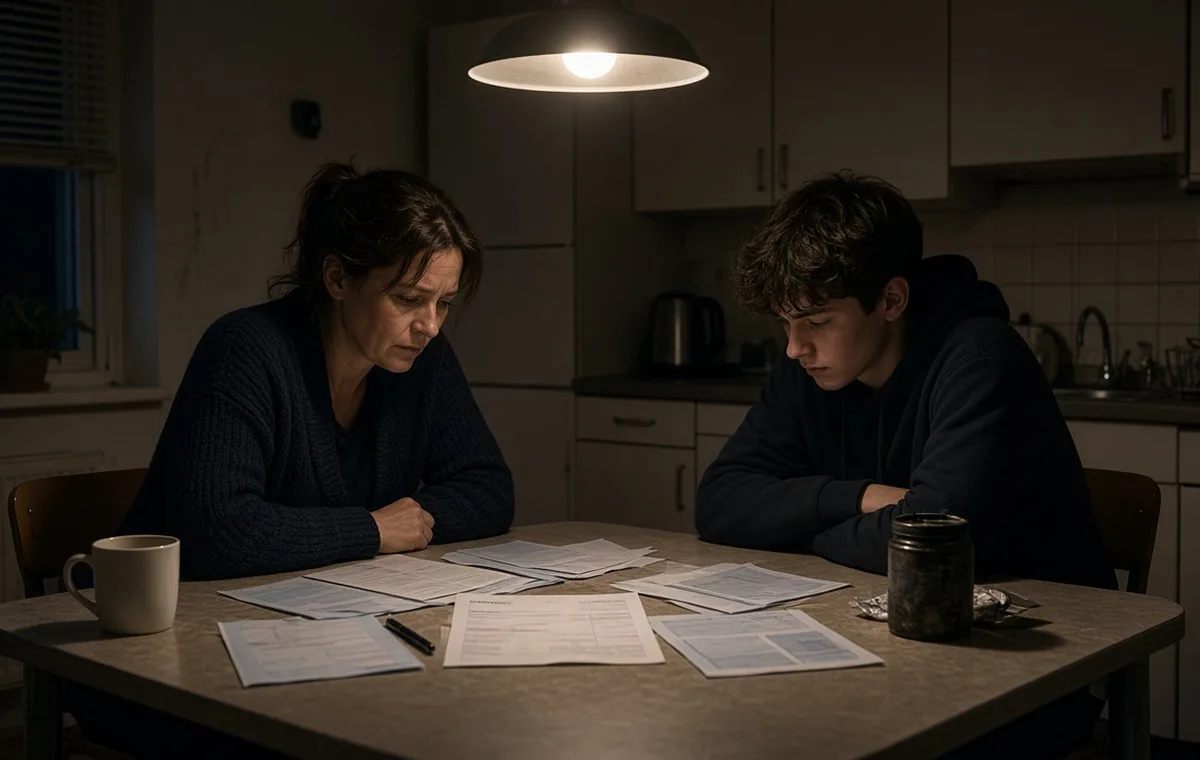
The scene in which Tae-young is cheated of his wages at a part-time job shows how the insecure work of one generation can carry over into the next. It is a strong piece of evidence if your assignment analyses intergenerational effects, and it also opens a discussion of how young workers learn, or fail to learn, what their rights are.
What kind of family welfare support applies?
| Support | Examples |
|---|---|
| Income security | Unemployment benefit, emergency welfare payments (in the UK, Universal Credit and local welfare assistance) |
| Childcare | Childcare services, after-school and community children's centres |
| Counselling | Family counselling and education at family support centres |
| Employment policy | Protection for non-regular workers; support for women returning to work |
Eligibility rules for each scheme change, so describe them accurately for the year you are writing about and name the government department responsible.
What rights do non-regular workers have?
The film leaves the viewer asking what rights people on insecure contracts actually have, and answering that question makes the intervention part of an assignment far more concrete. Alongside the protection against indefinite fixed-term use described above, the same Korean law prohibits treating a non-regular worker less favourably than a regular worker doing the same job without a reasonable justification; pay, bonuses and benefits are all covered, and a worker can apply to the Labour Relations Commission for correction within a time limit. UK law contains equivalent protections for fixed-term and part-time workers, and claims normally begin with ACAS early conciliation before an employment tribunal.
- Get a written contract or statement showing the length of employment, pay and hours.
- Receive at least the minimum wage and any statutory pay and holiday you are owed.
- Do not accept being treated worse than a permanent colleague doing the same job without good reason.
- Report unpaid wages or unfair treatment to the relevant authority.
- Check what protection exists against abuse from customers and whether you can step away from the task.
The written contract is the starting point for every other right, because it is the evidence when a dispute arises. That applies just as much to students with part-time jobs as to the women in the film.
How is emotional labour protected?
Many scenes show the cashiers smiling through unreasonable demands and abuse from customers. Work that requires people to suppress their own feelings and display the emotions an employer wants is called emotional labour, a concept set out systematically by the sociologist Arlie Hochschild in The Managed Heart (1983). It is common wherever staff deal directly with the public: checkout operators, call centre agents and cabin crew.
In South Korea an amendment to the Occupational Safety and Health Act that took effect in October 2018 introduced protections for customer-facing workers. Employers must take steps to prevent abuse from customers, and where abuse harms or threatens a worker's health they must allow a break from the task or move them to other duties. The principle that workers deserve protection even in a culture where "the customer is king" is now written into law.
Why does the cart become a symbol of solidarity?
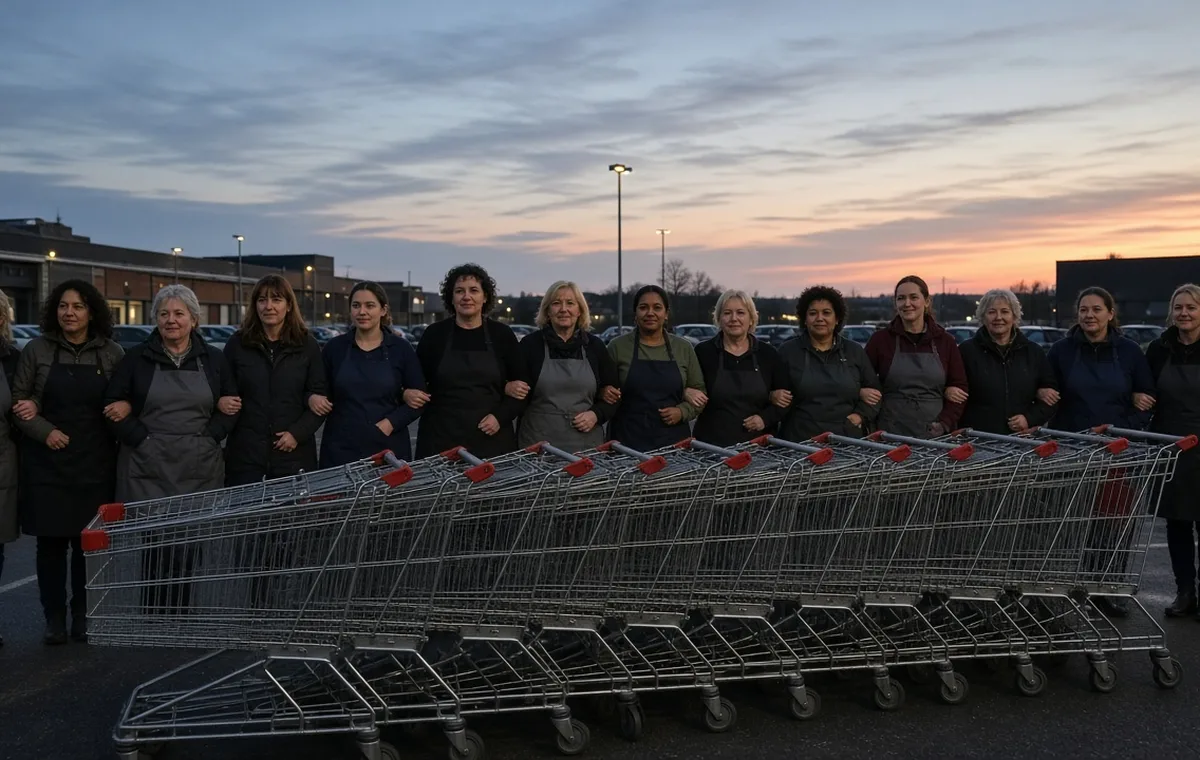
The cart of the title is the everyday object of supermarket work. Workers who spend their days collecting the trolleys customers have pushed around later line those same trolleys up in front of them to defend their voice. A row of carts, each weak alone but hard to shift together, looks like solidarity made visible.
The image matters from a family welfare perspective too. Most of the main characters are mothers who carry the household budget, and losing a job means a crisis for the family's livelihood and for raising the children. Because the film shows insecure work as a family problem rather than only an individual one, an assignment should also cover support at the level of the family.
Building an intervention plan
To finish the assignment, choose one character and draft a plan. For a lone mother facing dismissal, you could set out stages: connecting her with employment advice and legal remedies, applying for emergency financial help, arranging childcare, and linking her with a mutual support group of people in the same position. Showing the order in which help would arrive, and who would provide it, turns a list of services into a plan.
How should you conclude?
Emphasise that labour policy and family policy should be designed together rather than separately; that is the core of a family welfare perspective. Although the film is over a decade old, insecure work and emotional labour remain current, and newer forms such as platform and gig work are growing, so connecting the film with today's labour market keeps the analysis topical. Finally, ask what Sun-hee and her colleagues were trying to protect to the end, and how that resembles your own family's life. Talking about the film with friends or relatives and adding a line about what came up is a good way to show that the same scene reads differently across generations and experiences.
Related on CampusDown Law Up: Delivery App Deactivated My Account: A Student Driver's Game Plan.
CampusDown's family welfare and social policy notes cover the theories in this guide if you want to go further.
Written by the CampusDown editorial team, reviewed November 2026. Sources: Cart (2014), dir. Boo Ji-young; Doeringer P. & Piore M. (1971), Internal Labor Markets and Manpower Analysis; Hochschild A. R. (1983), The Managed Heart; Fixed-term Employees (Prevention of Less Favourable Treatment) Regulations 2002.
FAQ
Who directed Cart and when was it released?
Boo Ji-young directed it, and it was released in South Korea in 2014.
What real event inspired the film?
The 2007 strike by non-regular workers at a Korean hypermarket chain, which lasted for well over a year.
Which theory fits the film best?
Dual labour market theory, which explains why some groups are concentrated in low-paid, insecure jobs with little route upward.
Who coined the term emotional labour?
The sociologist Arlie Hochschild, in The Managed Heart (1983).