
Why Is Cancer Immunotherapy Called the Third Generation of Cancer Drugs? Immune Checkpoints, PD-1, CTLA-4 and Side Effects Explained
- Cancer drugs are taught in three generations: cytotoxic chemotherapy, targeted therapy and immunotherapy.
- Checkpoint inhibitors block brakes such as PD-1 and CTLA-4 so T cells can attack cancer again.
- Only some patients respond, and a released immune system can cause side effects in healthy organs.
Contents
Immunotherapy drugs are called the third generation of cancer medicines because, instead of poisoning dividing cells (first generation) or hitting one gene target on the tumour (second generation), they release the brakes on the patient's own immune system so it can attack cancer again. Your immune cells find and destroy abnormal cells every day, so why do some cancers survive? Part of the answer is immune escape, and checkpoint inhibitors were designed to reverse it. This guide, adapted from a Korean pharmacology study note, explains how cancer starts, how the three generations differ, how innate and adaptive immunity fight tumours, how checkpoints work, who benefits and what side effects to expect, and how older immune treatments paved the way.
How does cancer start?
The causes of cancer are not fully understood, but three starting points are widely accepted: changes (mutations) in genes that control cell growth, environmental and lifestyle factors such as tobacco smoke, radiation and some infections, and an immune system that fails to recognise abnormal cells. Study notes often group these into external factors, such as chemicals and viruses, and internal factors, such as inherited mutations, hormones and immune weakness.
Student money tip from CampusDown Law UpSurprise out-of-network ER bill? How to check and challenge it — the No Surprises rules, itemized bills, insurance appeals and where to complain.
Cancer is one of the leading causes of death worldwide. In the United States it has for many years been the second most common cause of death after heart disease, and in the UK it accounts for around one in four deaths, so better treatment remains one of the biggest goals in medicine. The exact rankings change from year to year, so check the latest official statistics before quoting them.
Treatment has traditionally rested on three pillars: surgery, radiotherapy and drug therapy. For cancers that cannot be removed by surgery, results from non surgical treatment were for a long time disappointing, which is the background to the search for new kinds of medicine.
Seeing cancer as partly an immune problem, and not only a genetic one, is the key idea that makes the rest of this topic easy to follow.

How have cancer drugs changed over three generations?
| Generation | How it works | Main limits |
|---|---|---|
| 1st: cytotoxic chemotherapy | Attacks rapidly dividing cells | Damages healthy fast dividing cells such as hair follicles and gut lining, resistance |
| 2nd: targeted therapy | Blocks a specific gene change or protein in the cancer | Works only when the target is present, resistance can develop |
| 3rd: immunotherapy | Activates the patient's own immune system | Only some patients respond, immune related side effects |
Advances in genetic techniques made targeted drugs possible, and the next step was to use the immune system itself as the weapon. Note that the word generation is a teaching device rather than a ranking: chemotherapy and targeted drugs are still widely used, and many modern regimens combine an immunotherapy drug with chemotherapy or a targeted drug.
In the United States, the first checkpoint inhibitor, ipilimumab, was approved in 2011 for advanced melanoma, and the first PD-1 blockers followed in 2014. In the UK, new cancer medicines are appraised by NICE for use on the NHS, and some are first made available through the Cancer Drugs Fund while more evidence is collected.
Skimming the section headings first makes a long guide much easier to map out. Try writing down one question of your own as you read.
How does the immune system fight cancer?
The immune system has two broad arms. Innate immunity, which we are born with, includes cells such as natural killer cells and macrophages; it reacts fast but is not very specific. Adaptive immunity, which develops through experience, relies on T cells and B cells; it takes longer to start but can recognise a particular cancer antigen precisely and remember it.
| Feature | Innate | Adaptive |
|---|---|---|
| Speed | Minutes to hours | Days |
| Specificity | Low | High |
| Memory | Little or none | Yes |
| Key cells | NK cells, macrophages | T cells, B cells |
Cancer cells can slip through this surveillance by hiding their antigens, creating a suppressive environment around the tumour, or switching on the immune system's own brakes. The last trick is what checkpoint inhibitors target.
What are immune checkpoints and why do they matter?
Checkpoint proteins sit on immune cells and act like brakes that stop an immune response from going too far and harming healthy tissue. The best known are CTLA-4 and PD-1, along with PD-L1, the partner molecule that binds to PD-1. Some cancer cells display PD-L1 to press the brake on T cells that would otherwise kill them.
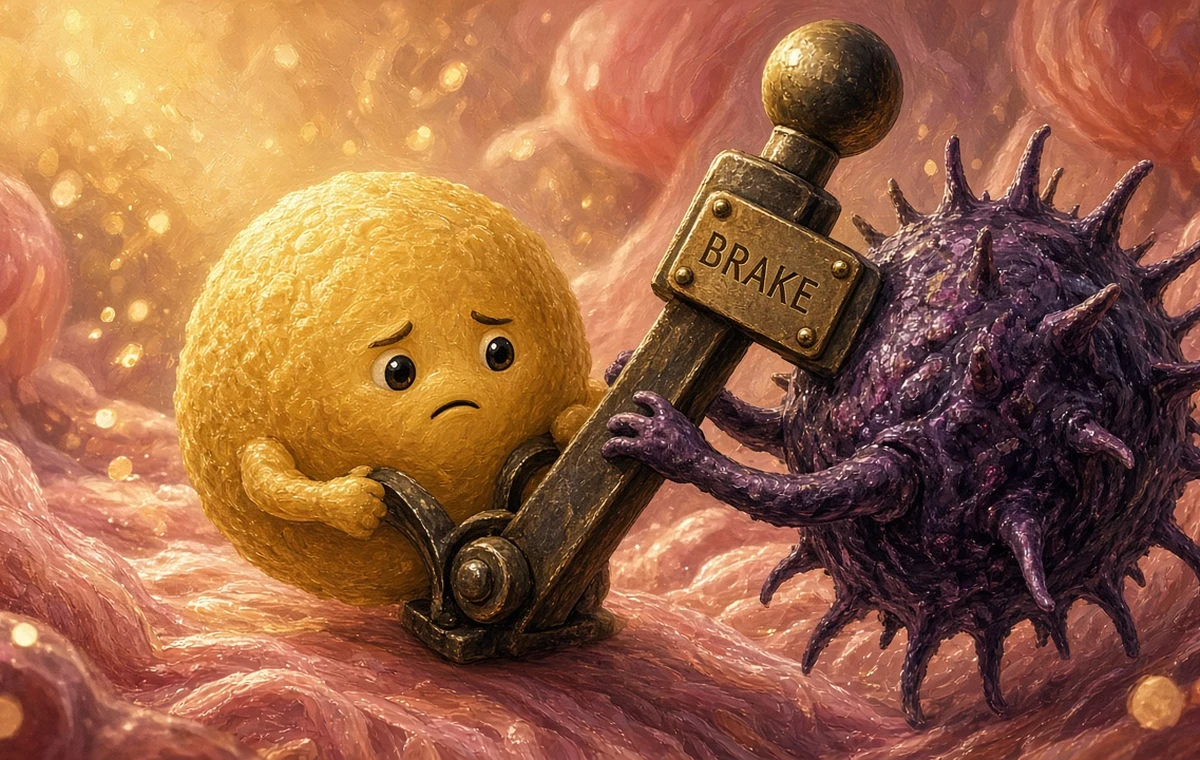
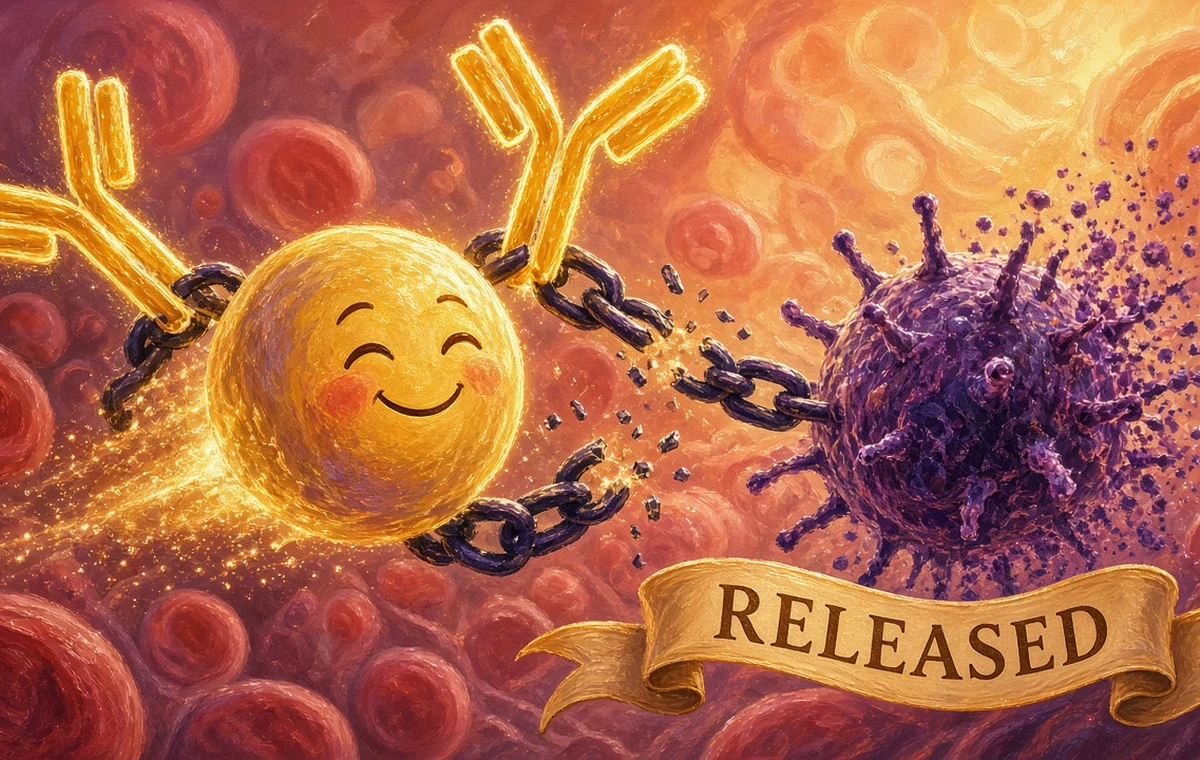
Checkpoint inhibitors are antibodies that block this brake signal, freeing T cells to attack the tumour again. The 2018 Nobel Prize in Physiology or Medicine went to James Allison, for his work on CTLA-4, and Tasuku Honjo, for his work on PD-1, for this discovery.
Because the drug acts on the immune system rather than directly on the tumour, responses can take weeks to appear, and in some patients who respond the benefit can last a long time.
Who benefits and what are the side effects?
Only a portion of patients respond, and researchers are still working on how to predict who will. Markers used in practice include the level of PD-L1 on tumour cells and certain DNA repair defects in the tumour (MSI-high or mismatch repair deficient tumours), which tend to respond better.
| Organ | Possible problem | Warning signs |
|---|---|---|
| Skin | Rash, itching | New rash or blistering |
| Gut | Colitis | Diarrhoea, abdominal pain, blood in stool |
| Lungs | Pneumonitis | New cough, shortness of breath |
| Hormone glands | Thyroid or pituitary inflammation | Unusual tiredness, weight change |
| Liver | Hepatitis | Yellow skin or eyes, dark urine |
These side effects happen because a released immune system can also attack healthy organs. Most are manageable when caught early, often with steroids, so patients are told to report new symptoms promptly, even weeks or months after a dose. In the US and UK, treatment is usually given in hospital cancer centres, and cost and coverage depend on insurance in the US and on NICE approval in England.
For an assignment, a short table of side effects by organ shows that you understand why immunotherapy is not simply a gentler chemotherapy.
What came before modern immunotherapy?
- Cytokine therapy: interferon alpha was one of the first cytokines used, for some leukaemias, malignant melanoma and Kaposi sarcoma, and interleukin 2 was used for kidney cancer and melanoma
- Cancer vaccines: training the immune system against cancer antigens; in 2010 the US approved sipuleucel-T for prostate cancer
- Adoptive cell therapy: collecting and boosting a patient's immune cells, as in CAR-T cell therapy, first approved in the US in 2017 for some blood cancers
Student money tip on CampusDown Law Up: Surprise out-of-network ER bill? How to check and challenge it.
Cytokine therapy adds an immune signal from outside, while checkpoint inhibitors remove a brake inside the body, which is a useful contrast when explaining the generations. CAR-T cells can trigger a strong inflammatory reaction called cytokine release syndrome, so these treatments are given in specialist centres.
Many newer approaches combine these ideas, for example pairing a checkpoint inhibitor with a cancer vaccine or with chemotherapy, and clinical trials continue to test which combinations help which patients. When you write about this area, check the date of your sources, because approvals and recommended uses change quickly as new trial results are published.
Reference: Pardoll, D. M. (2012). The blockade of immune checkpoints in cancer immunotherapy. Nature Reviews Cancer, 12(4), 252–264. Understanding the immune brake shows where cancer treatment is heading.
FAQ
Does immunotherapy work for every cancer patient?
No. Only a portion of patients respond, and research on markers that predict response, such as PD-L1 levels, is ongoing.
What is the main difference from targeted therapy?
Targeted drugs aim directly at a specific gene change in the cancer, while immunotherapy activates the patient's immune system to attack the cancer.
Who won the Nobel Prize for checkpoint inhibitors?
James Allison and Tasuku Honjo shared the 2018 Nobel Prize in Physiology or Medicine for discoveries on CTLA-4 and PD-1.
Is immunotherapy gentler than chemotherapy?
It has a different side effect profile rather than simply fewer side effects; it can inflame organs such as the gut, lungs, liver and thyroid.
What should an assignment on this topic cover?
The differences between the three generations, how checkpoints work, and the strengths and weaknesses of innate and adaptive immunity.