
Why Does Adolescent Mental Health Matter? Risk and Protective Factors, Warning Signs and Where to Get Help
- Many mental health conditions first appear in adolescence, so early detection shapes lifelong health.
- Building protective factors such as trusted relationships and self-efficacy matters as much as reducing risks.
- When warning signs appear, use school support and professional services together instead of coping alone.
Contents
- Why does mental health in adolescence matter so much?
- What are the main mental health problems teenagers face?
- What are risk factors and protective factors?
- What warning signs should adults notice?
- How should adults respond and talk about it?
- Where can young people and families get help in the US and UK?
- FAQ
Adolescent mental health matters because many mental health conditions first appear in the teenage years, and spotting them early, strengthening protective factors and knowing where to get help can change the course of a young person's life. A teenager who used to laugh easily suddenly goes quiet and keeps the bedroom door shut. Is that just being a teenager, or a sign that help is needed? Mood swings are normal at this age, but depression, anxiety and self-harm can hide behind them. This guide, adapted from a Korean nursing and counselling study note, covers why this period matters, the main problems, risk and protective factors, warning signs, how adults can respond and where to get help in the US and UK.
Why does mental health in adolescence matter so much?
A large US survey, the National Comorbidity Survey Replication, found that about half of all lifetime cases of mental disorders start by around age 14. The World Health Organization estimates that roughly one in seven young people aged 10 to 19 worldwide lives with a mental disorder. Emotional changes in these years are linked with identity formation and shifting friendships, as theories of adolescent development explain.
Related on CampusDown Law UpAsking for Disability Accommodations in College for the First Time — ADHD, anxiety, a chronic condition, or an injury?
Adolescence is also a period of major brain development. Brain systems linked with emotion and reward respond strongly in the teenage years, while the frontal areas that support planning and self-control keep maturing into the mid-twenties. This mix helps explain why teenagers can feel emotions so intensely, why peer approval matters so much and why sleep, routines and supportive adults make such a difference.
Difficulties left without support can lead to dropping out of school, problems with relationships and mental illness in adulthood. That is why adolescent mental health is treated as a public health issue and not only as a private family matter.

What are the main mental health problems teenagers face?
- Depression: often shows as irritability, low energy and changes in sleep and appetite
- Anxiety: excessive worry and physical symptoms around exams or social situations
- Self-harm and suicidal thoughts
- Problematic gaming or internet use and substance use
- Aggression, conduct problems and difficulty concentrating
In teenagers, depression often looks like anger or defiance rather than sadness, so it is easily dismissed as ordinary teenage attitude. Eating disorders, which can be serious and are often hidden, are also worth knowing about, especially when weight, food or exercise become a constant focus.
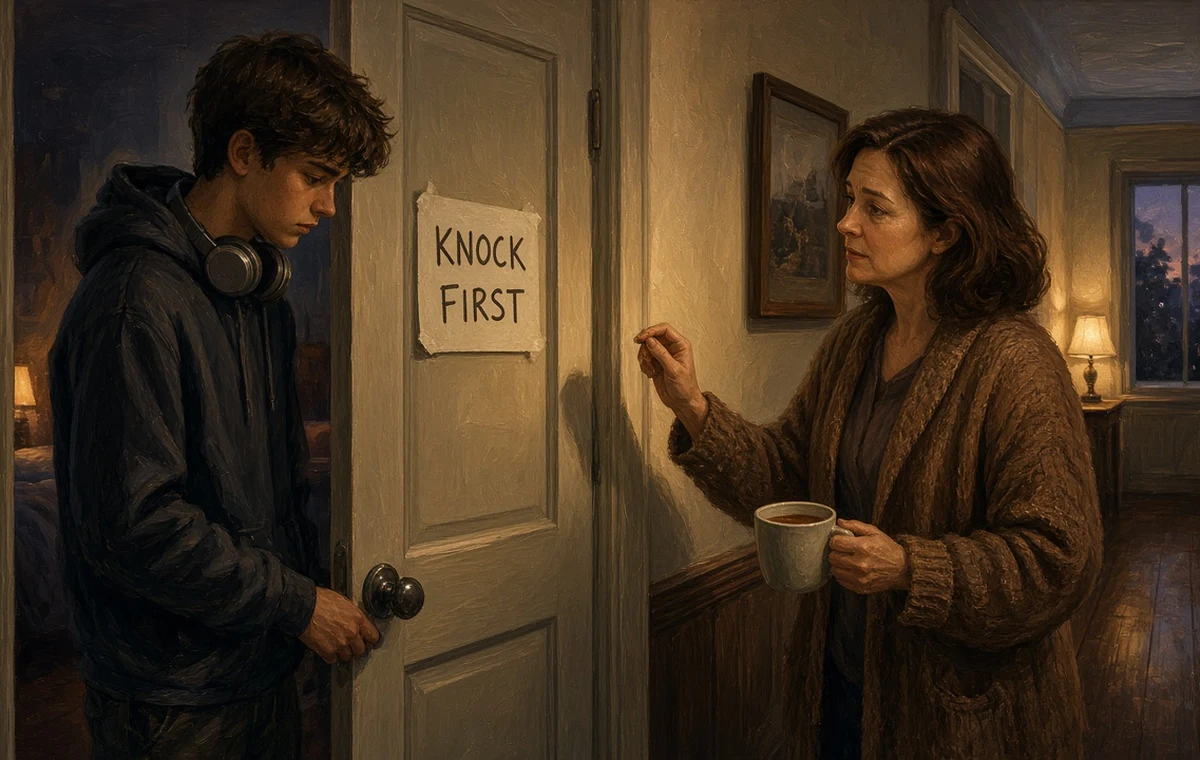
Problems often come together, so instead of judging one behaviour on its own, it is better to look at how a young person's whole daily life has changed over the past few weeks.
Skimming the section headings first makes a long guide much easier to map out. Try writing down one question of your own as you read.
What are risk factors and protective factors?
| Level | Risk factors | Protective factors |
|---|---|---|
| Individual | Low self-esteem, impulsivity, long-term illness | Self-efficacy, problem-solving skills, emotion regulation |
| Family | Conflict, abuse or neglect, parental mental illness | Warm communication, consistent parenting |
| School and peers | Bullying, including online, exclusion, academic pressure | Trusted teachers and friends, a sense of belonging |
| Community and society | Poverty, discrimination, exposure to harmful environments | Community services, sport and leisure activities |
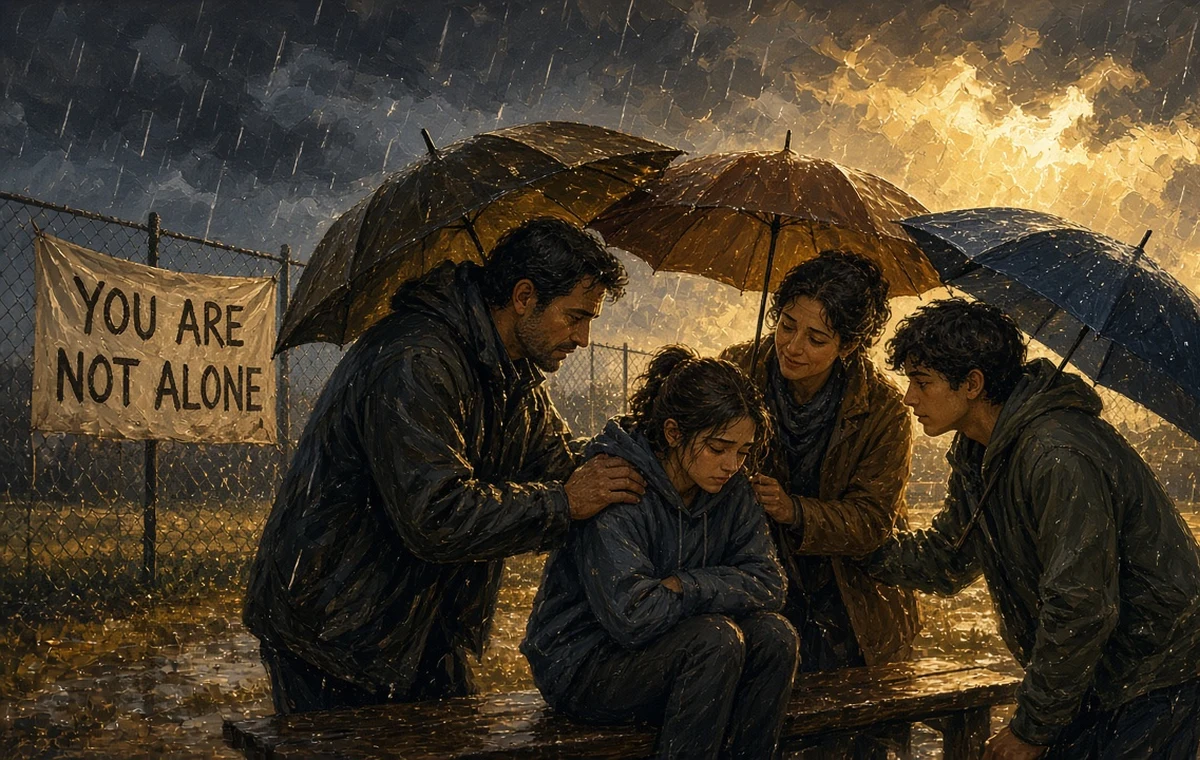
Young people with more protective factors recover faster from the same stress. Prevention programmes therefore try to build at least one trusted adult and a community where the young person feels they belong, as well as reducing risks. Erikson described adolescence as the stage of identity versus role confusion, and his psychosocial development theory helps explain why belonging and recognition matter so much now.
In the US, a 2023 advisory from the Surgeon General raised concerns about social media and youth mental health, and online life is now part of the risk and protective picture. In an assignment, pairing risks and protections at each level makes the link between causes and interventions easy to see.
What warning signs should adults notice?
Watch for big changes in sleep or eating, losing interest in activities the young person used to enjoy, a sudden drop in grades, pulling away from friends, talking about death or wanting to disappear, and giving away possessions or saying goodbye in unusual ways. Signs of self-harm, such as unexplained cuts or always wearing long sleeves in warm weather, also need a calm response.
| Usually part of normal adolescence | Worth taking seriously |
|---|---|
| Moodiness that passes within days | Low mood or irritability most days for two weeks or more |
| Wanting more privacy | Withdrawing from all friends and family |
| Changing interests | Losing interest in almost everything |
| Occasional late nights | Severe sleep changes with exhaustion |
| Arguing about rules | Talk of death, hopelessness or being a burden |
When symptoms last for two weeks or more and affect school, friendships or family life, a professional assessment is a good next step. Trust your sense that something has changed, even if the young person says everything is fine.
A short written record of what you have noticed, with dates, can make the first conversation with a doctor or counsellor much easier and more focused.
How should adults respond and talk about it?
Asking directly about suicide does not plant the idea or raise the risk. Research suggests it gives young people a chance to talk. Listen without blaming, avoid lectures, and thank them for telling you. Then make a plan together for getting help.
| Step | What to do | Example words |
|---|---|---|
| Notice | Describe what you have seen without judging | You have seemed really tired and quiet lately |
| Ask | Ask openly, including about suicide if you are worried | Sometimes when people feel this low they think about not being alive. Have you had thoughts like that? |
| Listen | Let them talk and do not rush to fix things | Thank you for telling me. That sounds really hard |
| Connect | Agree on the next step and go with them | Shall we talk to your GP or school counsellor together? |
| Keep safe | Reduce access to things that could be used for self-harm and stay close | I am going to stay with you tonight |
School nurses, counsellors and teachers can help adults approach the conversation if they feel unsure. Confidentiality matters to teenagers, but safety comes first when there is a risk of harm.
Where can young people and families get help in the US and UK?
In the US, school counselors and psychologists, family doctors and paediatricians are common first contacts. The 988 Suicide and Crisis Lifeline can be reached by call or text at 988. In the UK, the GP, school nurse and school counsellor can refer to children and young people's mental health services, often called CAMHS, and many schools now have mental health support teams. Samaritans can be called free on 116 123 and Childline on 0800 1111.
Also on CampusDown Law Up: Asking for Disability Accommodations in College for the First Time.
| Need | US | UK |
|---|---|---|
| Someone to talk to now | 988 by call or text | Samaritans 116 123, Childline 0800 1111 |
| School-based support | School counselor or psychologist | School nurse, counsellor, mental health support team |
| Assessment and treatment | Family doctor or paediatrician, then specialist care | GP referral to CAMHS |
| Immediate danger | 911 | 999 |
In an emergency, do not wait for an appointment: call 911 or 999 and keep the young person safe first, then continue with treatment and counselling. Services and waiting times vary by area, so check local options early.
Reference: Kessler, R. C., Berglund, P., Demler, O., Jin, R., Merikangas, K. R., and Walters, E. E. (2005). Lifetime prevalence and age-of-onset distributions of DSM-IV disorders in the National Comorbidity Survey Replication. Archives of General Psychiatry, 62(6), 593 to 602. The strength that protects a young mind often comes from an adult who stays and listens.
FAQ
How can I tell normal teenage moodiness from depression?
If low mood or irritability lasts two weeks or more and affects school or relationships, it is worth getting a professional assessment.
Will asking about suicide put the idea in their head?
No. There is no evidence that asking directly raises the risk, and it gives the young person a chance to talk.
What is the most important thing a parent can do?
Make regular time to listen without judging, and go with them to get professional help when it is needed.
Which number can a young person call or text in the US?
The 988 Suicide and Crisis Lifeline, by call or text at 988. In an emergency call 911.
Where can young people in the UK get help?
From a GP, school nurse or counsellor, Childline on 0800 1111 or Samaritans on 116 123, and 999 in an emergency.