
What Does a Community Mental Health Centre Do? Community Support Systems and Tertiary Prevention
- Tertiary prevention helps people with mental illness avoid relapse and return to everyday life.
- A community support system links treatment, housing, work, crisis help and family support.
- Community mental health centres are the local hubs that make that network work.
Contents
A community mental health centre is a local, mostly free or low-cost service that helps people with mental illness stay well, avoid relapse and rebuild everyday life outside hospital. When someone leaves a psychiatric ward, the hardest part often begins at home: taking medication without a nurse nearby, finding work, keeping friendships and knowing who to call at 2 a.m. This guide, adapted from a Korean community mental health nursing note, explains tertiary prevention, the community support system described by Beth Stroul, what centres actually do in the US and UK, the gaps that remain and the role of the community mental health nurse.
What is tertiary prevention in mental health?
Public health sorts prevention by timing. Primary prevention stops an illness from starting, secondary prevention finds it early, and tertiary prevention works with people who already live with a condition, so that symptoms do not worsen, relapse is less likely and the person can take part in work, study and family life again.
Related on CampusDown Law UpAsking for Disability Accommodations in College for the First Time — ADHD, anxiety, a chronic condition, or an injury?
| Level | Goal | Examples |
|---|---|---|
| Primary | Prevent onset | Mental health education, stress management, anti-bullying programmes |
| Secondary | Early detection and treatment | Screening, early counselling, early intervention in psychosis teams |
| Tertiary | Reduce relapse and disability, support social return | Rehabilitation, case management, supported housing and employment |
Tertiary prevention became more important as psychiatric care moved out of large institutions, a shift described in the wiki entry on deinstitutionalization. Once fewer people lived in long-stay hospitals, communities needed services that could do in the neighbourhood what the ward used to do behind closed doors.
In practice the three levels overlap. A single community centre may run school workshops in the morning, screen new referrals at lunchtime and visit long-term clients in the afternoon, so the labels describe the timing of help rather than separate buildings.

What makes up a community support system?
In 1989 Beth Stroul, writing in the Psychosocial Rehabilitation Journal, set out a framework for supporting adults with long-term mental illness in the community. It built on the US National Institute of Mental Health Community Support Program, launched in 1977. Her central point was that treatment alone is not enough; people need a connected set of services.
- Finding people who need help and reaching out to them
- Mental health treatment and medication support
- Crisis response services
- Housing and training in daily living skills
- Vocational rehabilitation and education
- Income support and links to welfare benefits
- Family and community support, including peer self-help groups
- Case management to coordinate everything around the person
The glue is case management: one worker who knows the person, plans with them and makes sure the different services actually connect. A community support system is therefore not one building but a web of health, welfare, housing and employment resources in a local area.
Think of it as a safety net with many knots. If one knot, such as housing, is missing, the person can fall through even when the clinic is excellent, which is why the framework puts the person, not the service, at the centre.
Skimming the section headings first makes a long guide much easier to map out. Try writing down one question of your own as you read.
What does a community mental health centre do?
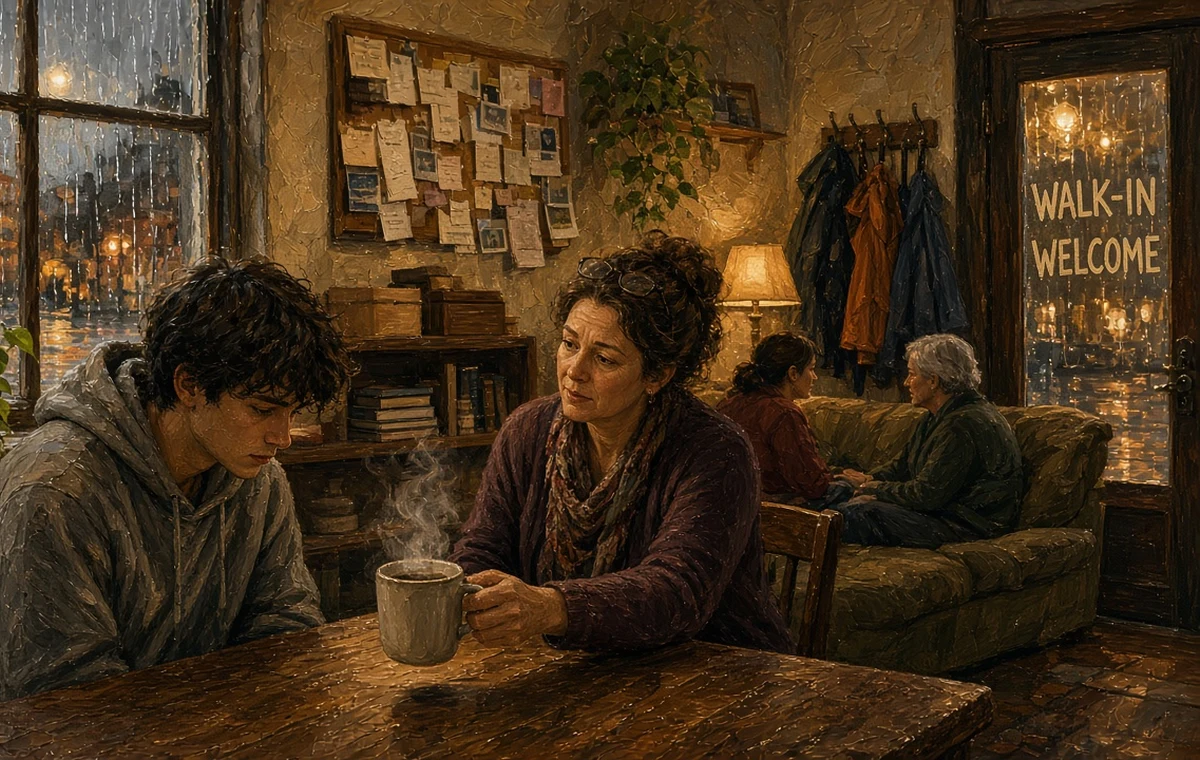
In Korea, the Mental Health Welfare Act that took effect in 2017 renamed the former mental health centres as mental health welfare centres and strengthened welfare support, with regional centres that plan and coordinate and local centres that provide case management and rehabilitation. English-speaking countries organise the same functions in their own ways.
United States
The Community Mental Health Act of 1963, signed by President Kennedy, funded community mental health centers as large state hospitals shrank. Funding later fell short of the vision, and many people ended up homeless or in jail rather than in community care. Today, Certified Community Behavioral Health Clinics (CCBHCs) must offer a defined set of services, including 24-hour crisis care, regardless of ability to pay, and Medicaid is the largest payer for public mental health services. Since July 2022, anyone can call or text 988 to reach the Suicide and Crisis Lifeline.
United Kingdom
In England, Community Mental Health Teams (CMHTs) bring together psychiatrists, community psychiatric nurses, social workers, psychologists and occupational therapists. The NHS Community Mental Health Framework (2019) aims to wrap care around primary care networks instead of passing people between teams. Adults can refer themselves to NHS Talking Therapies for anxiety and depression, and since 2024 people in England in a mental health crisis can call NHS 111 and choose the mental health option. Samaritans answer on 116 123, free, day and night.
| Service | United States | United Kingdom |
|---|---|---|
| Case management | CCBHC or county mental health agency | CMHT care coordinator |
| Crisis help | 988, mobile crisis teams | NHS 111 mental health option, crisis teams |
| Talking therapy | Community clinics, often sliding-scale fees | NHS Talking Therapies, self-referral |
| Rehabilitation | Clubhouses, supported employment | Rehabilitation teams, Individual Placement and Support |
Because centres are local and cheap or free, they also act as a front door for people who are not ready to see a psychiatrist.
How do the two ideas differ, and what gets in the way?
| Aspect | Community support system | Community mental health centre |
|---|---|---|
| Nature | A concept: a network of services | A real organisation with staff and a budget |
| Scope | Health, welfare, housing and employment | Counselling, case management and rehabilitation |
| Relationship | The overall goal | The hub that makes the network work locally |
The gaps are similar across countries. Case managers often carry high caseloads, housing and jobs sit outside the centre's control, and stigma keeps people from using services or being accepted at work and in their neighbourhood. In the US, long waits and patchy insurance coverage add to this; in the UK, waiting lists for community teams are a recurring concern.
Opening more centres helps, but the net only holds if hospitals, councils, landlords, employers and neighbours actually work together, and if local people see someone with a mental illness first as a neighbour.
What does a community mental health nurse do?

Community mental health nurses assess people, draw up care plans with them, check how medication is going, watch for side effects and teach both the person and their family to recognise early warning signs of relapse, such as poor sleep, withdrawal or suspicious thinking. In a crisis they act quickly and link the person to hospitals, crisis teams and welfare support.
- Assessment and shared care planning
- Medication support and physical health checks
- Relapse prevention plans written with the person
- Family education and support
- Linking to housing, benefits and work programmes
Above all, a recovery-oriented nurse treats the person as a neighbour with goals of their own, not just a patient with a diagnosis. Hope, choice and a sense of control are part of the treatment.
What other services complete the safety net?
A centre cannot do everything alone. Five neighbouring services fill gaps that a daytime office cannot.
Also on CampusDown Law Up: Asking for Disability Accommodations in College for the First Time.

| Service | What it does |
|---|---|
| Day hospital | Intensive treatment by day, home at night; bridges inpatient and outpatient care |
| Suicide bereavement support | Counselling and peer groups for people who have lost someone to suicide |
| Mental health crisis response | Phone lines, mobile teams and crisis cafes for nights and weekends |
| Psychiatric rehabilitation | Daily living skills, supported employment, group homes and clubhouses |
| Family psychoeducation | Teaches families about the illness, warning signs and calm communication |
Research on family psychoeducation has linked it with fewer relapses, which is why many guidelines recommend offering it. Seen together, these services show why mental health care in the community has to work like a web, with the centre in the middle doing the connecting.
If you or someone close to you is struggling, a local centre, a GP or a crisis line is a good first step. In an emergency where life is at risk, call 911 in the US or 999 in the UK.
FAQ
Who can use a community mental health centre?
Most centres serve local residents; services and eligibility rules vary by area and country.
Does it cost money?
Many services are free or low cost, often funded by public programmes or sliding-scale fees.
Where can I get help in a crisis?
In the US call or text 988; in England call NHS 111 and choose the mental health option, or Samaritans on 116 123.
What is tertiary prevention?
Care that reduces relapse and disability in people who already have a condition and helps them return to social life.
What is a community support system?
Stroul's 1989 framework of linked services, from treatment and housing to work and peer support, coordinated by case management.