
From Local Health Centres to the WHO: Who Protects Public Health? Korean Health Administration and International Health Organisations
- A health system links central ministries, specialist agencies and local health centres.
- Korea's KDCA, the US CDC and the UK Health Security Agency lead on infectious disease threats.
- WHO, UNICEF, the Red Cross and Red Crescent and ICN coordinate health across borders.
Contents
- Why do countries build health systems?
- Which central agencies run health policy in Korea?
- Which health organisations do people meet locally in Korea?
- What do international health organisations do?
- How do the US and UK organise public health?
- How does Korea take part in global health, and where can nurses fit in?
- FAQ
When an infectious disease starts in another country and spreads all the way to your neighbourhood, who is responsible for stopping it? A person's health is protected not by a single hospital but by a chain of organisations that runs from the local public health centre to international bodies. This guide, based on a Korean nursing course on health administration, explains how Korea's national and local health agencies divide the work, what the major international health organisations do, and how the same jobs are handled in the United States and the United Kingdom.
Why do countries build health systems?
Every country has health resources, such as hospitals, staff, medicines and money, and it manages them through an administrative structure. To guarantee the right to health and raise the overall health of the population, governments create laws and institutions and run them as one whole. This is called a health system.
Student money tip from CampusDown Law UpSomeone Already Filed Taxes With My SSN: What a Student Should Do — Tried to e-file and got rejected because someone used your SSN?
Whether people actually use the services on offer depends on more than their existence. The Andersen behavioral model of health services use explains use through predisposing factors such as age and beliefs, enabling factors such as income, insurance and distance, and the level of need. Public health administration largely works on the enabling side, putting services where people can reach them.
The many organisations in a health system each take on part of the work, yet they only function efficiently when they share information and cooperate. That is why nurses and other health workers benefit from understanding where their own workplace sits inside the wider system, and whom it depends on when something goes wrong.

Which central agencies run health policy in Korea?
| Body | Main role |
|---|---|
| Ministry of Health and Welfare | Overall health and welfare policy, including hygiene, disease control and social security |
| Korea Disease Control and Prevention Agency (KDCA) | Infectious disease response and research, chronic and rare disease management, blocking imported infections |
| Ministry of Employment and Labor, with the occupational safety and workers' compensation agencies | Protecting the health of workers and workplaces |
| Ministry of Education (student health division) | School health |
| Environment ministry | Environmental protection and pollution control |
The KDCA was upgraded in 2020 from the former Korea Centers for Disease Control and Prevention, giving it the independent status of an agency during the COVID-19 pandemic. One update to the source: the environment ministry was reorganised in 2025 into a larger ministry that also covers climate and energy, so its name now differs from older textbooks. Because health work is spread across labour, education and environment ministries as well as the health ministry, cooperation between them often decides whether a policy succeeds.
Skimming the section headings first makes a long guide much easier to map out. Try writing down one question of your own as you read.
Which health organisations do people meet locally in Korea?

- Public health centres (bogeonso): run by each city, county and district for vaccination, health promotion and infectious disease control.
- Public health branch offices: provide services at the town and township level.
- Community health posts: in areas with few medical facilities, a public official dedicated to community health care, usually with a nursing background, provides primary care.
Local health organisations are the window through which residents meet public health most directly. At community health posts in particular, nurses act as the centre of local health, handling first-line treatment and long-term health management for rural residents who may live far from any hospital.
What do international health organisations do?
| Organisation | Main activities |
|---|---|
| World Health Organization (WHO) | International health regulations, infectious disease control, international standards for medicines and food, diagnostic criteria |
| International Red Cross and Red Crescent Movement | Relief in disasters and armed conflicts, guided by seven fundamental principles |
| UNICEF | Children's immunisation, nutrition, safe water and education |
| International Council of Nurses (ICN) | A federation of national nurses' associations that advances nursing practice and policy |
The source lists the Red Cross principles as fairness, neutrality and service. The Movement actually has seven fundamental principles: humanity, impartiality, neutrality, independence, voluntary service, unity and universality. In Muslim-majority countries the same Movement works under the Red Crescent emblem.
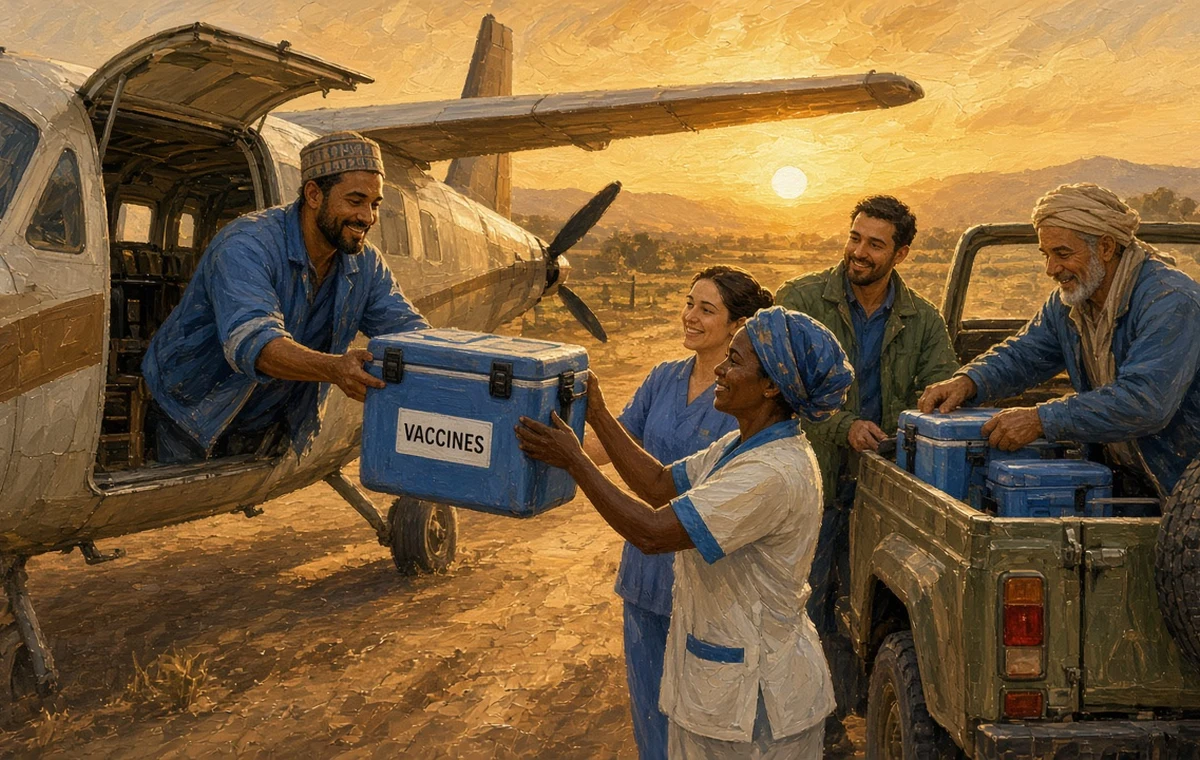
Diseases such as COVID-19 cross borders faster than any one country can respond, so countries share outbreak information through international bodies and coordinate the supply of vaccines and treatments. Since the pandemic, WHO member states have amended the International Health Regulations in 2024 and adopted a Pandemic Agreement in 2025 to improve preparedness. At the same time, the United States withdrew from WHO in 2026, a reminder that global health cooperation depends on political will as much as on science.
WHO was founded in 1948 as a specialised agency of the United Nations, and its constitution famously defines health as complete physical, mental and social well-being rather than merely the absence of disease. That broad definition is the reason international health work reaches into water, nutrition and education, not only hospitals.
How do the US and UK organise public health?
United States
In the United States, the Department of Health and Human Services oversees federal agencies including the Centers for Disease Control and Prevention, the Food and Drug Administration and the National Institutes of Health. Much of day-to-day public health, however, belongs to the states, which run their own health departments, and to county and city health departments that handle vaccination clinics, disease investigation, restaurant inspections and maternal and child health. This layered structure resembles Korea's split between national ministries and local public health centres, but American states have far more independent legal power.
United Kingdom
In the UK, the Department of Health and Social Care sets policy for England and the NHS delivers most care, while health is a devolved matter in Scotland, Wales and Northern Ireland. The UK Health Security Agency, created in 2021 to replace Public Health England's health protection functions, leads on infectious disease threats, much like the KDCA. Since 2013, local authorities in England have been responsible for public health services such as sexual health clinics and stop-smoking support, led by a director of public health in each area.
| Function | Korea | United States | United Kingdom (England) |
|---|---|---|---|
| Overall health policy | Ministry of Health and Welfare | Department of Health and Human Services | Department of Health and Social Care |
| Infectious disease agency | KDCA | CDC | UK Health Security Agency |
| Local public health | Public health centres, branch offices, health posts | State, county and city health departments | Local authorities and their directors of public health |
| International development | KOICA | Federal agencies and private foundations | Foreign, Commonwealth and Development Office |
Comparing the three shows that every country needs the same basic layers: a ministry that sets direction, a specialist agency for disease threats and a local tier that actually meets residents. What differs is how much power each layer holds, which matters a great deal when an outbreak demands quick decisions across all of them.
How does Korea take part in global health, and where can nurses fit in?
Korea supports developing countries through the Korea International Cooperation Agency (KOICA) in fields such as education, health care, public administration, information technology, the environment and climate change. In health, it prioritises prevention-focused projects such as maternal and child health. Korea itself was once a recipient of international health aid, so its shift to donor status is often cited as a development success story.
Student money tip on CampusDown Law Up: Someone Already Filed Taxes With My SSN: What a Student Should Do.
Nurses can broaden their careers through ICN activities, overseas medical volunteering and international cooperation projects, as well as positions with WHO, UNICEF and international NGOs. Anyone interested in global health should build language skills and experience in community health together, because local practice is the foundation of international work.
- Health systems turn resources into services through a structure of cooperating bodies.
- Korea's KDCA, the US CDC and the UK Health Security Agency play similar roles.
- Local public health centres are the residents' front door.
- The Red Cross and Red Crescent follow seven principles, not three.
- Global cooperation now includes updated health regulations and a pandemic agreement.
FAQ
What is the difference between a public health centre and a community health post?
A public health centre serves a whole city, county or district; a health post is a small facility providing primary care in underserved areas.
When was WHO founded?
In 1948, as a specialised agency of the United Nations.
How many fundamental principles does the Red Cross have?
Seven: humanity, impartiality, neutrality, independence, voluntary service, unity and universality.
What does the UK Health Security Agency do?
Created in 2021, it leads the UK response to infectious disease and other health threats, similar to Korea's KDCA.
Can nurses work for international organisations?
Yes. Nurses work with WHO, UNICEF, international NGOs and development projects, often after gaining community health experience.