
Stuck at a Screen All Day? VDT Syndrome, Neck Pain and Why Dance Exercise Helps
- VDT syndrome covers eye, neck, shoulder, wrist and mood symptoms linked to long hours of screen work.
- Musculoskeletal symptoms often improve when habits change, so short frequent movement breaks matter.
- Dance-based exercise combines stretching, rhythm and enjoyment, which helps people keep moving.
Contents
- What is VDT syndrome?
- Who is most likely to get the aches?
- Why does exercise therapy help?
- What makes dance different from ordinary stretching?
- Should you look after your eyes, fascia and wrists too?
- What do UK and US rules say about screen work?
- Why move your whole body in a bigger space?
- How do the symptoms break down by body part?
- Which everyday habits prevent problems?
- FAQ
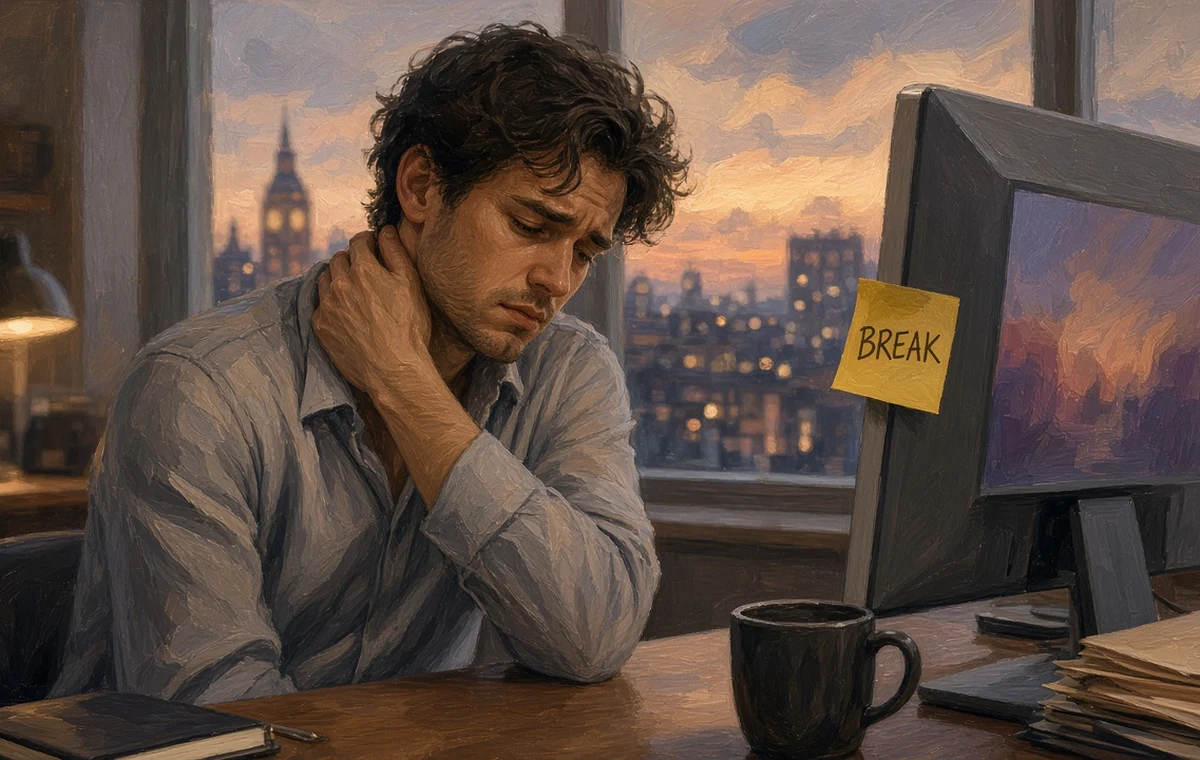
VDT syndrome, also called computer vision syndrome or digital eye strain when the eyes are the main complaint, is the cluster of eye, neck, shoulder, wrist and even mood symptoms linked to long hours of screen work. Office automation and smartphones have made it almost universal, from finance teams to teenagers scrolling in bed. This guide explains what is going on in the body, why exercise helps, and why dance-based movement is attracting interest as a way to undo a day hunched over a keyboard. It is general information, not a substitute for seeing a clinician about persistent pain.
What is VDT syndrome?
VDT stands for visual display terminal, the old term for any screen you work at. The Korean source groups the symptoms into four families, and most screen workers will recognise at least one.
Student money tip from CampusDown Life UpHow to make a simple monthly budget with the free CFPB worksheet — take-home pay, bills by due date, three spending buckets and a weekly check-in.
- Eyes: tiredness, dryness, blurred vision
- Musculoskeletal: pain in the neck, shoulders and wrists
- Skin complaints and headaches
- Mood and thinking: restlessness, poor concentration, slower judgement
A fuller overview of the concept is in VDT syndrome. Simple repetitive keyboard work has grown with office automation, and because children now use phones for hours too, the symptoms show up outside work as well.
The good news is that most of these complaints respond well to small, regular changes in how we sit, look and move.

Who is most likely to get the aches?
Musculoskeletal symptoms depend heavily on the kind of work, sex and posture. Studies summarised in the source report them more often in women than in men, and more often in people doing continuous data entry than in those whose tasks vary through the day.
The pattern resembles a chronic condition, with many causes, big differences between people and a long course. The encouraging difference is that it often improves when habits and workstations change, which is exactly why prevention and exercise therapy are worth taking seriously.
Skimming the section headings first makes a long guide much easier to map out. Try writing down one question of your own as you read.
Why does exercise therapy help?
Holding one posture for hours keeps the same muscles switched on while others switch off. Exercise therapy aims to reverse each of those effects in turn.
| Problem | Goal of exercise therapy |
|---|---|
| Muscle tension from a fixed posture | Relax neck and shoulder muscles and improve blood flow |
| Reduced range of motion | Restore flexibility with gentle stretching |
| Postural imbalance | Build trunk stability and awareness of good alignment |
| Stress and fatigue | Ease tension through breathing and rhythm |
Improving circulation around the shoulder and neck matters most, and short, frequent movement breaks can be more useful than one long workout at the end of the day.
What makes dance different from ordinary stretching?
Dancers use the body as a means of expression, aiming for a state where body and mind work together. Movement set to music also tends to feel less boring than counting repetitions, so people are more likely to keep it up.
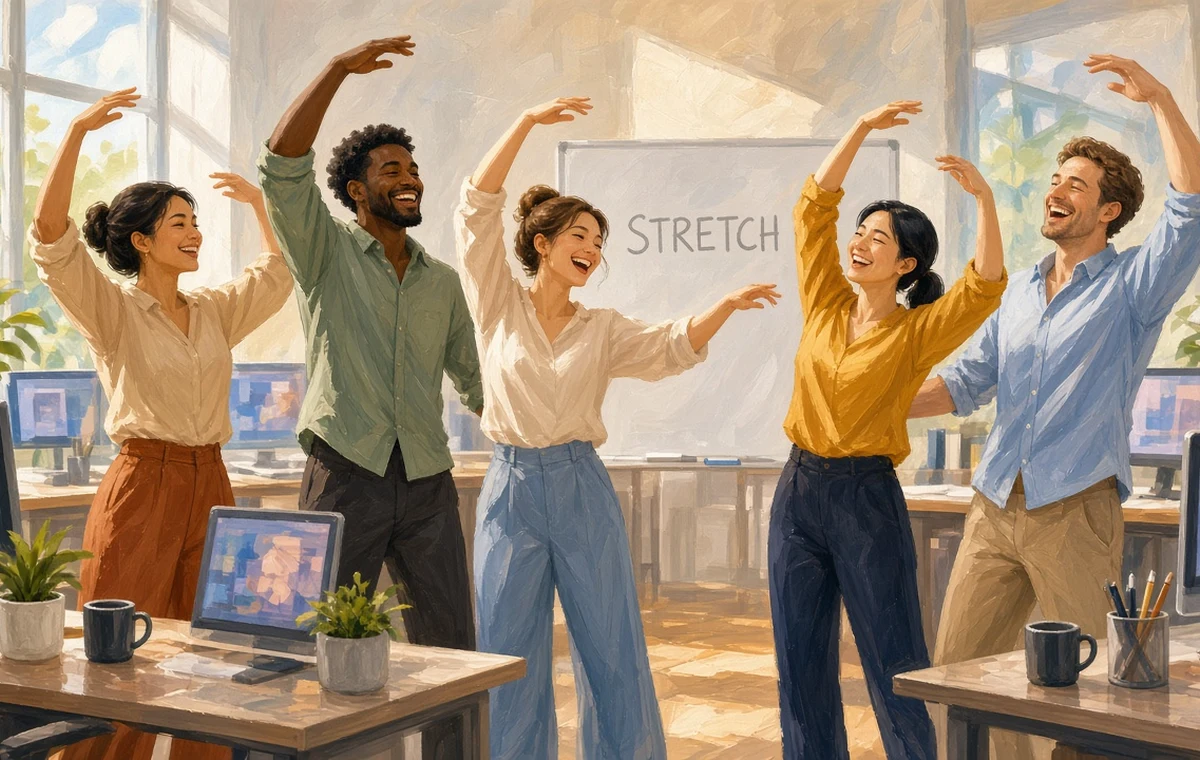
When dance is built into an exercise programme, the source suggests three phases: a warm-up with breathing and gentle joint mobility, a main phase of rhythmic movements that use the neck, shoulders and trunk fully, and a cool-down of stretching and relaxation, with intensity adjusted to each person's pain. The cited 2019 meta-analysis by Koch and colleagues found that dance and dance movement therapy improved health-related psychological outcomes such as quality of life and mood; it did not specifically measure neck pain, so treat the physical benefits as plausible and promising rather than proven by that study.
Should you look after your eyes, fascia and wrists too?
Once the neck and shoulders are covered, the next question is what else screen life strains. The answer is the eyes, the connective tissue around muscles and the small structures of the wrist.
Eyes and the 20-20-20 rule
People blink less when they concentrate on a screen, so the tear film dries faster and eyes feel gritty, sore or hot. Focusing at close range for long periods also keeps the focusing muscles working. The 20-20-20 rule, widely promoted by the American Optometric Association, is simple: every 20 minutes, look at something about 20 feet (6 metres) away for 20 seconds, and blink deliberately a few times. Keep the screen about an arm's length away, match its brightness to the room, and avoid air-conditioning blowing straight at your face. If symptoms persist, get your eyes checked.
Fascia and trigger points
Fascia is the thin connective tissue that wraps and links muscles. After long periods in one position, muscles and fascia can stiffen and develop trigger points, tender spots that refer pain elsewhere, such as pressure on the top of the shoulder that is felt at the side of the head. This myofascial pain syndrome is a common problem among screen workers.
Wrists and fingers
Hours on a mouse and keyboard keep the wrist bent. If the median nerve in the carpal tunnel is compressed, the thumb and index finger can tingle or go numb, a sign of carpal tunnel syndrome. A wrist rest, a keyboard height that keeps wrists straight, and regular finger spreads and wrist circles all help.
Dance basics translate well to a desk break. Raising the arms in a soft ballet curve opens the chest and shoulders, and gentle knee bends while holding the desk get blood moving in legs that have been folded all morning. Try this three-minute routine:
- Every 20 minutes, look out of the window for 20 seconds and blink slowly
- Stand and raise your arms in a curve over your head and lower them, five times
- Hold the desk edge and bend and straighten your knees gently, ten times
- Roll your shoulders backwards slowly with your breath, five times
- Spread your fingers wide and circle your wrists in both directions
Done a few times a day, this routine takes less time than making a cup of tea and touches the eyes, shoulders, legs and wrists in one go.
What do UK and US rules say about screen work?
Workplace law shapes how much of this your employer has to organise for you, and the UK and the US take noticeably different approaches.
In Great Britain, the Health and Safety (Display Screen Equipment) Regulations 1992 require employers to assess the workstations of regular screen users, reduce the risks they find, plan work so that people get breaks or changes of activity, and provide an eye test on request, paying for glasses if they are needed specifically for screen work. Guidance from the Health and Safety Executive favours short, frequent breaks over occasional long ones.
The United States has no specific federal ergonomics standard; a rule issued by OSHA was repealed by Congress in 2001. OSHA can still act on serious ergonomic hazards under its general duty clause, and NIOSH publishes guidance on workstation design and rest breaks, but much depends on the individual employer.
| Item | Great Britain | United States |
|---|---|---|
| Specific law | DSE Regulations 1992 | No federal ergonomics standard |
| Workstation assessment | Required for regular users | Recommended in guidance; varies by employer |
| Eye tests | Free on request for screen users | Depends on employer benefits and insurance |
| Breaks | Employer must plan breaks or task changes | Guidance only |
Wherever you work, the principles are the same: set up the desk well, break up long stretches of screen time, and act early on symptoms.
Why move your whole body in a bigger space?
Desk stretches are quick and convenient, but the range of movement is small. Once or twice a week, a session in a larger space where you can use your arms and legs fully helps restore movement that shrinks during a day at a desk.
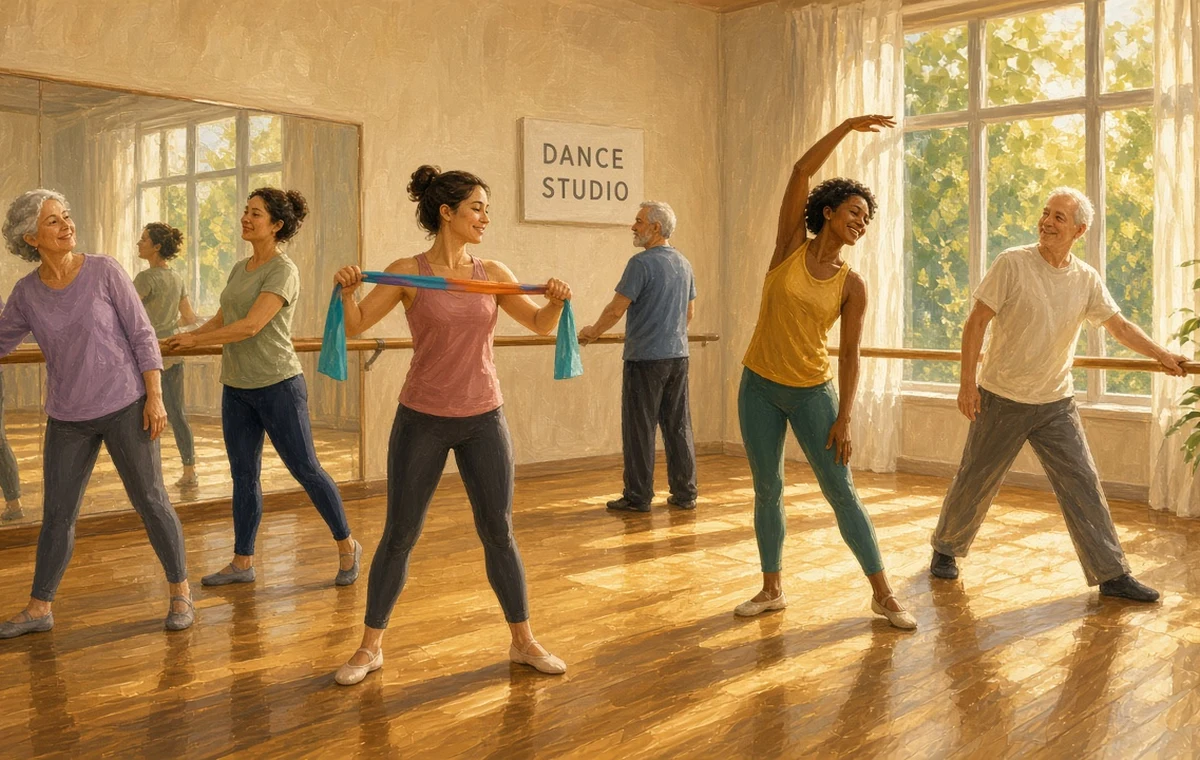
A ballet barre is a steadying handrail, so even complete beginners can move their legs and trunk safely, and an elastic band makes it easy to strengthen the upper back and the backs of the shoulders. Many UK leisure centres and community halls run adult beginner ballet, barre or dance fitness classes. If a class is not possible, putting on music you like at home and moving freely for ten minutes is a good start.
How do the symptoms break down by body part?
Grouping the most common problems by body part makes the right fix obvious, and turns prevention into a short checklist you can keep beside your desk.
| Body part | Common symptoms | Prevention |
|---|---|---|
| Eyes | Dryness, soreness, blurring | 20-20-20 rule, deliberate blinking, room humidity |
| Neck and shoulders | Stiffness, myofascial trigger points | Screen height, arm movements that open the shoulders |
| Wrists and fingers | Tingling, wrist pain | Wrist rest, wrist circles and finger spreads |
| Lower back and legs | Back pain, swollen legs | Stand up every hour, gentle knee bends |
Pick one body part a day and the routine soon stops feeling like an extra task and becomes part of the working day.
Which everyday habits prevent problems?
Small, repeatable habits do more than an occasional heroic effort, and most of them cost nothing.
Student money tip on CampusDown Life Up: How to make a simple monthly budget with the free CFPB worksheet.
- Set the top of the monitor at roughly eye level
- After about 50 minutes of screen work, take 5 to 10 minutes to rest and stretch
- Look into the distance to relax your eyes
- Hold your phone up nearer eye level and cut down screen time
If pain lasts more than a few weeks, or comes with nerve symptoms such as numb or tingling hands, do not try to fix it with exercise alone: see a GP or physiotherapist first, then continue exercising within safe limits. A body that moves is the best antidote to a day that stands still.
Compiled by the CampusDown editorial team from a Korean article on VDT syndrome and dance-based exercise therapy, adapted with public information on the Health and Safety (Display Screen Equipment) Regulations 1992, HSE guidance, the repeal of OSHA's ergonomics rule in 2001, NIOSH guidance and the American Optometric Association's 20-20-20 rule. Reference: Koch, S. C., Riege, R. F. F., Tisborn, K., Biondo, J., Martin, L. & Beelmann, A. (2019). Effects of dance movement therapy and dance on health-related psychological outcomes: A meta-analysis update. Frontiers in Psychology, 10, 1806. Reviewed November 2026. General information, not medical advice.
FAQ
What is the 20-20-20 rule?
Every 20 minutes, look at something about 20 feet (6 metres) away for 20 seconds to rest the focusing muscles, and blink deliberately.
Is VDT syndrome the same as computer vision syndrome?
Computer vision syndrome or digital eye strain usually refers to the eye symptoms; VDT syndrome is broader and includes musculoskeletal and mood symptoms.
Does my employer have to give me an eye test?
In Great Britain, the DSE Regulations 1992 require employers to provide an eye test on request for regular screen users.
Why use dance rather than ordinary stretching?
Dance links several joints in one flowing movement and is more enjoyable with music, which makes people more likely to keep doing it.
When should I see a doctor?
If pain lasts more than a few weeks or comes with numbness or tingling in the hands, get checked before relying on exercise alone.