
Can Non-Athletes Go to Prison for Doping? The Rodchenkov Act's First Case and What Korea's Anti-Doping Policy Gets Wrong
- The Rodchenkov Act lets US authorities prosecute non-athletes who help doping at major international events.
- The source argues Korea's sports authority held too much power over doping control, damaging fairness and independence.
- It proposes ending win-at-all-costs culture, reforming sports law and creating an independent reporting and legal-support body.
Contents
Yes, people who are not athletes can now go to prison over doping: the United States' Rodchenkov Anti-Doping Act makes it a federal crime to run or help a doping scheme at major international competitions, and its first conviction involved a Texas therapist who supplied banned drugs before the Tokyo Olympics. Should only the athlete who swallowed the pill be punished, or also the person who handed it over? This guide looks at the law, its first case, and what Korea's history of doping control reveals about the deeper problem, with comparisons to how the US and UK police clean sport.
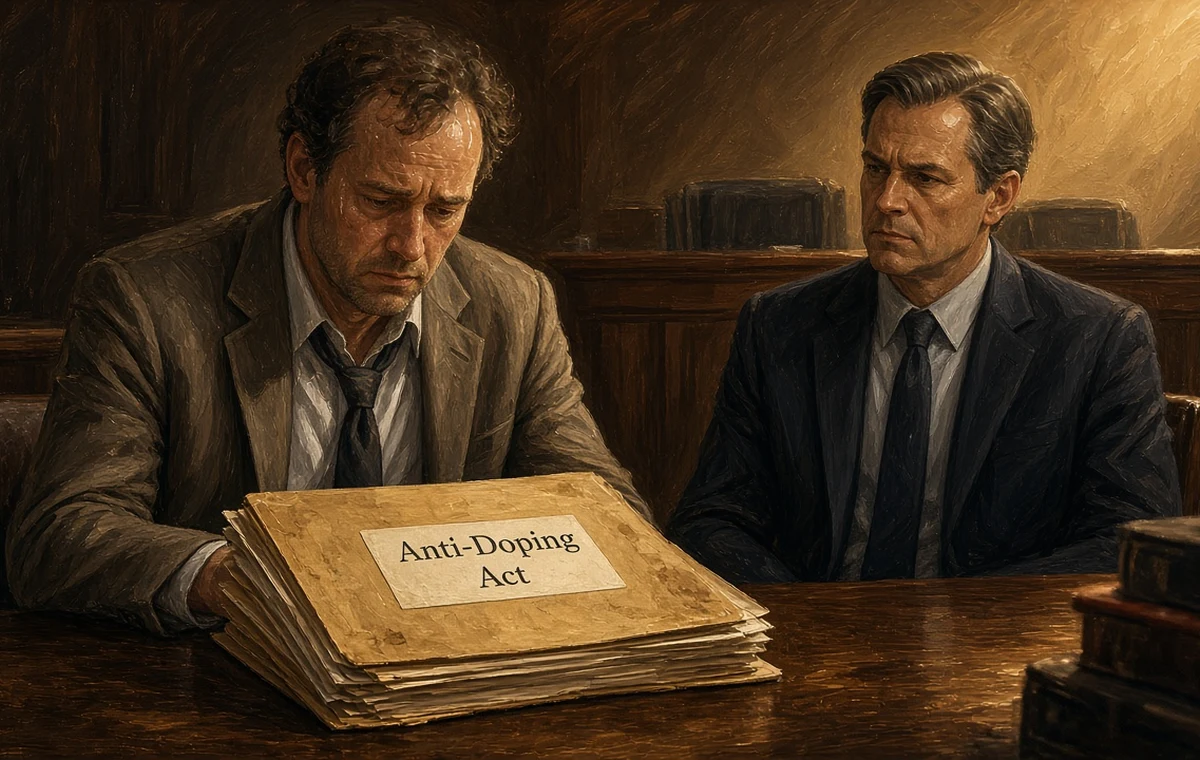
Sport has long treated doping as a private matter between the athlete and the rulebook. The Rodchenkov Act tears up that assumption by asking who stands behind the athlete: the coach, the doctor, the supplier.
What is the Rodchenkov Act?
According to the source, the law defines violating anti-doping rules at international sporting events, or helping someone do so, as a criminal offence, allowing US authorities to prosecute people who are not athletes. It was signed into law in December 2020 and is named after Grigory Rodchenkov, the former head of Russia's anti-doping laboratory who blew the whistle on Russia's state-sponsored doping programme, a story told in the documentary Icarus.
Student money tip from CampusDown Repair UpRenters Insurance Water Claim Denied? What I'd Do Next, Step by Step
Before this, the usual penalty was a competition ban for the athlete. By reaching the suppliers and organisers around them, the law dramatically widens the net. Offenders face prison terms of up to ten years and heavy fines, and the act also gives whistleblowers protection and lets victims, such as clean athletes who lost medals, seek restitution.
The law is not without critics. It reaches events held abroad as long as they have a US connection, such as American sponsors or broadcasters, which the World Anti-Doping Agency has questioned, and it does not cover the big American professional leagues or college sport, a gap many commentators find hard to justify.

What was the first case under the law?
- A naturopathic therapist from Texas admitted supplying banned substances to athletes ahead of the Tokyo Olympics.
- Both athletes who received the drugs tested positive.
- One was Nigerian sprinter and long jumper Blessing Okagbare, a Beijing 2008 long-jump medallist, who was banned for a total of 11 years.
The case showed that doping is rarely one athlete going rogue: behind the scenes there can be a supply network. Its significance is that the new law moved from paper to an actual conviction for the first time.
A small correction to the source: Okagbare's Beijing medal was first awarded as bronze and later upgraded after another athlete was disqualified, so describing her simply as a Beijing long-jump medallist is the safest wording.
Skimming the section headings first makes a long guide much easier to map out. Try writing down one question of your own as you read.
What problems has Korean sport faced?
The source argues that Korean sport has long chased medals, results and national prestige at full speed. It recounts a doping scandal in the years after the 1988 Seoul Olympics and, later, a case in which the sports authority hid test results. Government-led anti-doping policy only began in 2006, after the creation of WADA and the World Anti-Doping Code prompted an amendment to the National Sports Promotion Act, and the Korea Anti-Doping Agency was launched that year.
Interest tends to spike whenever a scandal breaks on the world stage and then fade again, a pattern that helps explain why reform has been slow. The Seoul Games themselves became a global symbol of the issue when the men's 100 metres champion was stripped of his gold for steroid use.
Where does the doping-control system fall short?
The IOC first introduced drug testing at the 1968 Winter Olympics in Grenoble, but the source notes that education and research into new banned substances lagged behind. In Korea, government and sports bodies focused on performance, and the Korean Sport and Olympic Committee, which manages athletes, also held excessive power over doping control, weakening fairness and independence.
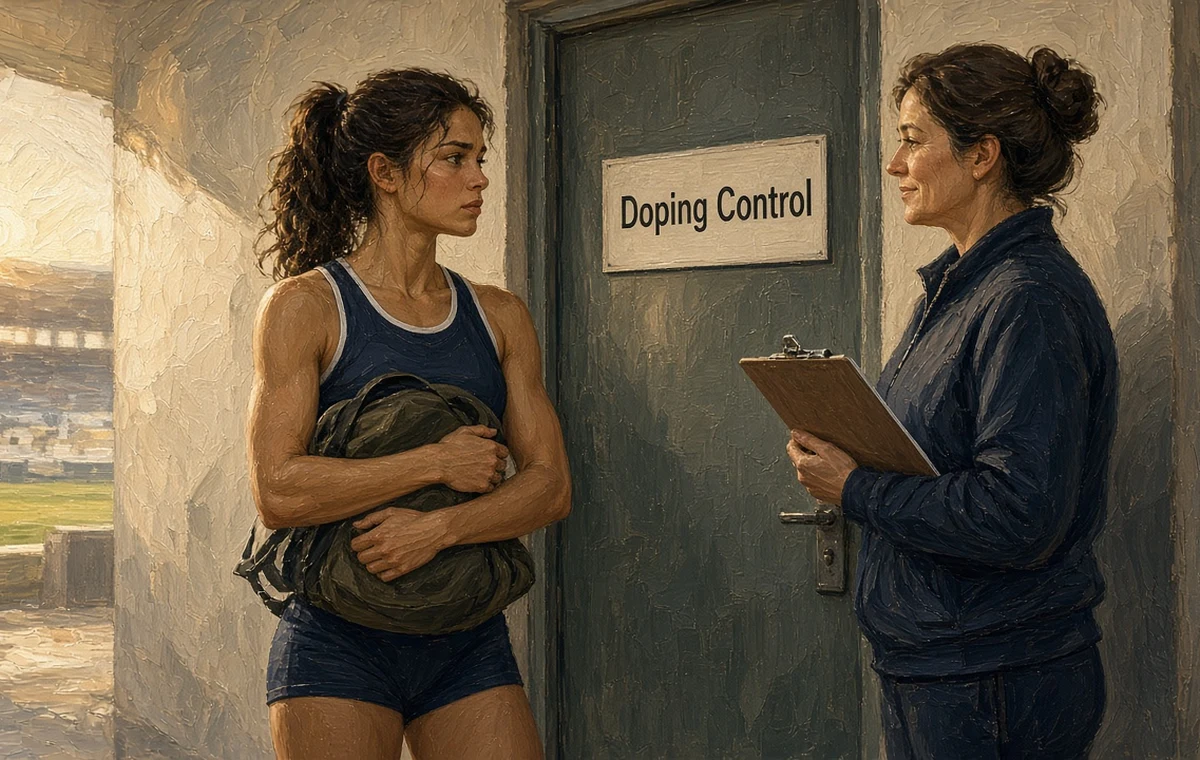
When the body that manages athletes is also the body that polices them, there is a built-in temptation to bury problems rather than expose them. That conflict of interest is the system's biggest weakness.
How do the US and UK keep testing independent?
The United States created the US Anti-Doping Agency (USADA) in 2000 as an independent, non-governmental body, deliberately separate from the US Olympic committee that selects and funds athletes. Its independence was tested in 2012, when its investigation into cycling led to Lance Armstrong losing his seven Tour de France titles, proof that an agency outside the sports hierarchy can take on even the biggest star.
Britain: no doping crime, but drug law bites
The United Kingdom set up UK Anti-Doping (UKAD) in 2009 as the national body for testing, education and intelligence, independent of individual sports' governing bodies. Unlike the US, Britain has no specific criminal offence of doping in sport. Instead, suppliers can be prosecuted under general drug laws, for example because anabolic steroids are Class C drugs under the Misuse of Drugs Act 1971, so supplying them is illegal. Whether to create a dedicated doping crime has been debated repeatedly.
| Item | United States | United Kingdom | Korea |
|---|---|---|---|
| National agency | USADA (2000), independent non-profit | UK Anti-Doping (2009) | Korea Anti-Doping Agency (2006) |
| Criminal law for helpers | Rodchenkov Act for major international events | No doping-specific crime, general drug law for suppliers | Mainly sports sanctions, with calls for stronger legal tools |
| Main concern | Reach of US law abroad, pro leagues excluded | Whether to criminalise doping | Independence from the body that manages athletes |
The comparison underlines the source's point: the key is not simply harsher punishment, but separating the people who want medals from the people who check how they were won.
What solutions does the source propose?
The author insists ethics should not be blamed on individual athletes alone. A win-at-all-costs culture breeds a results-only morality, and apprenticeship-style training with strict top-down obedience makes wrongdoing hard to expose. The proposals are to move away from results-driven elite sport, overhaul sports legislation, strengthen the Korea Sport Ethics Center launched in 2020, and create an independent body offering round-the-clock reporting and legal support. Thinking about character rather than rules alone connects naturally to virtue ethics, and broader workplace norms are covered in our entry on work ethics.
Student money tip on CampusDown Repair Up: Renters Insurance Water Claim Denied? What I'd Do Next, Step by Step.
The conclusion is that building an environment where athletes can choose ethically on their own matters more than piling on punishments. Laws like the Rodchenkov Act can catch suppliers, but only a culture that values clean competition can stop the demand.
Reviewed by the CampusDown editorial team, November 2026. Reference: Houlihan, B. (2002). Dying to win: Doping in sport and the development of anti-doping policy (2nd ed.). Council of Europe Publishing.
FAQ
What does the Rodchenkov Act do?
It makes running or assisting a doping scheme at major international competitions a US federal crime, so coaches, suppliers and others can be prosecuted, not just athletes.
Who was involved in the first case?
A Texas naturopathic therapist admitted supplying banned substances to athletes before the Tokyo Olympics, including Nigerian sprinter Blessing Okagbare.
When did the IOC start drug testing?
The IOC first introduced drug testing at the 1968 Winter Olympics in Grenoble.
Is doping a crime in the UK?
There is no doping-specific criminal offence, but suppliers can be prosecuted under general drug laws, for example for supplying anabolic steroids, which are Class C drugs.
Why does independence matter in doping control?
If the body that manages and promotes athletes also tests them, it has an incentive to hide problems, so an independent agency is more credible.