
PHQ-9 Depression Test: What Your Score Means, Score Bands, Question 9, GAD-7 and What to Do Next
- The PHQ-9 scores nine depression symptoms from 0 to 3 over the past two weeks for a total of 0 to 27.
- A score of 10 or more is a common signal to talk to a professional.
- Any answer above 0 on question 9 means talking to someone today, whatever the total.
Contents
The PHQ-9 is a nine-question self-report screen for depression that scores each symptom from 0 to 3 over the past two weeks, giving a total of 0 to 27, where 10 or more usually means it is worth talking to a professional, and any answer above 0 on question 9 means you should talk to someone today. Have you been sleeping badly and finding nothing enjoyable, and wondered whether it is depression or just exhaustion? Plenty of online depression tests exist, but few explain what the score means and what to do next. This guide, adapted from a Korean mental health study note, walks through what the PHQ-9 asks, how to read the score bands, why question 9 matters, when to add the GAD-7, how the test is used in the UK and US and a plan for the next two weeks.
What does the PHQ-9 ask?
The PHQ-9 (Patient Health Questionnaire-9), developed by Kurt Kroenke, Robert Spitzer and Janet Williams and published in 2001, turns the nine symptoms in the diagnostic criteria for major depressive disorder into a self-report questionnaire. It asks in turn about loss of interest, low mood, sleep problems, tiredness, appetite changes, feelings of guilt or failure, trouble concentrating, moving slowly or being restless, and thoughts of death or self-harm.
Related on CampusDown Law UpMy Medical Bill Got Sent to Collections. What Do I Do? — Medical bill sent to collections?
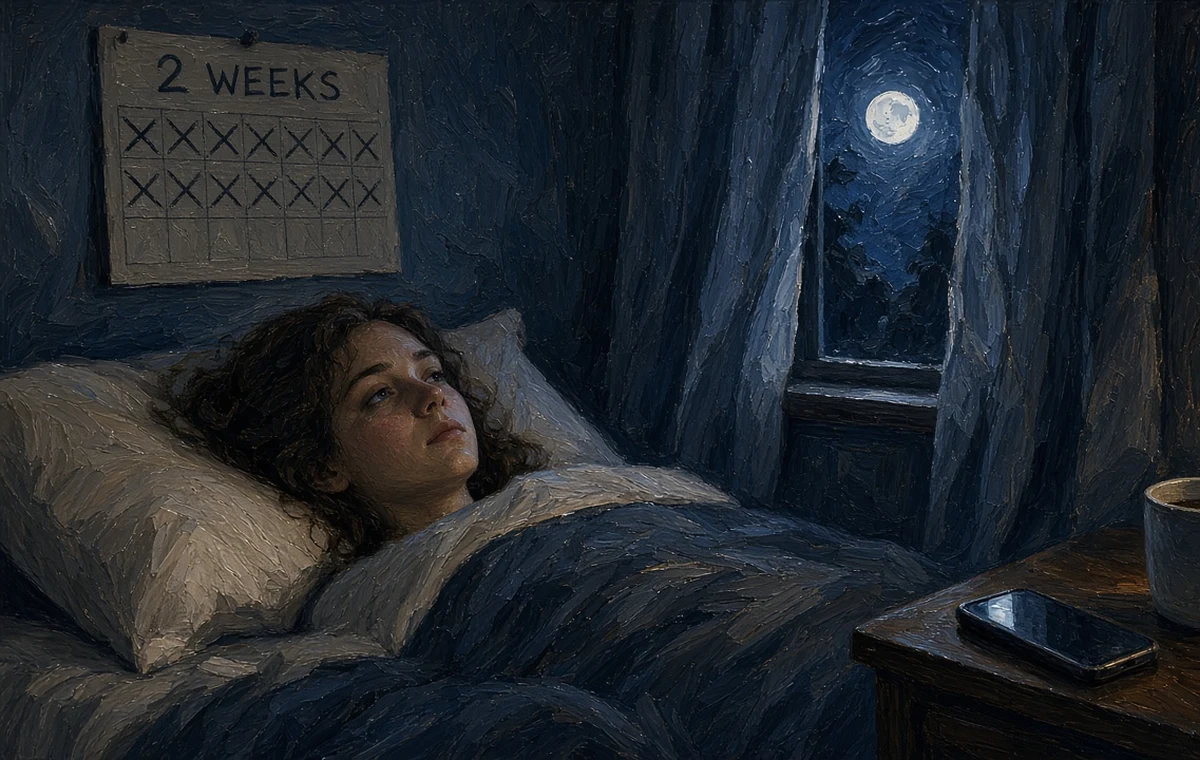
Why does it ask about the past two weeks? Each item asks how often the symptom has bothered you in that period: not at all (0), several days (1), more than half the days (2) or nearly every day (3). The total therefore falls between 0 and 27.
It takes about three minutes, but try to picture the last two weeks like a calendar rather than answering from the mood of one unusually good or bad day, because that makes the result more accurate and more useful when you retake it later.

How should you read the total score?
| Total | Band | Common next step |
|---|---|---|
| 0–4 | Minimal | Keep current habits; retest if needed |
| 5–9 | Mild | Look after sleep and activity; retest in 2 to 4 weeks |
| 10–14 | Moderate | Talking to a professional is recommended |
| 15–19 | Moderately severe | See a clinician and discuss a treatment plan |
| 20–27 | Severe | See a mental health professional as soon as possible |
A score of 10 is widely used in clinics as the cut-off for possible major depression; a large 2019 BMJ meta-analysis found it gave the best overall balance of catching cases and avoiding false alarms. If your score is the same but you can barely manage work or study, it is safer to treat it as one band higher.
Screening tools are designed to cast a wide net, so they sometimes score higher than the real picture. How well a test does this is described by its sensitivity and specificity, ideas covered in our wiki entry on reliability and validity of measurement. Read a high score as a signal to check more carefully, not as a confirmed diagnosis.
Skimming the section headings first makes a long guide much easier to map out. Try writing down one question of your own as you read.
Why does question 9 need special attention?
Question 9 asks about thoughts that you would be better off dead or of hurting yourself. Even if your total is low, if you marked 1 or more on this item, the rule is to find someone to talk to today, whatever your band.
- US: call or text 988, the Suicide and Crisis Lifeline, available 24 hours
- UK and Ireland: call Samaritans free on 116 123, available 24 hours
- In immediate danger: call 911 in the US or 999 in the UK

Why should difficult thoughts not be kept to yourself? Sharing them is not a sign of weakness. The moment you say them out loud, the other person can help you make a safety plan, and that matters more than any score.
Add the GAD-7 if anxiety is stronger
Depression and anxiety often come together. If worry will not stop and your body always feels tense, it is worth also taking the GAD-7, used to screen for generalised anxiety disorder. Its seven items are scored 0 to 3 in the same way for a total of 0 to 21, with 5, 10 and 15 as the cut-offs for mild, moderate and severe anxiety.
| Test | Items | Range | Key cut-off |
|---|---|---|---|
| PHQ-9 | 9 | 0–27 | 10 |
| GAD-7 | 7 | 0–21 | 10 |
Different websites use different scales and cut-offs, so do not compare scores from different tests directly. Taking both on the same day helps you see whether mood or worry is weighing on you more, and makes it easier to start the conversation with a counsellor or doctor.
How is the PHQ-9 used in the UK and US?
In England, NHS Talking Therapies services commonly ask people to complete the PHQ-9 and GAD-7 at assessment and at sessions to track progress, and many people can refer themselves without seeing a GP first. In the US, the US Preventive Services Task Force recommends screening for depression in adults and in adolescents aged 12 to 18, and the PHQ-9 is one of the most widely used tools in primary care.
| Setting | What happens |
|---|---|
| NHS Talking Therapies (England) | Questionnaires at assessment and sessions to measure change over time |
| US primary care visits | Brief depression screening, often starting with the two-question PHQ-2 |
| University counselling services | Intake questionnaires that may include the PHQ-9 or similar scales |
For teenagers, an adapted version called the PHQ-A is available. If you are a student, your campus counselling or health service is often the quickest place to take your score and talk it through.
What to do in the two weeks after your result
- Write down the date and your score, then retake the same test in two weeks to see the change
- Keep regular times for going to bed and getting up
- Schedule small activities, such as a 20 to 30 minute walk in daylight each day
- If you scored 10 or more, take your result to a GP, campus health service or mental health professional
Also on CampusDown Law Up: My Medical Bill Got Sent to Collections. What Do I Do?
Counselling based on cognitive behavioural therapy can teach you, step by step, how to change the patterns of depressive thinking, such as the cognitive distortions that make things look worse than they are.
A score is only a snapshot of one day. Measuring several times to see the trend, and paying more attention to what has changed in daily life than to the number itself, can speed up recovery.
It also helps to tell one trusted person that you are keeping track, so that someone else notices if things get harder and can encourage you to reach out for support sooner.
This guide follows the scoring in Levis, B., Benedetti, A., and Thombs, B. D. (2019). Accuracy of Patient Health Questionnaire-9 (PHQ-9) for screening to detect major depression: Individual participant data meta-analysis. BMJ, 365, l1476, and Spitzer, R. L., Kroenke, K., Williams, J. B. W., and Lowe, B. (2006). A brief measure for assessing generalized anxiety disorder: The GAD-7. Archives of Internal Medicine, 166(10), 1092–1097. Use your score not as a number to carry alone but as the first piece of information to show when you ask for help.
FAQ
Can a PHQ-9 score alone diagnose depression?
No. It is a screening result, and a diagnosis is made only after an assessment by a qualified professional.
How often can I take the test?
Because the questions cover two weeks, retaking it about every two weeks is sensible.
Do teenagers use the same version?
An adapted version for adolescents, the PHQ-A, is available and is more accurate for that age group.
What if I scored low but answered yes on question 9?
Treat it as urgent and talk to someone today, such as a crisis line like 988 in the US or Samaritans on 116 123 in the UK.
Who developed the PHQ-9?
Kurt Kroenke, Robert Spitzer and Janet Williams published it in 2001 as part of the Patient Health Questionnaire.