
What Is Pender's Health Promotion Model? Self-Efficacy, Barriers and Better Programmes for Older Adults
- Pender's Health Promotion Model explains health behaviour through the wish to feel well rather than fear of illness.
- Perceived benefits, perceived barriers and self-efficacy are the key variables that directly shape behaviour.
- Programmes for older adults draw more people when they lower barriers and build self-efficacy.
Contents
Pender's Health Promotion Model explains health behaviour as driven by the wish to feel well rather than the fear of illness, and it singles out perceived benefits, perceived barriers and self-efficacy as the beliefs that most directly decide whether someone acts. Why do some older people keep coming to a free exercise class at the local health centre while others drop out after one or two sessions? The quality of the class rarely explains the gap. Pender's model points to the thoughts and feelings that start and sustain a health behaviour, which makes it a practical framework for redesigning health promotion programmes for older adults.
What does Pender's Health Promotion Model explain?
The nursing theorist Nola Pender proposed that people take up health behaviours less out of fear of disease than out of a wish to live healthier, more energetic lives. First published in 1982 and revised in 1996, the Pender's Health Promotion Model draws on social cognitive theory to show how a person's beliefs, feelings and surroundings shape what they do. For another planning framework, the PRECEDE-PROCEED model is worth comparing.
Related on CampusDown Law UpMy Gym Won't Let Me Cancel My Membership. What Are My Rights? — Gym won't let you cancel your membership?
Why is the model so widely used?
Unlike the disease-focused health belief model, Pender's model also covers improving the lifestyle of people who are already reasonably healthy. That makes it a good fit for programmes aimed at older adults who manage long-term conditions but still want an active later life.

What are the components of the model?
The model groups its variables into three areas that run roughly in time order, from a person's past to what they finally do.
| Area | Main variables |
|---|---|
| Individual characteristics and experiences | Prior related behaviour; biological, psychological and sociocultural personal factors |
| Behaviour-specific cognitions and affect | Perceived benefits, perceived barriers, perceived self-efficacy, activity-related affect, interpersonal influences, situational influences |
| Behavioural outcome | Commitment to a plan of action, immediate competing demands and preferences, health-promoting behaviour |
The behaviour-specific cognitions and affect are the variables that interventions can change, so they are the main targets of nursing care. Self-efficacy is treated as a central variable because it lowers perceived barriers and lifts positive feelings about the activity.
Exam questions often ask you to match each variable to its area. Thinking of the three areas as "the past and the person", "current thoughts and feelings" and "the actual behaviour" makes them easier to remember.
Skimming the section headings first makes a long guide much easier to map out. Try writing down one question of your own as you read.
How are community health promotion programmes for older adults run?
Health centres and community services typically offer a mix of five kinds of support:
- Exercise: walking groups, strength and balance training, falls prevention classes
- Long-term conditions: education on blood pressure and diabetes, regular reviews
- Nutrition: healthy eating talks, low-salt cooking sessions
- Mental health and memory: memory cafés, screening and support for low mood
- Home visits: health checks for frail older people who cannot get out
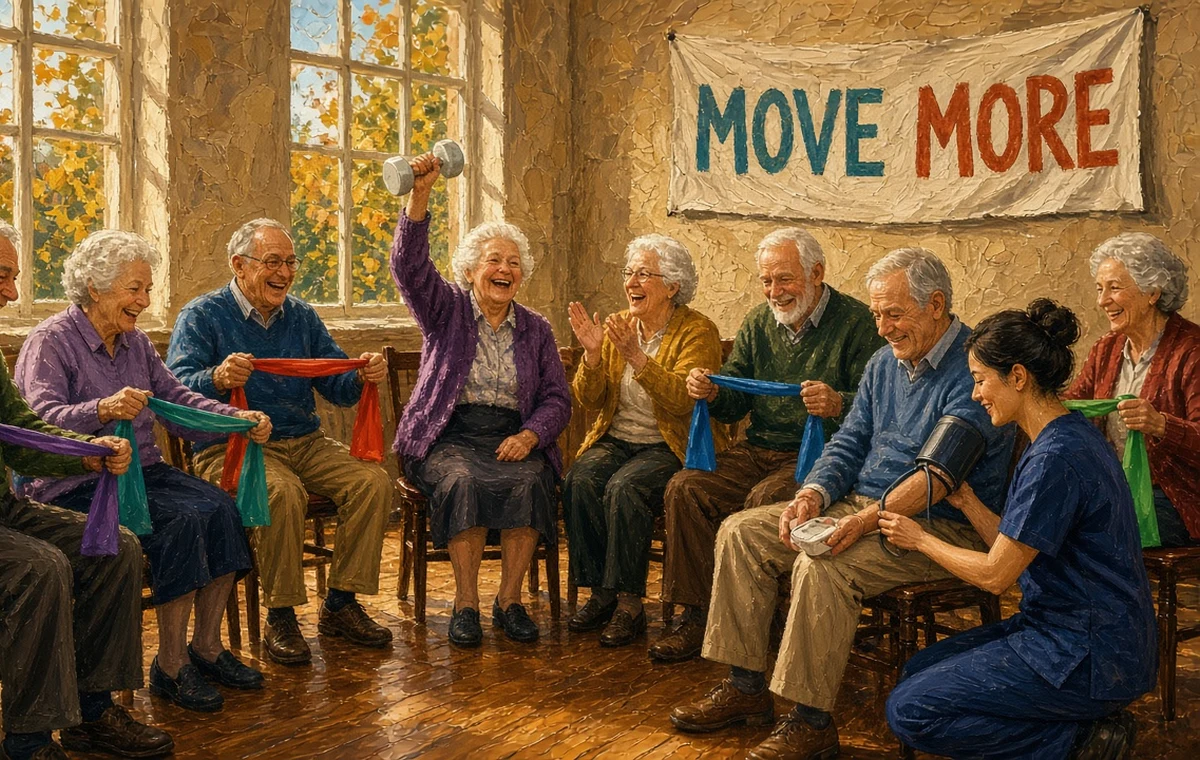
In England, the NHS Health Check invites adults aged 40 to 74 for a cardiovascular risk review every five years, and many areas run evidence-based strength and balance programmes such as Otago and FaME to prevent falls. In the US, Healthy People 2030 sets national targets for physical activity, some Medicare Advantage plans include gym and group-exercise memberships, and community groups run the Chronic Disease Self-Management Program developed at Stanford. In Korea, the same mix is delivered through public health centres under the national Health Plan 2030.
A familiar problem appears in all three countries: classes fill up with already active, healthier older people, while those who would benefit most rarely take part. Adding more programmes does not solve this, so the starting point for improvement is assessing what non-participants see as barriers.
What can the model suggest for improving programmes?
Matching each behaviour-specific variable to a concrete fix turns vague calls for "more publicity" into a workable plan.
| Variable | Older adults' examples | Improvement |
|---|---|---|
| Perceived barriers | Distance, transport, time, cost, worry about fitness | Sessions at local community venues, transport help, shorter sessions |
| Perceived benefits | Unsure whether it helps | Measure and show changes in blood pressure and strength |
| Self-efficacy | Afraid of not keeping up | Start with easy moves, build up step by step, praise success |
| Interpersonal influences | Hard to go alone | Bring a friend or family member, peer leaders |
| Situational influences | Unfamiliar or uncomfortable venue | Familiar places, a relaxed atmosphere |
For an assignment, pick one real local programme and run it through these five variables. It shows clearly that you can apply the theory to practice.
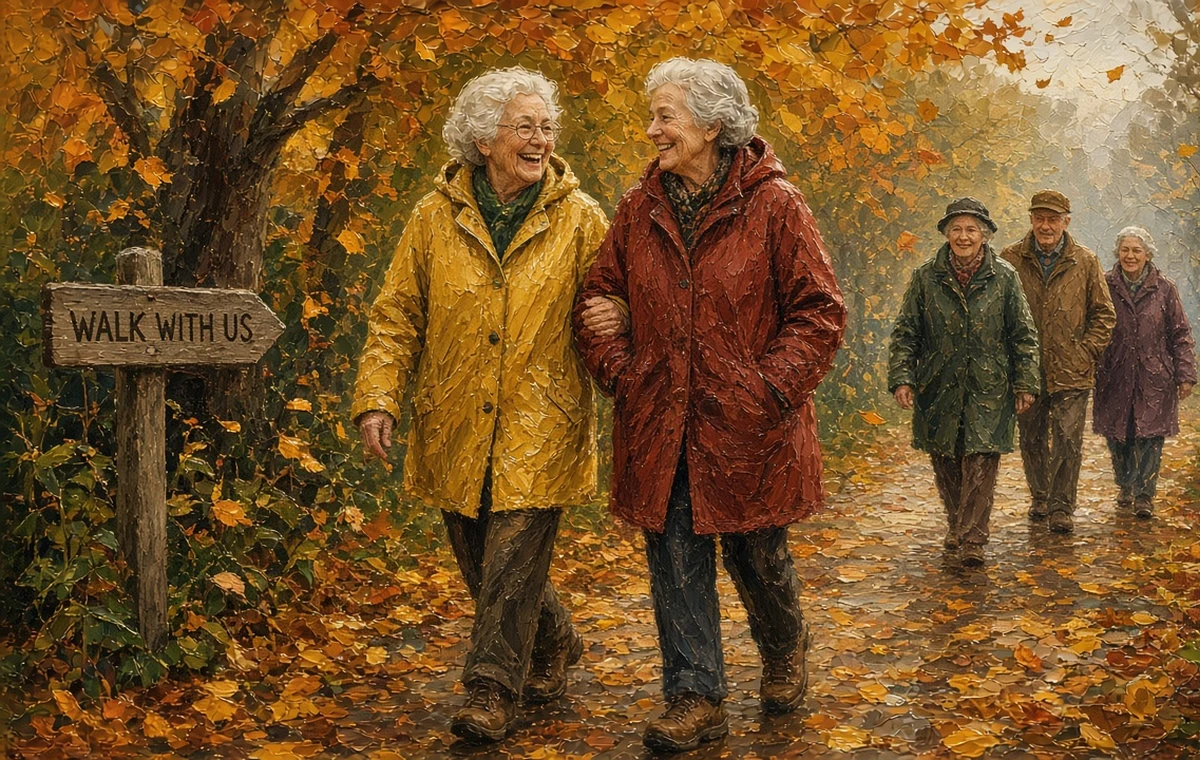
Peer support deserves special attention. Older people who find a regular exercise companion tend to keep attending, so pairing newcomers with a buddy or forming small groups is a simple way to raise interpersonal influences.
What role does the nurse play?
A community nurse assesses not only an older person's health but also how they think and feel about a health behaviour. The nurse helps identify and reduce barriers, sets small goals so success builds up, helps turn intentions into a concrete plan, and links the person with support from family and neighbours.
When an older person comes to believe "I can do this", a programme stops being a one-off event and becomes part of daily life. That is why steady encouragement from a nurse can be the most effective health promotion intervention of all.
Which related ideas deepen an assignment on Pender's model?
Once you have covered the model's components and how it applies to programmes, five practical concepts help you turn analysis into concrete activities.
Also on CampusDown Law Up: My Gym Won't Let Me Cancel My Membership. What Are My Rights?
| Concept | Core idea | Use in an assignment |
|---|---|---|
| Action planning | Turning a decision into when, where and how | Strengthens the "commitment to a plan" step |
| Peer support | Doing it together with people in a similar situation | Raises interpersonal influences |
| Strength training for older adults | Sit-to-stand, resistance bands, light weights to prevent falls | Core programme activity |
| Chronic disease self-management | Building confidence to manage medicines, diet and monitoring | Shows why programmes are needed |
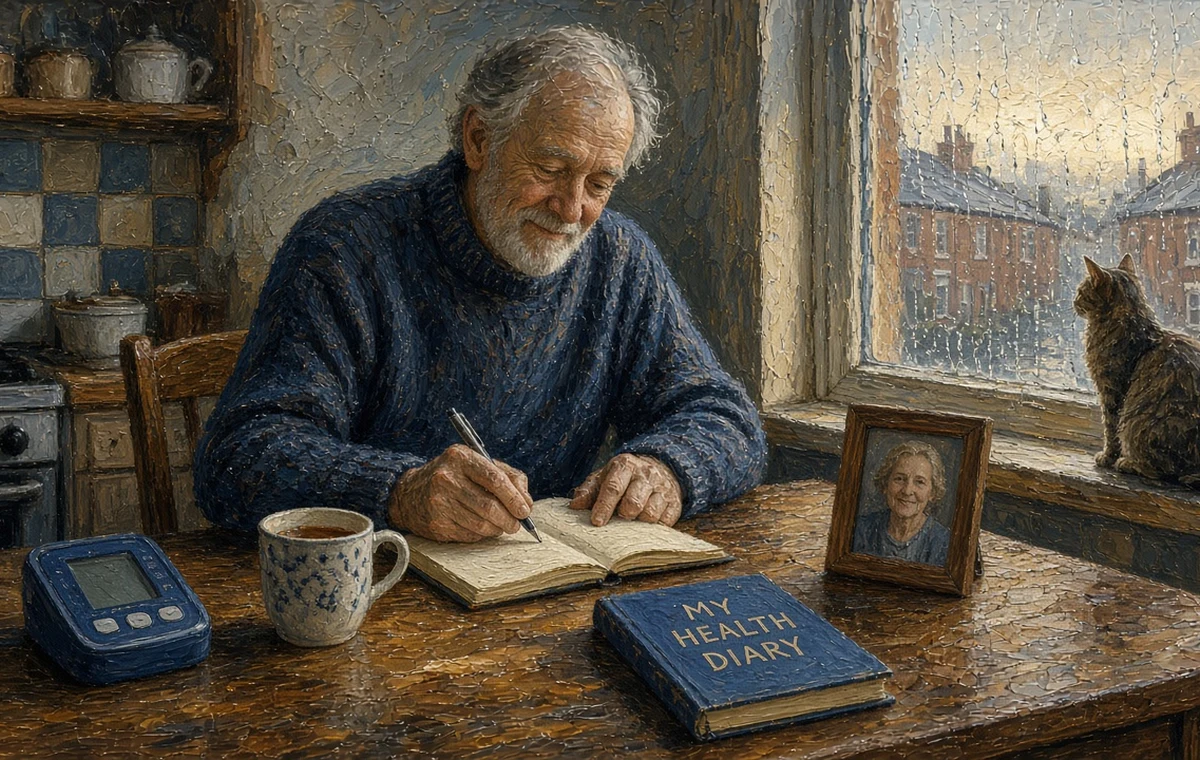
| Health diary | Recording steps, exercise, blood pressure and mood | A tool linking nurse and older adult |
The more specific the plan, the more likely it is to happen: "Tuesday and Thursday mornings at the community centre class" beats "I'll exercise more". For people who find writing difficult, stickers or pictures in a diary work just as well. Linking each activity in this table to one of Pender's variables gives your conclusion a clear bridge between theory and practice.
Compiled by the CampusDown editorial team from a Korean article on Pender's Health Promotion Model and public health centre programmes for older adults, adapted with public information on the NHS Health Check and falls prevention programmes in England and Healthy People 2030 in the US. Source: Pender, N. J., Murdaugh, C. L., & Parsons, M. A. (2015). Health promotion in nursing practice (7th ed.). Pearson. Reviewed November 2026.
FAQ
How is Pender's model different from the health belief model?
The health belief model focuses on avoiding the threat of illness, while Pender's model centres on the wish to improve wellbeing.
How can self-efficacy be increased?
Through small successes, watching similar people succeed, encouragement, and reducing anxiety about the activity.
What are immediate competing demands?
Other tasks, such as housework or caring, or more tempting options that crop up just as a person is about to act.
Which variables can nurses change?
The behaviour-specific cognitions and affect, such as perceived barriers, benefits and self-efficacy, are the main targets.
Why do the healthiest older people fill programmes?
They face fewer barriers and already feel capable, so programmes must actively reduce barriers for those who need help most.