
Noisy Upstairs Neighbours: Why Flats Leak Sound and How UK and US Rules Handle It
- Neighbour noise is everyday sound from one home travelling into another, mostly as impact noise through floors.
- The UK uses statutory nuisance, lease covenants and Approved Document E; the US relies on city ordinances, leases and building codes.
- Better floors and rules help, but early conversation and mediation keep the peace longest.
Contents
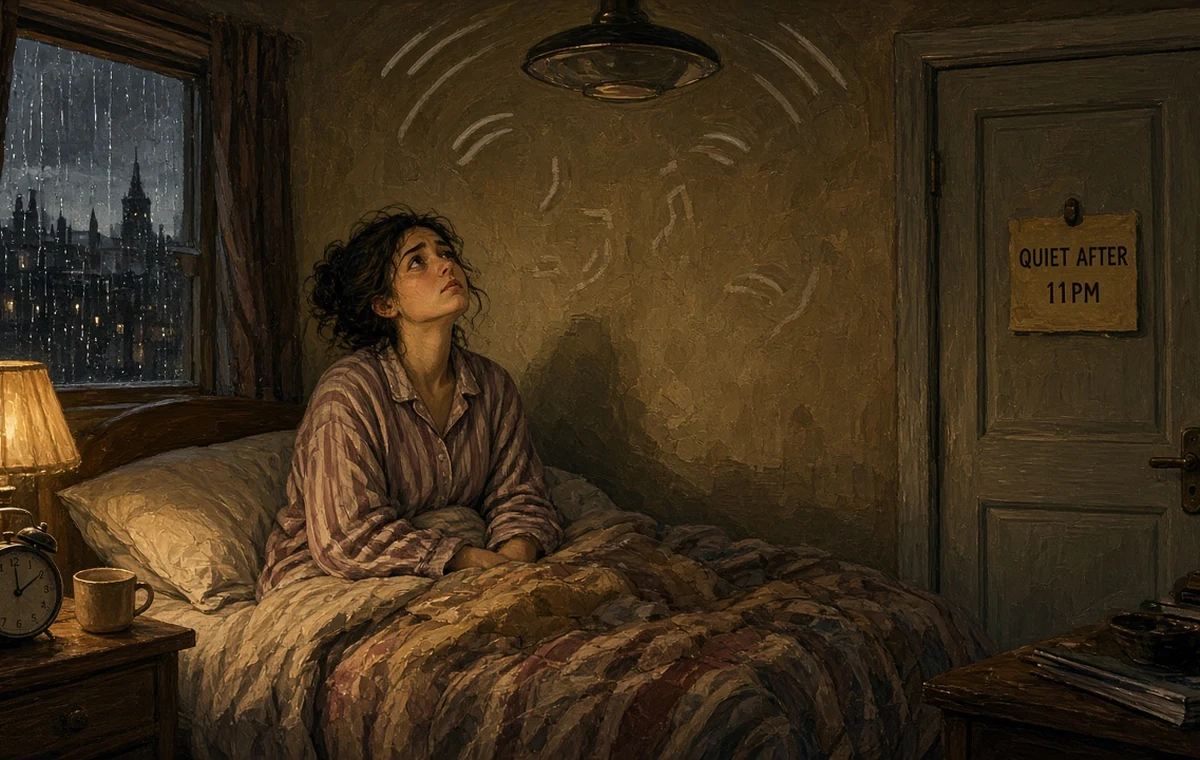
Neighbour noise in flats, often called floor-to-ceiling or upstairs noise, is sound from everyday life in one home that travels through floors, ceilings and walls into another. The thud of a toddler's heels, a dropped pan at midnight or a bass line at 2am rarely breaks any dramatic law, yet it is one of the most common reasons neighbours stop speaking. This guide explains where the noise comes from, how UK and US rules treat it, and how to handle a dispute without turning the stairwell into a battlefield.
The topic began as a Korean classroom assignment, because most Koreans live in large apartment blocks and the noise from upstairs is a genuine national headache. We have rewritten it for English-speaking readers, so the legal half is about council environmental health teams, leases, noise ordinances and building codes rather than Korean statutes.
Why does noise travel between flats?
Acousticians split neighbour noise into two families. Impact noise is created when something strikes the structure itself: footsteps, children jumping, chairs scraped across a hard floor, a dropped object, a washing machine on spin. The floor slab vibrates and re-radiates that energy into the room below, which is why a light adult walking in hard shoes can be more annoying than a loud conversation. Airborne noise starts in the air, such as TV audio, music, voices or a barking dog, and leaks through walls, gaps, ducts and thin doors.
Student money tip from CampusDown Repair UpIs a small leak worth a renters insurance claim? How to decide — compare the loss with your deductible, check who is responsible, and document it either way.
| Type | Typical sources | How it travels | What usually helps |
|---|---|---|---|
| Impact noise | Footsteps, jumping, dropped objects, moving furniture | Through the floor and frame as vibration | Rugs, underlay, felt pads, floating floors, soft slippers |
| Airborne noise | TV, music, voices, instruments, pets | Through air, gaps, thin walls and doors | Lower volume, sealing gaps, heavier walls, quiet hours |
Causes usually come in three layers: the building (thin slabs, hard flooring laid without underlay, converted Victorian houses with timber joists), habits (late-night routines, shoes indoors, a treadmill above someone's bedroom) and relationships (neighbours who never met until the first angry note). Economists would call the problem an externality, because one household enjoys the activity while another pays the cost in lost sleep without any price changing hands.
Seeing the problem in these three layers keeps a presentation fair. It moves the question away from who is the villain and towards what the building, the rules and the people involved can each realistically change.

What do UK rules say about noisy neighbours?
In England and Wales the main tool is the Environmental Protection Act 1990. Noise from a home that unreasonably interferes with the use of another can be a statutory nuisance, and the local council's environmental health team has a duty to investigate complaints. If officers are satisfied a nuisance exists, they serve an abatement notice, and ignoring it can lead to prosecution and seizure of equipment such as speakers. Councils usually ask complainants to keep a noise diary first, and some use recording apps or install monitoring kit.
Night-time has its own regime. Under the Noise Act 1996, councils may act on noise from a dwelling between 11pm and 7am that exceeds a permitted level, issuing a warning notice and then a fixed penalty if it continues. On top of that, the Anti-social Behaviour, Crime and Policing Act 2014 lets councils and police use community protection notices for persistent behaviour that harms a community's quality of life. Scotland and Northern Ireland have their own versions, so always check the right nation's guidance.
Leases, carpets and Approved Document E
For many flat owners the lease matters as much as the law. Long leases commonly contain covenants not to cause nuisance, and plenty also require floors to be carpeted or properly insulated, which is why laying fashionable hard flooring can put a leaseholder in breach. Social landlords and housing associations add tenancy conditions and their own anti-social behaviour teams. On the construction side, new homes and conversions in England must meet Approved Document E of the Building Regulations on resistance to the passage of sound, with pre-completion sound testing commonly used to show the separating floors and walls perform as required. Older conversions built before such standards are often where complaints cluster.
Skimming the section headings first makes a long guide much easier to map out. Try writing down one question of your own as you read.
How does the US handle it?
There is no single federal law on noisy neighbours. The Noise Control Act of 1972 created a federal noise programme, but the EPA office that ran it lost its funding in the early 1980s, leaving most of the work to states and cities. In practice, neighbour noise is handled by local noise ordinances, which usually set quiet hours overnight and give police or city inspectors power to issue warnings or citations. Hours and limits vary widely, so a rule that applies in Chicago may be different in Austin.
New York City is the textbook example: its Noise Code covers residential noise, complaints go through the 311 system, and many co-op, condo and rental leases include a carpet clause requiring most of the floor to be covered. Elsewhere, homeowners associations write quiet hours into their rules, and tenants can point to the implied covenant of quiet enjoyment, which in many states protects a renter's right to use the home without substantial interference. For new buildings, the International Building Code, adopted by most states, sets minimum sound transmission ratings for walls and floor-ceiling assemblies between dwelling units, covering both airborne sound and impact sound.
| Step | United Kingdom | United States |
|---|---|---|
| First conversation | Neighbour, then landlord, managing agent or freeholder | Neighbour, then landlord, building manager or HOA |
| Formal complaint | Council environmental health (statutory nuisance) | City noise ordinance via police non-emergency line or 311 |
| Contract rules | Lease covenants, carpet clauses, tenancy agreements | Lease, carpet clauses, HOA bylaws, quiet enjoyment |
| Building standard | Approved Document E (England) | International Building Code as adopted locally |
| Help to talk | Community mediation services, Citizens Advice | Community mediation centres, tenant unions |
The point for a presentation is that both countries mix three layers of protection: contract rules written into leases, public enforcement through councils and cities, and building standards that try to stop the problem being built into the walls in the first place.
Where should a solution start?

Solutions fall into three groups. Technology reduces the noise itself: thick rugs and underlay, felt pads on chair legs, anti-vibration feet for washing machines, acoustic floating floors and resilient ceilings when a flat is renovated. Rules resolve conflict when talking fails: lease enforcement, council notices and, in the last resort, court action. Relationships prevent the conflict from hardening: introducing yourself, warning neighbours before a party, agreeing quiet hours for a home workout or a child's piano practice.
Mediation sits between relationships and rules. A trained, neutral mediator helps both households describe how the noise affects them and agree on practical changes, and many councils and housing associations refer neighbour disputes to community mediation before taking enforcement action. Our wiki page on conflict management and alternative dispute resolution explains why this route often lasts longer than a legal win.
When you analyse a public awareness campaign on the topic, ask three questions: who is the message aimed at, which emotion does it use, and what exact action does it ask for. That simple frame shows whether a campaign is trying to shame, to inform or to build empathy.
Where do student presentations usually go wrong?
The most common trap is splitting the story into a victim downstairs and a villain upstairs. Real cases are messier: the upstairs family may have no idea how loud their floor is, and the downstairs neighbour may be on night shifts. Other frequent mistakes are quoting a decade-old complaint statistic as if it were current, citing rules that have since been revised, and recommending confrontation at the door, which often makes things worse.
A strong case study takes one scenario, such as footsteps every night after midnight, and walks through it: keep a short diary, talk calmly or leave a friendly note, involve the landlord or managing agent, try mediation, and only then contact the council or city. Finish by listing what each side can do, for example rugs and earlier bedtimes upstairs, and clear, specific feedback downstairs.
- Did you define neighbour noise and separate impact from airborne noise?
- Did you sort the causes into building, habits and relationships?
- Did you check the current rules for the right country or city?
- Did you explain the complaint and mediation route step by step?
- Did you propose actions for both households?
Use the checklist as a final review before you present, and replace any statistic you cannot trace to a dated official source with a general statement instead.
How should you wrap it up?
A good conclusion admits that laws and better floors cannot remove every footstep. Building standards and enforcement set the outer limits, but day-to-day peace in a block of flats still depends on neighbours who talk early, adjust a little and remember that today's upstairs neighbour could be tomorrow's downstairs one. That idea of empathy across the floor is a natural closing line for any talk on the subject.
Student money tip on CampusDown Repair Up: Is a small leak worth a renters insurance claim? How to decide.
Compiled by the CampusDown editorial team from a Korean study summary on apartment noise, adapted with public guidance on the Environmental Protection Act 1990, the Noise Act 1996, Approved Document E, US local noise ordinances and the International Building Code. Reviewed November 2026. Rules change, so confirm details with GOV.UK, your council or your city before relying on them.
FAQ
What is impact noise in a flat?
Sound created when something strikes the structure, such as footsteps, jumping or dropped objects, which travels through the floor as vibration into the home below.
Can my council stop a noisy neighbour in the UK?
Yes. Environmental health teams investigate statutory nuisance under the Environmental Protection Act 1990 and can serve an abatement notice if a nuisance is proven.
Is there a federal US law on noisy neighbours?
No. Neighbour noise is mainly handled by city and county noise ordinances, leases, HOA rules and the tenant's right to quiet enjoyment.
Why do some leases require carpets?
Because hard floors transmit impact noise much more, so many UK leases and US co-op or rental agreements require most floors to be covered or insulated.
Does mediation really work for noise disputes?
Often, yes. A neutral mediator helps both households agree practical changes, and many councils and housing providers suggest it before formal enforcement.