
Where Should Midlife Women's Health Start? Risk Assessment and an Exercise-Based Health Education Plan
- The source names lack of exercise, an unbalanced diet and stress as the three main threats to midlife health.
- Risk factors split into external ones such as environment and living situation, and internal ones such as age, sensory decline and muscle loss.
- The case plans home exercise education for a 51-year-old woman with stress relief and easing low mood as the general goal.
Contents
A health education plan for a midlife woman starts by assessing her risk factors step by step, external ones such as her environment and living situation and internal ones such as age, sensory decline and muscle loss, and then builds an exercise programme she can actually keep up at home. The kids have flown the nest, the promotion window at work feels like it is narrowing, and somewhere between the school run ending and retirement starting, nobody is quite looking after Mum's health, including Mum. This guide follows a Korean nursing case study of a 51-year-old woman, explains the assessment model behind it, and then adds what UK and US guidance says about menopause, hormone therapy, bones, heart health and the pelvic floor.
What makes midlife a distinct life stage?
The source describes midlife as the period when many people feel the limits of their chances for promotion or meaningful status at work. It is also the stage when children grow up and leave home, so many parents experience the quiet of an empty house, often called empty nest syndrome.
Student money tip from CampusDown Life UpHow to Find Unclaimed Money in Your Name — How to find unclaimed money in your name for free: official state databases via NAUPA and MissingMoney.com, federal searches like Treasury…
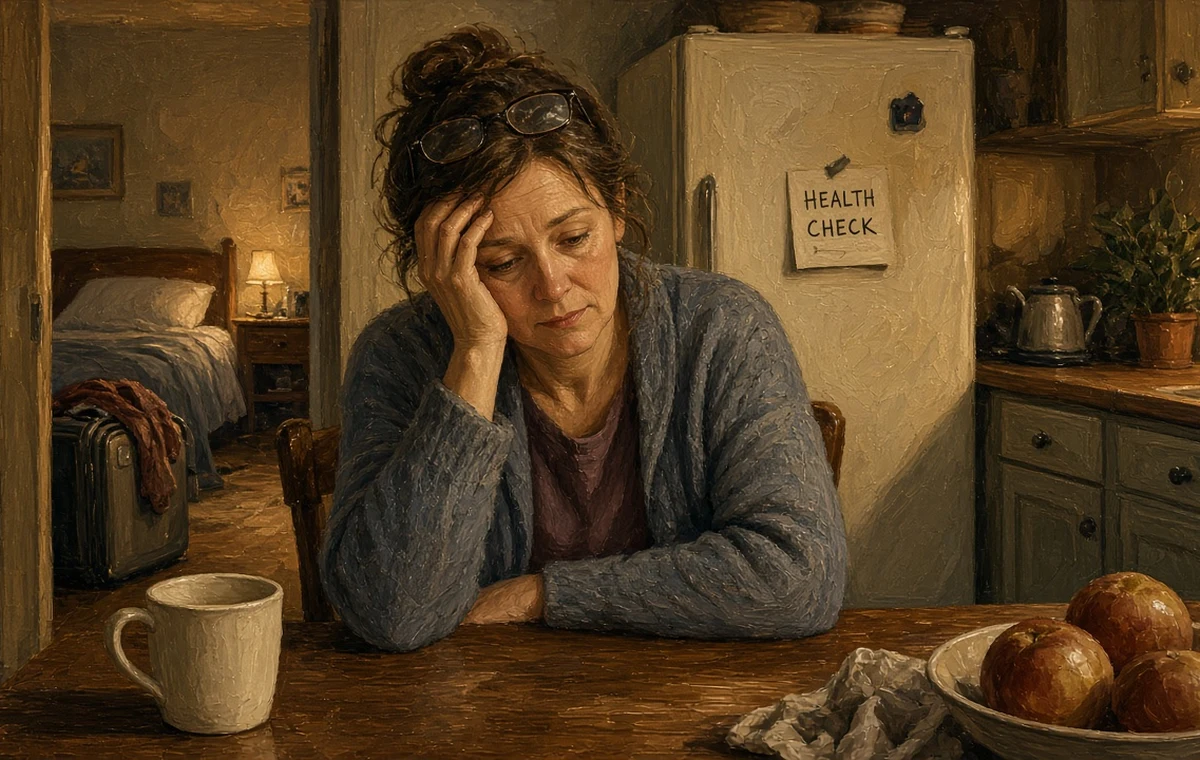
The Korean source cites survey data suggesting that Koreans spend a significant part of their later years in poor health compared with other developed countries. The exact gap varies by data source and year, so we state it generally here. The UK and US have the same concern: official statistics in both countries show a gap of many years between life expectancy and healthy life expectancy, and that gap is wider in poorer areas. That is a strong argument for paying attention to risk factors in midlife, before chronic disease sets in.

What threatens health in midlife?
The source points to three side effects of modern convenience that wear down fitness and bring on chronic disease: too little exercise, an unbalanced diet and heavy stress. Desk jobs, cars, ready meals and evenings spent caring for parents or teenagers all push in the same direction.
| Type | Examples | What education can do |
|---|---|---|
| External (extrinsic) factors | Environmental barriers, living arrangements, unsafe streets, lack of nearby facilities | Find realistic places and times to exercise, involve family |
| Internal (intrinsic) factors | Age, declining eyesight and hearing, illness, loss of muscle strength and balance, medicines | Monitor regularly, adapt exercise safely, review medicines |
Splitting the factors this way helps a nurse separate what education can change, such as daily habits and the home environment, from what needs ongoing monitoring, such as the body's gradual changes.
Skimming the section headings first makes a long guide much easier to map out. Try writing down one question of your own as you read.
Who is the case study about?
The person in the case is a 51-year-old woman who lives with her husband and has two sons and a daughter. The education takes place in her own home. The general goal is to relieve the stress she carries from home and society, and to ease the low mood and sense of futility that come with it.
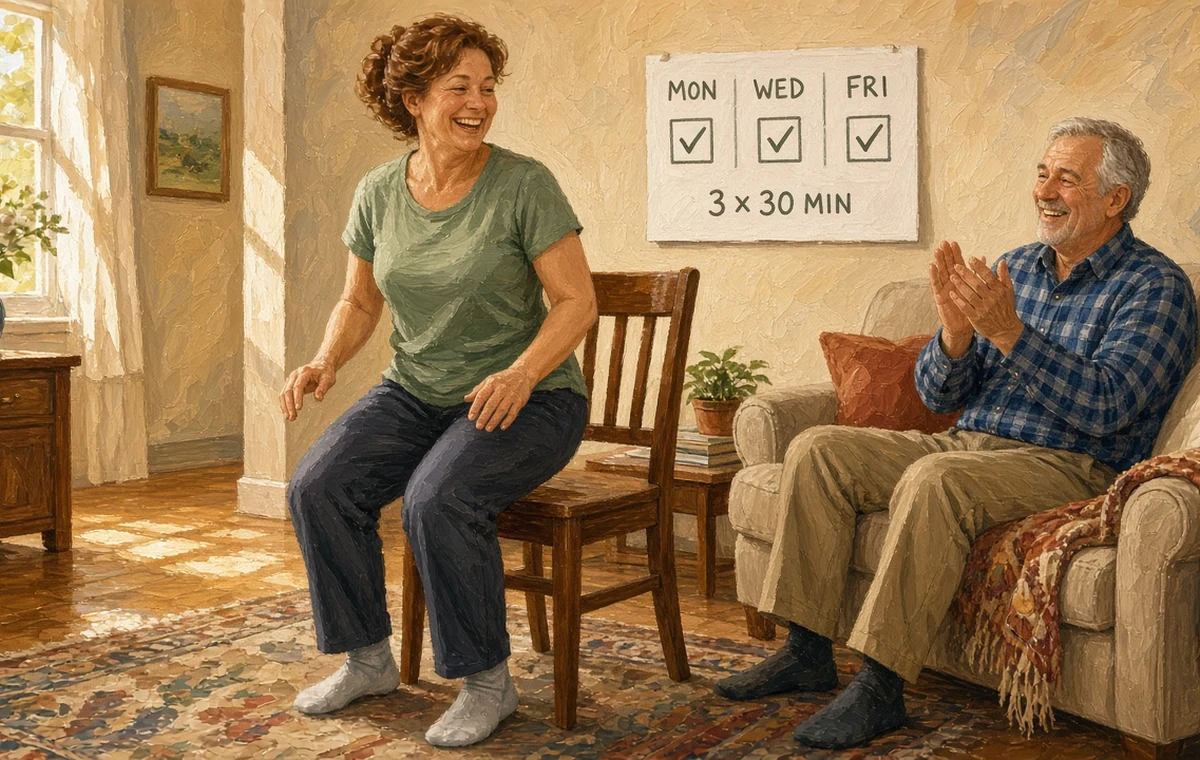
Because the sessions happen in her home rather than a lecture hall, the plan can fit her daily rhythm and family situation in detail: when she actually has 30 minutes, which chair is sturdy enough for sit-to-stands, and whether her husband will join a walk after dinner.
How is the assessment done step by step?
The source follows the stages of the PRECEDE-PROCEED planning model. After the epidemiological assessment, the behavioural and environmental assessment looks at exercise, sleep, alcohol and smoking, and medicines; the educational and ecological assessment covers knowledge about exercise and safety precautions. For the full structure of the model, see the PRECEDE-PROCEED model.
- Epidemiological assessment: identify external and internal risk factors
- Behavioural and environmental assessment: exercise, sleep, alcohol and smoking, medicines
- Educational and ecological assessment: exercise knowledge and precautions
- Administrative and policy assessment: whether an exercise programme is feasible
In the final administrative and policy step, the source justifies the programme on the grounds that exercise education can improve fitness and lower the rate of diseases that threaten quality of life.
Where UK and US services fit in
In England, the NHS Health Check invites adults aged 40 to 74 without certain existing conditions for a check of blood pressure, cholesterol, weight and lifestyle roughly every five years, which makes it a ready-made source of data for the epidemiological step. In the US, the Medicare Annual Wellness Visit plays a similar role for older adults, and the Affordable Care Act requires most private plans to cover many recommended preventive services without cost sharing. The UK Chief Medical Officers and the Physical Activity Guidelines for Americans give similar targets: at least 150 minutes of moderate activity a week plus muscle-strengthening work on two or more days.
How should you write it up for an assignment?
Present the person's socio-demographic profile first, then the risk factor table and each assessment step, and finish with the general goal and the specific exercise content. That order makes the logic of the plan easy to follow.
As the source puts it, building fitness is key to arriving at old age in a healthy body, so the conclusion should spell out an exercise plan she can realistically keep doing week after week.
What else matters for midlife women's health?
After the case study, two questions usually come up: what changes are specific to women in midlife, and how should menopausal symptoms be managed? Menopause brings a major hormonal shift that affects bones, heart, muscles and mood.
Menopause and perimenopause
Menopause is the permanent end of periods as ovarian function declines, usually confirmed after 12 months without a period. It typically arrives around 50, preceded by several years of perimenopause when cycles become irregular. Hot flushes, night sweats, trouble sleeping, mood changes and vaginal dryness are common, but their type and severity vary widely. In the UK, NICE guideline NG23 sets out how to diagnose and manage menopause and was updated in 2024. For background, see our entry on menopause.
The hormone therapy debate
In 2002, part of the large US Women's Health Initiative study, the arm testing combined oestrogen and progestin, was stopped early after higher rates of breast cancer, stroke and blood clots, and use of hormone therapy fell sharply worldwide. Later analyses suggested that risks and benefits may differ for women who start treatment soon after menopause compared with those who start much later. Regulators have moved with the evidence: in November 2025 the US Food and Drug Administration began removing the broad boxed warnings about heart disease, breast cancer and dementia from menopausal hormone therapy labels, while keeping other risk information.
Professional bodies on both sides of the Atlantic now recommend neither prescribing hormone therapy to everyone nor banning it, but deciding case by case based on symptoms, age, time since menopause and personal risks such as breast cancer and clots. In England, an HRT prepayment certificate introduced in 2023 caps the prescription cost of eligible HRT for a year. The nurse's role is to give accurate information so the woman is not deciding out of vague fear or hope, and to encourage a proper conversation with her doctor.
Bones, heart, muscle and pelvic floor
Oestrogen helps slow bone loss, so bone density can fall quickly in the years after menopause. Osteoporosis often causes no symptoms until a wrist, spine or hip fracture. The source mentions bone density checks within Korea's national screening; in the US, the Preventive Services Task Force recommends bone density screening for women aged 65 and over and for younger postmenopausal women at increased risk, while the UK uses risk tools such as FRAX and QFracture to decide who needs a scan. Calcium, vitamin D, weight-bearing exercise, not smoking and moderate drinking are the basics.
Before menopause women generally have lower cardiovascular risk than men of the same age, but the risk climbs afterwards as cholesterol, blood pressure and waist size tend to rise. Muscle loss, or sarcopenia, also starts in midlife, so strength training should sit alongside aerobic exercise. Childbirth, age and hormonal change can weaken the pelvic floor and cause stress urinary incontinence when coughing or laughing. Pelvic floor exercises can help, and many women are too embarrassed to mention it, so a nurse should ask naturally during assessment.
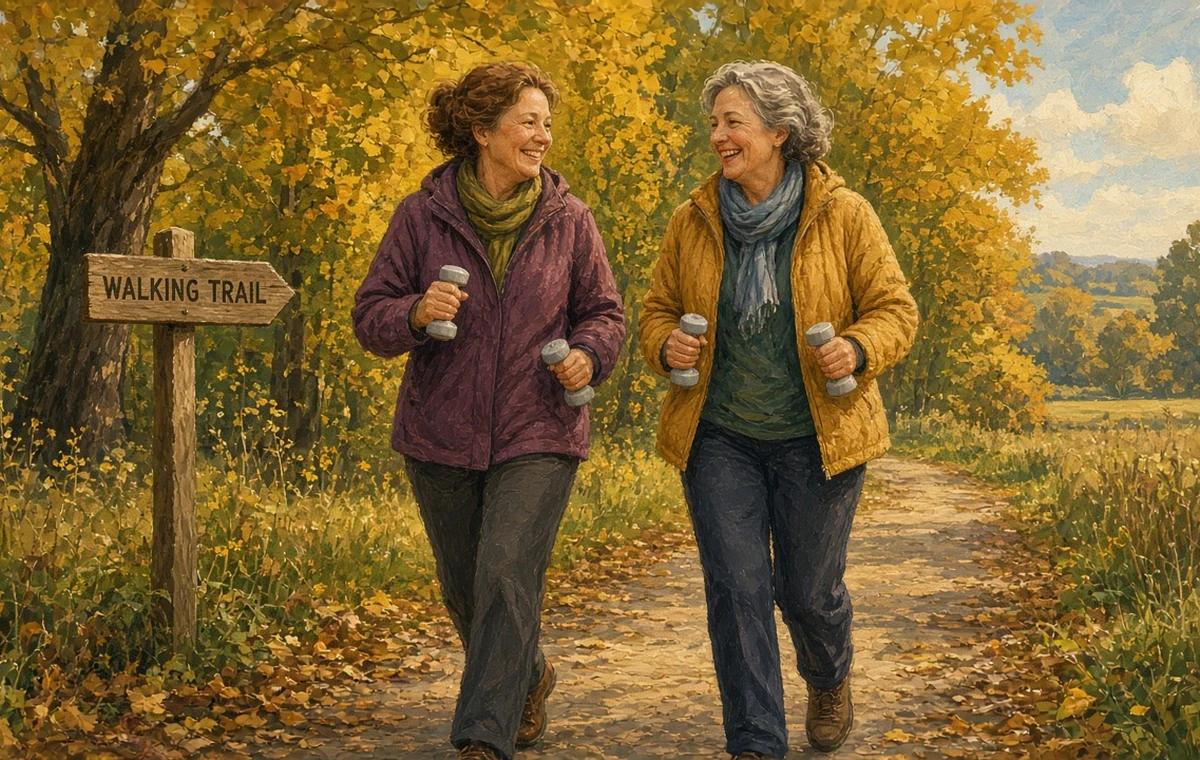
Five items are worth adding to a midlife assessment: menstrual changes and menopausal symptoms such as hot flushes, sleep and mood; whether she has had a bone density check and how much calcium and vitamin D she gets; blood pressure, cholesterol and waist measurement; how often she does strength and weight-bearing exercise; and pelvic floor symptoms such as leaking urine.
How do health risks change after menopause?
| Area | Change | How to manage it |
|---|---|---|
| Bones | Bone density can fall quickly | Risk assessment or bone density scan, calcium and vitamin D, weight-bearing exercise |
| Heart and circulation | Cholesterol and blood pressure tend to rise | Regular checks, diet changes, aerobic exercise |
| Muscles | Muscle mass and strength decline | Regular strength training and enough protein |
| Pelvic floor | Stress urinary incontinence may develop | Pelvic floor exercises, medical review if needed |
Student money tip on CampusDown Life Up: How to Find Unclaimed Money in Your Name.
Link this table to the case study's assessment results to set priorities, and the care plan becomes far more convincing. Strength training helps bones, muscles and blood sugar at once, which makes it a natural centrepiece for the exercise education.
Compiled by the CampusDown editorial team from a Korean nursing study summary, adapted with public information on the NHS Health Check, NICE guideline NG23, the HRT prepayment certificate, the UK Chief Medical Officers' physical activity guidelines, the Physical Activity Guidelines for Americans, USPSTF osteoporosis screening and the November 2025 FDA labelling action on menopausal hormone therapy. Reference: Lachman, M. E. (2004). Development in midlife. Annual Review of Psychology, 55, 305–331. Reviewed November 2026.
FAQ
What are the three main threats to midlife health in the source?
Lack of exercise, an unbalanced diet and heavy stress, which together reduce fitness and lead to chronic disease.
What counts as an internal risk factor?
Age, declining eyesight and hearing, illness, loss of muscle strength and balance, and the medicines a person takes.
How much exercise do UK and US guidelines recommend?
At least 150 minutes of moderate activity a week, plus muscle-strengthening activities on two or more days.
Is hormone therapy safe after menopause?
It depends on the individual. Current guidance weighs symptoms, age, time since menopause and personal risks, so the decision should be made with a doctor.
Who should have a bone density test?
In the US, the USPSTF recommends screening women 65 and over and younger postmenopausal women at higher risk; in the UK, risk tools help decide who needs a scan.