
Why Do We Ask Family Before a Doctor? Kleinman's Three Sectors of Health Care and Cultural Competence
- Kleinman's model describes the social system around illness, including how patients and healers interact, not a single hospital or policy.
- The popular sector of self-care and family advice is where most illness is first recognised and managed.
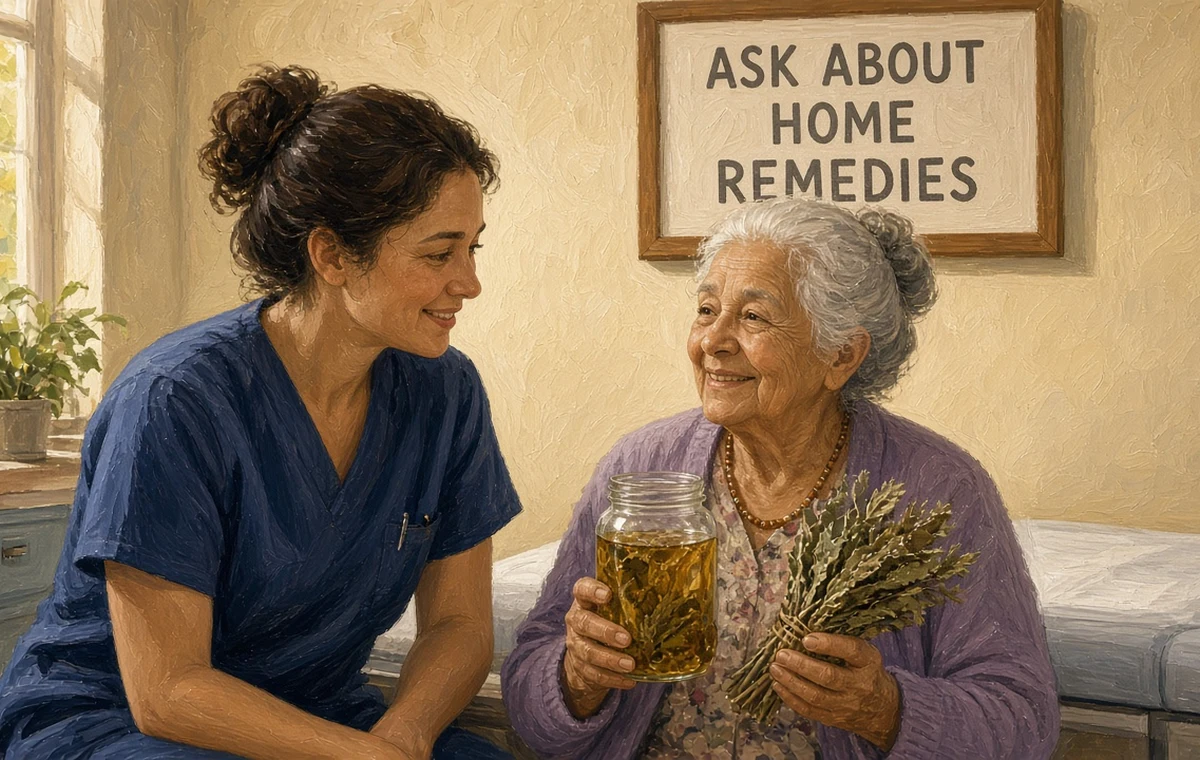
- Cultural competence grows when professionals ask about folk and home remedies and learn from other healing traditions.
Contents
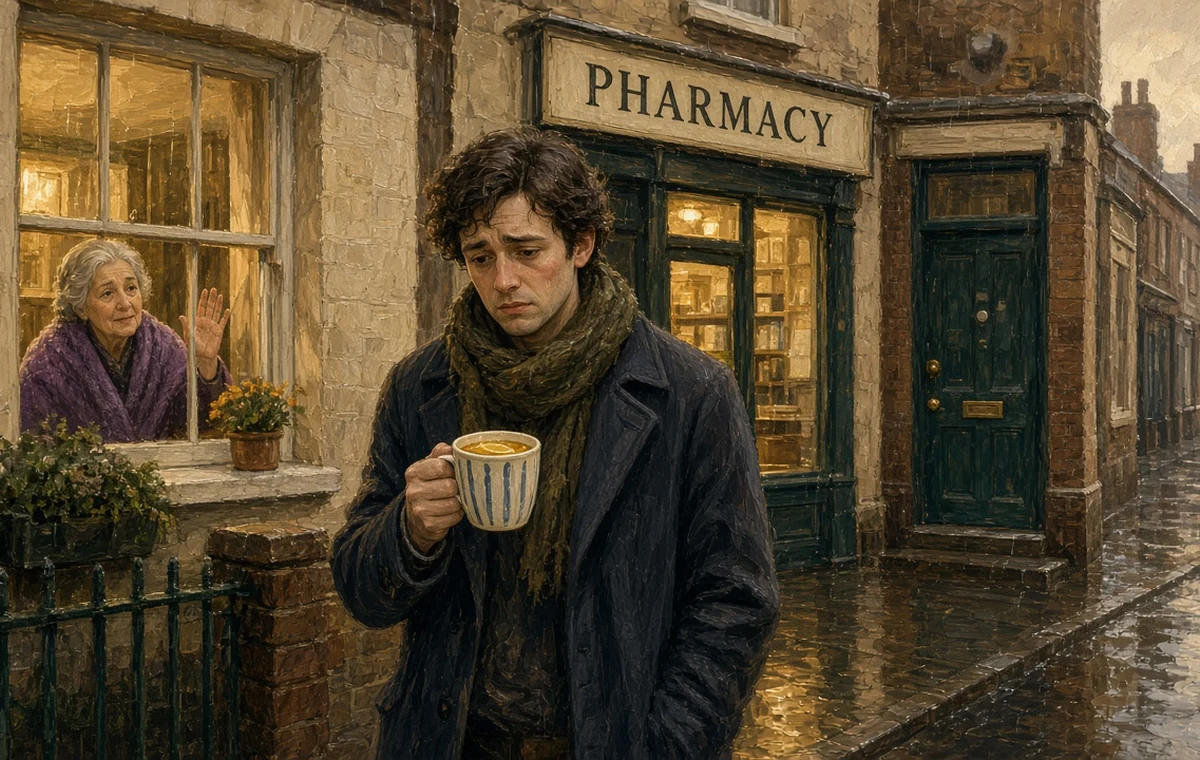
Kleinman's health care system model says that every society handles illness in three overlapping arenas: the popular sector of self-care, family and friends; the folk sector of traditional and spiritual healers; and the professional sector of licensed, science-based medicine. If you have ever texted your mum about a rash before booking a GP appointment, or tried a hot honey-and-lemon before taking anything stronger, you have already lived the model. Harvard psychiatrist and anthropologist Arthur Kleinman set it out in his 1980 book Patients and Healers in the Context of Culture, and it is still a staple of nursing and medical anthropology courses.
This guide began life as a Korean nursing assignment. We have rewritten it for readers in the UK and US, so alongside the theory you will find NHS 111, Pharmacy First, US language-access rules and the herbal registration scheme run by the UK medicines regulator.
What is Kleinman's health care system model?
It is not a hospital, an insurance plan or a government policy. Kleinman used "health care system" to mean the whole web of beliefs, roles and institutions a society builds around sickness: how people make sense of being unwell, who they turn to, what counts as a cure, and how patients and healers talk to each other. The interaction between patient and healer sits at the heart of it.
Student money tip from CampusDown Life UpHow to Find Unclaimed Money in Your Name — How to find unclaimed money in your name for free: official state databases via NAUPA and MissingMoney.com, federal searches like Treasury…
The key idea is that this system is socially constructed. It changes from one era to another and from one culture to another, which is why the same symptom, say persistent tiredness or a child's fever, can be read as stress, as a spiritual imbalance, as a vitamin problem or as a virus, and treated in completely different ways depending on where you grew up.

How do the three sectors differ?
| Sector | What it means | Everyday UK and US examples |
|---|---|---|
| Popular sector | The lay arena where illness is first noticed, named and handled | Resting at home, asking family, searching symptoms online, buying paracetamol, asking a friend who "had the same thing" |
| Folk sector | Healers whose authority comes from tradition, skill or faith rather than state licensing | Herbalists, faith healers, curanderos in some Latino communities, traditional practitioners in migrant communities |
| Professional sector | Legally recognised, science-based medicine with formal training and licensing | GPs and hospitals, nurses, pharmacists, physician assistants, registered physiotherapists |
The popular sector is by far the biggest. Kleinman argued that most episodes of illness are recognised and dealt with there and never reach a professional at all. The folk sector covers bonesetters, herbalists and religious healers; in the original Korean source the examples were bonesetters and shamans. The professional sector is Western biomedicine plus any other healing tradition a state chooses to license.
Why the borders move from country to country
Here is the interesting twist: which healers count as "professional" depends on the law. In the UK, osteopaths and chiropractors are regulated by statute, so they sit in the professional sector, while herbalists are largely unregulated as practitioners. In the US, chiropractors are licensed in every state and acupuncturists in most, while naturopaths are licensed only in some states. So a practitioner can be "folk" in one place and "professional" a few hundred miles away.
Skimming the section headings first makes a long guide much easier to map out. Try writing down one question of your own as you read.
Why does one person move between sectors?
The sectors are not sealed boxes. A typical British winter cold might run like this: you rest and drink hot honey and lemon (popular), ask a community pharmacist for advice (professional), and only see a GP if things drag on. A family in Texas might combine a remedy from a grandmother, a visit to a curandero and a prescription from an urgent care clinic, all for the same illness.
Policy in the UK actively pushes people towards the edge between sectors. NHS 111 offers phone and online triage, and the Pharmacy First service in England, launched in January 2024, lets community pharmacists assess and treat a set of common conditions, such as sinusitis, sore throat and earache, without a GP appointment. In effect the state is trying to catch problems where the popular sector already meets the professional one.
What does the professional sector focus on?
According to the source, professional medicine mainly looks at the body's structure and function: tissues, organs, lab values, scans. The popular and folk sectors, by contrast, often ask about meaning. Why did this happen to me? Is it the family, the weather, bad luck, God's will? How does it affect my role at home?
Kleinman called this the gap between disease, a biological malfunction, and illness, the person's lived experience of being unwell. When a doctor's explanation and a patient's own explanatory model do not match, the patient may quietly skip medicines or stop coming back. That is why nurses are taught to ask about the patient's view of the problem rather than assume the medical view is shared.
Kleinman even offered a short set of questions clinicians can use: what do you call the problem, what do you think caused it, why did it start when it did, how severe is it, what kind of treatment do you think you should get, and what do you fear most about it. They take a couple of minutes and often reveal the folk or popular remedies already in play.
Why is cultural relativism part of the discussion?
The source introduces cultural relativism, sometimes called conventional ethical relativism, as the view that no moral principle is valid for every culture. In health care it encourages staff to understand a folk remedy in its own context instead of dismissing it as superstition.
Relativism is not a blank cheque, though. Respecting a belief does not mean ignoring harm: a herbal product can interact with warfarin, a fasting regime can be dangerous for someone on insulin, and some practices raise safeguarding duties that override cultural explanations. The skill is to hold respect and safety together, and to negotiate rather than either surrender or lecture.
The UK has built part of that safety net into medicines law. The Traditional Herbal Registration scheme run by the MHRA lets herbal medicines carry a THR mark when they meet standards on quality, safety and information, although registration is based on traditional use rather than proof of effectiveness. In the US, herbal products are mostly sold as dietary supplements, which do not need FDA approval before they are marketed, so it is even more important to ask patients exactly what they take.
How can nurses build cultural competence?
The source defines cultural competence as steadily widening your understanding of different cultural groups so that care feels satisfying and safe to them. From Kleinman's angle, the starting point is contact: professional and folk practitioners need real chances to see how each other assess and advise. For a nursing framework that builds culture into care planning, see Leininger's culture care theory, which grew out of the same era of thinking about culture and nursing.
Student money tip on CampusDown Life Up: How to Find Unclaimed Money in Your Name.
What the law expects in the US and UK
In the US, Title VI of the Civil Rights Act of 1964 means providers receiving federal funds must take reasonable steps to give meaningful access to people with limited English, which usually means trained interpreters rather than relatives. The National CLAS Standards from the Department of Health and Human Services add a voluntary blueprint for culturally and linguistically appropriate services. Anne Fadiman's book The Spirit Catches You and You Fall Down, about a Hmong family and a California hospital, is still assigned to show what happens when two explanatory models collide.
In the UK, the Equality Act 2010 places a public sector equality duty on NHS bodies, and the Nursing and Midwifery Council Code asks nurses to treat people as individuals, respect their preferences and make sure their communication needs are met. Neither law tells you what to think about a folk remedy, but both make it hard to ignore the person who uses one.
Put simply, the habit of asking "what have you already tried, and who did you ask?" turns Kleinman's theory into practice. It respects culture, surfaces risky combinations and gives the patient a reason to trust the professional sector.
| Question for the nurse | Why it matters |
|---|---|
| Who did you talk to before coming in? | Shows the role of family and community in decisions |
| Are you taking any herbs, teas or supplements? | Catches interactions with prescribed drugs |
| What do you think caused this? | Reveals the explanatory model and possible adherence problems |
| Would you like an interpreter? | Meets legal duties and avoids using children as translators |
For a wider look at how societies handle cultural difference, the idea of multiculturalism is a useful companion to Kleinman when you write an essay.
When you turn this into coursework, a neat structure is: define the model, describe each sector with local examples, explain disease versus illness, discuss relativism and its limits, then finish with practical steps for cultural competence. Real case material from placement, anonymised, will lift the grade more than any extra theory.
Compiled by the CampusDown editorial team from a Korean nursing study summary, adapted with public information on NHS 111, Pharmacy First, the MHRA Traditional Herbal Registration scheme, Title VI of the Civil Rights Act, the National CLAS Standards, the Equality Act 2010 and the NMC Code. Reference: Kleinman, A. (1980). Patients and Healers in the Context of Culture. University of California Press. Reviewed November 2026.
FAQ
What are the three sectors in Kleinman's model?
The popular sector of self-care and family advice, the folk sector of traditional or spiritual healers, and the professional sector of licensed, science-based medicine.
Is a community pharmacist part of the popular or professional sector?
The professional sector, because pharmacists are trained and regulated. Services like Pharmacy First in England sit right where self-care meets professional advice.
Are chiropractors folk or professional healers?
It depends on the law. They are statutorily regulated in the UK and licensed in every US state, so in those countries they belong to the professional sector.
Does cultural relativism mean nurses must accept any remedy?
No. It means understanding a remedy in its cultural context while still acting on safety risks such as drug interactions or safeguarding concerns.
How can a nurse show cultural competence quickly?
Ask what the patient has already tried, who they consulted, what they think caused the problem, and offer a trained interpreter when needed.