
King Gongmin's Anti-Yuan Reforms and Sin Don: How Late Goryeo Tried to Win Back Its Independence
- In 1356 King Gongmin purged the pro-Yuan Gi Cheol faction and recovered the Ssangseong Commandery.
- In 1366 the monk Sin Don set up an office to return seized land and free people wrongly enslaved.
- Aristocratic resistance, foreign invasions and the king's personal tragedy left the reforms unfinished.
Contents
- Why did Gongmin turn against the Yuan?
- Why did recovering the Ssangseong Commandery matter?
- What did Sin Don's reforms do?
- How did it fall apart?
- How did foreign threats shape the reforms?
- Was the reform a failure?
- From Gongmin to Joseon: what happened next?
- How was the Gwajeon law different from Sin Don's office?
- What does celadon tell us about the period?
- Who were the main factions in late Goryeo?
- FAQ
King Gongmin (r. 1351–1374) came to the throne of Goryeo at the tail end of nearly a century of Mongol domination and set out to make the kingdom its own master again. He had spent years at the Yuan court in Dadu (today's Beijing) and had seen for himself how the empire was weakening. Soon after his accession he gave up the Mongol braided hairstyle and dress, and before long he moved against the pro-Yuan faction at home. Yet the reform drive peaked during the few years the monk Sin Don held power, and it faltered quickly after that.
A king who cut off his Mongol braid: that is where the anti-Yuan reforms begin.
Why did Gongmin turn against the Yuan?
By the 1350s the Yuan dynasty was shaken by the Red Turban rebellions and other uprisings across China. Inside Goryeo, the Gi clan, tied to the Yuan imperial house by marriage, wielded more power than the king. Its leader Gi Cheol was the elder brother of Empress Gi, consort of the last Yuan emperor, Toghon Temür. Gongmin judged that a weakened Yuan gave him his opening. In 1356 he invited Gi Cheol and his allies to a banquet and had them killed, then abolished the Imun-so, the bureau of the Yuan's Eastern Expedition Field Headquarters through which the Mongols had meddled in Goryeo's internal affairs. He also stopped using the Yuan reign title and restored the older Goryeo system of government offices that the Mongols had reorganised.
Student money tip from CampusDown Repair UpIs a small leak worth a renters insurance claim? How to decide — compare the loss with your deductible, check who is responsible, and document it either way.
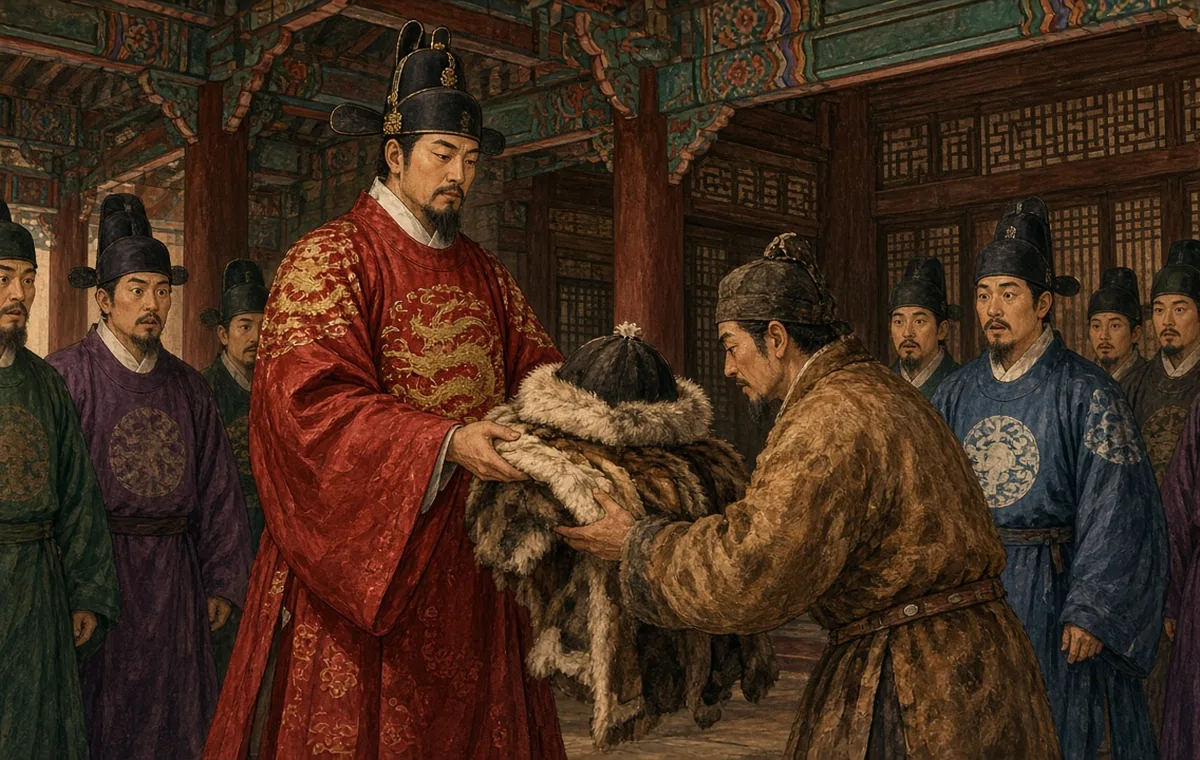
Seen through political legitimacy, the move makes sense.
A Goryeo king whose authority rested on a Mongol marriage and Mongol approval could only claim to rule in his own right by showing that power flowed from the Goryeo throne, not from Dadu.

Why did recovering the Ssangseong Commandery matter?
The Mongols had set up the Ssangseong Commandery in 1258 around Hwaju, present-day Yeongheung in South Hamgyong, and ruled the area directly for roughly a hundred years. The year it was founded is the same year Hülegü's armies sacked Baghdad, a reminder of how far the empire stretched. In 1356 a Goryeo force under Yu In-u attacked, and a local strongman, Yi Ja-chun, opened the way from the inside. Goryeo won back the lands north of Cheollyeong it had lost, and Yi Ja-chun's son, Yi Seong-gye, gained a foothold in central politics. One campaign to recover territory became a link in the chain that would end in a change of dynasty.
Skimming the section headings first makes a long guide much easier to map out. Try writing down one question of your own as you read.
What did Sin Don's reforms do?
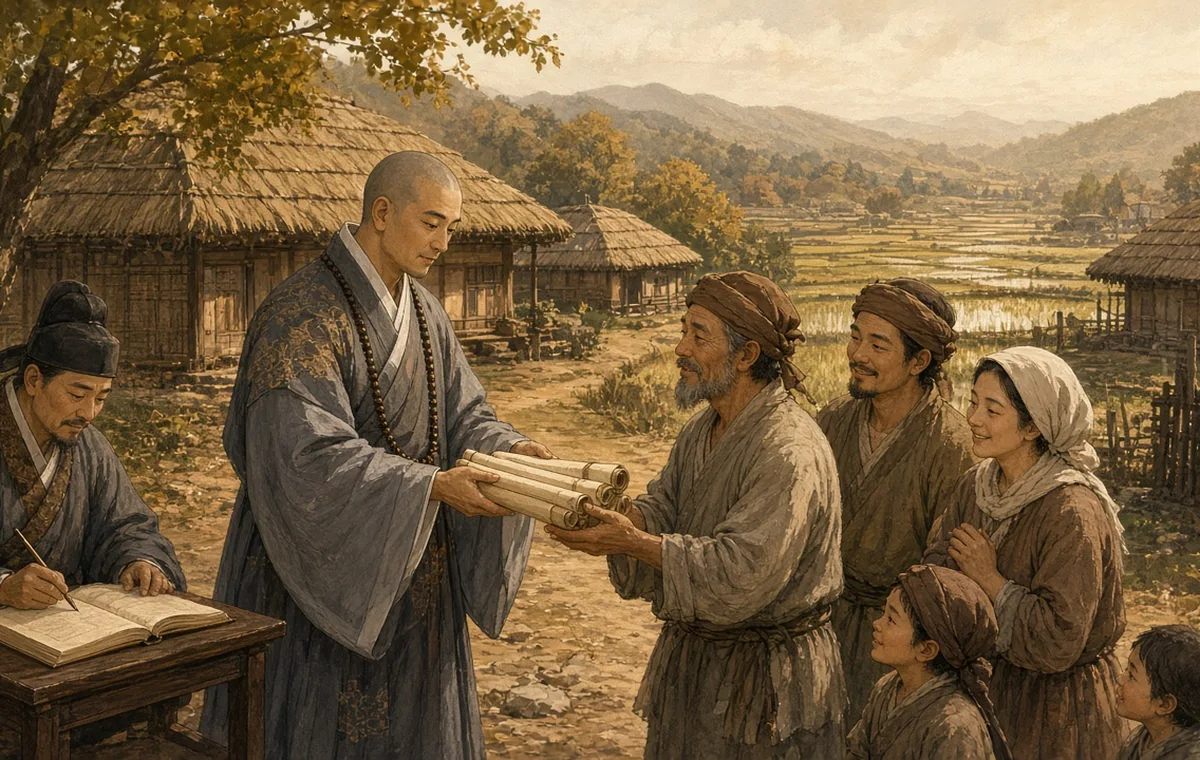
In 1365 Gongmin's queen, Princess Noguk, a Yuan princess who had backed his break with her own dynasty, died in childbirth. The grieving king handed the running of the state to Sin Don, a Buddhist monk with no ties to the established families. In 1366 Sin Don created the Jeonmin Byeonjeong Dogam, an office for sorting out land and people. It returned land that the powerful families had seized illegally and freed people who had been wrongly reduced to slavery. Commoners welcomed him so warmly that some called him a sage, but the great landholders who lost estates and slaves grew more hostile by the month.
Rebuilding the Seonggyungwan, the national academy, belongs to the same years and is often counted among its most lasting results. The academy trained the new Confucian scholar-officials who would shape the next century.
How did it fall apart?
Sin Don was executed in 1371 on charges of treason, and the reform lost its driving force. Gongmin withdrew from government, and in 1374 he was murdered by members of his own entourage, including Hong Ryun and Choe Man-saeng. Elite theory describes this pattern well: a small, entrenched group that controls land and office can outlast a reforming ruler, especially one who depends on a single trusted agent. You can read more on elite theory for the wider argument.
How did foreign threats shape the reforms?
Red Turban armies invaded twice, in 1359 and 1361. The second time they took the capital Gaegyeong, and the king had to flee as far south as Andong. Along the southern coast, wokou pirates raided without let-up. The wars raised the standing of commanders such as Choe Yeong and Yi Seong-gye and emptied the treasury. With money and time both running short, the reforms hit a structural limit.
Was the reform a failure?
It is usually judged unfinished. It leaned too heavily on the king's personal resolve and on one man, Sin Don, and no support base grew strong enough to replace the old aristocracy. But the new scholar-officials and the rising military men of these years went on to found Joseon. Many historians therefore treat Gongmin's reforms as a failed attempt that also prepared the ground for the next era.
A quick revision trick: make a four-row table for 1356, 1366, 1371 and 1374 and write one line for each. The rise and collapse of the reforms become visible at a glance. CampusDown's Korean history notes use the same layout for the whole late Goryeo period.
From Gongmin to Joseon: what happened next?
Less than twenty years after the murder of 1374, Goryeo was gone. Under King U, wokou raids pushed inland, while on the continent the Yuan retreated north and the Ming, founded in 1368, grew stronger. Yi Seong-gye made his name with a major victory over the raiders at Hwangsan in 1380. The turning point came in 1388: when the Ming laid claim to the land north of Cheollyeong, King U and Choe Yeong ordered an expedition into Liaodong. Yi Seong-gye objected, arguing among other things that a small state should not defy a great one, then marched anyway, turned his army round at Wihwa Island on the Yalu and seized power in the capital.
- 1374: Gongmin murdered; King U takes the throne
- 1380: Yi Seong-gye defeats the wokou at Hwangsan
- 1388: the retreat from Wihwa Island puts Yi's faction in control
- 1391: the Gwajeon land law redraws the land system
- 1392: King Gongyang deposed and Joseon founded
The direction Gongmin set, curbing the great families and fixing the land problem, was carried through by others. The outcome was not a renewed Goryeo but a new dynasty.
How was the Gwajeon law different from Sin Don's office?
Sin Don's office tried to correct abuses inside the existing order by giving back what had been taken. The Gwajeon law of 1391 came after the old land registers were burned in 1390 and handed officials fresh rights to collect rent from land in the capital province. It rebuilt the framework itself, which made it far more radical.
What does celadon tell us about the period?
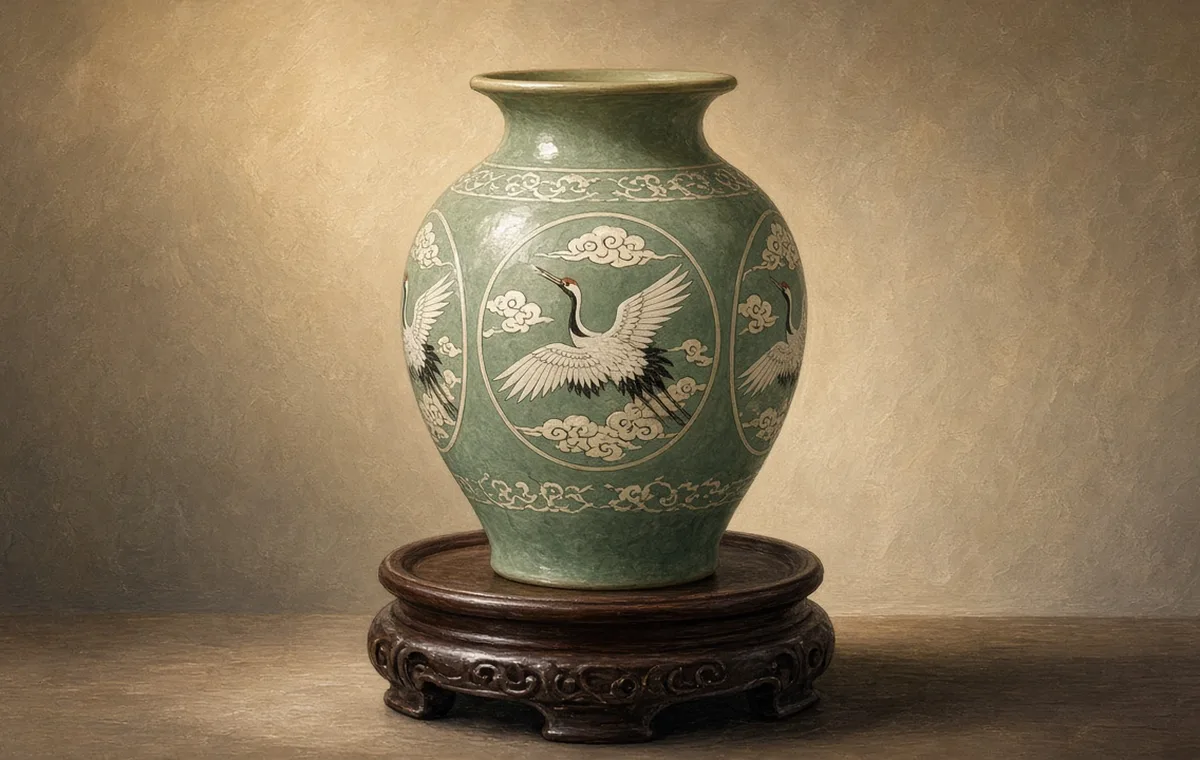
Cranes and clouds on Goryeo celadon are read as symbols of long life, nobility of spirit and longing for the realm of immortals. The inlay technique, in which carved lines are filled with white or black clay before glazing, developed in Goryeo as a distinctive craft. Gongmin himself was remembered as a gifted painter, though the works attributed to him are still debated, so present any attribution with care.
Gongmin's devotion to Princess Noguk is part of his story too. He supervised the building of her tomb himself, and the two now lie side by side in the twin tombs of Hyeolleung and Jeongneung near Kaesong, which belong to the Historic Monuments and Sites in Kaesong, a UNESCO World Heritage site since 2013.
Who were the main factions in late Goryeo?
| Group | Key figures | Aim |
|---|---|---|
| Powerful aristocratic families | Elite of the Yuan period | Keep large estates and privileges |
| Moderate scholar-officials | Jeong Mong-ju, Yi Saek | Gradual reform within Goryeo |
| Radical scholar-officials | Jeong Do-jeon, Jo Jun | Found a new dynasty and rebuild institutions |
| Rising military men | Yi Seong-gye | Grew strong fighting raiders and Red Turbans; allied with the radicals |
Student money tip on CampusDown Repair Up: Is a small leak worth a renters insurance claim? How to decide.
Use this table when you answer the question of whether Gongmin failed. The scholar-officials he tried to cultivate became the authors of the next reforms, so the project died but its seeds survived. Historical dramas are a fun way into the period, but for coursework rely on sources such as the Goryeosa and on scholarly histories.
Reviewed by the CampusDown editorial team, November 2026. Source: Lee, K. (1984). A New History of Korea (E. W. Wagner & E. J. Shultz, Trans.). Harvard University Press.
FAQ
When did King Gongmin reign?
From 1351 to 1374, about 23 years, as the 31st ruler of Goryeo.
What was the Jeonmin Byeonjeong Dogam?
An office created in 1366 under Sin Don to return illegally seized land to its owners and free people who had been forced into slavery.
What happened to Sin Don?
He fell from power and was executed in 1371 on charges of treason.
Where are King Gongmin and his queen buried?
In the twin tombs of Hyeolleung and Jeongneung near Kaesong, part of a UNESCO World Heritage site inscribed in 2013.