
How Did Biosimilars Change the Drug Industry? Celltrion and Disruptive Innovation Theory
- Biosimilars are biologics proven highly similar to an off-patent original.
- Christensen describes cheaper, more accessible products reshaping a market.
- Celltrion widened access at lower prices, but matched rather than lowered performance.
Contents
A biosimilar is a biological medicine shown to be highly similar to an existing biologic whose patents have expired, with no clinically meaningful differences in quality, safety or effectiveness. Some biologic drugs cost thousands of dollars per dose, so when cheaper, near-identical versions arrive, the whole market shifts. This guide, adapted from a Korean business study note, explains what biosimilars are, what makes the pharmaceutical industry unusual, what Clayton Christensen meant by disruptive innovation, how the case of the Korean company Celltrion fits and does not fit the theory, how US and UK regulators and payers treat biosimilars, and what the case teaches about new business strategy.
What is a biosimilar?
| Feature | Generic (small-molecule copy) | Biosimilar |
|---|---|---|
| Reference medicine | Chemically synthesised drug | Biologic made in living cells |
| Structure | Identical active ingredient | Cannot be identical; similarity must be proven |
| Development | Relatively simple | Advanced technology, large plants and clinical data |
| Example | A generic tablet | A copy of an antibody treatment |
Student money tip from CampusDown Law UpMedical bill sent to collections? What to check before you pay — verify the bill, ask about insurance and financial assistance, and dispute errors.
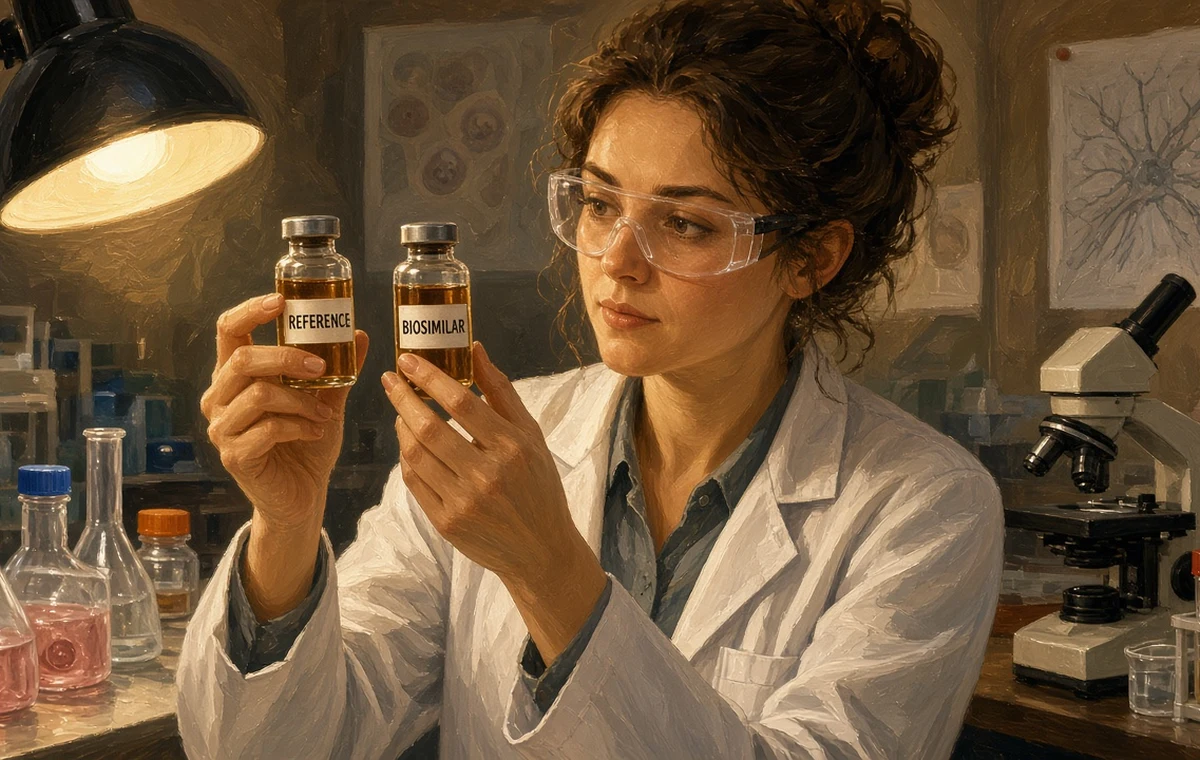
Biologic medicines such as monoclonal antibodies are produced by living cells, so small natural variations are unavoidable even between batches of the original product. A biosimilar developer therefore has to show, through extensive analytical, functional and clinical comparisons, that its product matches the reference medicine closely enough that there are no clinically meaningful differences.
That makes biosimilars much harder to build than ordinary generics. They need serious technology, large manufacturing plants and clinical capability, which is both a barrier to entry and a source of competitive advantage for the companies that manage it.

What makes the pharmaceutical industry different?
- Developing a new drug takes many years and huge investment, but a success can be very profitable.
- Patents give near-monopoly market power for a limited time.
- Demand is tied to health, so it is less sensitive to economic cycles.
- Approval, pricing and reimbursement are heavily shaped by regulators and payers.
Biologics that kept high prices during their patent life become open to competition the moment those patents and exclusivities expire. Biosimilar companies aim at exactly that point, entering a large market with less scientific risk than inventing a new drug.
Price alone does not win, though. Doctors and patients need to trust that a biosimilar works just as well, so changing prescribing habits is often what decides whether a launch succeeds.
Skimming the section headings first makes a long guide much easier to map out. Try writing down one question of your own as you read.
What is disruptive innovation?
In The Innovator's Dilemma (1997), Harvard professor Clayton Christensen described how leading firms keep improving products for their most profitable customers, while newcomers start with simpler, cheaper offerings at the low end of the market or in a new market, then move up until they take over the mainstream. The striking point is that the incumbents fail even though each of their decisions looked rational. The wiki entry on disruptive innovation covers the theory in more detail.
| Feature | Sustaining innovation | Disruptive innovation |
|---|---|---|
| Target customers | Existing mainstream customers | Price-sensitive or new customers |
| Direction | Higher performance | Cheaper and more accessible |
| Usually led by | Incumbents | New entrants |
When you analyse a case with this theory, ask three questions in order: which customers were underserved, what the newcomer made simpler or cheaper, and why the incumbents were slow to respond.
How does the Celltrion case fit the theory?
Celltrion's Remsima, a biosimilar of the autoimmune disease drug infliximab, was approved in South Korea in 2012 as the first monoclonal antibody biosimilar approved by a regulator anywhere. In 2013 it became the first antibody biosimilar approved in the European Union, and in 2016 the US Food and Drug Administration approved it under the name Inflectra. Because it widened access to an expensive treatment at a lower price, it is often discussed as an example of disruptive innovation.
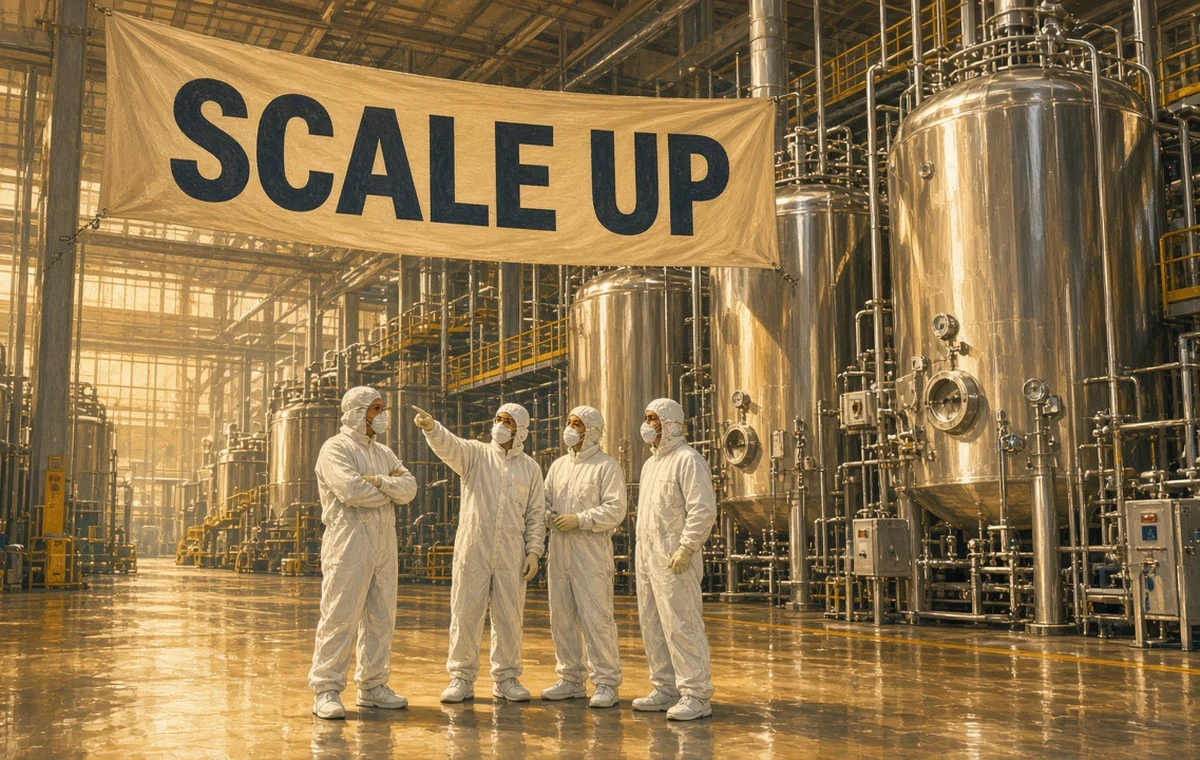
- Lower prices reached health systems and patients struggling with drug costs.
- Large production plants built cost competitiveness.
- Being early built approval experience and trust with regulators and doctors.
- Follow-on products widened the business.
There is also a strong counterargument. A biosimilar aims to match the original's performance, while classic disruption starts with a product that is worse on traditional measures. Some analysts therefore see the case less as disruption and more as cost leadership, one of the strategies in Porter's generic competitive strategies, combined with early entry. Presenting both views makes an assignment much more balanced.
A clarification on the source: it said Celltrion received Korea's first biosimilar approval. What we can confirm is that Remsima was the first antibody biosimilar approved by any regulator, which is the more meaningful milestone for this case.
How do US and UK regulators and payers treat biosimilars?
United States
The Biologics Price Competition and Innovation Act of 2010, passed as part of the Affordable Care Act, created a shorter approval pathway for biosimilars. The FDA approved the first US biosimilar in 2015. A product can also be designated interchangeable, which allows a pharmacist to substitute it for the reference product without asking the prescriber, subject to state pharmacy laws. Long chains of patents around some blockbuster biologics delayed US competition; biosimilars of adalimumab (Humira), for example, launched in the US only in 2023, years after they reached Europe.
United Kingdom
Since leaving the EU, the UK has had its own biosimilar guidance. In 2021 the Medicines and Healthcare products Regulatory Agency (MHRA) said that in most cases a comparative efficacy trial may not be needed if analytical, functional and pharmacokinetic data make a strong case. On the payer side, NHS England runs national tenders and asks hospitals to use the best-value biologic, and switching patients to adalimumab biosimilars after 2018 became a well-known example of fast uptake.
| Issue | United States | United Kingdom |
|---|---|---|
| Approval route | FDA abbreviated pathway (BPCIA 2010) | MHRA guidance (2021), streamlined clinical data |
| Substitution | Interchangeable designation plus state law | Switching led by NHS clinicians and commissioners |
| Main barrier | Patent disputes, rebates, insurer formularies | Building clinician and patient confidence |
The contrast shows that the same product can spread quickly or slowly depending on who pays for medicines and how they decide.
What does the case teach about new business strategy?
The Celltrion story shows that even a market dominated by giants can open up when a structural change, such as patent expiry, is spotted early and a company invests first in technology and plants that others thought too hard. It also shows the limits: original manufacturers respond with price cuts and next-generation products, so any advantage needs continuous innovation to last.
Student money tip on CampusDown Law Up: Medical bill sent to collections? What to check before you pay.
- Biosimilars must prove they are highly similar to the original biologic.
- Patent expiry is the structural opening that biosimilars target.
- Christensen's theory explains access and price, but not the matching performance.
- Cost leadership and early entry are useful complementary lenses.
- Regulation and payers decide how fast biosimilars spread.
In a business assignment, rather than forcing a case into one theory, show both what the theory explains well and what it misses. That is what gives a case analysis depth and credibility.
FAQ
Do biosimilars work as well as the original?
To be approved, they must show no clinically meaningful differences in quality, safety and effectiveness.
What is a biobetter?
A biologic that improves on an existing one, for example in effectiveness or convenience, and is regulated as a new product.
Is disruptive innovation always about cheap products?
It often starts at the low end, but new-market disruption reaches customers who were not using the product at all.
What does interchangeable mean in the US?
An FDA designation that lets pharmacists substitute a biosimilar for the reference product, subject to state law.
Why were US biosimilars of Humira so late?
Patent protection and litigation delayed US launches until 2023, years after Europe.