
Gesell Maturation Theory vs Bandura Social Learning Theory: Readiness, Norms and Milestone Checks
- Gesell saw development as maturation unfolding in a genetically set order.
- Bandura explained it through observation and reciprocal determinism.
- The two theories complement each other, and modern milestone checks are screening tools.
Contents
Gesell maturation theory holds that a child's development unfolds from within in a genetically set order and pace; the environment can support or slow that flow but cannot change the order itself. Arnold Gesell (1880 to 1961) built the theory by observing large numbers of infants and young children and turning what he saw into age-based developmental norms. Bandura's social learning theory starts from the opposite place, with learning through observation and imitation, which is why assignments so often ask students to compare the two. This guide covers both, where practitioners get confused, and how milestone checks work in the United States and the United Kingdom today.
What is Gesell maturation theory?
Gesell was born in Wisconsin in 1880, earned his doctorate in psychology at Clark University under G. Stanley Hall, and later led child development research at Yale. After founding a child study clinic at Yale in 1911, he spent decades recording how infants moved and behaved. He is known for using one-way mirrors and film so that children could be observed without being disturbed.
Related on CampusDown Life UpLost Your Birth Certificate? How to Order a Certified Copy — How to replace a lost birth certificate: order a certified copy from your birth state's vital records office (CDC directory), what you…
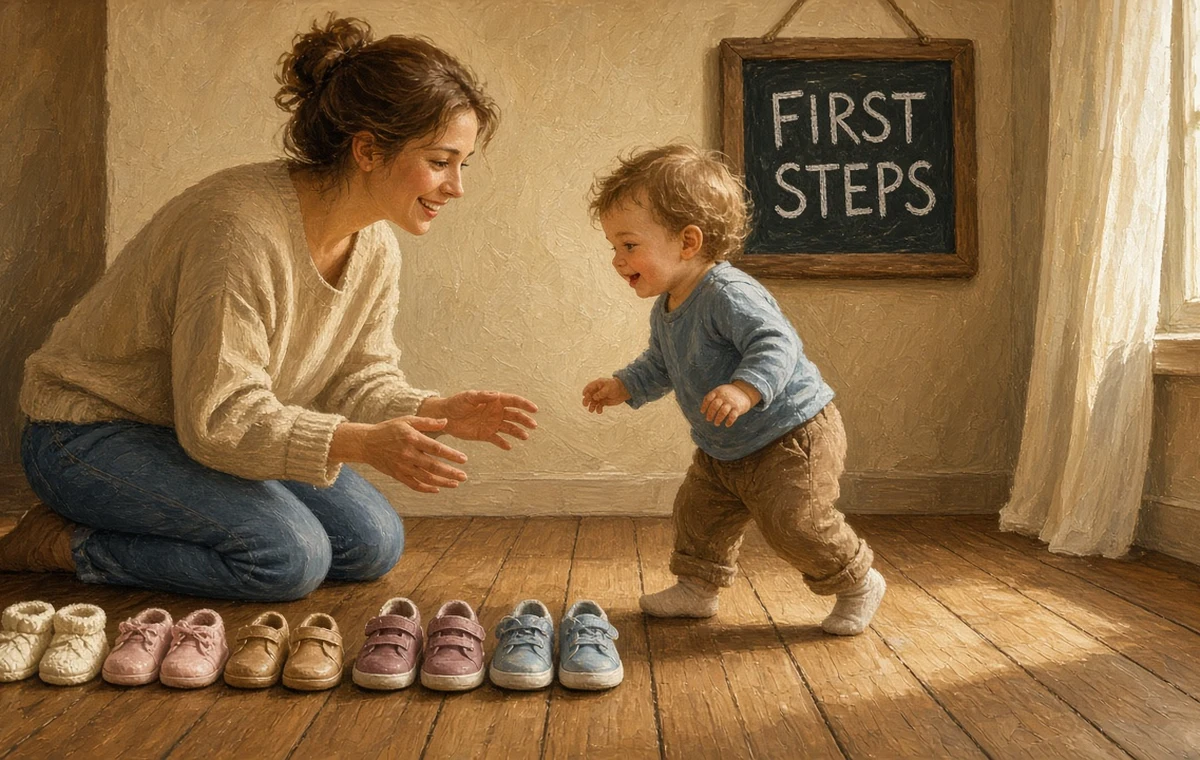
What struck Gesell was that, although each child moved at a slightly different pace, the order of milestones such as rolling over, sitting, crawling, standing and walking was remarkably similar. He called the force behind that shared order maturation, and explained it as the nervous system growing according to a genetic plan.
What did the twin stair-climbing study show?
The study most associated with Gesell is the stair-climbing experiment with identical twins, published with Helen Thompson in 1929. One twin was trained early to climb stairs; the other was trained briefly several weeks later and quickly caught up. Gesell concluded that training before the body is ready has little effect, while at the right moment a small amount of practice produces fast learning.
The key idea from this work is readiness. The message that teachers and parents should look at a child's maturity rather than calendar age when deciding what to teach and when is still widely quoted in early childhood education.

What are Gesell's principles and developmental norms?
From his observations Gesell set out several principles of development. The best known is direction: development proceeds from head to foot and from the centre of the body outwards. More detail is in the wiki entry on Gesell maturation theory.
| Principle | Meaning | Example |
|---|---|---|
| Developmental direction | Head to foot, centre to edge | Holding the head up before sitting; using the arms before the fingers |
| Reciprocal interweaving | Opposing functions take turns dominating, then integrate | Bending and stretching develop in alternation |
| Functional asymmetry | One side tends to become dominant | Preferring the right or left hand |
| Individuating maturation | Maturation proceeds from within the child | Learning quickly when ready rather than through forced practice |
| Self-regulatory fluctuation | Development surges and pauses as it finds balance | Focusing on walking for a while after a burst of new words |

Gesell's other major contribution was developmental norms. He described what children typically do at given ages across motor, adaptive, language and personal-social behaviour, and these norms became a foundation for later infant and toddler developmental tests. A norm is a reference line for when something usually appears, not a pass mark for ranking children.
One correction to the usual textbook account: Gesell's norms came from a relatively small and homogeneous sample, largely children from middle-class families around New Haven. Later researchers pointed out that this limits how far the norms can be generalised across cultures and backgrounds, which is one reason modern screening tools are standardised on broader populations.
Skimming the section headings first makes a long guide much easier to map out. Try writing down one question of your own as you read.
How does it differ from Bandura's social learning theory?
Bandura stressed observational learning: children learn by watching and copying others. In his Bobo doll experiments of the 1960s, children who saw an adult hit an inflatable doll were more likely to behave aggressively themselves, a result often cited as key evidence for social learning theory. The source text describes the environment as the key factor for Bandura, but that oversimplifies him. Bandura's view is reciprocal determinism: the person, their behaviour and the environment influence one another, and thinking processes such as attention, memory and motivation shape what a child learns.
| Aspect | Gesell | Bandura |
|---|---|---|
| Driving force | Genetically set maturation | Observation, imitation and reinforcement |
| Role of environment | Supports or slows the flow | One of three interacting factors with person and behaviour |
| View of the child | A being that unfolds from within | A learner who watches, thinks and chooses |
| Role of adults | Observe and wait for readiness | Model good behaviour and reinforce it |
| Main criticism | Underplays environment and culture | Struggles to explain biological maturation |
The two theories look opposed but complement each other when explaining infancy. Gesell fits functions that need neural maturity first, such as walking. Bandura fits social behaviours such as greeting or tidying up. When comparing them in an assignment, note that which theory explains more depends on the behaviour you choose as an example.
Where do practitioners get confused?
The most common misreading of maturation theory is that waiting solves everything. The waiting Gesell meant is not neglect but active waiting: watching a child's signals closely and offering opportunities when readiness appears.
- Treating norms as pass marks: deciding there is a problem only because a 12-month-old is not yet walking ignores individual differences.
- Choosing between maturation and learning: for most behaviour, maturation lays the foundation and experience shapes the detail.
- Reducing Bandura to copying: social learning theory includes cognitive processes such as attention, memory and motivation.
Imagine a toddler-room teacher deciding when to start toilet training. From Gesell's view, the teacher first looks for readiness signals, such as whether the child notices a wet nappy or can stay dry for a while. Adding Bandura's view, the teacher can let the child see peers using the potty and respond warmly to success. This is a hypothetical example.
A short checklist helps: record behaviour by readiness signals rather than age; observe for a period before judging any difference from the norm; remember that your own behaviour is a model; and separate functions that need maturation from behaviour learned through experience.
How are milestones checked in the US and UK?
United States
Gesell's legacy lives on in the Gesell Institute, whose developmental observation tools are still used by some schools when thinking about kindergarten readiness. Readiness also sits behind the debate over academic redshirting, when parents delay kindergarten entry by a year. On the health side, the CDC and the American Academy of Pediatrics revised their developmental milestone checklists in 2022 so that each milestone is one that most children, 75 percent or more, reach by that age, making it clearer when to talk to a doctor.
United Kingdom
In England, the Healthy Child Programme includes a health visitor review at around two to two and a half years, commonly using the Ages and Stages Questionnaire (ASQ-3) completed with parents. The Early Years Foundation Stage also includes a progress check at age two in early years settings. Both are screening tools for spotting children who may need support, not tests to rank them, which echoes the point that norms are reference lines.
| Item | United States | United Kingdom |
|---|---|---|
| Main reference | CDC and AAP milestone checklists | Healthy Child Programme reviews |
| Toddler check | Well-child visits with developmental screening | Two to two and a half year review, often with ASQ-3 |
| Readiness debate | Kindergarten readiness and redshirting | EYFS progress check at age two |
These systems show how Gesell's idea of age norms survives in modern form, while broader samples and the 75 percent threshold respond to the criticisms of his original method.
How should you write a Gesell vs Bandura comparison?
A dependable structure is: the theorists' lives and the background of each theory; key concepts; a comparison table; strengths and weaknesses; and implications for early childhood practice. To place maturationism alongside behaviourism, constructivism and other approaches, see the wiki entry on child development theories.
Related on CampusDown Life Up: Lost Your Birth Certificate? How to Order a Certified Copy.
In the conclusion, rather than picking a winner, state in one or two sentences your view that understanding development requires looking at maturation and learning together. Norms are reference points, and if you are worried about a child's development, speak to a paediatrician, health visitor or developmental specialist.
- Gesell saw development as maturation unfolding in a fixed order.
- Readiness means teaching when the child is ready, through active waiting.
- Norms are reference lines, and Gesell's original sample was narrow.
- Bandura explains development through reciprocal determinism and observational learning.
- Modern US and UK milestone checks are screening tools, not rankings.
FAQ
What is the core idea of Gesell maturation theory?
Development unfolds from within in a genetically set order; the environment can support or slow it but cannot change the order.
What is readiness?
The idea that teaching works best when a child is maturationally ready, so adults should observe and offer chances at the right time.
What did the twin stair-climbing study find?
A twin trained later and more briefly quickly caught up with a twin trained early, suggesting training before readiness has little effect.
How does Bandura differ from Gesell?
Bandura stresses observational learning and reciprocal determinism among person, behaviour and environment, rather than inner maturation.
Are developmental norms pass marks?
No. They are reference lines for when skills usually appear, and screening tools are used to spot children who may need support.