
Does Music Therapy Help Schizophrenia? What an Inpatient Group Study Found
- Group music therapy combines singing, relaxation, playing instruments and sharing reflections.
- In the study, social functioning, some negative symptoms, depression and anxiety improved more than in the control group.
- A single-hospital sample, a short intervention and no follow-up limit how far the results can be generalised.
Contents
Group music therapy for schizophrenia uses singing, rhythm, relaxation and playing instruments together, guided by a trained therapist, as an add-on to medication to help people reconnect with others and express feelings without relying on words. Many people with schizophrenia find that medication calms hallucinations and delusions, yet withdrawal, low motivation and flattened emotion, the so-called negative symptoms, still make it hard to return to everyday life. This guide walks through a study of inpatient group music therapy and looks at what it can and cannot show.
Why use music therapy for schizophrenia?
Symptoms of schizophrenia are usually grouped into positive symptoms, such as hearing voices and delusions, and negative symptoms, such as reduced emotional expression, loss of motivation and social withdrawal. Antipsychotic medication tends to work relatively well on positive symptoms, but negative symptoms and social functioning often recover much more slowly.
Student money tip from CampusDown Law UpSurprise out-of-network ER bill? How to check and challenge it — the No Surprises rules, itemized bills, insurance appeals and where to complain.
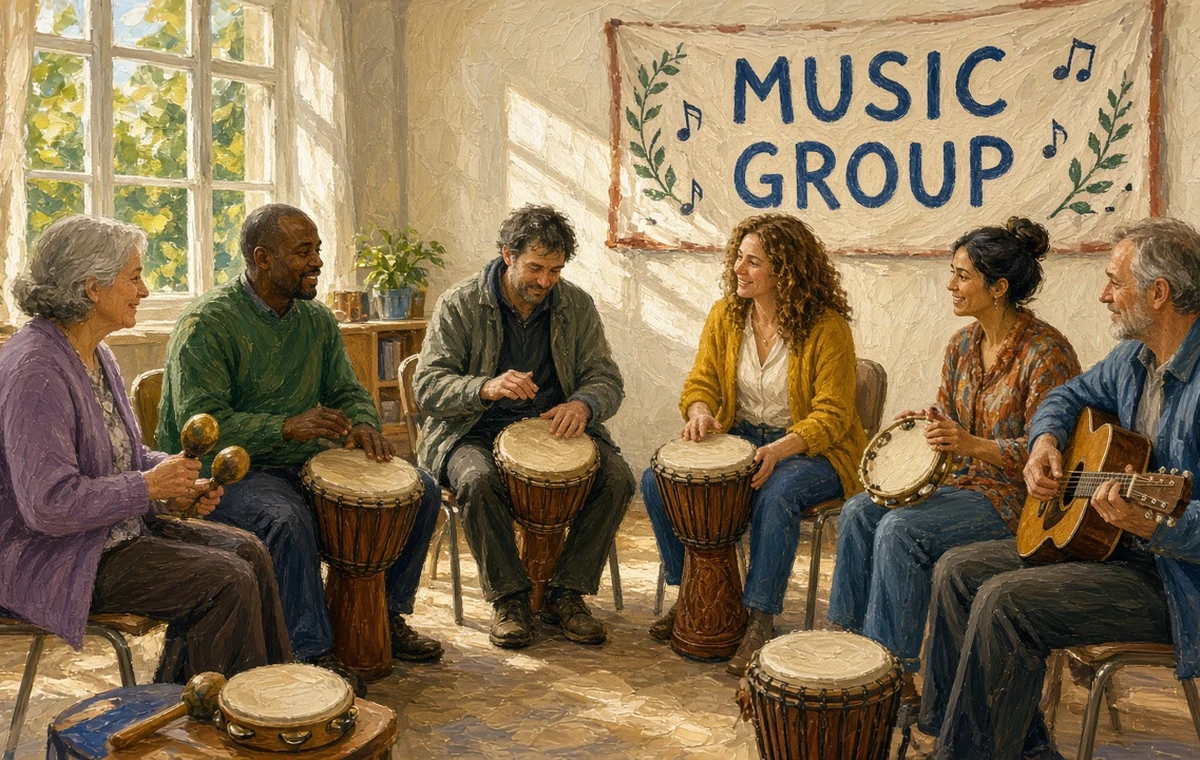
Music offers a lower-pressure way to share emotion and to coordinate with other people by keeping time together, so it has long been used as a supportive therapy for practising relationships and emotional expression. In the UK, NICE guidance on psychosis and schizophrenia in adults (CG178, 2014) advises considering arts therapies, which include music therapy, for everyone with psychosis or schizophrenia, particularly to ease negative symptoms. "Music therapist" is a protected title regulated by the Health and Care Professions Council, while in the United States most practitioners hold the MT-BC board certification.

How was the study carried out?
The study compared inpatients who joined a short daily music group with similar patients who received usual ward care only. Its design is summarised in the table below.
| Item | Details |
|---|---|
| Participants | 65 inpatients at one psychiatric hospital in China, aged 20–60, ill for at least two years, on the same medication and in a stable mental state |
| Duration | Once a day for 14 days, 45 minutes per session |
| Session structure | Greeting song, body relaxation, about 30 minutes of music activities, sharing reflections |
| Measures | Personal and social functioning, negative symptoms, depression and anxiety scales |
Limiting participants to stable patients on the same medication was a way to stop differences in drugs from muddying the results, so that any change could more plausibly be linked to the music therapy itself.
Skimming the section headings first makes a long guide much easier to map out. Try writing down one question of your own as you read.
What did it find?
Compared with the control group, the music group showed gains in several areas, but the pattern was mixed rather than uniform, which matters for how the findings should be described.
| Area | Result |
|---|---|
| Social functioning | Significantly higher in the music group; aggressive or impulsive behaviour and self-stimulating behaviour decreased |
| Negative symptoms | Attention problems, lack of drive and asociality improved; affective flattening and alogia (poverty of speech) showed no difference |
| Depression and anxiety | Psychomotor and depressive mood items improved, and anxiety fell |
| Background factors | Social functioning differed by sex but not by age |
In other words, singing and playing together seemed to help people get along with others and feel calmer, but two weeks was not enough to shift the core negative symptoms of emotional depth and poverty of thought. Summaries that say negative symptoms "improved" overall go further than the data: only some of them did.
What does the wider evidence say?
The wider evidence points the same way. A Cochrane review by Geretsegger and colleagues (2017) found that music therapy added to standard care may improve global state, mental state including negative symptoms, social functioning and quality of life, though the quality of evidence was low to moderate and benefits seemed to depend on receiving enough sessions.
What are the study's limitations?
First, the sample came from a single hospital, which makes it hard to generalise. Depression and anxiety were rated by doctors and nurses rather than by patients themselves, so the strengths of self-report scales were lost. And the control group received no activity at all, so it is hard to separate the effect of music from the effect of simply getting extra attention.
The study also did not follow patients after treatment to see how long the effects lasted. In terms of experimental design, future studies would be stronger with multi-site samples, an active control group, follow-up assessments, qualitative interviews with patients and comparisons of different numbers of sessions.
None of these limits means the findings are worthless; they simply mark the study as an encouraging early signal that larger, longer trials need to confirm.
What does it mean for nursing and rehabilitation?
Student money tip on CampusDown Law Up: Surprise out-of-network ER bill? How to check and challenge it.
Mental health nurses and rehabilitation staff need to plan activities, alongside medication, that let people practise connecting with others again. Group music therapy needs no musical skill, offers easy experiences of success and belonging, and fits well into ward and community programmes.
Still, music therapy is an add-on, not a replacement for medication. It works best when run with a qualified music therapist, with attention to each person's symptoms and sensitivity to sound, and with outcomes reviewed regularly. Group activities can also chip away at the isolation that stigma and labelling create, which is part of why recovery-oriented services value them.
Compiled by the CampusDown editorial team from a Korean article reviewing a Chinese inpatient study of group music therapy for schizophrenia, adapted with public information on NICE guideline CG178, HCPC regulation of music therapists and US board certification. Reference: Geretsegger, M., Mössler, K. A., Bieleninik, Ł., Chen, X.-J., Heldal, T. O., and Gold, C. (2017), Music therapy for people with schizophrenia and schizophrenia-like disorders, Cochrane Database of Systematic Reviews, (5), CD004025. Reviewed November 2026. This is general information, not medical advice; never stop medication without talking to your care team.
FAQ
Who delivers music therapy?
A trained music therapist who has studied both music and psychological therapy plans and runs sessions to suit each person; in the UK the title is regulated by the HCPC.
Can I take part if I can't sing?
Yes. The aim is participation and expression, not musical skill.
Can music therapy replace medication?
No. It is an add-on to medication, and stopping medication on your own greatly raises the risk of relapse.
Did all negative symptoms improve in the study?
No. Attention, drive and sociability improved, but affective flattening and poverty of speech did not change.
Is music therapy recommended in UK guidelines?
NICE guideline CG178 advises considering arts therapies, including music therapy, for people with psychosis or schizophrenia, especially for negative symptoms.