
Does Cupping Therapy Work? What the Evidence Says, Why It Leaves Marks and Who Should Avoid It
- Cupping uses suction to lift the skin and may ease neck and back pain for some people.
- Trials are small and hard to blind, so the evidence is rated low to moderate.
- The marks are bruises, and people on blood thinners, pregnant women and frail adults need care.
Contents
Cupping can ease muscle and neck pain for some people, but the research behind it is small and hard to blind, so the honest answer is "possibly helpful, not proven". The round marks are bruises from burst capillaries, not toxins leaving the body, and people on blood thinners, pregnant women and frail older adults need extra care. Many people say their stiff shoulders feel lighter after a session, and since Michael Phelps appeared at the 2016 Rio Olympics with purple circles on his back, cupping has spread from Chinese and Korean clinics to gyms, sports physios and hijama practitioners across the UK. This guide sets out what cupping is, how it sits alongside acupuncture and moxibustion, what the studies actually show and who should think twice.
Where do acupuncture, cupping and moxibustion come from?
East Asian medicine, including traditional Chinese medicine and Korean medicine, describes illness as a blockage or imbalance in the flow of qi and blood. The channels that carry this flow are called meridians, and the points along them where stimulation is thought to work best are acupoints. Acupuncture, cupping and moxibustion are all explained as ways of stimulating those points to restore the flow.
Related on CampusDown Law UpI Signed a Gym Waiver and Then Got Hurt. Am I Totally Out of Luck? — Injured at the gym after signing a liability waiver?
This framework does not map neatly onto Western anatomy, so it helps to keep two questions apart: what the traditional theory says, and what modern research has actually measured. Mixing them up is the main reason discussions about cupping become heated rather than useful.

How are the three treatments different?
| Treatment | Method | Commonly used for |
|---|---|---|
| Acupuncture | Fine needles inserted at acupoints | Muscle and joint pain, indigestion |
| Cupping | Air removed from a cup so suction lifts the skin | Stiff shoulders and back, knotted muscles |
| Moxibustion | Dried mugwort burned to warm an acupoint | Chronic pain, feeling cold, fatigue |
In practice a clinic often combines them, placing needles first and then adding cups or moxa. What they share is that nothing is swallowed or injected: each works through the skin and muscle.
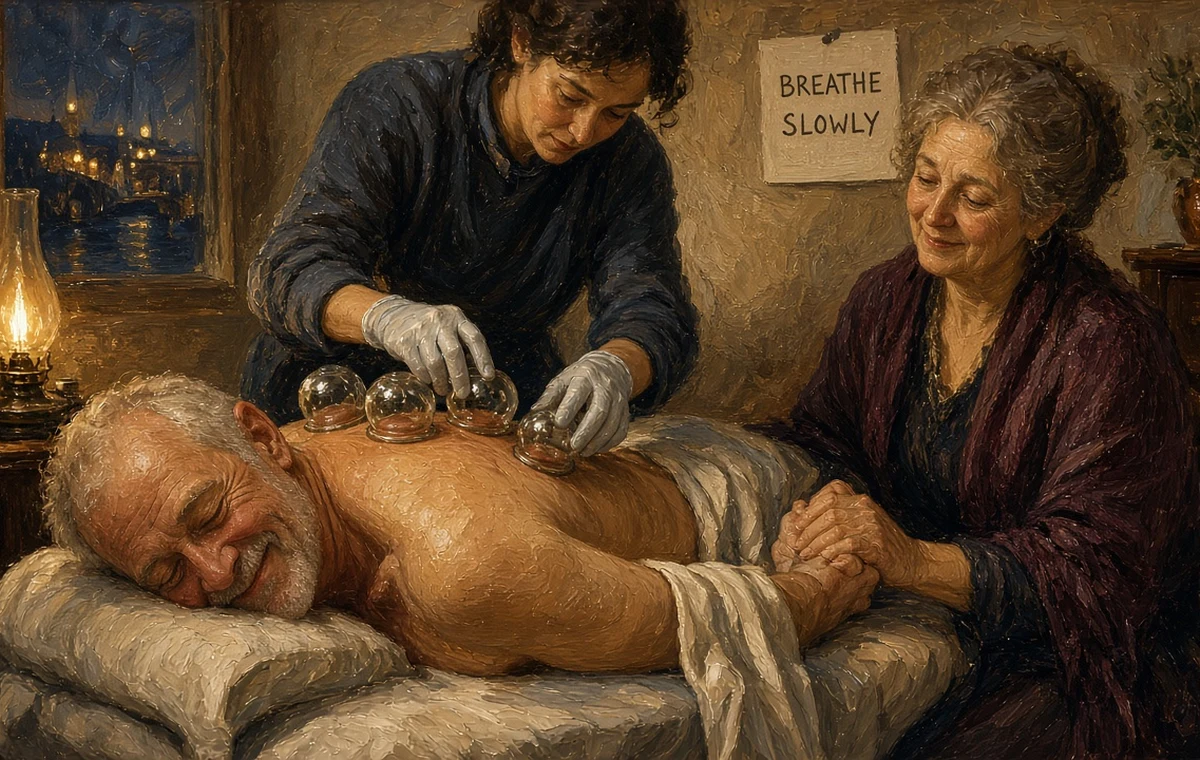
In the UK, acupuncture is the only one of the three with a foothold in mainstream guidance. NICE guideline NG193 (2021) allows a single course of acupuncture for chronic primary pain within the NHS, but it does not recommend cupping. Practitioners of acupuncture and cupping are not statutorily regulated in the UK, so checking membership of a professional body and local authority registration matters.
Skimming the section headings first makes a long guide much easier to map out. Try writing down one question of your own as you read.
How does cupping work, and what types are there?
- Principle: a vacuum inside the cup pulls skin and muscle upwards
- Dry cupping: suction only, with no cut to the skin
- Wet cupping (hijama): small cuts are made first, then the cup draws out blood
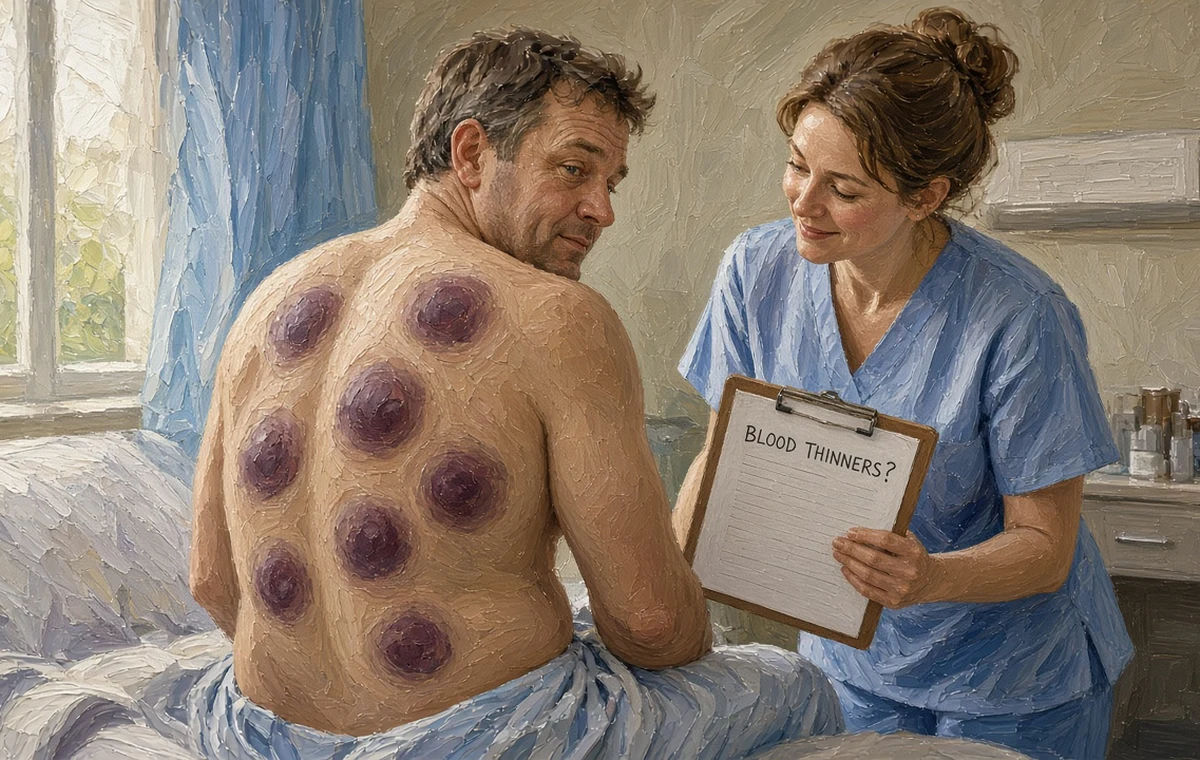
- Marks: bruises from burst capillaries, usually gone within a few days to two weeks
Traditional theory says cupping clears stagnant blood and improves circulation. Modern explanations suggest the suction may raise local blood flow, stretch the fascia and change how pain signals are processed, but the exact mechanism has not been established.
Do darker marks mean more toxins came out?
No. The circles are bleeding under the skin caused by the negative pressure, and claims that a darker colour means more "bad blood" or toxins have no scientific support. People who bruise easily or take anticoagulants simply bruise more, so a dark mark is not a measure of how ill someone was or how well the session worked.
What does the research actually show?
Cao, Li and Liu (2012) reviewed clinical trials of cupping and reported possible benefits for shingles, acne and neck and lower back pain. In the same paper they warned that most trials were small and poorly designed, so firm conclusions were not possible. Later systematic reviews broadly agree: some positive results for neck and back pain, with evidence rated low to moderate.
| Aspect | What the evidence says |
|---|---|
| Reported benefits | Relief of musculoskeletal pain, some skin conditions |
| Limitations | Small trials, blinding is hard, uneven quality |
| Reasonable reading | A possible add-on for pain, not a replacement for diagnosis |
The core problem is blinding. A drug can be compared with an identical sugar pill, but people feel the pull of a cup immediately. Researchers use weak suction or leaky "sham" cups, yet participants and practitioners can often tell which is which, so expectation is hard to separate from the treatment itself. That is exactly why the placebo effect matters so much in this field.
Why might cupping ease pain at all?
Several ideas are on the table, and none is fully proven. Melzack and Wall's gate control theory (1965) suggests strong stimulation of skin and muscle partly blocks pain signals in the spinal cord. Others propose that stimulation releases the body's own painkillers, such as endorphins, or changes local blood flow.
| Hypothesis | Idea | Evidence level |
|---|---|---|
| Gate control | Strong skin input dampens pain signals in the spinal cord | Theoretical, little direct proof |
| Natural painkillers | More endorphins and similar substances | Suggested by some studies |
| Local blood flow | Suction alters blood flow in skin and muscle | Observational studies |
| Expectation | Belief in the treatment shapes how pain is felt | Must be considered in every study |
These explanations are not mutually exclusive and may work together. In an essay, call them hypotheses and state the level of evidence beside each, which is more accurate than saying cupping either works or does not.
Who should be careful, and what should nurses check?
- People who bleed easily or take anticoagulants such as warfarin or apixaban
- Areas with skin disease, wounds or burns
- The abdomen and lower back during pregnancy
- People with severe anaemia and frail older adults
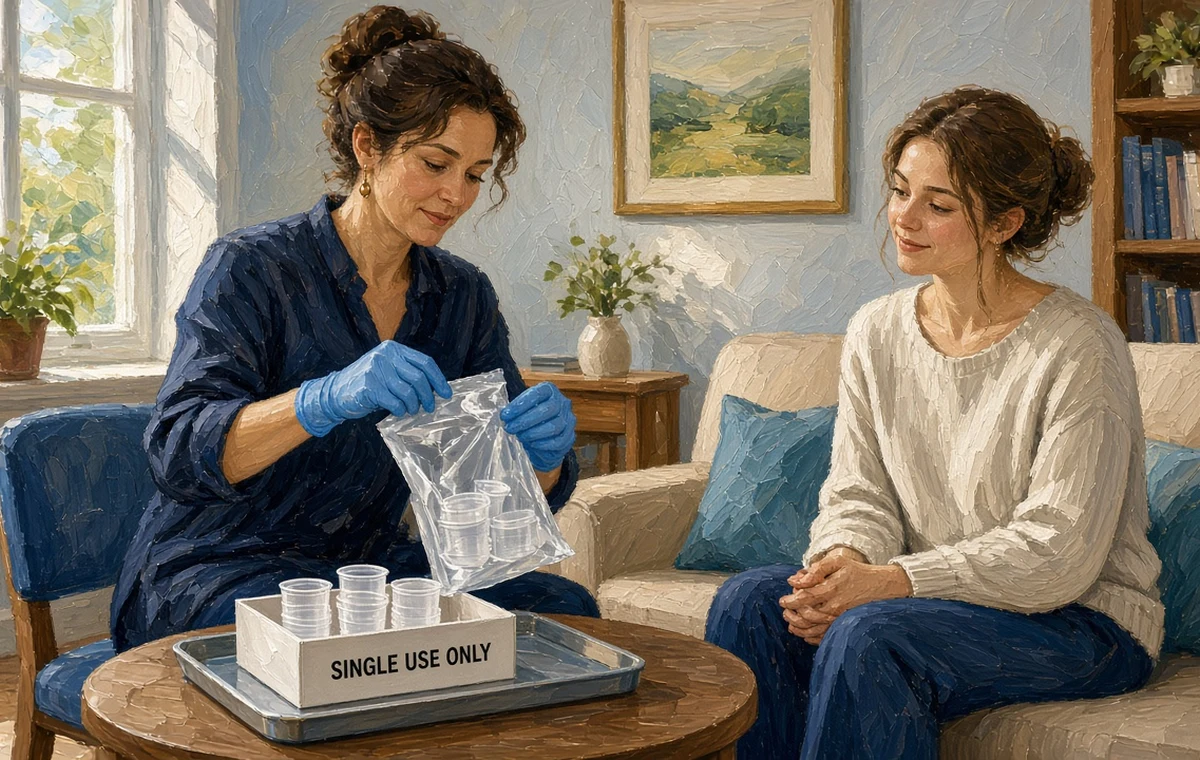
Wet cupping breaks the skin, so single-use equipment, sterile technique and proper sharps disposal are essential. In the UK, skin-piercing activities such as hijama generally require registration with the local council, which inspects hygiene. Fire cupping and home moxibustion also cause burns every year, especially in people with diabetes who feel heat less.
Many patients never mention complementary treatments to hospital staff, so asking directly about cupping, acupuncture or herbal remedies during admission is good practice. Nurses check for bleeding risk and medicines, inspect the skin and respect the patient's choice while giving clear safety information.
How should you read a cupping study?
Five questions help you judge any trial you cite:
Also on CampusDown Law Up: I Signed a Gym Waiver and Then Got Hurt. Am I Totally Out of Luck?
- Was the comparison group given sham cupping or no treatment?
- Were participants and assessors kept unaware of which treatment was given?
- Were there enough participants, followed up for long enough?
- How was pain measured?
- Were side effects recorded systematically?
Reading papers this way lets you weigh the quality of evidence yourself rather than repeating a headline. It is also why a famous swimmer's back is a story, not a source: celebrity use tells you about popularity, never about effectiveness.
Compiled by the CampusDown editorial team from a Korean article on acupuncture, cupping and moxibustion in nursing, adapted with public information on NICE guideline NG193 and UK registration of skin-piercing practitioners. Source: Cao, H., Li, X., & Liu, J. (2012). An updated review of the efficacy of cupping therapy. PLoS ONE, 7(2), e31793. Reviewed November 2026. This is general information and not a substitute for medical advice.
FAQ
How long do cupping marks last?
Usually a few days to two weeks. See a doctor if they last much longer or are very painful.
Can I do cupping at home?
Even dry cupping can blister if left on too long, and wet cupping carries infection risk, so a registered practitioner is safer.
Is cupping available on the NHS?
Generally no. NICE allows acupuncture for chronic primary pain but does not recommend cupping.
Is it safe if I take blood thinners?
Tell the practitioner first. Anticoagulants make larger bruises and bleeding more likely, and wet cupping is usually best avoided.
Does acupuncture hurt?
The needles are very fine, so most people feel only a brief prick, though it varies by person and site.