
Colorectal Cancer Surgery Nursing: Screening, Bowel Preparation and Enhanced Recovery Care
- Most colorectal cancers start as small polyps, so screening can prevent cancer as well as find it early.
- Enhanced recovery programmes combine preparation, shorter fasting, clot prevention and opioid-sparing pain control.
- After surgery, early walking and eating speed recovery, while fever, worsening pain and drain changes may signal a leak.
Contents
Colorectal cancer is one of the most common cancers in the UK, yet it is also one where screening is unusually powerful, because removing a polyp can stop cancer before it starts. This guide follows the nursing journey from screening through surgery to chemotherapy teaching, in the order you are likely to meet it on placement and in exams.

How does colorectal cancer develop?
Most colorectal cancers follow the adenoma–carcinoma sequence: an adenomatous polyp forms in normal mucosa and, over many years, accumulates genetic changes until it becomes malignant. Risk factors include age, family history, inflammatory bowel disease, a diet high in red and processed meat, obesity, smoking and alcohol.
Student money tip from CampusDown Law UpGot a Data Breach Notice Letter? A Student's To-Do List — Got a data breach notice saying your info was exposed?
Symptoms that should prompt investigation include a persistent change in bowel habit, blood in the stool, unexplained iron-deficiency anaemia and unintentional weight loss. Right-sided tumours often present with anaemia and fatigue rather than obvious bleeding, which is why a low haemoglobin in an older adult should never be dismissed.

Screening: FIT and colonoscopy
In England, everyone aged 50 to 74 who is registered with a GP is posted a faecal immunochemical test (FIT) every two years. It detects tiny amounts of blood invisible to the eye. A positive result leads to an appointment with a specialist screening practitioner and, usually, a colonoscopy. Colonoscopy has the advantage that polyps can be removed during the same procedure.
A negative FIT is reassuring but not a guarantee. Anyone with symptoms or a strong family history should talk to their GP rather than wait for the next kit. Uptake is lower among men and in more deprived areas, so community nurses who explain the kit in plain language make a real difference.
Skimming the section headings first makes a long guide much easier to map out. Try writing down one question of your own as you read.
Bowel preparation: getting it right
The quality of a colonoscopy depends on how clean the bowel is. Patients are usually asked to take a low-fibre diet for a few days beforehand, avoiding seeds, nuts, wholegrains, sweetcorn and skins, then drink the laxative solution in split doses at the times given. Clear fluids help the solution work and prevent dehydration. Older adults, people with kidney or heart disease and those on diabetes medication need individual advice, because fluid shifts and fasting can be risky.
Before surgery: enhanced recovery
Enhanced Recovery After Surgery (ERAS) bundles evidence-based steps to speed recovery. The ERAS Society guideline for elective colorectal surgery (Gustafsson et al., 2019) includes thorough pre-operative explanation, avoiding long fasting by allowing clear fluids up to two hours before anaesthesia and solids up to six hours, carbohydrate drinks the evening before and on the morning of surgery, prevention of venous thromboembolism, and multimodal, opioid-sparing pain control.
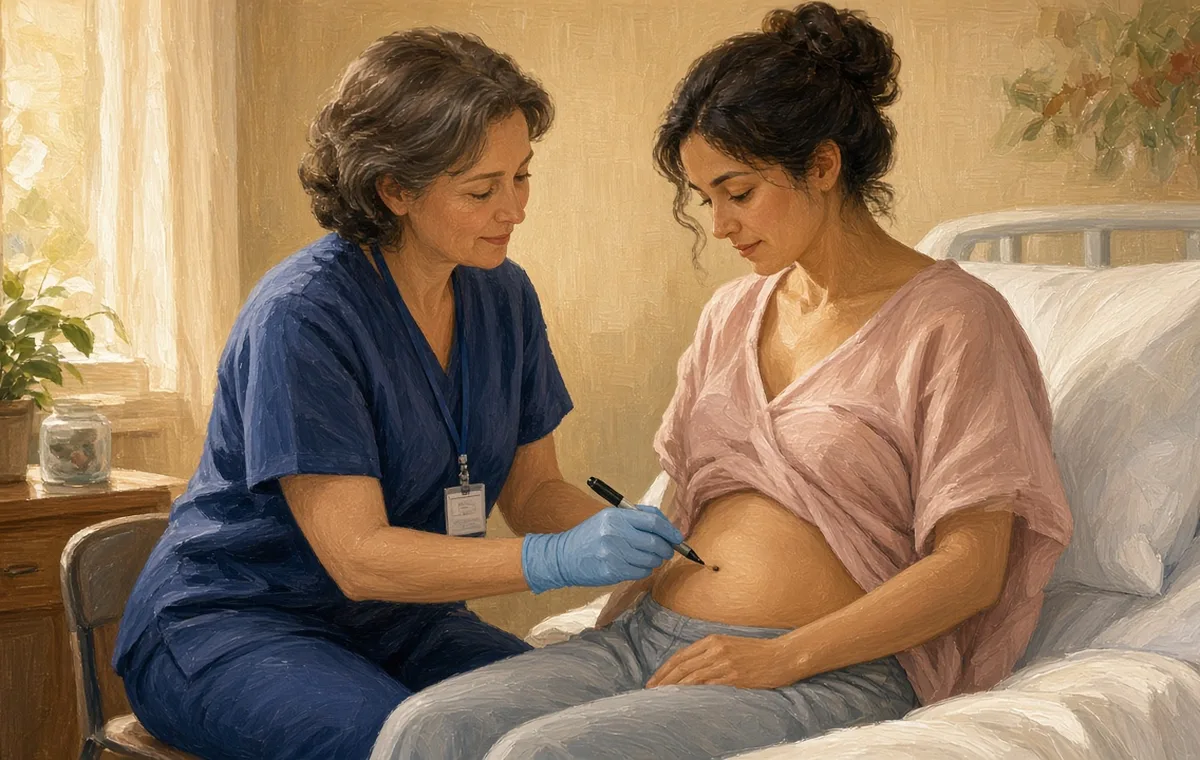
Whether mechanical bowel preparation is used depends on the type of operation and local protocol. Checking nutritional status and correcting anaemia before surgery also reduces complications; intravenous iron is often used when there is time. If a stoma is planned, a stoma care nurse marks the best site before the operation, with the patient sitting, standing and lying down, so the bag will sit well against the skin and be visible to the patient.
After surgery: what to observe
Early mobilisation and early oral intake are central to ERAS. Most patients are encouraged to sit out of bed on the day of surgery and walk the next day, and to start drinking and eating within hours if they feel able. Return of bowel function is tracked by passing wind, bowel sounds and abdominal distension, and routine nasogastric tubes are avoided.
Fever, increasing abdominal pain, a rising heart rate and a change in drain output or colour can signal an anastomotic leak, most often within the first week, and must be reported straight away. Record pain scores, drains, wound and urine output together. Help with deep breathing and coughing to prevent chest infection, and use leg exercises, compression stockings and low-molecular-weight heparin as prescribed to prevent clots.

| Observation | Reassuring | Report promptly |
|---|---|---|
| Temperature and pulse | Settling towards normal | New fever or rising heart rate |
| Abdomen | Soft, pain improving | Rigid, distended, pain worsening |
| Drain | Small, serous output | Cloudy, faecal or suddenly increased output |
| Urine | Adequate hourly output | Falling output despite fluids |
Living with a stoma
Some operations create a colostomy or ileostomy, either temporary while a join heals or permanent. A healthy stoma is moist and red-pink; a dark or very pale stoma needs urgent review. Teaching covers emptying and changing the bag, measuring the stoma as swelling settles, protecting the surrounding skin, and recognising leaks or a hernia. Ileostomy output is liquid, so dehydration is a particular risk in hot weather or with diarrhoea.
Body image, intimacy and returning to work deserve time too. Patients often worry about smell and noise; reassurance that modern appliances are discreet, and contact with charities such as Colostomy UK, can help a great deal.
Chemotherapy teaching
Depending on the stage, adjuvant chemotherapy may follow surgery. Common regimens use fluorouracil or capecitabine, often with oxaliplatin. Side effects to explain include diarrhoea, mouth ulcers, hand-foot syndrome with capecitabine, and with oxaliplatin a peripheral neuropathy that can be triggered by cold, so patients should avoid cold drinks and use gloves when handling cold items for a few days after each dose. Severe diarrhoea or fever needs same-day contact with the oncology helpline.
Prevention and family history
In 2015 the International Agency for Research on Cancer classified processed meat as Group 1 (carcinogenic to humans) and red meat as Group 2A (probably carcinogenic). The groups reflect how strong the evidence is, not how large the risk is, which is worth explaining to avoid alarm. Helpful habits include more fibre from vegetables, fruit and wholegrains, regular activity, stopping smoking, drinking less and keeping a healthy weight.
Always ask about family history. People with a close relative diagnosed young, or with familial adenomatous polyposis or Lynch syndrome, may need colonoscopy earlier and more often than the general programme offers, and long-standing inflammatory bowel disease also calls for surveillance.
Follow-up after treatment checks for recurrence, and continued exercise and diet changes support long-term health. When a patient encourages a reluctant brother or sister to do their screening kit, prevention spreads beyond the ward. For exam revision, the CampusDown adult nursing notes cover the related gastrointestinal topics.
Discharge teaching checklist
Under ERAS many patients go home within a few days, so teaching has to start early rather than on the morning of discharge. Before the patient leaves, check that they can:
Student money tip on CampusDown Law Up: Got a Data Breach Notice Letter? A Student's To-Do List.
- describe the signs that mean they should call the ward or seek urgent help: fever, worsening abdominal pain, vomiting, a red or leaking wound, or no stoma output or bowel movement for a prolonged period;
- manage their pain relief and any anticoagulant injections they have been prescribed to continue at home;
- eat little and often and drink enough, particularly with an ileostomy;
- avoid heavy lifting for the period their surgeon advises while staying gently active with daily walks;
- name who to contact, whether the ward, stoma nurse or colorectal specialist nurse, and when their follow-up is booked.
Teach-back, asking the patient to explain the plan in their own words, is a quick way to check understanding and is well worth describing in a care plan assignment.
Reviewed by the CampusDown editorial team, November 2026. Sources: Dekker E. et al. (2019), Colorectal cancer, The Lancet 394(10207); Gustafsson U. O. et al. (2019), ERAS Society recommendations for elective colorectal surgery, World Journal of Surgery 43(3); NHS England, Bowel cancer screening; IARC Monographs volume 114 (2015).
FAQ
What is the usual precursor of colorectal cancer?
The adenomatous polyp, which can take years to turn into cancer and can be removed during colonoscopy.
How does bowel screening work in England?
People aged 50 to 74 registered with a GP are sent a home FIT kit every two years; a positive result leads to colonoscopy.
What are warning signs of an anastomotic leak?
Fever, increasing abdominal pain, a fast heart rate and a change in drain output or colour, usually within the first week.
Why should patients on oxaliplatin avoid cold?
It can cause cold-triggered tingling and throat discomfort, so cold drinks and touching cold objects are best avoided for a few days after each dose.