
Can Blindness in Older Adults Be Prevented? Cataract, Glaucoma, Macular Degeneration and Diabetic Eye Disease
- Poor sight in older adults can lead to falls, medication mistakes, low mood and isolation.
- Cataract is usually treatable with surgery; glaucoma and macular degeneration need early detection.
- Regular eye checks and programmes that lower cost barriers can prevent much avoidable sight loss.
Contents
A large share of blindness and serious sight loss in older adults is preventable or treatable, as long as eye disease is found early and people can afford and reach care. Imagine a grandparent who stops going out because the kerb edges blur, or who cannot read the label on a pill bottle. Poor sight is not just an inconvenience; it leads to falls, medication mistakes, depression and loneliness. This guide, adapted from a Korean community health nursing note, explains why eye health matters in later life, the four main causes of sight loss in older adults, how screening and surgery programmes work in the US and UK, how nurses and families can help and what everyone can do to protect their eyes.
Why does eye health matter in later life?
The World Health Organization World report on vision (2019) estimated that at least 2.2 billion people worldwide have a near or distance vision impairment, and that in at least 1 billion of them it could have been prevented or has yet to be addressed.
Related on CampusDown Repair UpMy Glasses Arm Keeps Flopping and the Tiny Screw Just Vanished — Glasses arm loose or the hinge screw fell out?
As populations age, eye conditions linked to ageing become more common, so sight loss grows into a bigger public health issue every year. For an older person, vision underpins walking, cooking, taking medicines, reading, driving and meeting friends. Protecting sight therefore helps people stay independent for longer, which is why eye health is a core part of healthy ageing.
| Area | What can happen |
|---|---|
| Safety | Trips and falls on steps, kerbs and cluttered floors |
| Medicines | Misreading labels, mixing up pills or doses |
| Mood | Withdrawal, low mood and loss of confidence |
| Independence | Giving up driving, hobbies and social activities |
Because these effects build slowly, families often notice the changes in behaviour before the older person mentions any trouble with their eyes.

Which eye diseases most often cause sight loss in older adults?
| Condition | What happens | Warning signs |
|---|---|---|
| Cataract | The lens becomes cloudy; usually treatable with surgery | Blurred or dim vision, glare from headlights |
| Glaucoma | Damage to the optic nerve gradually narrows the field of vision | Few or no early symptoms |
| Age-related macular degeneration | Damage to central vision | Straight lines look wavy, dark patch in the centre |
| Diabetic retinopathy | Damage to blood vessels in the retina | Often no symptoms until it is advanced |
Cataract is the leading cause of blindness worldwide but is usually reversible with a short operation. By contrast, the wiki entries on glaucoma and macular degeneration explain why those conditions need early detection: lost nerve or retinal tissue cannot be restored, although treatment can slow or stop further damage.
Glaucoma and diabetic retinopathy can progress silently, so a regular eye examination is often the only way to catch them early. That message is worth repeating to older people and their families even when everything seems fine.
Skimming the section headings first makes a long guide much easier to map out. Try writing down one question of your own as you read.
How do screening and surgery programmes help?
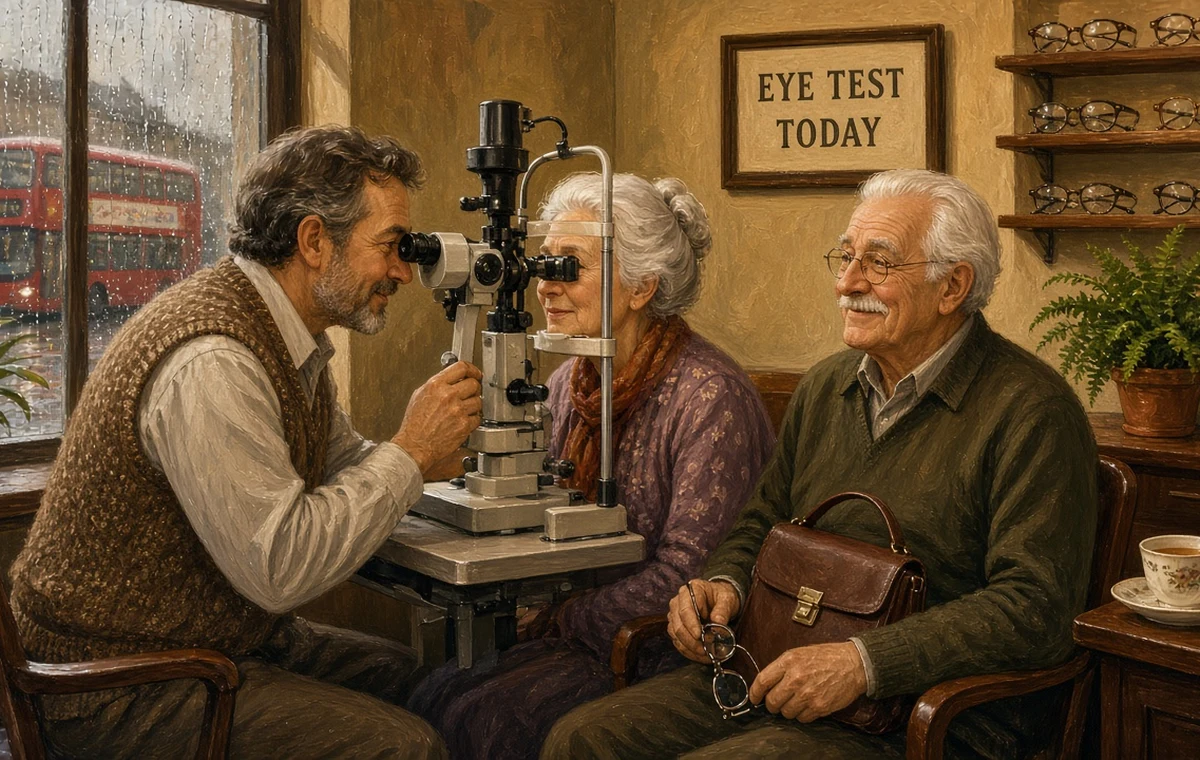
The Korean source describes a public programme that offers detailed eye examinations to older people on low incomes and helps pay for cataract and other sight-restoring surgery, with local health centres finding eligible people and linking them to hospitals. English-speaking countries tackle the same barriers in their own ways.
United States
Medicare Part B covers a yearly glaucoma test for people at high risk, including those with diabetes, a family history of glaucoma, African Americans aged 50 and over and Hispanic Americans aged 65 and over. It also covers a yearly eye exam for diabetic retinopathy and cataract surgery with a standard intraocular lens. Routine eye exams for glasses are generally not covered by Original Medicare, though some Medicare Advantage plans include them. EyeCare America, run by the American Academy of Ophthalmology Foundation, offers eye exams at no out-of-pocket cost to eligible older adults.
United Kingdom
NHS sight tests are free for everyone aged 60 and over, and people who cannot leave home can ask for a home visit. Everyone with diabetes aged 12 and over is invited to the NHS diabetic eye screening programme. Cataract surgery is provided on the NHS, and people with severe sight loss can be certified with a Certificate of Vision Impairment, which opens the way to registration and local support.
| Need | United States | United Kingdom |
|---|---|---|
| Routine check | Optometrist or ophthalmologist; check plan coverage | Free NHS sight test at an optician (60+) |
| Diabetes | Yearly dilated eye exam (Medicare covered) | NHS diabetic eye screening |
| Cataract | Medicare covers surgery | NHS referral to hospital eye service |
| Severe sight loss | State vision rehabilitation services | Certificate of Vision Impairment and council support |
Programmes only work if people know about them, so outreach through home visits, community centres and GP practices matters as much as the funding.
How can nurses and families help someone with poor sight?
- Fall prevention: bright, even lighting, contrasting tape on step edges, clear walkways and secure rugs
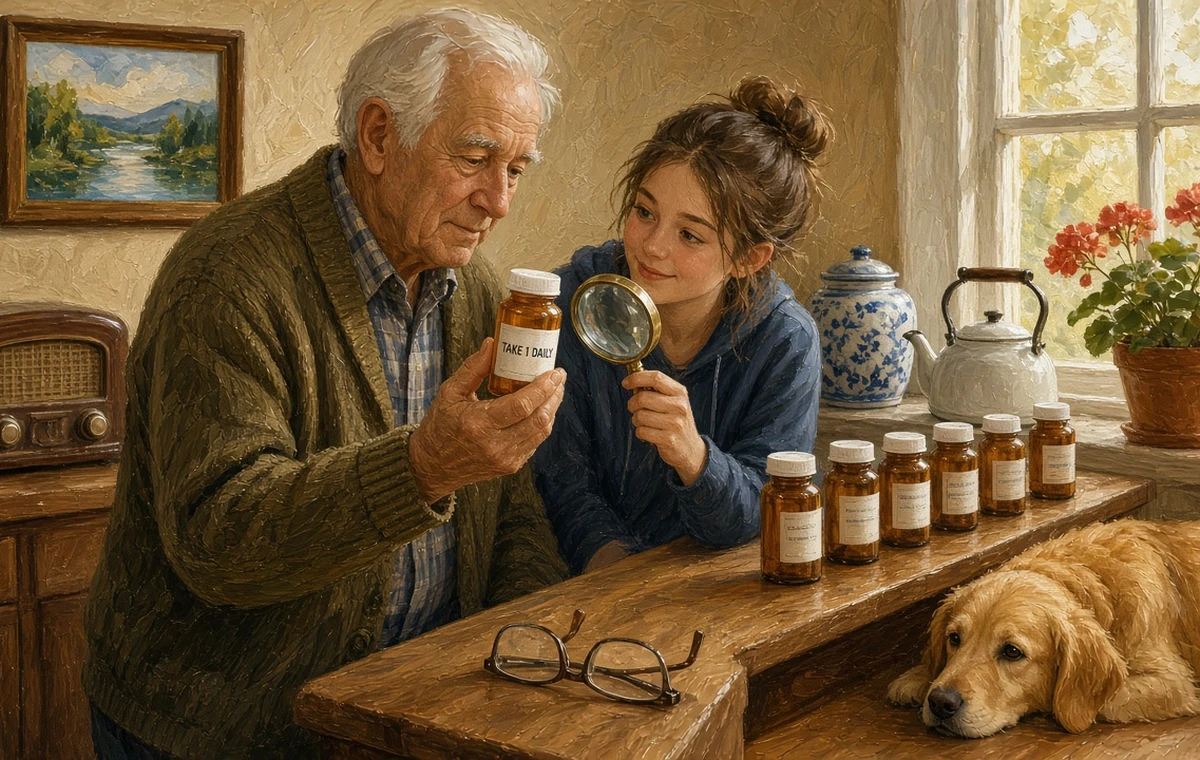
- Medication safety: large-print labels, colour-coded pill boxes and a family member to double-check
- Communication: face the person, say who you are and describe where objects are in words
- Emotional support: ask about low mood and loss, and keep social activities going
Falls are the most common and dangerous result of poor sight in older adults, so a home safety check should always be part of care. Occupational therapists and low-vision services can suggest magnifiers, task lighting and talking devices.
Small changes in the home and in daily habits can greatly increase what an older person can do for themselves, so it helps to focus on making things possible rather than on what they can no longer do.
What can people do to protect their eyes?
- Stop smoking, which raises the risk of macular degeneration and cataract
- Keep blood pressure and blood sugar under control
- Wear sunglasses and a brimmed hat in strong sunlight
- Eat plenty of leafy greens and colourful vegetables
- Keep glasses clean, well fitted and up to date, and keep a spare pair in the same place
- Do not ignore sudden changes; get them checked the same day
National health plans, such as the US Healthy People 2030 objectives, include goals on vision. Preventing sight loss in older adults works best when regular check-ups, good control of chronic diseases and support that lowers cost barriers go together, and community nurses often act as the bridge between them.
Sudden loss of vision, a curtain over part of the view, flashes with new floaters or a painful red eye are emergencies and need urgent care.
When should older adults get their eyes checked?
How often you need an eye exam depends on age, health and family history, so the timing is best agreed with an optometrist or eye doctor.
Also on CampusDown Repair Up: My Glasses Arm Keeps Flopping and the Tiny Screw Just Vanished.
| Group | Suggested approach |
|---|---|
| Adults over 60 with healthy eyes | Regular eye examinations, commonly every one to two years |
| People with diabetes | Diabetic eye checks at the interval set by the screening service or doctor |
| Family history of glaucoma | Regular pressure and optic nerve checks |
| Wavy or missing central vision | Prompt examination; an Amsler grid can help notice changes |
An Amsler grid is a simple square of lines; covering one eye at a time, a person checks whether lines look bent or missing. It does not replace an exam, but it can prompt someone to seek help sooner. A clear day of sight helps protect an older person's independent life.
FAQ
How often should older adults have an eye test?
Commonly every one to two years for people over 60, and more often with diabetes or glaucoma risk; agree the interval with a clinician.
Does cataract surgery have to be done early?
Surgery is usually considered when cloudy vision starts to affect daily life; decide the timing with an eye doctor.
Can I check myself for macular degeneration?
An Amsler grid can show wavy or missing lines, but diagnosis needs an eye examination.
Are eye tests free?
In the UK NHS sight tests are free from age 60. In the US, Medicare covers some eye tests for people at high risk.
Why is glaucoma called a silent disease?
It usually causes no early symptoms, and side vision is lost gradually before people notice.