
— Overview
The writer came to the book having thought alcoholism nearly untreatable, and left that view behind.
— Contents and key concepts
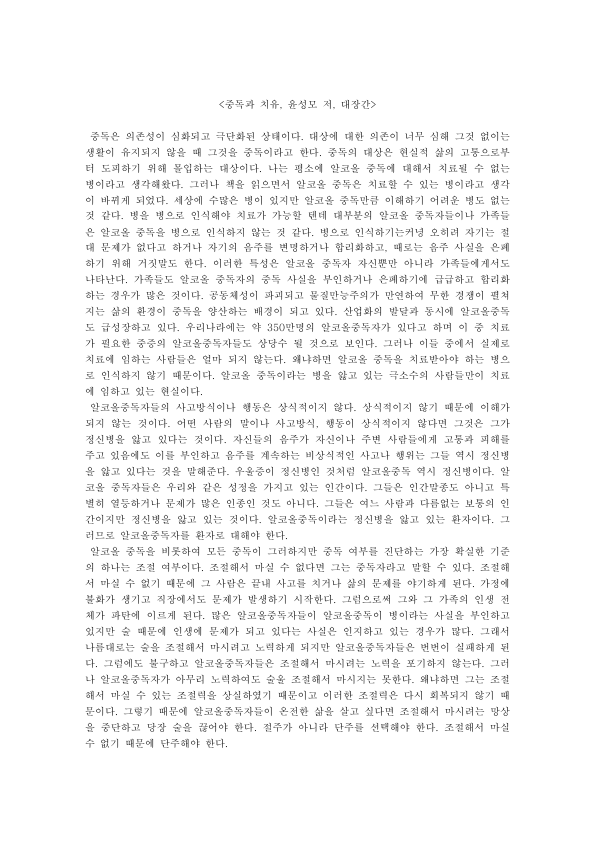
Dependence, and a number
The notes take up Yun Seong-mo’s Addiction and Healing. Addiction, as they read the book, is an extreme form of dependence. They stay with alcohol in particular.
They mark a figure for Korea: about 3.5 million alcoholics, of whom very few receive treatment. The gap between the number and the people in care is part of what the book is asking them to see.
Denial at home, and a social background
Addicts and their families, the notes write, deny, rationalize, and conceal. Seeing the illness clearly is already hard work, before any treatment begins.
Behind that household difficulty they place a wider background: a breakdown of community, a turn toward materialism, and a culture of infinite competition. Those currents, they suggest, make it easier to drink and harder to stop.
An illness, and a change of mind
Alcoholism, in their reading of the book, should be treated as a mental illness, like depression, not as a mere failure of will. The surest way to tell, they write, is whether the person can still control their drinking.
The writer had once thought alcoholism nearly untreatable, and left that view behind. They wanted to keep that change in sight. A fuller writing of the same Korean notes is on CampusDown.
Sources
- Student notes on Yun Seong-mo’s Addiction and Healing, read through alcohol, denial, and a change of mind about treatment.
Last updated 15 November 2026
Frequently asked questions
How does the book, as they read it, define addiction?
As an extreme form of dependence. The notes stay with alcohol in particular, and with how hard it is for the person and the family to see it clearly.
What figures and habits do they mark in Korea?
About 3.5 million alcoholics, of whom very few receive treatment. Addicts and families deny, rationalize, and conceal. Behind that, they place a breakdown of community, materialism, and a culture of infinite competition.
How should alcoholism be treated, in their reading?
As a mental illness, like depression, not as a mere failure of will. The surest way to tell, they write, is whether the person can still control their drinking. The writer had thought it nearly untreatable, and changed that view.
Refund policy
- Change of mind / refund requested after partial use / more than 7 days after purchase
◆ Exceptions
- File errors / cannot download or open the file
◆ How to request a refund: send a 1:1 inquiry via Customer Service at the top