
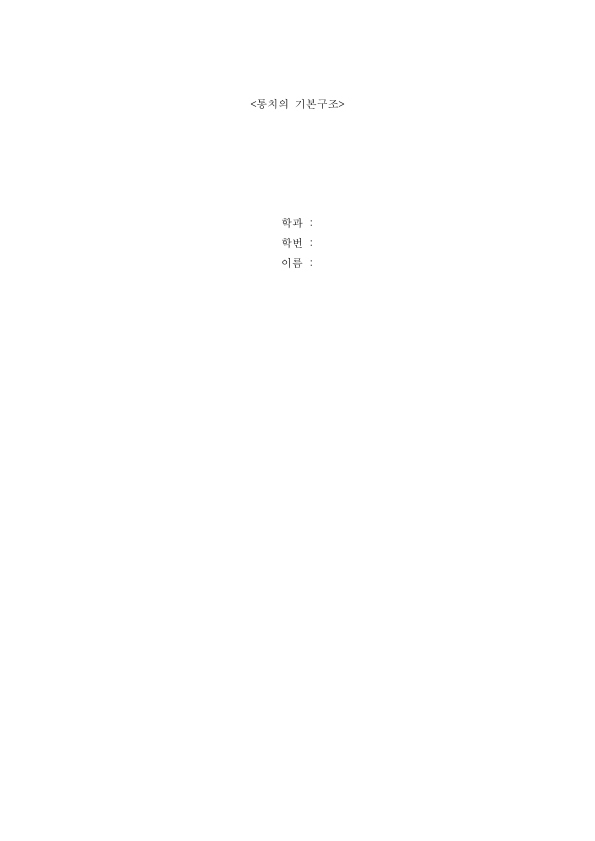
Page 1 is shown as is; from page 2 on, the preview is blurred. Buy it to download the complete original file right away (the file itself is written in Korean).
Packed with real examples and experience. Download it now and save time.
Save your valuable time
Buyer ratings
Fast, accurate and useful.
No ratings yet. Be the first to rate it.


When a Presidential Emergency Decree Is Unconstitutional in Korea: Substantive and Procedural Requirements of Article 76, National Assembly Approval and Limits on Content
※ You can preview page 1 as is. Buy it to download the complete original file right away. The file itself is written in Korean.
■ When a Presidential Emergency Decree Is Unconstitutional in Korea: Substantive and Procedural Requirements of Article 76, National Assembly Approval and Limits on Content — Overview
A 4-page Korean constitutional law case analysis. Using a hypothetical in which a president under investigation issues an emergency decree over protests, it tests the decree against the substantive requirements of Article 76, the duty to obtain National Assembly approval, the ban on amending the Constitution or blocking judicial review by decree, and the problem of a decree aimed at one person.
■ When a Presidential Emergency Decree Is Unconstitutional in Korea: Substantive and Procedural Requirements of Article 76, National Assembly Approval and Limits on Content — Excerpt from the original document (English translation)
President A is suspected of abuse of power and issued an emergency decree citing the rallies and protests that followed. However, it is doubtful that this is a situation in which an emergency decree may be issued.
When the President deems it necessary, he or she may put important policies on diplomacy, national defense, unification and other matters of national security to a referendum (Article 72 of the Constitution) and may propose constitutional amendments (Article 128(1)). Under Article 76(2), the President may issue an emergency decree with the force of law when, in a major hostile situation affecting national security, urgent measures are needed to defend the nation and the National Assembly cannot convene. The President may also take emergency financial and economic actions in a serious financial or economic crisis and issue emergency financial and economic orders with the force of law. To issue such orders or take such actions, there must first be internal turmoil, external threat, natural disaster or a grave financial or economic crisis. The crisis must exist now; so-called preventive emergency powers to head off a crisis expected in the future are not allowed. The hypothetical situation therefore does not appear to be one in which an emergency decree may be issued.
The purpose of the emergency decree is not legitimate.
To add: under Article 76(1) of the Constitution, emergency financial and economic orders may be issued only in internal turmoil, external threat, natural disaster or a grave financial or economic crisis when there is no time to wait for the National Assembly to convene, and under Article 76(2) an emergency decree only in a major hostile situation affecting national security when the Assembly cannot convene. On the 1993 emergency financial and economic order introducing the real-name financial transaction system, the Constitutional Court held that even an act of high political decision is subject to constitutional review when it is directly related to infringement of basic rights (93Hun-Ma186, February 29, 1996). If an emergency decree fails to win Assembly approval, it loses effect from that moment, and laws it had amended or repealed automatically regain effect (Article 76(4)).
■ When a Presidential Emergency Decree Is Unconstitutional in Korea: Substantive and Procedural Requirements of Article 76, National Assembly Approval and Limits on Content — Contents and key concepts
An order with the force of law, and its limits
✦ At a glance
- Why a hypothetical Korean emergency decree is unconstitutional
- Structure: substantive → procedural → content → form
- Useful for constitutional law case problems
☰ What the paper covers
- Situation requirement
- Purpose and necessity
- National Assembly approval
- No amendment or blocking review
- Decrees aimed at one case
✎ Emergency powers in Korea and the U.S.
Korea's Constitution spells out emergency financial orders, emergency decrees and martial law, and each needs prompt National Assembly approval or notice.
The U.S. Constitution has no general emergency clause; presidents rely on statutes such as the National Emergencies Act of 1976, which Congress can end by joint resolution.
Note: the paper itself is written in Korean and discusses Korean law. This page is general study information, not legal advice.
Related wiki: Emergency Powers
■ When a Presidential Emergency Decree Is Unconstitutional in Korea: Substantive and Procedural Requirements of Article 76, National Assembly Approval and Limits on Content References
- 교재 및 강의안
Take a break with a quick personality test?
Ranked by actual participation. Results in about a minute.
Loading…
Most-read content
Loading view counts…

Campusdown is a lifelong-learning community in Korea offering study materials, information on government support, student loans and scholarships, and more. Don't miss our free resources.
Go to the Campusdown home page →Refund policy
- Change of mind / refund requested after partial use / more than 7 days after purchase
◆ Exceptions
- File errors / cannot download or open the file
◆ How to request a refund: send a 1:1 inquiry via Customer Service at the top