
— Overview
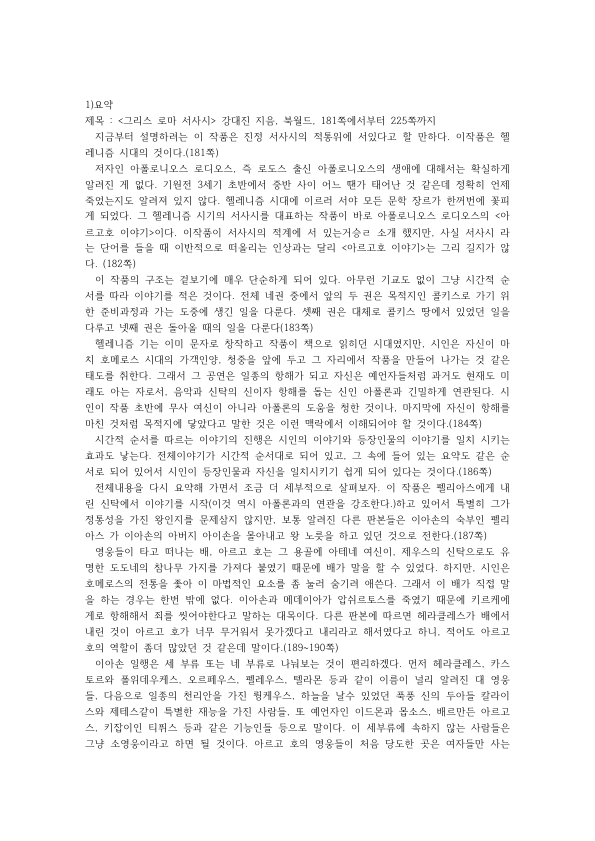
The notes introduce Apollonius’s Argonautica, and they stop after the Argo’s single speech.
— Contents and key concepts
A poet of whom little is known
The work they are about to describe, the notes say, truly stands in the legitimate line of epic. Of its author, Apollonius Rhodius — Apollonius of Rhodes — little is known for certain. He seems to have been born sometime in the early or mid third century BCE, and even when he died is not known.
Only in the Hellenistic age, they write, did every literary genre come into bloom at once, and the epic that represents that moment is Apollonius’s Argonautica.
Four books, in time order, toward Colchis
They have introduced it as standing in the line of epic, yet, unlike the impression the word usually calls up, the Argonautica is not very long. Its structure looks very simple: the story is set down in time order, with no obvious artifice. Of the four books, the first two treat the preparations for going to Colchis, the destination, and what arose on the way.
The Hellenistic age was already a time of writing and of books, but the poet takes the stance of a Homeric bard, making the work in front of an audience. The performance becomes a kind of voyage, and he, like a seer who knows past, present, and future, is closely tied to Apollo, god of music and oracles and of aid at sea. Telling the story in time also has the effect of aligning the poet’s telling with the characters’ own story.
A keel from Dodona, and one speech
They then say they will summarize the whole more closely. The ship the heroes board, the Argo, can speak because Athena set in its keel a branch of the oak at Dodona, famous for the oracles of Zeus. But the poet, following Homer’s tradition, tries to play that magic down. So the ship speaks directly only once: Iason and Medea, having killed Apsyrtus, must sail to Circe to wash the guilt.
There the notes break off, before they start to divide Iason’s company into three or four groups. You’ll find the same Korean report, written out more fully, on CampusDown.
Sources
- The notes, a student reading of Apollonius of Rhodes’s Argonautica: a life of which little is known, a short Hellenistic epic in four books, a voyage toward Colchis, and a ship that speaks only once, about Circe and Apsyrtus.
Last updated: 15 November 2026
Frequently asked questions
What do the notes say about the poet?
Little is known of the life of Apollonius of Rhodes. He seems to have been born sometime in the early or mid third century BCE; even the date of his death is unknown. His Argonautica, they write, is the representative epic of the Hellenistic age.
How do they describe the poem’s shape?
Unlike the usual idea of epic, it is not very long. Its structure looks very simple: the story is written in time order, with no obvious artifice. Of four books, the first two treat the preparations for reaching Colchis and what happened on the way. Though this was already an age of written books, the poet takes the stance of a Homeric bard before an audience; the performance becomes a kind of voyage, and the poet, like a seer, is closely tied to Apollo.
Where do they stop?
The Argo can speak because Athena set in its keel a branch of Dodona’s oak, famous for the oracles of Zeus. Following Homer, the poet plays the magic down, so the ship speaks only once: Iason and Medea must sail to Circe to wash the guilt of killing Apsyrtus. The notes stop there, before they begin to divide Iason’s company into groups.
Refund policy
- Change of mind / refund requested after partial use / more than 7 days after purchase
◆ Exceptions
- File errors / cannot download or open the file
◆ How to request a refund: send a 1:1 inquiry via Customer Service at the top