
From Being Shaped to Having a Say: Korea's 140-Year Youth Policy Story vs UK Youth Work and US 4-H, Boys & Girls Clubs and AmeriCorps
- Early Korean youth activity was led by private schools, churches and patriotic youth groups, much like Britain's YMCA and Scouts.
- Korea's 1988 Youth Development Act made youth policy a state priority, later shifting toward youth participation.
- In the UK and US, youth work depends on trained workers, stable funding and positive youth development.
Contents
Youth policy is the set of laws, services and trained professionals a country uses to support young people, and over time most countries have shifted from treating teenagers as a resource to be developed toward treating them as citizens with a voice. South Korea's story compresses that shift into about 140 years, from missionary schools and patriotic youth groups to a modern system run by state-certified youth workers. For readers in the US and UK, it is a useful mirror: the same tensions between charity and state, control and participation, run through Boys & Girls Clubs, 4-H, and the British youth club down the road.
This article first sketches Korea's arc as context, then looks in more depth at how youth work is organized in Britain and the United States, and finally compares the people who actually do the work.
How did Korean youth policy begin?
The source material defines Korea's modern era as the late Joseon period and Japanese colonial rule, roughly 1876 to 1945. The state ran almost no youth programs. Private academies in port cities, English schools opened by foreign missionaries and church Sunday schools filled the gap before a modern school system existed.
Student money tip from CampusDown Repair UpRenters Insurance Water Claim Denied? What I'd Do Next, Step by Step
Once colonial rule began, an idea of "building our own strength" spread, and youth associations increasingly became part of the movement to recover national independence. Three milestones stand out: a Christian youth association, the Seoul YMCA, founded in 1903; the Young Students' Fraternity of 1908, forerunner of the Heungsadan society; and the Korean Boy Scouts of 1922.
The pattern is clear: in Korea's early modern period, civil society rather than government led youth activity, a point that will sound very familiar to British readers.

How did Korea's state take over youth policy?
From the late 1980s, the Korean government began treating young people as future human capital to be developed systematically. A Youth Development Act took effect in 1988, followed by a dedicated committee, research institutes and, around 1990, a ten-year master plan. The theories of adolescent development popular at the time framed teenagers mainly as people in transition who needed guidance.
Today the emphasis has moved to young people's rights and voices. Five-year basic plans now target all young people, not only those labeled at risk, and programs focus on practical life skills. Korea also created two national qualifications: the youth instructor, focused on activities, and the youth counselor, focused on counseling. Local governments employ dedicated youth development officers to connect frontline work with administration.
Skimming the section headings first makes a long guide much easier to map out. Try writing down one question of your own as you read.
How does youth work operate in the UK?
Britain followed a similar path from charity to state, but earlier. The YMCA was founded in London in 1844, the Scouts grew from Robert Baden-Powell's 1907 camp on Brownsea Island, and settlement houses and boys' clubs spread through Victorian cities. The state stepped in after the 1960 Albemarle Report, which led to a wave of publicly funded youth centres and trained youth workers across England and Wales.
Youth work in Britain has a distinctive philosophy: young people choose to take part, and the relationship is built on informal education rather than discipline. The National Youth Agency (NYA) acts as the professional body for youth work in England, setting standards and validating qualifications recognized by the Joint Negotiating Committee (JNC), which determines who counts as a professionally qualified youth worker.
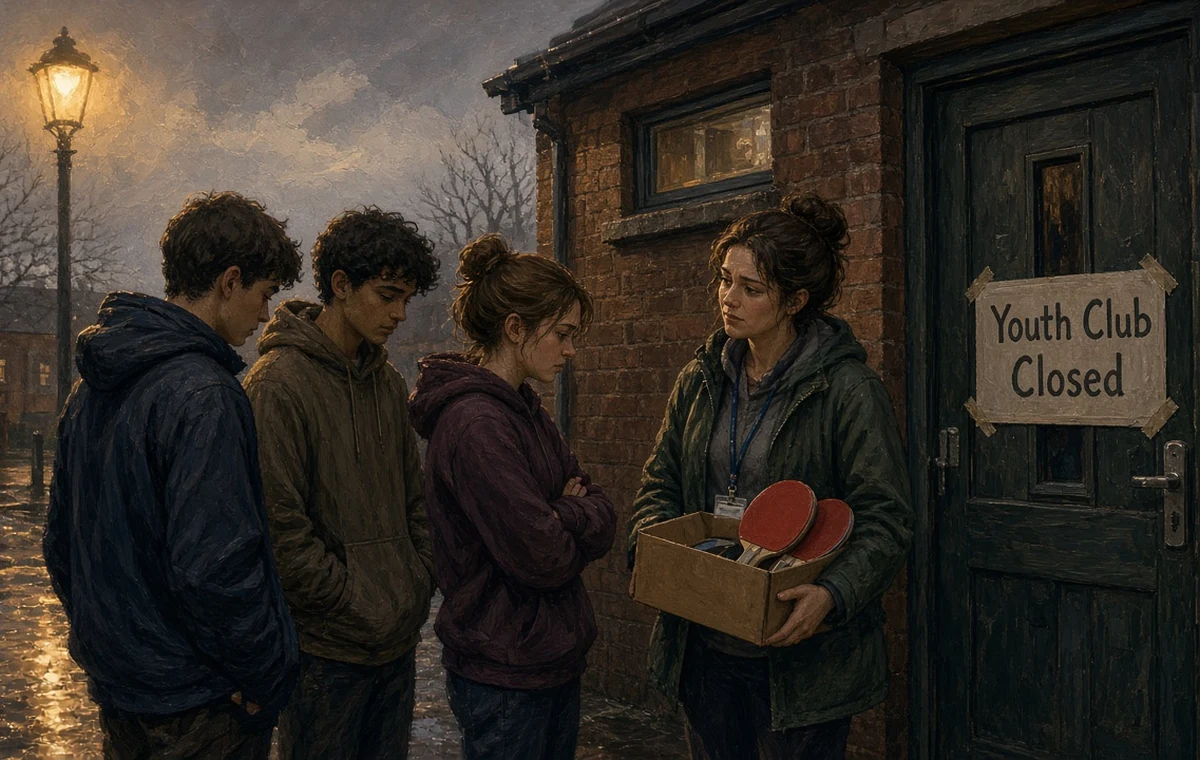
The big story of the past fifteen years is austerity. After 2010, many councils closed youth centres as budgets shrank, and charity analyses such as those by YMCA England & Wales have estimated that local authority youth service spending fell by well over half in real terms. Programmes like the National Citizen Service, launched in 2011 for 16 and 17 year olds, offered short summer experiences but could not replace year-round local clubs. That is why "bring back youth clubs" has become a recurring theme in British politics.
What does the US youth development system look like?
The United States never built a single national youth service. Instead, it relies on a patchwork of nonprofits, land-grant universities and federal grants, held together by the idea of positive youth development.

- 4-H: born in rural clubs in the early 1900s and run through the Cooperative Extension System created by the Smith-Lever Act of 1914, it connects young people to land-grant universities through projects from livestock to robotics.
- Boys & Girls Clubs of America: rooted in clubs that began in Hartford, Connecticut, in 1860, they offer safe after-school spaces in cities, towns and on military bases.
- AmeriCorps: created by the National and Community Service Trust Act of 1993, it funds young adults to serve in schools, disaster relief and community programs.
Researchers like Richard Lerner summarize positive youth development as the "Five Cs": competence, confidence, connection, character and caring. Programs that build those strengths, rather than only preventing problems, tend to show better long-term outcomes. Civic participation is part of the package; the civic voluntarism model explains why young people who gain resources, motivation and invitations early are more likely to stay engaged as adults.
In practice, American youth development is strongest where these pieces overlap: a teenager who shows a calf at the county fair, volunteers through a school service club and later joins AmeriCorps has met caring adults at every step, and that chain of relationships matters more than any single program brochure.
Who are the youth workers in each country?
Every system eventually depends on the adults who show up on a Tuesday night. Their training and status differ widely.
| Item | South Korea | United Kingdom (England) | United States |
|---|---|---|---|
| Main legal basis | Framework Act on Youth | Local authority duty to secure sufficient youth services (Education Act 1996, section 507B) | No single national law; federal and state grants |
| Professional title | National youth instructor and youth counselor qualifications | JNC-recognised professional youth worker | Varies: program staff, extension educators, social workers |
| Where they work | Youth training centres, counseling centres, local government | Council and charity youth clubs, detached street work | Nonprofits, schools, universities, faith groups |
| Main challenge | Shifting from "guiding" to genuine youth participation | Rebuilding services after deep funding cuts | Uneven access between rich and poor areas |
The comparison shows that a qualification alone is not enough. Youth workers need program design and counseling skills, but they also need stable funding and a place to work.
What is the big lesson across 140 years?
Korea's history, as the source material summarizes it, moved from private and patriotic youth movements, to a state that developed young people as future assets, to a present that treats them as active participants in policy. Britain and the US went through their own versions of the same journey.
Student money tip on CampusDown Repair Up: Renters Insurance Water Claim Denied? What I'd Do Next, Step by Step.
The common thread is that the more a society listens to young people, the more it needs skilled adults who can turn that listening into real opportunities, whether in a Seoul youth centre, a Manchester youth club or a county fair barn in Iowa.
Reference: Lerner, R. M., Almerigi, J. B., Theokas, C., & Lerner, J. V. (2005). Positive youth development: A view of the issues. Journal of Early Adolescence, 25(1), 10–16, which presents young people as active agents of their own development.
FAQ
What is youth work in the UK?
It is informal education where young people choose to take part, delivered in youth clubs and on the street by workers often holding JNC-recognised qualifications.
Why did so many UK youth clubs close?
After 2010, local councils cut youth service budgets sharply during austerity, and charity analyses estimate real-terms spending fell by well over half.
What is positive youth development?
An approach that builds young people's strengths, often described as the Five Cs, instead of focusing only on preventing problems.
How is 4-H connected to universities?
4-H runs through the Cooperative Extension System created by the Smith-Lever Act of 1914, linking local clubs with land-grant universities.
What qualifications do Korean youth workers hold?
Korea has national youth instructor and youth counselor qualifications, focused on activities and counseling respectively.