
Why Is Mobility a Right? People with Reduced Mobility, Universal Design and Accessible Transport Laws in the US and UK
- People with reduced mobility include disabled and older people, pregnant women, carers with infants and children.
- Mobility is the gateway to school, work and healthcare, so accessible transport is a right, not a favour.
- Universal design and laws such as the ADA and the Equality Act turn access into everyday reality.
Contents
A step at a bus door, a broken lift at a station, a pavement blocked by parked scooters: for some people these are minor nuisances, for others they decide whether a trip happens at all. The right to move around a city is the foundation for going to school, working, seeing a doctor and taking part in community life. This guide, adapted from a Korean social welfare study note, explains who counts as a person with reduced mobility, why mobility is treated as a right, how Korea built its law after years of protest, and how the United States and the United Kingdom protect accessible transport.
Who are people with reduced mobility?
Korea's Act on Promotion of the Transportation Convenience of Mobility Disadvantaged Persons, enacted in 2005 and in force from 2006, defines the group broadly. It covers disabled people, older people, pregnant women, people travelling with infants and young children, and children, along with others who find everyday travel difficult.
Student money tip from CampusDown Repair UpIs a small leak worth a renters insurance claim? How to decide — compare the loss with your deductible, check who is responsible, and document it either way.
- Disabled people: wheelchair users, blind and partially sighted people, Deaf people and people with intellectual or developmental disabilities.
- Older people: slower walking, poorer balance and reduced eyesight or hearing.
- Pregnant women and carers with infants: pushchairs, heavy bags and fatigue.
- Children and people with temporary injuries: anyone on crutches or with heavy luggage benefits too.
The broad definition matters because it shows that accessible transport is not a favour for a small group. Almost everyone will belong to one of these categories at some point in life, and in an ageing society the share of the population with reduced mobility keeps growing.

Why is mobility treated as a right?
Korea's Constitution, Article 34, guarantees every citizen a life worthy of human beings and obliges the state to protect people who cannot easily support themselves. Mobility is the gateway to education, work, healthcare and political participation, so a transport system that excludes people effectively excludes them from those rights as well. The capability approach, explained in the wiki entry on the capability approach, makes a similar point: what matters is not only the resources people have but what they can actually do and be.
Korea's Anti-Discrimination Against and Remedies for Persons with Disabilities Act of 2007 also prohibits discrimination in the use of transport. Together, these laws turn accessibility from a matter of goodwill into a legal duty that transport operators and governments must meet.
The right only becomes real when it is backed by budgets, standards and enforcement. A law that promises access but leaves stations without lifts or buses without ramps does little for the person standing at the stop, which is why the history of mobility rights is also a history of campaigning.
Skimming the section headings first makes a long guide much easier to map out. Try writing down one question of your own as you read.
How did Korea build its mobility rights?
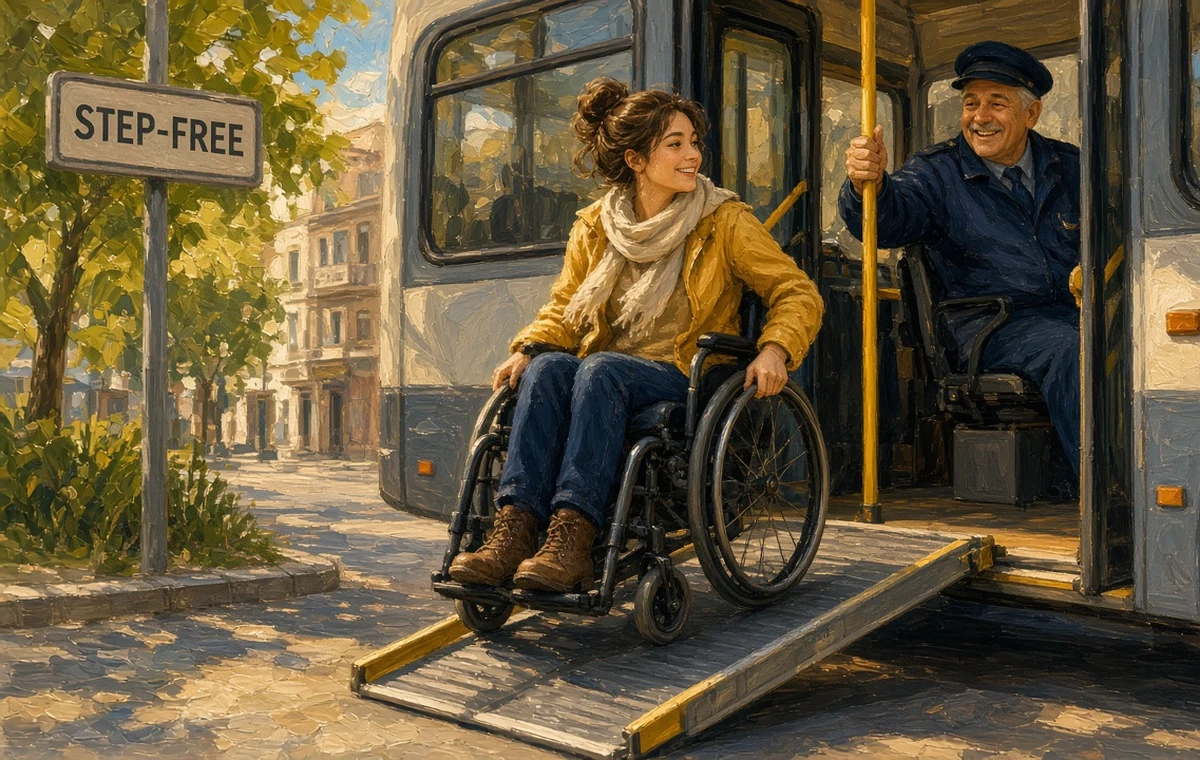
In 2001 a wheelchair lift at Oido Station near Seoul fell and an older disabled passenger was killed. The accident sparked a long movement for mobility rights, with disabled activists occupying stations and blocking buses to demand lifts and accessible vehicles. The 2005 act was one result of that pressure.
- Low-floor buses: an amendment in 2021 made low-floor buses mandatory when city buses are replaced from 2023, with exceptions for routes where road conditions make them impractical.
- Special transport services: local governments run call taxis for wheelchair users and others, but waiting times can still be long, especially at night and in rural areas.
- Barrier-free certification: new public buildings must be certified as barrier-free, covering entrances, lifts, toilets and signage.
A journey is only as accessible as its weakest link. A low-floor bus helps little if the stop has no kerb, the pavement is broken or the destination has stairs, so planners talk about a chain that links vehicles, stops, pavements and buildings.
What does universal design add?
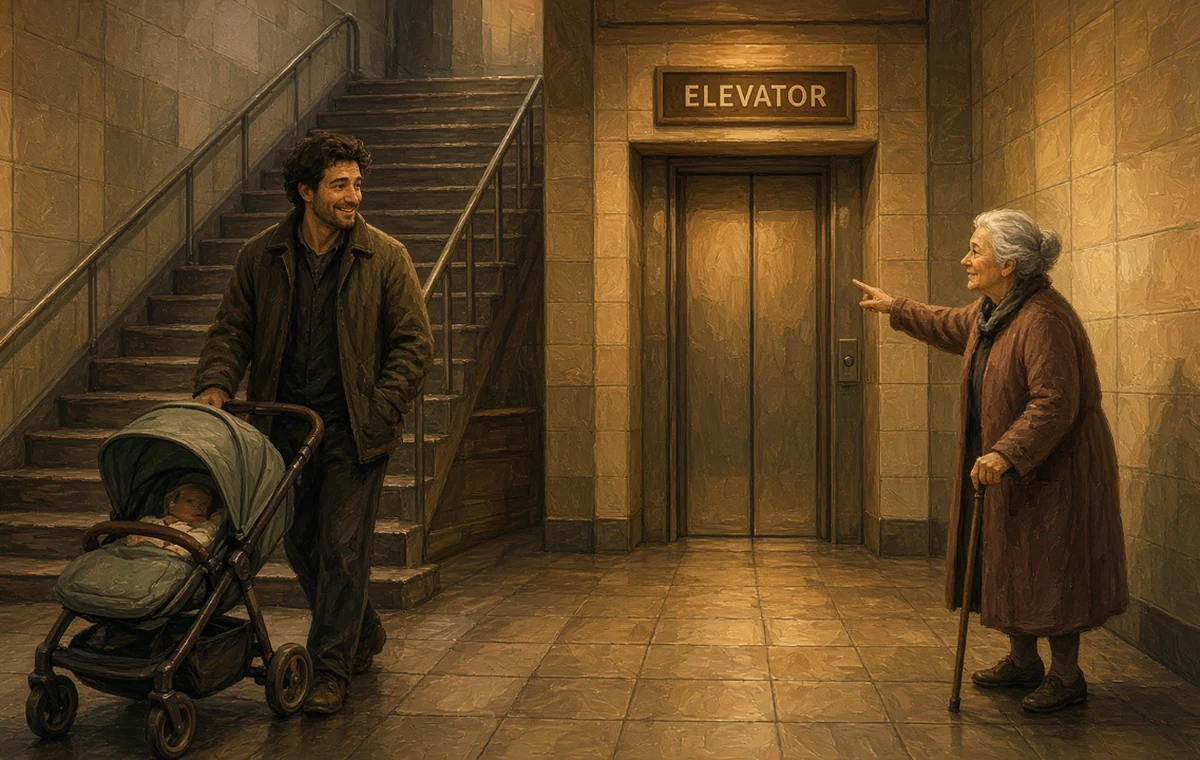
Universal design means designing products and spaces so that as many people as possible can use them without special adaptation. The architect Ronald Mace and colleagues set out seven principles in 1997.
| Principle | Transport example |
|---|---|
| Equitable use | The same entrance for everyone rather than a separate side door |
| Flexibility in use | Announcements by both sound and screen |
| Simple and intuitive use | Clear signs and consistent layouts |
| Perceptible information | Tactile paving and high-contrast colours |
| Tolerance for error | Doors that reopen when something blocks them |
| Low physical effort | Automatic doors and step-free routes |
| Size and space for approach and use | Room for wheelchairs, pushchairs and luggage |
Kerb cuts designed for wheelchairs are now used by parents with pushchairs, travellers with suitcases and delivery workers. This is sometimes called the curb-cut effect: accessibility for some becomes convenience for all.
How do the US and UK protect accessible transport?
United States
The Americans with Disabilities Act of 1990, described in the wiki entry on the Americans with Disabilities Act, requires new buses and trains to be accessible and requires public transit agencies to offer complementary paratransit for people who cannot use fixed routes. The law grew out of decades of activism, including a 1978 protest in Denver in which wheelchair users blocked buses to demand lifts, an action that helped launch the disability rights group ADAPT.
United Kingdom
The Equality Act 2010 requires transport providers to make reasonable adjustments for disabled people, and the Public Service Vehicles Accessibility Regulations 2000 set standards that buses and coaches had to meet. In 2017 the Supreme Court ruled in Paulley v FirstGroup that bus drivers must do more than simply ask when a pushchair occupies the wheelchair space. Transport for London publishes step-free access maps, and the national Access for All programme funds lifts and ramps at railway stations.
| Item | United States | United Kingdom | Korea (source country) |
|---|---|---|---|
| Core law | ADA 1990 | Equality Act 2010 | Mobility Disadvantaged Persons Act 2005 |
| Vehicle standard | Accessible buses and rail | PSV Accessibility Regulations 2000 | Low-floor buses mandatory from 2023 with exceptions |
| Door-to-door service | ADA paratransit | Local dial-a-ride schemes | Special transport call taxis |
The three countries took different legal routes, but each moved from charity towards enforceable rights, and in each the push came from disabled people themselves.
How should we look at mobility in an ageing society?

Student money tip on CampusDown Repair Up: Is a small leak worth a renters insurance claim? How to decide.
Korea became a super-aged society at the end of 2024, with more than one in five residents aged 65 or over, and the US and UK are ageing too. As the number of older travellers grows, accessible transport becomes a mainstream service rather than a niche one. Digital barriers are a newer concern: timetables, ticketing and taxi booking increasingly depend on apps that can be hard for older or disabled people to use.
For students, a useful exercise is to follow one route from home to a hospital or campus and note every step, gap, missing sign or broken lift along the way. Seeing the chain from the point of view of a wheelchair user, a parent with a pushchair or an older person with a cane turns abstract law into concrete design choices.
- People with reduced mobility include disabled and older people, pregnant women, carers and children.
- Mobility is the gateway to education, work and healthcare.
- Korea's law followed years of protest after the 2001 Oido Station accident.
- Universal design helps everyone, not just one group.
- The ADA and the Equality Act turned access into enforceable rights.
FAQ
Who counts as a person with reduced mobility?
Disabled people, older people, pregnant women, people travelling with infants, children and others who find travel difficult.
Why is mobility considered a right?
Because it is the gateway to education, work, healthcare and community life, which constitutions and equality laws protect.
What are special transport services in Korea?
Call taxis run by local governments for wheelchair users and others who cannot easily use buses or trains.
What is universal design?
Designing spaces and products so that as many people as possible can use them without special adaptation.
What does the ADA require of public transit?
Accessible new buses and trains and complementary paratransit for people who cannot use fixed routes.