
Why Are More Older People Living Alone? Poverty, Health, Isolation and Lessons From US and UK Loneliness Policy
- Longer lives and smaller families mean more older people now live alone.
- Their main problems are money, health, broken ties and isolation that can end in lonely death.
- The US relies on meals and senior centres, while the UK uses social prescribing.
Contents
Have you noticed more older neighbours living on their own? Longer lives and smaller families mean that more and more people spend their last decades in a one-person household. For some that means independence; for others it means a silent phone, a thin pension and days without a conversation. This guide reworks a Korean student report on older people living alone: why their numbers keep rising, what problems they face, and how welfare services should respond. It then compares Korea with the very different approaches taken in the United States and Britain.
Why are more older people living alone?
The report gives two broad reasons. The first is demographic: people live much longer, so the older population is growing fast. The second is social: industrialisation changed the family. Where older parents once lived with, and depended on, their adult children, nuclear and smaller families became the norm, attitudes to supporting parents shifted and a stronger culture of individualism spread. Older people who once expected to be cared for at home increasingly found themselves running a household alone.
Student money tip from CampusDown Law UpMy First Paycheck Was Short Because of a Polo Shirt. Is That Allowed? — Your employer took money from your paycheck for a uniform or broken equipment?
The report expects Korea to become an aged society, the stage at which people aged 65 and over make up 14 percent of the population. That forecast has already come true and been overtaken. Korea passed the 14 percent mark in 2017 and crossed 20 percent, the threshold of a super-aged society, at the end of 2024, one of the fastest transitions ever recorded. The wider demographic picture is explained in our guide to population ageing theories.
The source also cites a chart showing that in 2010 households of a single person aged 65 or over made up 6.0 percent of all households, with the share continuing to climb after that. Treat the exact figure as the source's snapshot; the trend since then has been clearly upward.

What problems do older people living alone face?
The report sorts the difficulties into four areas. Money comes first: in a survey it quotes, economic hardship was the problem older people named most often, at 43.6 percent, made worse by early retirement that leaves a long gap before or beyond pension income. Health comes second, at 37.9 percent, together with the feeling of emptiness that can follow physical and mental decline. Relationships come third, as generational and lifestyle differences push some older parents away from their children. Isolation comes last but is the most dangerous: a sense of being cut off from society, loneliness, and a rise in lonely deaths discovered long after the person has died.
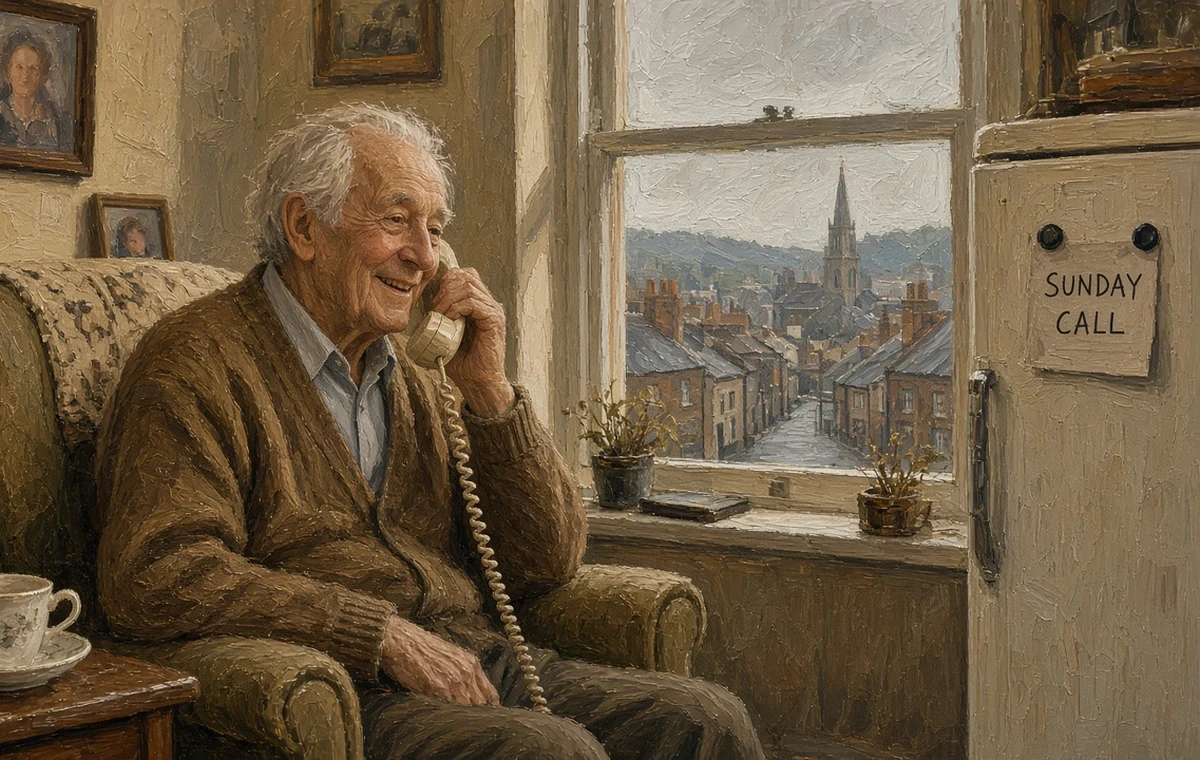
The joy on his face shows how small the remedy can be. A regular call does not fix a low pension or a bad hip, but it is often the thread that keeps a person connected and makes it more likely that someone will notice when something goes wrong.
The report argues that lonely deaths show this is no longer a private family matter. When money worries, failing health and broken relationships pile up at once, the risk rises sharply, so the first priority is a system that spots isolation early, such as regular check-in calls or visits. The path from isolation to tragedy is set out in our page on social isolation and lonely death.
Skimming the section headings first makes a long guide much easier to map out. Try writing down one question of your own as you read.
How do the US and UK respond to loneliness in later life?
United States: meals, senior centres and a public health warning
America's main framework is the Older Americans Act of 1965, which funds a national network of local agencies on ageing. Through it, communities run congregate meals in senior centres, home-delivered meals for people who cannot get out, transport, caregiver support and information services. For many recipients the volunteer who brings the meal is also the only daily visitor, so the service doubles as an informal welfare check. Medicare covers health care from 65, while Medicaid pays for much long-term care for people with low incomes and assets.
In 2023 the US Surgeon General issued an advisory calling loneliness and isolation a public health epidemic, comparing the health risks of social disconnection with well-known risks such as smoking. The advisory urged communities, employers and health systems to treat social connection as part of health, not merely a personal preference.
United Kingdom: a minister for loneliness and social prescribing
Britain took the unusual step in 2018 of giving a government minister specific responsibility for loneliness and publishing a national loneliness strategy. One of its key tools is social prescribing: GPs and other NHS staff can refer patients to link workers who connect them with local activities such as walking groups, lunch clubs, choirs or befriending schemes, where volunteers phone or visit isolated older people every week. Councils assess care needs and arrange home care, but charities and volunteers carry much of the work of keeping people connected.
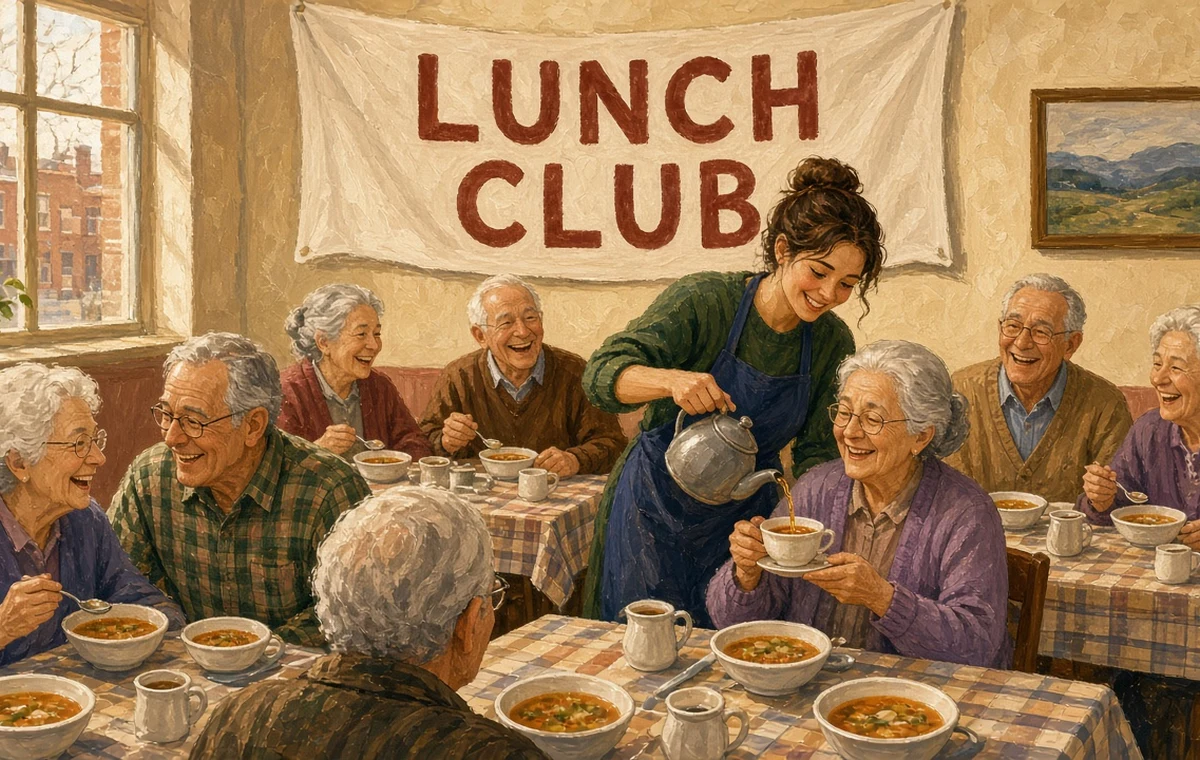
The laughter in the hall makes the case better than any statistic. A weekly meal brings food, conversation and a reason to get dressed and go out, three things that are easy to lose when you live alone.
How do Korea, the US and the UK compare?
| Issue | Korea | United States | United Kingdom |
|---|---|---|---|
| Ageing stage | Aged society in 2017, super-aged from late 2024 | Ageing steadily, slower than Korea | Ageing steadily, slower than Korea |
| Main framework | Elder welfare law, long-term care insurance, check-in and care services | Older Americans Act, Medicare and Medicaid | NHS and council social care, loneliness strategy |
| Typical anti-isolation tool | Regular check-in calls and home visits | Senior centres and home-delivered meals | Social prescribing, befriending and lunch clubs |
| Main concern | Old-age poverty and lonely deaths | Uneven local services and care costs | Pressure on social care funding |
The comparison shows that no country relies on money alone. Each pairs income and health support with something that brings people into contact, whether a call, a meal or a club, because isolation is a risk in its own right.
Korea's distinctive concern is how fast it has aged and how high old-age poverty remains compared with other rich countries. That is why the report stresses economic support alongside health care and social connection, rather than treating loneliness as a purely emotional problem.
How should welfare services for older people living alone be planned?
The report concludes that, although the need for social protection is obvious, services for this group remain inadequate. It proposes a structure for a planning assignment: describe the current situation, analyse the problems, examine housing conditions and existing services, then design a new service. Its three directions match the three main problems: income and job support for economic hardship, visiting health care for health problems, and check-in calls and social programmes to prevent isolation.
Student money tip on CampusDown Law Up: My First Paycheck Was Short Because of a Polo Shirt. Is That Allowed?.
- Have you shown the scale of the issue with dated statistics?
- Have you grouped the problems by area in a table?
- Have you paired each problem with a specific service?
- Have you considered housing as well as income and health?
- Have you explained how isolation will be detected early?
A strong plan names who will make the call or visit, how often, and what happens if nobody answers. Those practical details are what turn a good intention into a working service.
Who will find this useful?
This structure suits students of social welfare, nursing, gerontology and public policy writing a service planning report. Statistics on ageing change quickly, so always use the latest official figures and give the year.
FAQ
When did Korea become a super-aged society?
People aged 65 and over passed 20 percent of the population at the end of 2024, after Korea became an aged society in 2017.
What does the Older Americans Act provide?
It funds local services such as senior centre meals, home-delivered meals, transport and caregiver support.
What is social prescribing in the UK?
NHS staff refer patients to link workers who connect them with local groups and befriending schemes.
What is a lonely death?
A death of someone living in isolation that goes unnoticed for a long time before the body is found.
What services help older people living alone most?
Income support, visiting health care and regular check-in calls or social activities that prevent isolation.