
What Is Epigenetics? DNA Methylation, Nature vs Nurture and the Studies Behind It
- Epigenetics studies changes in gene expression that happen without any change to the DNA sequence.
- DNA methylation and histone modification are the best-known mechanisms.
- Evidence from rats, famine cohorts and twins supports an interaction view of nature and nurture, with careful limits.
Contents
Epigenetics is the study of changes in how genes are switched on and off that happen without any change to the DNA sequence itself; the same genes can be used differently depending on environment and experience. This guide explains the main mechanisms, the landmark rat and famine studies, how to link the topic to developmental psychology, and how research programmes in the United States and the United Kingdom are reshaping the old nature-versus-nurture argument.
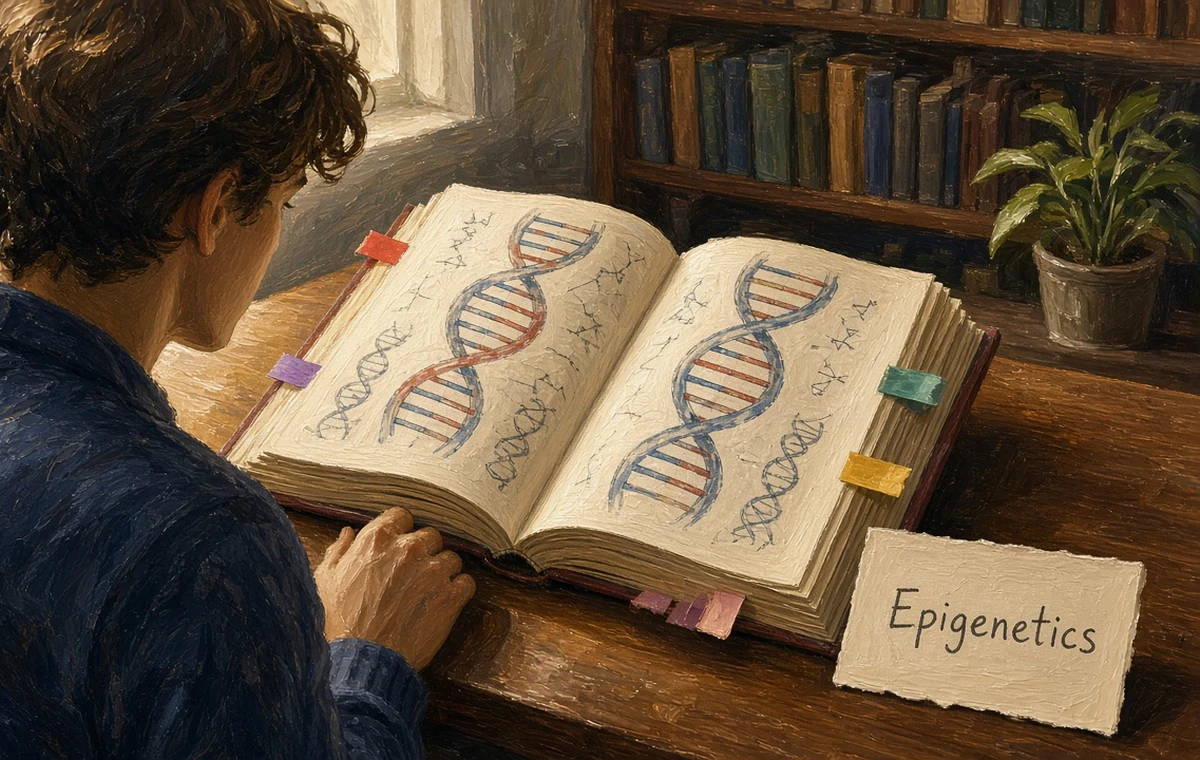
When a developmental psychology assignment asks whether personality is inborn or learned, picking one side is usually the weakest answer. Epigenetics gives you evidence for a better one: genes and environment shape each other, so the real question is how they interact rather than which one wins.
How does epigenetic change actually happen?
Two mechanisms dominate the textbooks. In DNA methylation, small chemical tags called methyl groups attach to particular sites on the DNA, most often where a cytosine sits next to a guanine. When this happens in the control region of a gene, the gene is usually read less often. In histone modification, the spool-like proteins that DNA wraps around are chemically altered, which loosens or tightens the packaging and makes genes easier or harder for the cell to reach.
Student money tip from CampusDown Repair UpIs a small leak worth a renters insurance claim? How to decide — compare the loss with your deductible, check who is responsible, and document it either way.
A useful analogy is a library book: the text never changes, but bookmarks, sticky tape and paper clips decide which pages are opened and which stay shut. One small refinement to the source is worth adding. Methylation does not always mean silence; its effect depends on where in the gene it occurs, so it is safer to write that it usually reduces activity when it sits in a gene's promoter.
Who coined the word epigenetics?
The British biologist Conrad Waddington introduced the term in 1942, long before anyone could measure methylation. He later pictured development as a ball rolling down a landscape of valleys, an image that captured how genes and surroundings together steer a cell, or a person, towards one path rather than another.
| Mechanism | What changes | Typical effect |
|---|---|---|
| DNA methylation | Methyl tags added to DNA, often at CpG sites | Usually lowers gene activity when found in a promoter |
| Histone modification | Chemical tags on the proteins DNA wraps around | Loosens or tightens access to genes |
| DNA sequence | Nothing; the genetic letters stay the same | Explains why epigenetic change is not mutation |
Keeping the last row in mind prevents the most common mistake in student essays, which is describing epigenetics as genes themselves being rewritten by effort or experience.

Can parenting really change how genes are expressed?
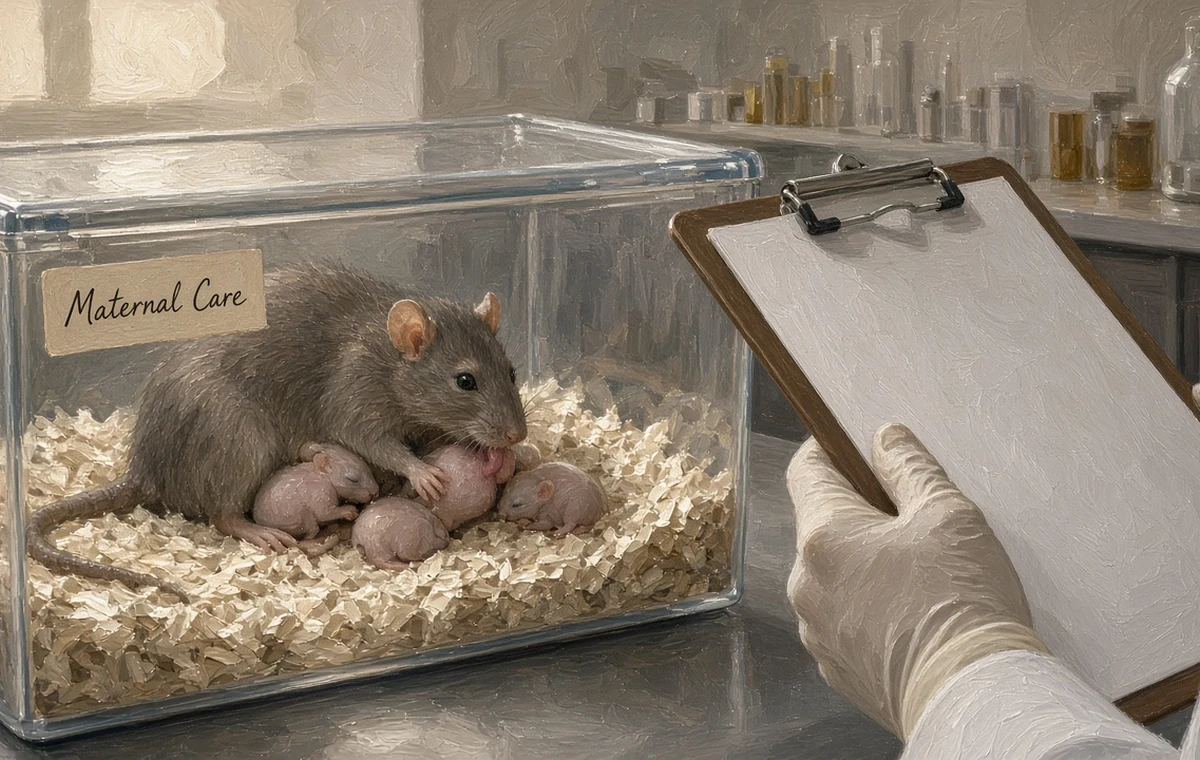
The study cited most often comes from Michael Meaney's laboratory at McGill University in Canada. Ian Weaver, Meaney and colleagues reported in Nature Neuroscience in 2004 that rat pups raised by mothers who licked and groomed them a lot showed less methylation on a stress-hormone receptor gene in the hippocampus, and grew into calmer adults. Cross-fostering pups to different mothers showed that the care, not the pups' inherited genes, made the difference.
For humans, the famous natural experiment is the Dutch Hunger Winter of 1944 to 1945, when a German blockade caused severe famine in the western Netherlands. In 2008 Bas Heijmans and colleagues found that people who had been exposed to the famine before birth still showed lower methylation of the IGF2 gene about six decades later. Animal results cannot be transferred directly to human personality, so the accurate phrasing in an assignment is that these studies show a possibility, not a proven chain of cause and effect.
Do epigenetic marks pass to grandchildren?
This is where popular articles most often exaggerate. Some animal studies suggest that certain marks can cross generations, but in humans most tags are wiped and reset during the formation of eggs, sperm and the early embryo, and claims of inheritance over several generations remain debated. Say so plainly rather than presenting it as settled science.
Skimming the section headings first makes a long guide much easier to map out. Try writing down one question of your own as you read.
How are the US and UK studying epigenetics?
In the United States, the National Institutes of Health launched the Roadmap Epigenomics Program in 2008, and in 2015 the consortium published reference maps of 111 human epigenomes in Nature, giving researchers a baseline for comparing tissues and diseases. In the United Kingdom, the Children of the 90s study in Bristol, also known as ALSPAC, has followed families since the early 1990s, and its ARIES project measured DNA methylation in mothers and children at several ages so that early experience could be compared with later outcomes.

Twin research adds a striking human example. In 2005 Mario Fraga and colleagues reported that identical twins have very similar epigenetic profiles in early life, but that the differences grow as they age and as their lifestyles diverge. Francis Galton, who popularised the phrase nature and nurture in 1874, could hardly have imagined such a direct look at how the two meet.
| Item | Korea (source perspective) | United States | United Kingdom |
|---|---|---|---|
| Typical assignment | Is my personality inborn? A developmental psychology report | Nature versus nurture essays in AP and college psychology | A-level psychology and biology debates on nature and nurture |
| Landmark research | Meaney's rat studies and the Dutch famine cohort | NIH Roadmap Epigenomics Program (2008) | Children of the 90s (ALSPAC) and its ARIES methylation data |
| Theory link | Erikson and Freud on early experience | Twin and adoption studies | Galton's nature and nurture framing |
Whichever system you study in, the same lesson applies: the strongest essays use one biological study and one personal example to show interaction rather than a contest.
How does this connect to psychological theory?
Erik Erikson described development as the meeting point of biological maturation and social demands, with each stage of life built on relationships with caregivers. The idea that early trust or autonomy lays foundations fits well with epigenetic research that gives early experience a biological footprint.
Freud's psychoanalytic view, by contrast, treated early childhood as close to decisive. Epigenetic studies sit more comfortably with Erikson here, because they show plasticity too: marks can shift with later experience, so the evidence argues against the idea that everything is fixed by the age of five.
Where do students go wrong when writing about it?
The classic errors are writing that effort can change your genes, treating rat findings as proof about human character, and claiming that epigenetic changes are reliably inherited for generations. A hypothetical childcare student writing about whether her temperament is inborn could list what her parents say about her as a baby as the genetic side, describe being raised mainly by her grandparents as the environmental side, and conclude with the interaction view. Link the debate itself to the nature versus nurture debate and the molecule at its centre to DNA.
Student money tip on CampusDown Repair Up: Is a small leak worth a renters insurance claim? How to decide.
- Did you separate the DNA sequence from gene expression?
- Did you state the limits of animal research?
- Did you avoid choosing only nature or only nurture?
- Did you connect the evidence to a developmental theory?
Putting one biological finding beside one personal story makes the conclusion almost write itself: inheritance and upbringing work together, and both remain open to change.
Reviewed by the CampusDown editorial team, November 2026. References: Waddington, C. H. (1942). The epigenotype. Endeavour, 1; Weaver, I. C. G., et al. (2004). Epigenetic programming by maternal behavior. Nature Neuroscience, 7(8); Heijmans, B. T., et al. (2008). Persistent epigenetic differences associated with prenatal exposure to famine in humans. PNAS, 105(44). This is a fast-moving field, so check recent research before citing new claims.
FAQ
Does epigenetics mean my genes change?
No. The DNA sequence stays the same; what changes is which genes are used and how strongly.
Who coined the term epigenetics?
The British biologist Conrad Waddington introduced it in 1942.
What did Meaney's rat studies show?
Pups that received more licking and grooming had different methylation on a stress-related gene and grew into calmer adults.
What was the Dutch Hunger Winter study?
Research on people exposed to famine before birth in 1944 to 1945, who showed methylation differences decades later.
Are epigenetic changes inherited by grandchildren?
Some animal studies suggest it, but in humans most marks are reset and multi-generation inheritance is still debated.