
Weber–Fechner at the Grocery Shelf: Why Shrinkflation Crosses the Just-Noticeable Line
- The Weber–Fechner law says people notice changes relative to what was already there, and the just-noticeable difference grows with the starting size.
- Shrinkflation often lives under that threshold: a slightly lighter package at a familiar price is easier to miss than a higher tag on the same box.
- Unit prices and net weights are the practical counter to a change designed to feel like continuity.
Contents
A one-ounce change in a cereal box is easy to miss. A one-dollar change on the shelf tag is not. That difference is close to what the Weber–Fechner law has been telling psychology, and later economics, for a long time: people notice changes relative to what was already there, and the just-noticeable difference grows as the starting size grows. Shrinkflation lives in the gap between those two thresholds.
Grocery aisles have been a live demonstration. Reuters reporting on U.S. consumer prices in mid-November said October consumer prices rose more than expected, with higher costs for food and accommodation in the mix. dunnhumby’s U.S. Consumer Trends Tracker, Wave 13, based on August interviews and released in early November, found shoppers under record financial pressure and, among other adjustments, trading down to smaller packs and private brands. NPR, on November 24, described families cutting grocery corners to pay other bills. A smaller bag that still costs what the larger bag used to cost is, in Weber’s terms, a change designed to stay under the difference you would otherwise protest.
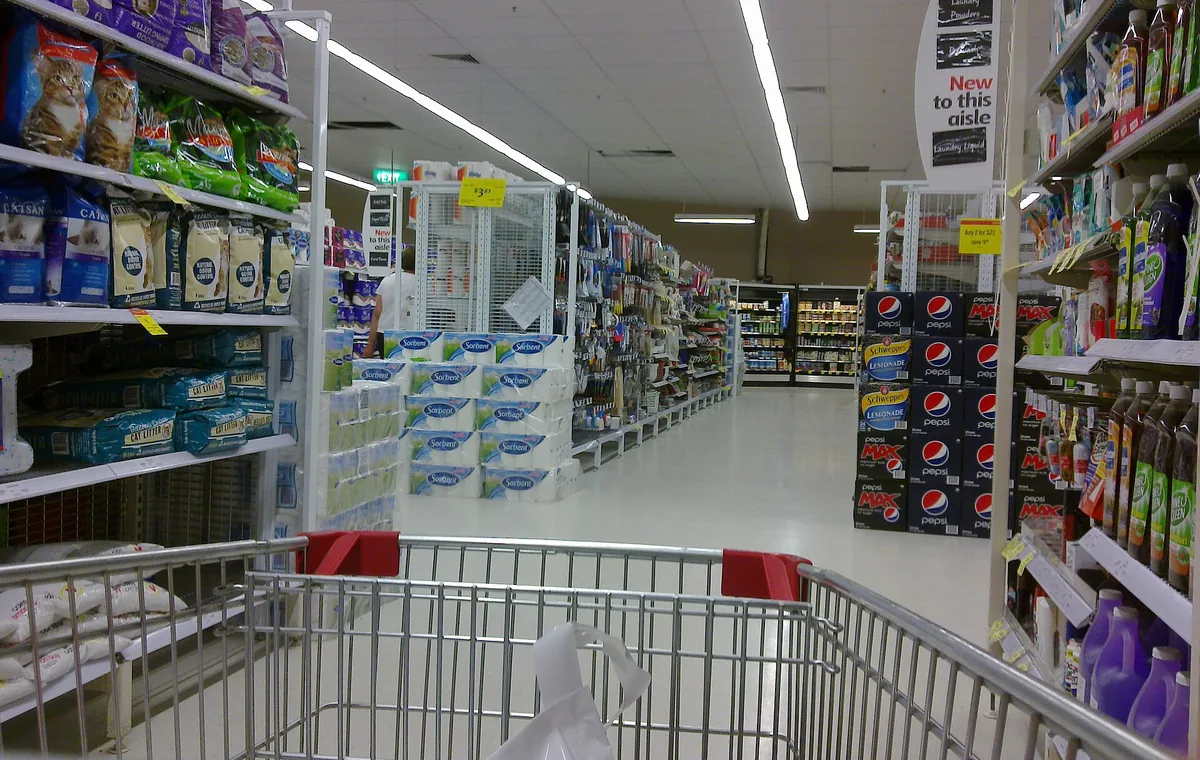
A just-noticeable difference, in a cereal aisle
Weber’s idea is that the smallest change you can reliably detect is a roughly constant fraction of the original stimulus. Fechner built a logarithmic relationship on top of that. You do not need the equation to use the insight. A two-ounce cut from a 16-ounce box is a larger relative change than a two-ounce cut from a 40-ounce box, but both can be designed to feel like “about the same bag” if the packaging stays familiar.
That is why shrinkflation is not only a pricing story. It is a perception story. Firms are often more willing to change quantity than list price, because shoppers compare this week’s tag with last week’s tag more readily than they compare this week’s net weight with a memory of last year’s net weight.

What else sits next to the law
The same family of ideas includes the just-noticeable difference itself and, in a consumer setting, work on prospect theory and loss aversion — losses loom larger than equivalent gains — and on the anchoring effect. The official consumer price index may or may not fully capture a change in package size, which is one reason a familiar box can hide a real price increase. A familiar package size is an anchor. A slightly lighter box still hanging from that anchor can feel like continuity even when the unit price has moved.
For a household already stretching a grocery budget, the practical tools are unromantic. Unit prices on the shelf tag, when they are posted, beat a memory of the old bag. If a package claim looks wrong, a consumer complaint letter is the ordinary recourse, not a lecture on 19th-century psychophysics. The same habit of reading the fine print applies when a credit-card annual fee shows up as a surprise: the change was often disclosed at a size or in a place designed not to be noticed.

Skimming the section headings first makes a long guide much easier to map out. Try writing down one question of your own as you read.
A fairer way to notice
Look at the unit price, not only the shelf price. Look at the net weight, not only the familiar box. If a brand you buy every week has gotten smaller, say so in the terms the store already uses — cents per ounce — rather than as a vague feeling that “everything is shrinking.” The Weber–Fechner law explains why the feeling is easy to dismiss. It does not require you to accept the change.
FAQ
What does the Weber–Fechner law say, in plain terms?
That the smallest change a person can reliably notice is roughly a constant fraction of the original stimulus, so larger starting amounts require larger changes to be noticed.
How does that apply to shrinkflation?
A modest cut in package size can stay below a shopper’s just-noticeable difference, especially if the box still looks familiar, while a price increase on the tag would not.
What recent reporting is this tied to?
A November 10 Reuters report on the October CPI, which rose more than expected with higher food and accommodation costs; dunnhumby’s U.S. Consumer Trends Tracker, Wave 13, which found shoppers under financial pressure and trading to smaller packs and private brands; and NPR’s November 24 reporting on families cutting grocery corners.
What should a shopper actually check?
The unit price and the net weight, not only the shelf price and the familiar package shape.
Is this only about groceries?
No. The same relative-threshold idea shows up in prices, noise, brightness, and other everyday judgments. Groceries are simply where many households feel it this month.
Academic reference search
Can't find the reference you need? Try academic search for references now.
Featured Guides
- LawMy Scholarship Covers Rent Too. Wait, Could That Be Taxable?Scholarship or grant money covering housing and food, not just tuition? A student's plain…13 readers
- RepairThe Wallpaper in My Rental Is Peeling at the SeamsWallpaper seams lifting in your rental? iFixit's simple fix: lift gently, clean, thin…14 readers
- KoreaBubble Tea (Boba) Part-Time Jobs in Korea for Foreigners: Duties, Pay, Perks and Visa Rules (2026)Bubble tea and boba franchise alba for foreigners in Korea: station duties, pearl timing,…Quick Guide
- LawMy Buddy Asked Me to Cosign His Car Loan and I FrozeA friend or girlfriend asked you to cosign a car loan? A broke student's plain guide to…Read by 16 people
- LawA Buyer "Accidentally" Overpaid for My Old Desk. Something Feels OffSelling stuff online and a buyer overpays then asks you to send the extra back? A student…Read by 13 people