
The Hours Film Analysis: Three Women, Three Eras and the Question of Who Owns a Life
- The Hours intercuts a single day in the lives of three women living in different eras.
- The three stories are linked through Virginia Woolf's novel Mrs Dalloway.
- The tension between sacrifice for others and owning one's own life is the film's central question.
Contents
- What is The Hours about?
- How are the three characters connected?
- What question does the film ask?
- Why does each woman's day begin with flowers?
- What should you analyse in your essay?
- Why are the three days built the same way?
- What do you need to know about Woolf?
- A suggested reading order
- How does the film differ from the novels?
- Writing about difficult themes
- How should you structure and conclude the essay?
- FAQ
The Hours, released in 2002 and based on Michael Cunningham's novel, turns up again and again on women's writing and film criticism courses. These notes focus on the structure that layers one day in the lives of three women from different eras, and on the questions that structure raises, with pointers for an analytical essay.
What is The Hours about?
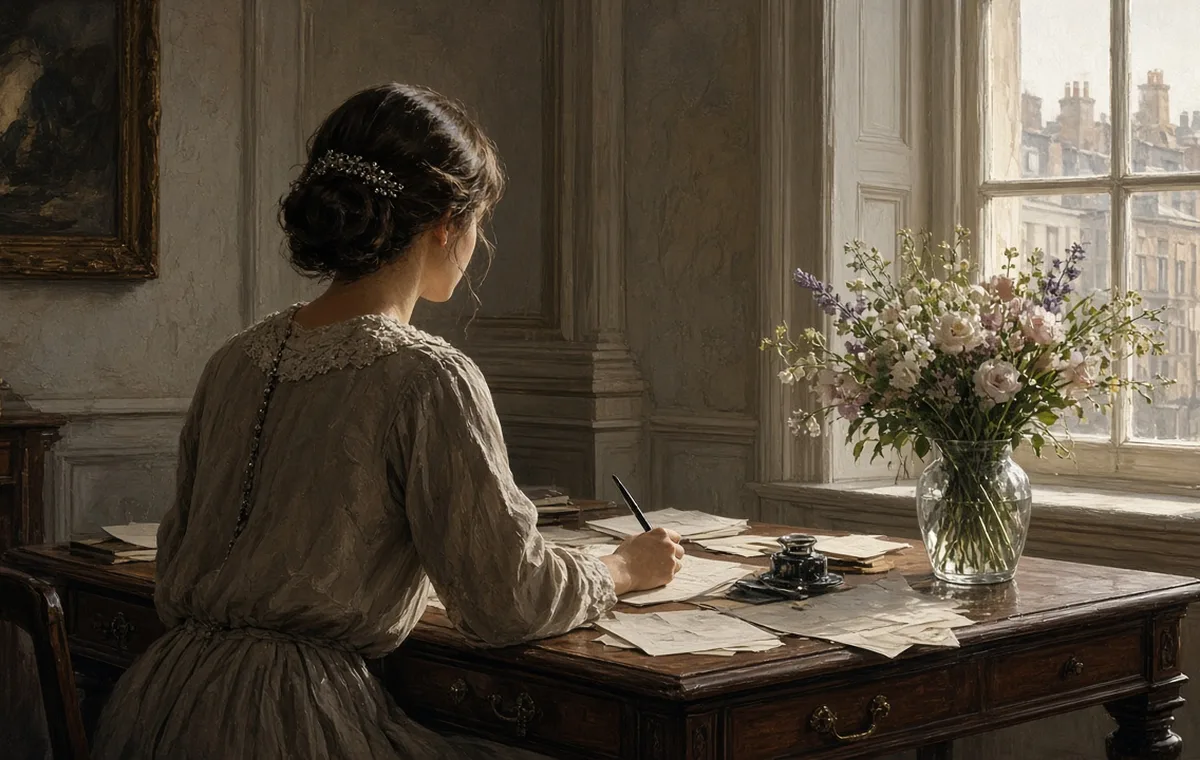
Directed by Stephen Daldry from a screenplay by David Hare, the film moves between three days. In 1923, in Richmond on the edge of London, Virginia Woolf is beginning to write Mrs Dalloway while recovering from illness under her husband Leonard's watchful care. In 1951, in a Los Angeles suburb, Laura Brown, a pregnant housewife, is reading that novel on the day she is meant to bake her husband's birthday cake. In 2001, in New York, the editor Clarissa Vaughan is preparing a party for her friend Richard, a poet who is seriously ill with AIDS and has just won a major prize.
Student money tip from CampusDown Life UpHow to search official databases for unclaimed money in your name — free state and federal searches, and how to avoid paid finders and scams.
The women live in different times and places, yet each spends the day looking after someone while holding down her own feelings. The film's defining feature is that a single day is built to carry the weight of a whole life. Nicole Kidman won the Academy Award for Best Actress for playing Woolf, alongside Julianne Moore as Laura and Meryl Streep as Clarissa, and Philip Glass's score helps knit the three timelines together.

How are the three characters connected?
| Character | Time and place | Her situation |
|---|---|---|
| Virginia Woolf | Richmond, 1923 | Torn between a quiet convalescence and the urge to write and return to London |
| Laura Brown | Los Angeles, 1951 | Stifled by the role of the perfect wife and mother |
| Clarissa Vaughan | New York, 2001 | A day devoted to caring for a dying friend |
The three stories follow Mrs Dalloway as it is written, read and lived again. Woolf is the writer, Laura the reader, and Clarissa a woman whom Richard has nicknamed "Mrs Dalloway", who seems to live inside the novel. Seen as writer, reader and character, the film becomes an exploration of how literature works on actual lives. The wiki entry on feminist theory is a useful companion for reading women's lives alongside social structures.
Skimming the section headings first makes a long guide much easier to map out. Try writing down one question of your own as you read.
What question does the film ask?
Laura has built a home that looks happy from the outside, yet inside it she feels herself disappearing. Virginia, despite Leonard's devotion, is frustrated at not being allowed to decide the shape of her own days; at Richmond station she tells him she would rather face the risks of London than slowly suffocate in the suburbs. Both show that being loved and being the author of your own life are not the same thing.
Clarissa lives in a comparatively free era, with a career and a long-term partner, Sally, yet she still spends the day arranging things for someone else. The film asks the audience whether, even as the decades change, a structure remains in which care and sacrifice fall mostly to women. Sociologists describe gender as something we keep performing in everyday tasks, an idea explored in the wiki entry on doing gender, and the birthday cake, the party and the flowers are exactly such tasks.
Why does each woman's day begin with flowers?
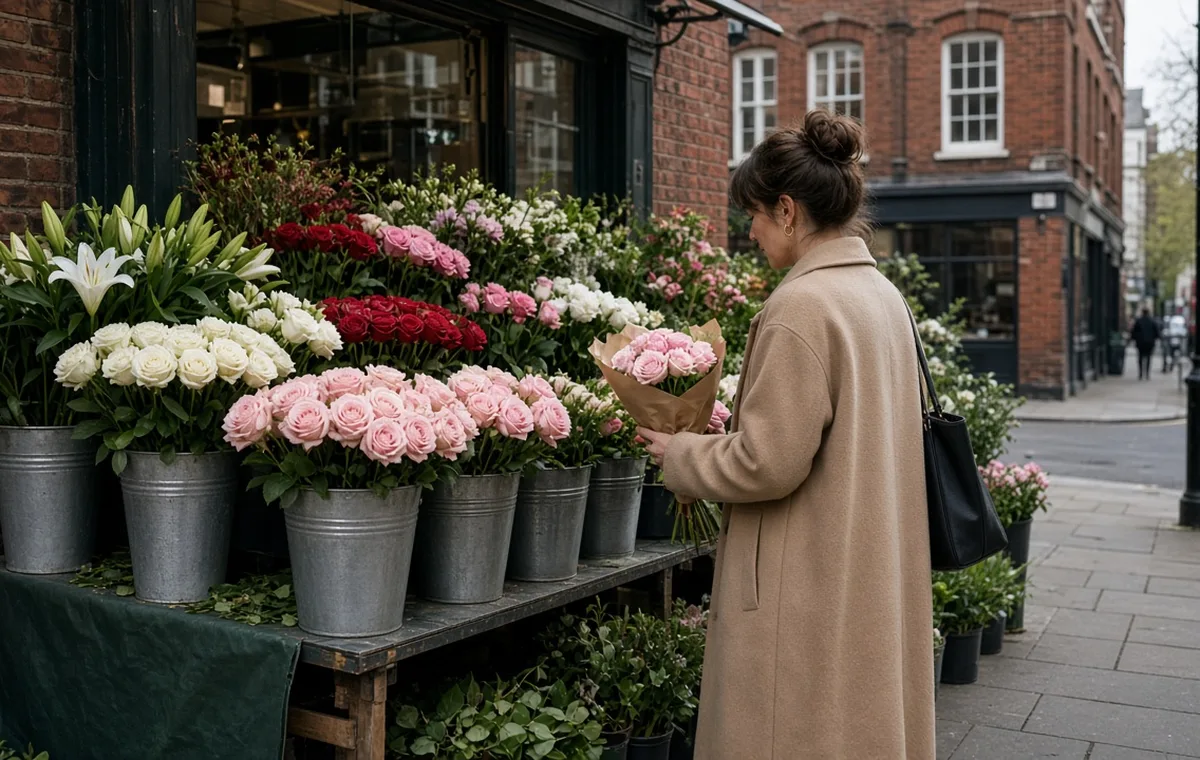
Flowers start with the famous first line of Mrs Dalloway, "Mrs Dalloway said she would buy the flowers herself", and become a symbol that runs through the whole film. Going out to buy flowers looks like an ordinary chore, but for Woolf's Clarissa Dalloway it is also a moment of freedom, walking alone through London. At the same time flowers fade quickly, so they carry both the beauty and the brevity of life. In an essay, comparing the scenes in which flowers appear shows how differently each woman approaches her day: Clarissa Vaughan buys them briskly, Virginia lies in the garden beside a small dead bird that her sister's children have laid on a bed of roses, and Laura's kitchen is full of the props of a role she is performing.
What should you analyse in your essay?
First, look at how recurring images, such as flowers, parties, mirrors and water, connect the three stories. Second, explain how the editing moves across time and makes the characters' feelings overlap; a gesture begun in one era is often completed by a woman in another. Third, rather than judging each character's choices as right or wrong, explain the conditions that produced them.
There is no need to dismiss care and sacrifice within relationships. What deepens an essay is asking what wounds appear when sacrifice is demanded of only one side, and what families and society would need to change to reduce them.
Why are the three days built the same way?
Each woman spends the day preparing something for someone else, a novel, a cake, a party, and in the process asks whether her life is really her own. By repeating the same structure across 1923, 1951 and 2001, the film suggests that the question women face has not changed as much as the surface of their lives has. The novel's own structure is similar: Woolf compressed Clarissa Dalloway's life into a single June day in 1923 and threaded it with the story of Septimus Smith, a traumatised war veteran.
What do you need to know about Woolf?
Cunningham's novel won the 1999 Pulitzer Prize for Fiction, and its title, "The Hours", was the working title Woolf used while writing Mrs Dalloway. Knowing both the source and the source's source changes the depth of an essay.
The key idea for reading Woolf is stream of consciousness, a narrative method that follows the thoughts, memories and feelings rising in a character's mind without keeping to chronological order. On the surface Clarissa Dalloway's day is ordinary, buying flowers and walking through Westminster, but inside it she moves constantly between past love, old choices and thoughts of death. The film imitates this by layering the inner time of three women.
Woolf and her husband founded the Hogarth Press in 1917, at Hogarth House in Richmond, and the press published Mrs Dalloway in 1925. That is why the Richmond house in the film doubles as the workplace of a small press, and it reminds us that Woolf had unusual control over her own publishing at a time when few women did.
A suggested reading order
- Mrs Dalloway (1925): Woolf's novel following one day of consciousness.
- A Room of One's Own (1929): the essay arguing that a woman needs money and a room of her own if she is to write fiction.
- To the Lighthouse (1927): another major novel about family, time and loss.
- Michael Cunningham, The Hours (1998): the novel the film adapts.
- The film The Hours (2002): compare its intercut adaptation with the book.
A Room of One's Own connects directly with the film's theme. Woolf's argument that without financial independence and a space of their own women struggle to direct their lives is the key to understanding why Laura Brown feels she cannot breathe in her 1950s home.
How does the film differ from the novels?
| Work | Form and date | Key features |
|---|---|---|
| Mrs Dalloway | Novel, 1925 | One day of consciousness; everyday London |
| Cunningham's The Hours | Novel, 1998 | Intercuts three women's days; a response to Woolf |
| The film The Hours | Film, 2002 | Music and editing weave three times into one |
| Shared themes | Across eras | Ownership of one's life, love and loss, time |
Because film cannot reproduce a novel's inner narration directly, it relies on editing and music instead. A typical example is match-cutting, where a character in one era puts something down and the next shot shows a woman in another era continuing the same movement. Picking one such sequence and asking "how does the film express the novel's stream of consciousness?" makes a strong comparison of media, the kind of close focus that suits an A-level comparative coursework piece or a first-year film module.
Writing about difficult themes
The film deals closely with depression and death; it opens and closes with Woolf's suicide in 1941, and Richard's story ends in the same way. When you write about these scenes, avoid romanticising a character's choice or reducing it to a simple verdict, and look instead at the conditions of the period and the person. Woolf's mental illness is a fact of her life, and it deserves to be written about with respect rather than as a dramatic device.
How should you structure and conclude the essay?
Introduce the work and the question you want to explore, analyse each character and the shared themes in the main body, and draw your own view together at the end. Referring to the film, Cunningham's novel and Mrs Dalloway together widens the critical frame.
Student money tip on CampusDown Life Up: How to search official databases for unclaimed money in your name.
In the conclusion, ask what a room of one's own means for you. It might be a space, or time, or the power to decide without leaning on anyone else. Linking the film's question to your own life turns analysis into response, and response into reflection. An essay gains force when it tries to understand the characters rather than grade them.
Reading some of Woolf's essays or diaries alongside the film also helps: her own records of writing and living show how her characters' struggles grew out of questions she was asking herself. CampusDown's notes on writing film and literature essays cover introductions and thesis statements in more detail.
Written by the CampusDown editorial team, reviewed November 2026. Sources: Cunningham M. (1998), The Hours; Woolf V. (1925), Mrs Dalloway; Woolf V. (1929), A Room of One's Own; The Hours (2002), dir. Stephen Daldry.
FAQ
What is The Hours based on?
Michael Cunningham's novel The Hours (1998), which won the Pulitzer Prize for Fiction in 1999.
Who are the three main characters?
Virginia Woolf in 1923, Laura Brown in 1951 and Clarissa Vaughan in 2001.
How is the film connected to Mrs Dalloway?
Woolf is writing the novel, Laura is reading it, and Clarissa is living a version of it, so the three stories follow the book being written, read and lived again.
Where does the title come from?
"The Hours" was Woolf's working title for Mrs Dalloway.