
Territory, People, Sovereignty: What This Week’s Asylum Fight Says About the State
- NPR reported on November 27 that the Supreme Court will consider whether a president can unilaterally suspend asylum access.
- CBP data cited in that report show fewer than 99,000 Southwest border apprehensions in fiscal year 2026, and TRAC data show a 94 percent asylum denial rate in J
- The three elements of the state — territory, a people, and sovereignty — keep those facts from collapsing into a single word: border.
Contents
The U.S. Supreme Court will soon hear whether a president can suspend access to asylum protections on his own. That sentence, reported by NPR on November 27, is a legal fight. It is also a civics lesson in the oldest definition of a state: a territory, a people, and a sovereign power that claims to decide who may enter.
The wiki entry on the three elements of the state is unusually popular with English-language readers here, probably because the terms sound abstract until a border policy makes them concrete. Territory is not only a map. A people is not only a census. Sovereignty is not only a flag. Each one is being argued, this week, in public.
According to the same NPR report, U.S. Border Patrol recorded fewer than 99,000 Southwest border apprehensions in fiscal year 2026, a 95 percent decline from more than 1.8 million a year under President Biden, citing U.S. Customs and Border Protection data. National asylum denial rates, the report said, citing TRAC at Syracuse University, rose to 94 percent in June, from about 50 percent in 2024.
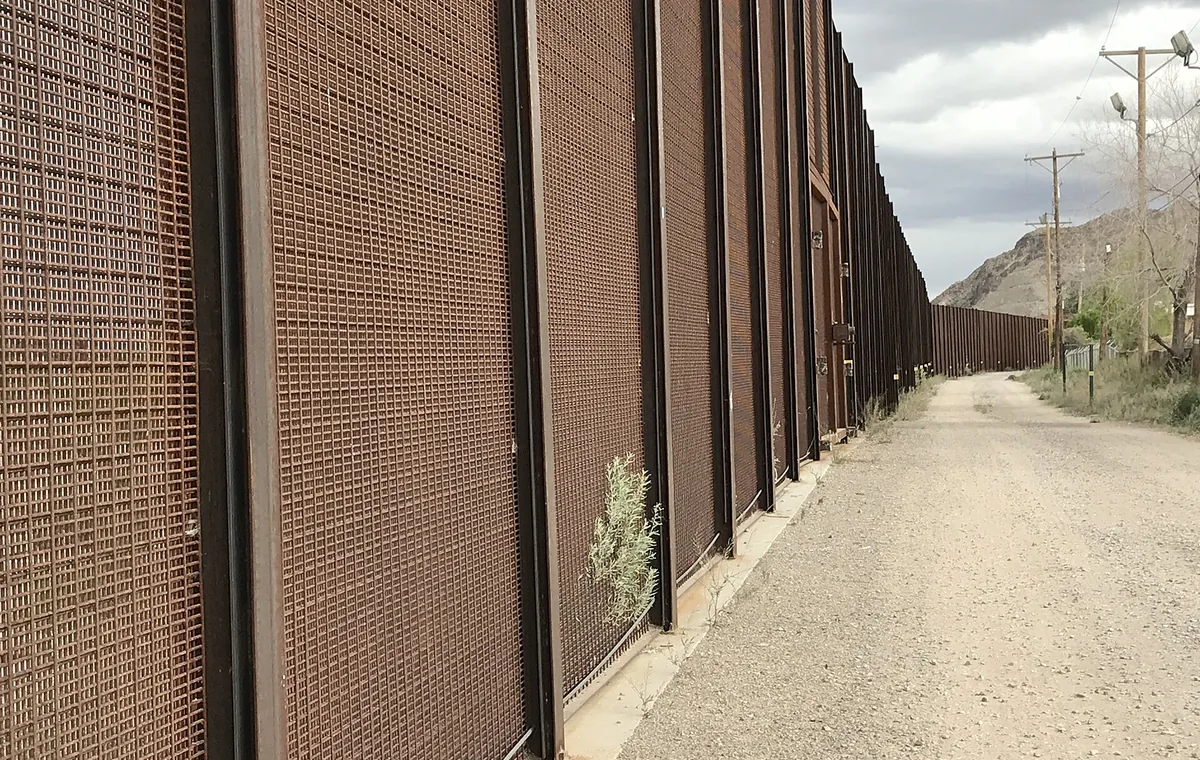
Territory is the part you can photograph
A state needs a territory it actually holds. International law has a long, dry vocabulary for that fact. The wiki on territorial acquisition and effective control is about how control is shown, not only how it is claimed.
The administration has described the southern border in the language of invasion and used that claim to justify a proclamation, issued in the first hours of the second Trump term, that restricts asylum at the border. Two lower federal courts have rejected the president’s legal argument, NPR reported, while the policy has largely remained in place during the appeals.
A drop in apprehensions is a fact about enforcement and about crossings. It is not, by itself, a verdict on whether asylum law was followed. Those are different questions, and they belong to different elements: control of territory, and the rules a state has already written for people who ask for protection.

A people is more than a headcount
The second element is a population — a people the state claims, protects, counts, and sometimes excludes. U.S. rules about who may stay, work, or be removed are collected, in plain language, in the wiki on U.S. immigration law.
Asylum is a narrower channel inside that system: a claim that a person would be persecuted if returned. The principle of non-refoulement is the international name for the idea that you do not send someone back into that harm. Whether a particular policy honors that idea is contested. The numbers in the NPR report — a 94 percent denial rate in June — are one measure of how rarely the claim is succeeding now.
Everyday life sits under these headlines. A roommate’s visa status, a job’s sponsorship, a missed filing date: these are not abstractions for the person holding the paperwork. A practical page on international roommates and H-1B questions will not settle a Supreme Court case. It will keep a household from confusing rumor with the actual visa category in front of them.
Skimming the section headings first makes a long guide much easier to map out. Try writing down one question of your own as you read.
Sovereignty is the argument about who decides
The third element is sovereignty: the authority to make and enforce binding decisions. The question the Court is being asked is not whether the United States has borders. It is whether the president can, by proclamation, step around statutes Congress has already written about asylum.
That is a separation-of-powers problem as much as an immigration one. A state can have territory and a people and still fight, internally, about which office gets to change the rules. NPR also noted later fights the Court is hearing or will hear, including deportations to third countries and the use of detention in removal proceedings. Each one is a sovereignty question with a human body attached to it.
Documents are how a state sees a person
States do not meet people only at a border checkpoint. They meet them in record offices. A birth certificate, a passport, a work permit — these are how a population is made legible. If you have ever had to replace a lost birth certificate, you have already been on the quiet side of the same machinery.
None of this requires you to take a campaign position. It requires you to keep the three elements from collapsing into one word, usually “border,” that cannot carry all of the meaning.

What to watch without pretending the theory decides the case
When the Court rules, the useful habit is to ask which element moved. Did the decision change how territory is controlled? Did it change who is counted as having a claim to remain? Did it change which branch of government gets to say so?
The three-element formula is older than this administration and will outlast it. Its value, this week, is that it keeps a legal fight from being reduced to a single image of a fence.
FAQ
What asylum figure did NPR report for June?
A national asylum denial rate of 94 percent in June, up from about 50 percent in 2024, according to TRAC at Syracuse University, as reported by NPR on November 27, 2026.
How many Southwest border apprehensions were recorded in fiscal year 2026?
Fewer than 99,000, a 95 percent decline from more than 1.8 million a year under President Biden, according to CBP data cited by NPR.
What are the three elements of the state?
A territory, a people (population), and a sovereign authority that can make binding decisions. Definitions vary by tradition, but those three recur.
Has the Supreme Court already ruled on the asylum proclamation?
Not in the report dated November 27. NPR said the Court will soon consider the question, and that two lower courts had rejected the administration’s legal argument while the policy largely remained in place.
Is a drop in border crossings the same as a lawful asylum policy?
No. Enforcement numbers and the legal rules for protection are related, but they answer different questions.
Academic reference search
Can't find the reference you need? Try academic search for references now.
Featured Guides
- LawA Buyer "Accidentally" Overpaid for My Old Desk. Something Feels OffSelling stuff online and a buyer overpays then asks you to send the extra back? A student…Read by 13 people
- RepairOld Two-Prong Outlets in Your Rental: Questions to AskMoved into a rental with old two-prong outlets? Learn what to ask your landlord, what to…35 readers
- KoreaBubble Tea (Boba) Part-Time Jobs in Korea for Foreigners: Duties, Pay, Perks and Visa Rules (2026)Bubble tea and boba franchise alba for foreigners in Korea: station duties, pearl timing,…Quick Guide
- LawMy Dad Cosigned My Private Loan. Can I Take His Name Off?Want your parent removed as cosigner on a private student loan? A grad's plain guide to…Read by 10 people
- LawMy Scholarship Covers Rent Too. Wait, Could That Be Taxable?Scholarship or grant money covering housing and food, not just tuition? A student's plain…13 readers