
Is It Better for a Ruler to Be Loved or Feared? Machiavelli's The Prince Compared with Rousseau's Emile
- The Prince was written around 1513 and published in 1532, after Machiavelli's death.
- Machiavelli separated politics from conventional morality and treated it as a practical problem of power.
- Rousseau's Emile, a treatise on education, was published in 1762.
Contents
Because of the word "Machiavellian", The Prince is often remembered simply as a book about using any means to reach an end. English has carried that reputation for centuries; Shakespeare already has a character boast that he can "set the murderous Machiavel to school". Read against the turmoil of the Florence in which it was written, though, the book turns out to be asking a harder question: what does a leader actually need to keep a state from falling apart? This guide sets out the core ideas and shows how to compare Machiavelli's view of government with Rousseau's Emile.
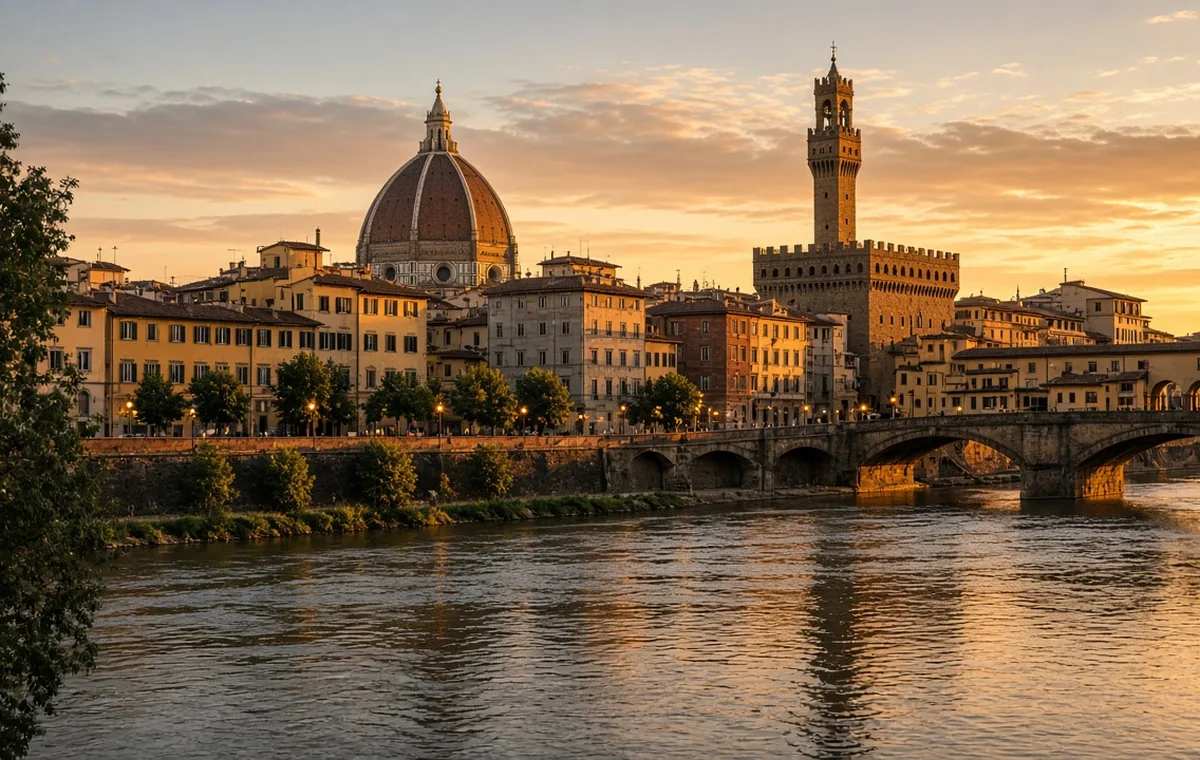
What was the background to The Prince?
Niccolò Machiavelli worked as a diplomat and senior official of the Florentine Republic until the Medici family returned to power in 1512 and he was removed from office. Briefly imprisoned and then living in enforced retirement outside the city, he wrote The Prince around 1513 and dedicated it to Lorenzo de' Medici. Italy at the time was divided into rival city-states and repeatedly invaded by France and Spain. In an introduction, it is worth pointing out that the book grows out of a longing for a strong leader who could unite and defend a fractured homeland.
Student money tip from CampusDown Repair UpIs a Small Leak Worth a Renters Insurance Claim? My Decision Checklist
It also matters that The Prince is not Machiavelli's only political work. In his Discourses on Livy he discusses at length the strengths of republics and the civic virtue of citizens. Many scholars therefore regard the picture of Machiavelli as nothing more than a teacher of cunning as one-sided.

What are virtù and fortuna?
Fortuna means fortune or circumstance, the part of events that does not bend to human will. Virtù is the capacity and decisiveness with which a leader confronts that fortune and takes control of a situation. Machiavelli argued that even if fortune governs half of human affairs, the other half is left to us. Translating virtù simply as "virtue" in the modern moral sense blurs its meaning, so it is wise to explain the Italian term separately in your essay.
The modern habit of dividing leadership into innate traits and responses to circumstance is worth comparing with these ideas; the leadership theories entry sets out trait, behavioural and situational approaches.
Skimming the section headings first makes a long guide much easier to map out. Try writing down one question of your own as you read.
Why did he advise fear?
In chapter 17, Machiavelli says that if a ruler cannot be both loved and feared, it is safer to be feared, because love is held by a bond of obligation that people break whenever it suits them, while fear is maintained by a dread of punishment that does not fade. He immediately adds a crucial condition: the ruler must avoid being hated, and the surest way to do that is to keep his hands off his subjects' property and their women.
This is a point students often miss. Lift the sentence "it is safer to be feared than loved" out of context and it reads like a defence of cruelty, but Machiavelli drew a clear line between fear and hatred. Quoting with the surrounding argument produces a much more accurate reading.
In chapter 18 he adds the famous image that a ruler must be both a fox, to recognise traps, and a lion, to frighten off wolves. The passage shows his realism: before politics is a question of good and evil, it is a question of results.

How does Rousseau's Emile differ?
In Emile, published in 1762, Jean-Jacques Rousseau starts from the claim that people are born good and are corrupted by society and its institutions. He argues for an education that follows the child's nature, favouring natural growth guided by a tutor over the formal schooling of his day. Where Machiavelli sees human beings as changeable and self-interested and asks how to govern them, Rousseau asks how to protect their good nature and raise free citizens. A table comparing how their views of human nature lead to different views of government works well in an essay.
| Machiavelli | Rousseau | |
|---|---|---|
| Human nature | Changeable, driven by self-interest | Born good, corrupted by society |
| Central question | How to gain and keep power | How to form free, virtuous citizens |
| Source of order | The ruler's virtù and the fear of punishment | Education and the general will |
| Key works | The Prince (1532), Discourses on Livy | Emile and The Social Contract (both 1762) |
How did later thinkers reframe power?
Once you have the argument of The Prince, it helps to compare it with the modern political thinkers who followed. Machiavelli concentrated on the practical skill of gaining and keeping power; his successors asked why power is legitimate in the first place. The tradition of social contract theory running from Hobbes through Locke to Rousseau is the classic answer.
In Leviathan (1651), Thomas Hobbes described the state of nature without government as a war of all against all. To escape their fear of one another, people make a contract handing their rights to a powerful sovereign. Fear as the foundation of order invites comparison with Machiavelli's feared prince, but the decisive difference is that Hobbes locates the source of that power in the agreement of the people.
In the Two Treatises of Government (1689), John Locke argued that people set up government to protect their natural rights to life, liberty and property, and that if a government violates those rights, citizens may resist. That idea of a right of resistance went on to shape the American Declaration of Independence. Rousseau's Social Contract (1762) went further, holding that sovereignty belongs to the whole people and cannot be handed over; his general will is not simply the sum of private interests but a will directed at the common good. Emile, published the same year, is bound up with that project of forming free and virtuous citizens.
In The Spirit of the Laws (1748), Montesquieu argued that liberty is safe only when legislative, executive and judicial power are separated and check one another, because whoever holds power is tempted to abuse it. The American founders took the lesson to heart; in Federalist No. 51, James Madison wrote that "ambition must be made to counteract ambition". Where Machiavelli asked how to concentrate power in one prince, Montesquieu designed institutions to stop any one person from holding all of it.
| Thinker | Source of power | Key work |
|---|---|---|
| Machiavelli | The ruler's capacity and real force | The Prince; Discourses on Livy |
| Hobbes | A contract to escape fear | Leviathan (1651) |
| Locke | A trust to protect natural rights | Two Treatises of Government (1689) |
| Rousseau | The general will of the people | The Social Contract (1762) |
| Montesquieu | Power divided so that power checks power | The Spirit of the Laws (1748) |

Read in sequence, these works show the question shifting from "who holds power and how" to "where does power come from and how is it limited", the idea on which modern democratic constitutions rest.
Linking Machiavelli to modern leadership
Connecting the texts to modern leadership theory makes for an interesting extension. Machiavelli's advice that a prince should be as clever as a fox or as strong as a lion depending on circumstances can be compared with situational leadership, which holds that leaders should change style to fit the situation. Modern leadership that relies on the trust and voluntary consent of team members, by contrast, sits closer to the spirit of the social contract.
How should you write the conclusion?
Rather than deciding which thinker was right, use the conclusion to show that the shape of good politics depends on how one sees human nature. You might add a present-day example of the tension between a politics of order and stability and a politics of freedom and human nature. Then recast the original question in modern terms: a leader today needs trust rather than fear, and that trust begins with the recognition that power comes from the people it is exercised over. That closes the arc from Machiavelli to Rousseau naturally. Finish by answering in one sentence whether your ideal leader should win confidence through love or through fear.
Student money tip on CampusDown Repair Up: Is a Small Leak Worth a Renters Insurance Claim? My Decision Checklist.
Translations of The Prince differ noticeably in wording, so give the edition and page number for every quotation. If reading the full texts feels daunting, choose the key chapters of each work, such as chapters 17, 18 and 25 of The Prince, and use a good commentary to fill in the context.
Written by the CampusDown editorial team, reviewed November 2026. Sources: Niccolò Machiavelli, Il Principe (1532); Jean-Jacques Rousseau, Émile, ou De l'éducation (1762) and Du contrat social (1762); Thomas Hobbes, Leviathan (1651); John Locke, Two Treatises of Government (1689); Montesquieu, De l'esprit des lois (1748).
FAQ
When was The Prince published?
In 1532, five years after Machiavelli's death; it was written around 1513.
What do virtù and fortuna mean?
Virtù is a leader's capacity and decisiveness; fortuna is fortune or circumstance beyond human control.
When was Rousseau's Emile published?
In 1762, the same year as The Social Contract.
Did Machiavelli say a ruler should be hated?
No. He said it is safer to be feared than loved if one cannot be both, but that a ruler must avoid being hated.