
How to Read Semen Analysis Results: WHO Reference Limits, Preparing for the Test and Next Steps
- A semen analysis measures volume, sperm count, motility, shape and vitality.
- WHO values are lower reference limits from fertile men, not a strict pass or fail line.
- Results vary, so an abnormal test is usually repeated, ideally after about three months.
Contents
A semen analysis checks volume, sperm concentration and total count, motility, shape and vitality. The WHO figures printed beside your results are lower reference limits, the bottom 5% of men who fathered a child within a year, not a pass mark, and because semen quality changes from week to week, one abnormal result is normally repeated before anyone draws conclusions. If you have started fertility tests and only one partner has had blood tests and scans, it is worth asking about the other. Male factors contribute to around half of couples' fertility problems, which is why guidance on both sides of the Atlantic says both partners should be assessed together. The test itself is simple; the numbers on the report are what confuse people.
What does a semen analysis look at?
The laboratory examines a fresh sample under a microscope and with automated equipment, counting sperm, judging how they move and assessing their shape. It also records properties of the semen itself, such as volume, pH and how long it takes to liquefy.
Related on CampusDown Repair UpMy Laptop Sounded Like a Jet Engine During Finals. Here's How I Cooled It Down — Laptop overheating and loud fan right before a deadline?
A drop is placed on a counting chamber with a grid, sperm in set squares are counted, and each sperm is classed as moving forwards (progressive), moving without getting anywhere (non-progressive) or not moving. Because much of this still relies on trained human eyes, the same sample can give slightly different numbers in different labs, so follow-up tests are best done at the same place.

What are the WHO reference limits?
| Measure | Lower reference limit |
|---|---|
| Semen volume | 1.4 mL |
| Sperm concentration | 16 million per mL |
| Total sperm number | 39 million per ejaculate |
| Total motility | 42% |
| Progressive motility | 30% |
| Vitality (live sperm) | 54% |
| Normal forms | 4% |
The WHO laboratory manual (2021) uses the 5th percentile of men whose partners conceived within 12 months. A figure below the limit does not mean pregnancy is impossible, and a figure above it does not guarantee one. Normal forms of 4% look alarmingly low, but under strict criteria even healthy men produce mostly imperfect sperm, so that number alone is rarely a reason to panic.
Skimming the section headings first makes a long guide much easier to map out. Try writing down one question of your own as you read.
How should you prepare and give the sample?
- Abstain from ejaculation for 2 to 7 days beforehand
- Collect the whole sample into the sterile pot the clinic provides
- Do not use ordinary condoms or lubricants, which can harm sperm
- If collected at home, keep it near body temperature and deliver it within the time given, usually about an hour
The first part of the ejaculate holds the most sperm, so if any was spilled, tell the lab, because the result may look worse than it really is. Mention any recent fever or medicines too. Many men find the process awkward, and a quiet private room plus a calm, matter-of-fact explanation from the nurse improves both the sample and the experience.
What happens if the result is abnormal?
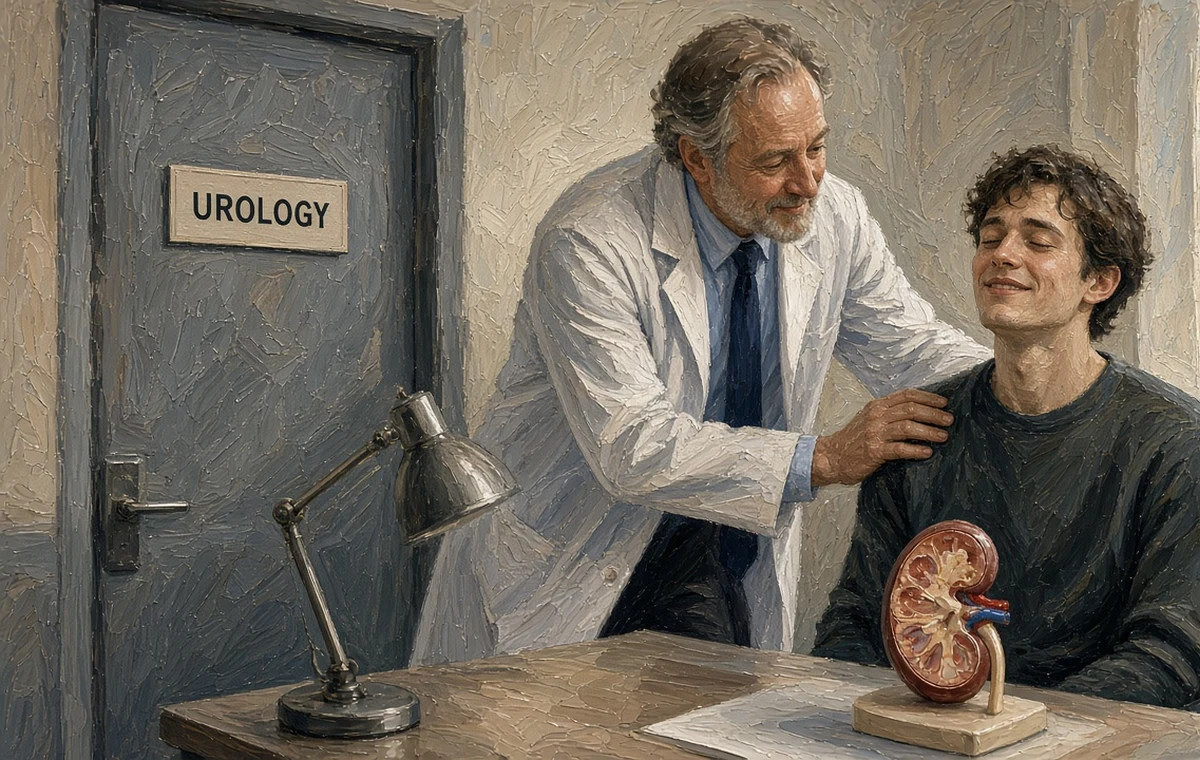
Making sperm takes roughly 74 days, about two and a half months, and semen quality varies with health, so a single abnormal result is not treated as final. NICE guideline CG156 advises repeating an abnormal test, ideally three months later, or sooner if sperm are severely reduced or absent. If problems persist, a urologist or andrologist looks for causes with hormone tests, a scrotal ultrasound and sometimes genetic tests.
What causes male infertility?
One of the most common findings is a varicocele, swollen veins around the testicle that raise its temperature and can affect sperm production; it is found far more often in men with fertility problems and can be treated surgically if needed. Other causes include hormonal problems, genetic conditions, blocked ducts, past infections and the effects of cancer treatment.
| Finding | Possible cause | Typical next step |
|---|---|---|
| Low count or motility on one test | Recent illness, short or long abstinence, spilled sample | Repeat in about three months under the same conditions |
| Persistently low results | Varicocele, hormones, lifestyle, medicines | Urology review, hormone tests, ultrasound |
| No sperm seen (azoospermia) | Blockage or production failure | Specialist assessment; sperm can sometimes be retrieved from the testis for IVF |
Even when no sperm are seen, surgical sperm retrieval combined with IVF and ICSI may still be possible, so a single report should never be the end of the conversation. In the UK, NHS funding for IVF depends on local criteria set by each integrated care board, so ask your GP what applies where you live.
How can nurses support couples through testing?
Male infertility can hit self-esteem and a sense of masculinity hard, and many men put off testing because of it. Nurses can stress that infertility belongs to the couple, not to one person, and avoid any wording that sounds like blame when results are explained.

As tests and treatment drag on, stress and conflict between partners tend to grow, so signpost counselling (HFEA-licensed clinics must offer it) and support groups such as Fertility Network UK. Lifestyle goals work best when framed as things the couple does together, like stopping smoking, cutting down on alcohol and managing weight.
What can you change in daily life to help sperm health?
Because sperm take around two and a half months to develop, changes you make today usually show up in a test several months later. If a repeat test is coming, aim for at least two to three months of steady habits.
Also on CampusDown Repair Up: My Laptop Sounded Like a Jet Engine During Finals. Here's How I Cooled It Down.

Stopping smoking comes first: smoking lowers sperm count and motility and can damage sperm DNA. Heavy drinking and obesity both disturb hormones. The testicles work best slightly below body temperature, so frequent long saunas or hot baths, tight underwear, a laptop resting on the lap for hours and long periods of sitting may all add up.
Why are testosterone and steroids a problem?
Taking testosterone from outside, whether as a "booster" or as anabolic steroids for muscle, tells the brain there is already plenty, so it switches off the signals that drive sperm production. Sperm counts can fall dramatically, sometimes to zero, so anyone trying for a baby should tell the doctor about every medicine and supplement.
| Factor | Known effect | What to do |
|---|---|---|
| Smoking | Lower count and motility, DNA damage | Stop; use NHS Stop Smoking services |
| Heat around the testicles | Reduced sperm production | Fewer saunas, looser underwear, laptop off the lap |
| Obesity | Hormonal changes | Balanced diet and regular exercise |
| Testosterone or steroids | Switch off sperm production signals | Always talk to a doctor first |
Antioxidant supplements are heavily marketed for sperm, but trial results are mixed, so judging them by evidence-based practice means improving the whole diet first and discussing any supplement with a clinician. Starting with one clear change, such as quitting smoking or skipping the sauna, and writing changes on a calendar also makes the next appointment easier.
A semen analysis is a snapshot, not a verdict. Many results improve once causes are found and habits change, and working through it together is often the biggest support a couple can give each other.
Compiled by the CampusDown editorial team from a Korean article on reading semen analysis results in fertility nursing, adapted with public information on NICE guideline CG156, HFEA counselling requirements and NHS IVF commissioning. Source: World Health Organization. (2021). WHO laboratory manual for the examination and processing of human semen (6th ed.). Reviewed November 2026. This is general information and not a substitute for medical advice.
FAQ
Does a longer abstinence give a better result?
Volume and count may rise, but motility can fall, so keep to the 2 to 7 day window.
What if only motility is low?
Repeat the test to confirm. If it stays low, look for causes, adjust lifestyle and discuss assisted reproduction if needed.
Why are my results different each time?
Sperm production, recent illness, abstinence time and how the sample was collected all change the numbers naturally.
How soon will lifestyle changes show?
Sperm take about two and a half months to develop, so expect changes in a test after roughly three months.
Can I have a semen analysis on the NHS?
Yes. A GP can usually arrange one as part of initial fertility investigations for a couple.