
Who Is Responsible for Workplace Safety? Occupational Welfare, Its Five Functions and Lessons from Industrial Accidents
- Occupational welfare protects workers and families from unfair pressure and accidents, provided by the state, employers, workers and civil society.
- Its five functions are cost reduction, workforce stability, humanitarian care, standardisation and social responsibility.
- Korea's accident record fuels the case for structural responsibility, echoed by OSHA, the UK's 1974 Act and corporate manslaughter law.
Contents
Workplace safety is a shared responsibility: occupational welfare spreads it across the state, employers, workers and civil society, and the key debate is whether accidents are blamed on individual workers or on structural failures that governments and companies must fix. This guide explains what occupational welfare means, who provides it, the five functions it serves, what Korea's industrial accident record reveals, and how the United States and the United Kingdom handle workplace safety and compensation.
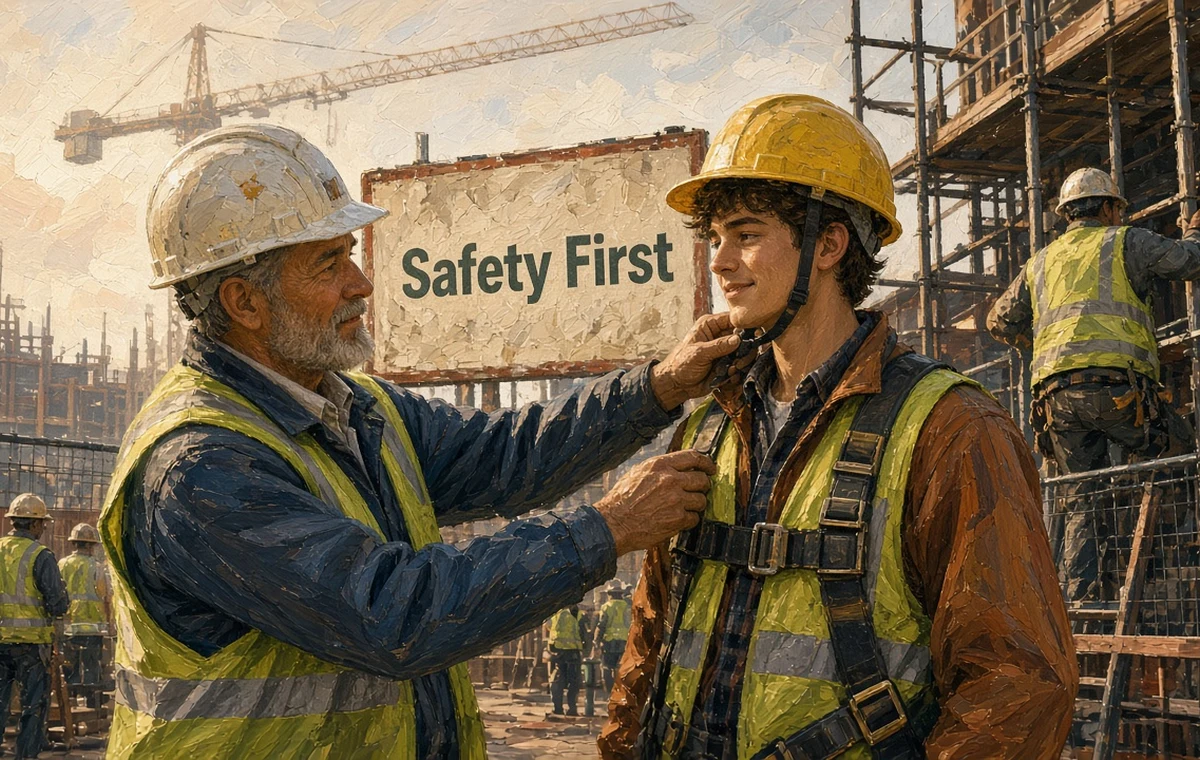
People work for a living, for meaning, in offices and on scaffolding. Occupational welfare is the safety net that tries to make sure none of them pays for a job with their health or life.
What is occupational welfare?
Occupational welfare, often used interchangeably with industrial welfare, is the branch of social welfare that protects workers and their families from unfair pressure and accidents. It covers current employees, job seekers and workers' families.
Related on CampusDown Law UpMy Cheap Charger Melted and Scorched My Desk. Now What? — Bargain charger overheated, melted, or burned something?
The concept developed in the United States alongside early twentieth-century corporate welfare programmes. In a broad sense it includes everything the state, employers and unions do to secure workers' livelihoods; in a narrow sense it refers to direct practice by social workers who help employees. Separating these two meanings keeps the discussion of providers and functions clear.

Who is responsible for occupational welfare?
The state, through central and local government, builds systems such as social insurance. Its strength is stability and universal coverage, but it struggles to tailor services to individual circumstances.
Employers provide benefits beyond the legal minimum on a voluntary basis. Workers contribute through trade unions, cooperatives and mutual aid societies, and voluntary organisations offer counselling and job training, although the source notes their influence in Korea remains limited. The four providers fill each other's gaps.
Skimming the section headings first makes a long guide much easier to map out. Try writing down one question of your own as you read.
What functions does occupational welfare serve?
| Function | What it does | Who benefits |
|---|---|---|
| Cost reduction | Prevents overwork and improves work quality, cutting losses | Employers |
| Workforce stability | Fewer grievances mean lower turnover | Both |
| Humanitarian care | Makes hours and conditions humane | Workers |
| Standardisation | Balances different needs within the workforce | Both |
| Social responsibility | Reduces conflict between management and labour | Society |
Because these functions serve both employers and workers, they provide a strong argument that occupational welfare is an investment rather than a cost. A related tool is the employee assistance programme, which offers confidential counselling for stress, family or alcohol problems before they lead to absence or accidents.
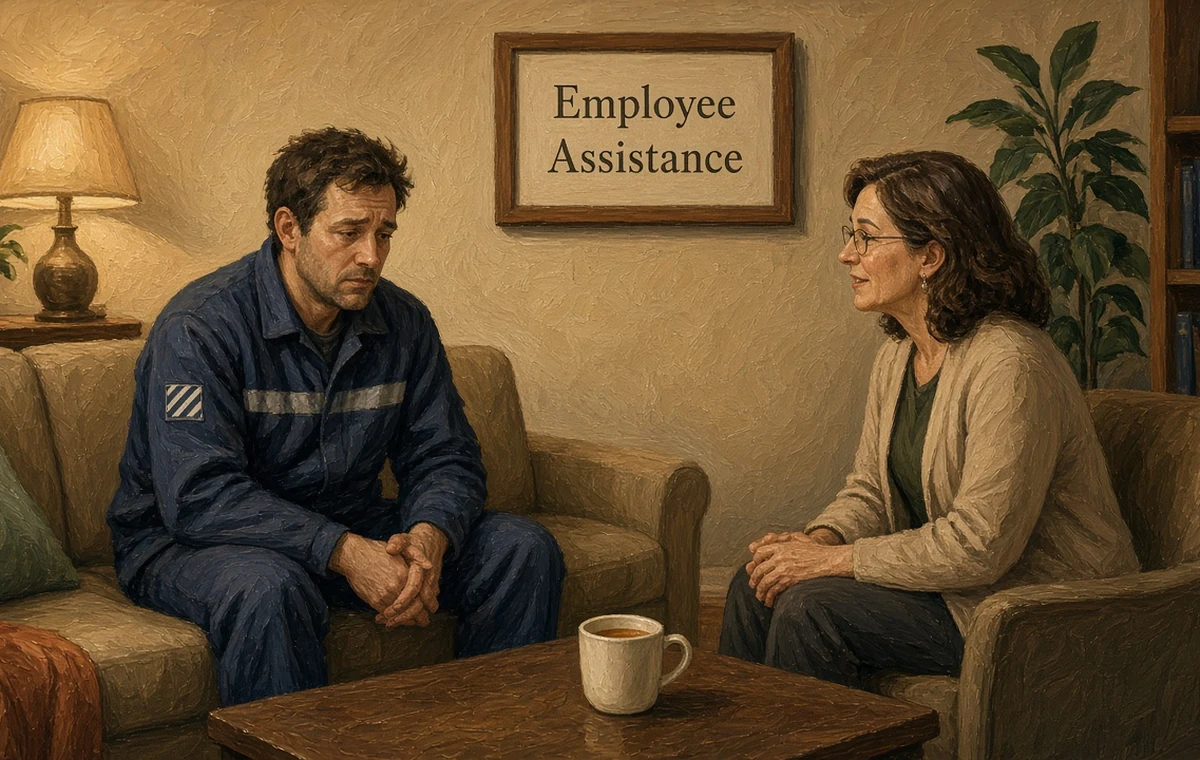
Employee assistance programmes grew out of American occupational alcoholism programmes in the mid-twentieth century and are now a standard benefit at many large employers, usually delivered by outside specialists to protect confidentiality.
What do industrial accidents in Korea reveal?
The source discusses a young worker who died at a port while working without a safety manager, and parcel delivery drivers who collapsed from overwork as volumes surged. Official figures for deaths from workplace accidents were 969 in 2016, 964 in 2017, 971 in 2018, 855 in 2019 and 882 in 2020.
Two perspectives frame the debate. The individual-contract view treats workplace risk as part of a contract a worker freely accepted, emphasising personal responsibility. The structural view sees accidents as the product of systemic flaws, so the state and employers must share responsibility. The source sides with stronger state intervention, citing government plans to target workplaces with frequent fatalities, along with examples such as part-time work arrangements in the Netherlands and unemployment benefits in Sweden. Korea's Serious Accidents Punishment Act, in force since 27 January 2022, now requires top executives to build safety and health management systems.
How do the US and UK protect workers?
In the United States, the Occupational Safety and Health Act of 1970 created OSHA to set and enforce workplace safety standards. The Bureau of Labor Statistics has recorded more than 5,000 fatal work injuries a year in recent years, with transport incidents the leading cause. Workers' compensation is run by individual states and works on a no-fault basis: injured workers receive medical care and wage replacement without proving employer negligence, but generally give up the right to sue.
Britain: the 1974 Act and corporate manslaughter
In the United Kingdom, the Health and Safety at Work etc. Act 1974 places a general duty on employers to ensure, so far as reasonably practicable, the health, safety and welfare of employees, enforced by the Health and Safety Executive. Britain has one of the lowest fatal injury rates in Europe, with around 130 to 140 workers killed in recent years. The Corporate Manslaughter and Corporate Homicide Act 2007 allows organisations to be prosecuted when gross management failures cause a death, and recognised unions can appoint safety representatives with legal rights to inspect workplaces and be consulted.
| Item | United States | United Kingdom | Korea |
|---|---|---|---|
| Core law | Occupational Safety and Health Act 1970 | Health and Safety at Work etc. Act 1974 | Occupational Safety and Health Act, Serious Accidents Punishment Act (2022) |
| Compensation | State-run, no-fault workers' compensation | Employers' liability insurance and state injury benefits | National industrial accident compensation insurance |
| Corporate accountability | OSHA fines and criminal referrals | Corporate manslaughter offence | Executive liability for serious accidents |
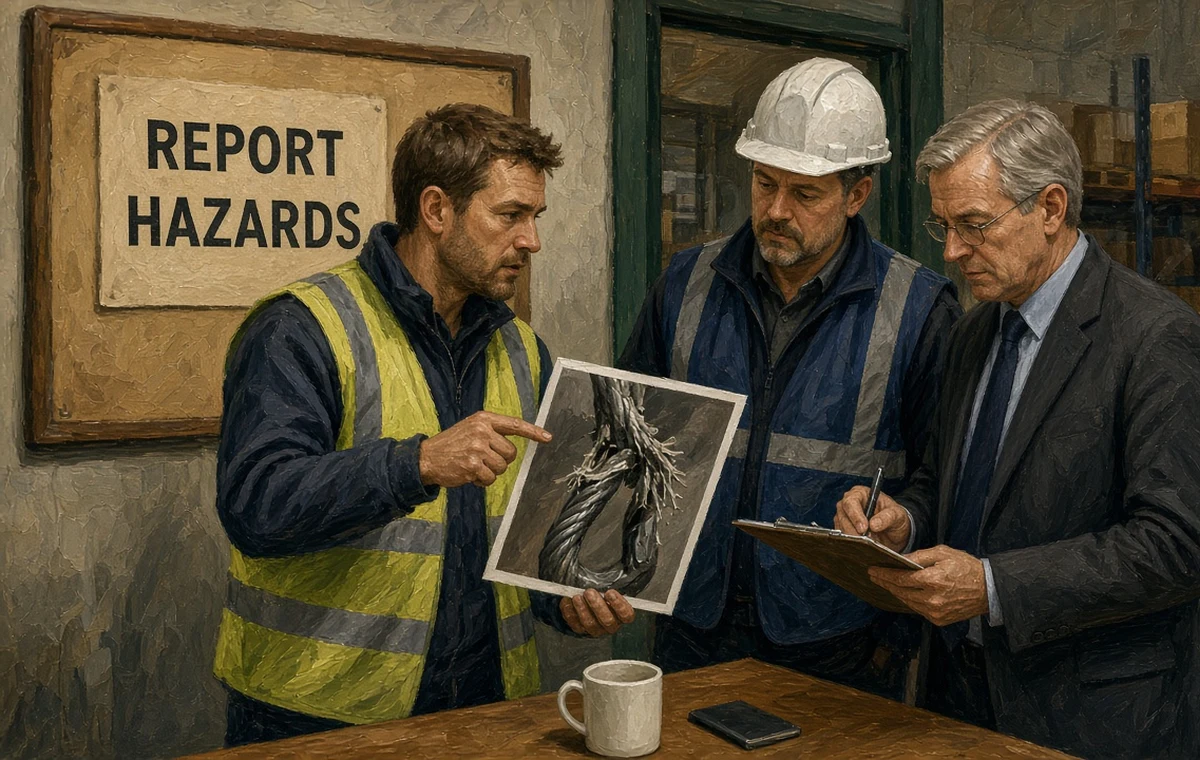
| Worker voice | Right to report hazards without retaliation | Union safety representatives | Joint occupational safety and health committees |
The comparison supports the structural view: countries with low fatality rates combine clear employer duties, independent enforcement and real channels for workers to raise concerns.
What should be done to reduce workplace accidents?
Prevention and compensation must work together. That means risk assessment built into daily management, joint committees where workers and managers discuss hazards, no-fault compensation that pays out quickly, and fair rules for recognising occupational diseases such as overwork-related heart disease. The famous safety rule that many minor incidents precede each serious one is explained in our entry on Heinrich's law, and the logic of state compensation schemes is covered under principles of social insurance.
Related on CampusDown Law Up: My Cheap Charger Melted and Scorched My Desk. Now What?.
The bottom line is that a hard hat on the workbench is only the start. Real safety comes from systems that listen to the people who wear it.
Reviewed by the CampusDown editorial team, November 2026. Reference: Heinrich, H. W. (1931). Industrial Accident Prevention: A Scientific Approach. McGraw-Hill.
FAQ
Who provides occupational welfare?
The state, employers, workers through unions and mutual aid, and voluntary organisations, each covering gaps left by the others.
What is the structural view of workplace accidents?
It sees accidents as the result of systemic flaws, so governments and employers, not just individual workers, must take responsibility.
How does US workers' compensation work?
It is run by each state on a no-fault basis, paying medical costs and lost wages without proving employer negligence, usually in exchange for not suing.
What is the UK Corporate Manslaughter Act?
A 2007 law allowing organisations to be prosecuted when gross failures in how activities are managed cause a person's death.
What is an employee assistance programme?
A confidential counselling service, usually provided through outside specialists, that helps employees with stress, family or substance problems.