
The Sectors of National Security: Military, Political, Economic, Societal and the Copenhagen School
- National security now covers military, political, economic and societal sectors, and Buzan adds the environment as a fifth.
- The Copenhagen School argues issues become security issues when leaders frame them as existential threats and audiences accept it.
- Military security remains central, and the security dilemma explains why defensive build-ups can make everyone less safe.
Contents
National security is no longer only about armies: scholars usually divide it into military, political, economic and societal sectors, and Barry Buzan's influential framework adds a fifth, the environment. The Copenhagen School then asked a sharper question: who gets to decide that something is a security threat at all? This guide walks through the sectors, the theory of securitization and the security dilemma, with examples from the United States and the United Kingdom you can drop straight into a seminar presentation.

Ask a room of students what national security means and most will picture soldiers, missiles and border posts. Yet today's security strategies talk just as much about semiconductor factories, ransomware gangs and pandemics. That shift is exactly what a good presentation on this topic needs to explain.
What does national security actually protect?
At its core, national security means protecting a state's survival and its core values from threats. In the classic realist view, the biggest danger was a foreign army threatening territory and sovereignty, so building military power and forming alliances sat at the centre of policy. Arnold Wolfers warned as early as 1952 that "national security" was an ambiguous symbol that could mean very different things to different people.
Student money tip from CampusDown Repair UpMaking My Apartment Front Door Feel Less Flimsy — Front door feel flimsy?
Why did the agenda widen after the Cold War?
After 1991 the risk of great-power war seemed to fall, while civil wars, financial crises, terrorism and environmental disasters grew more visible. The UN Development Programme's 1994 Human Development Report popularised "human security", shifting attention from states to people. Scholars began arguing that both the object and the scope of security had to be broadened.

How are the security sectors divided?
The Korean source presents four sectors, which is a common classroom simplification. Each sector protects a different referent object and faces different kinds of threat, so a simple table is the clearest way to show it.
| Sector | What it protects | Typical threats |
|---|---|---|
| Military | Territory and sovereignty | Invasion, arms races |
| Political | Legitimacy of government, stability of the system | Insurrection, foreign political interference |
| Economic | Economic base and access to resources | Supply chain disruption, financial crises |
| Societal | Collective identity: language, culture, religion | Rapid population movement, identity conflict |
| Environmental (Buzan's fifth) | Ecosystems that sustain human life | Climate change, water and food stress |
Note the correction here: although the source's headline speaks of four areas, Buzan himself, in People, States and Fear (1983, second edition 1991), described five sectors including the environment. If you present four, say clearly which textbook you are following.
Skimming the section headings first makes a long guide much easier to map out. Try writing down one question of your own as you read.
What did the Copenhagen School add?
Buzan worked with Ole Wæver and others at the Copenhagen Peace Research Institute, founded in 1985, and their approach became known as the Copenhagen School. Wæver introduced the idea of securitization in the mid-1990s, and Buzan, Wæver and Jaap de Wilde set it out fully in Security: A New Framework for Analysis in 1998.
Securitization in plain English
An issue is not a security issue by nature. It becomes one when a political leader declares it an existential threat and an audience accepts that claim. Once that happens, emergency measures that would normally be unacceptable can be justified. In the United States, the USA PATRIOT Act, passed weeks after the attacks of 11 September 2001, is a classic case study of how a security framing expanded surveillance powers, which is why the theory also asks us to reflect critically on when securitization is appropriate.
How do the US and the UK organise security across sectors?
Both countries have built institutions that reflect the wider agenda, which makes them useful examples for each sector rather than for military power alone.
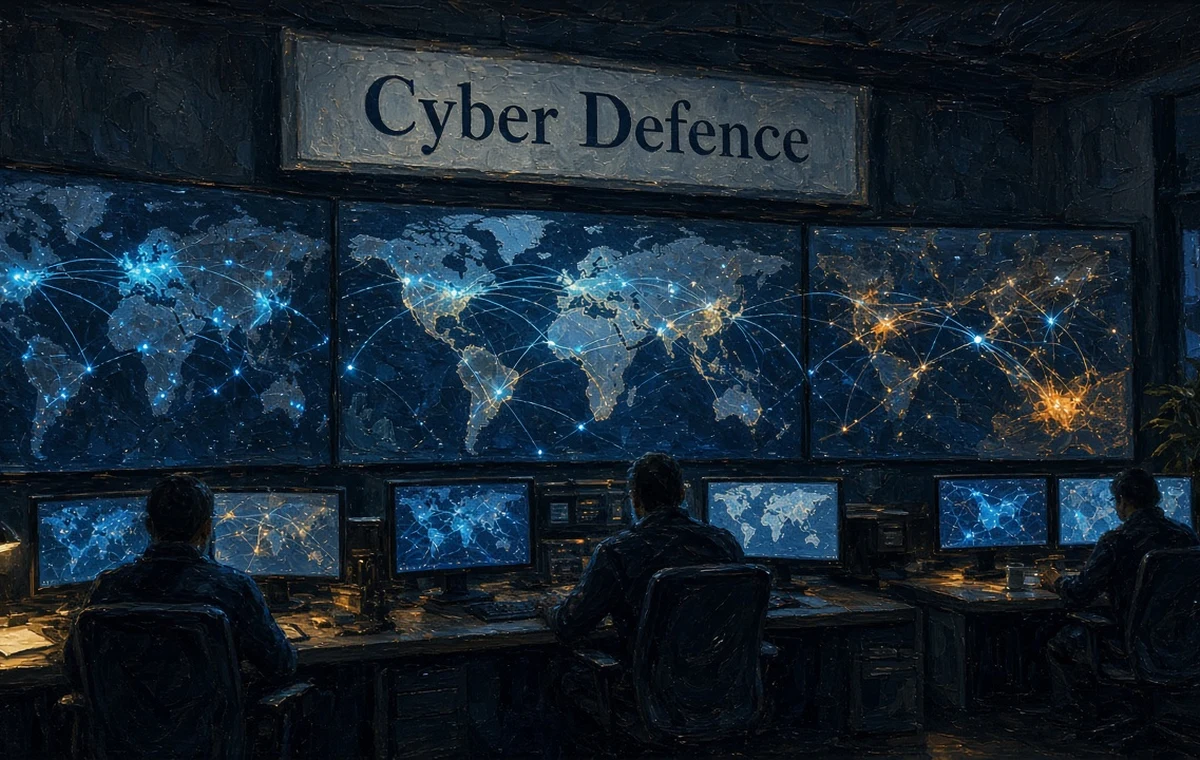
- United States: the National Security Act of 1947 created the National Security Council; the Cybersecurity and Infrastructure Security Agency (CISA) was established in 2018; and the CHIPS and Science Act of 2022 treated domestic chip manufacturing as an economic security priority.
- United Kingdom: a National Security Council was set up in 2010; the National Cyber Security Centre opened in 2016; the Integrated Review of 2021 joined defence, diplomacy, trade and technology in one strategy; and the National Security Act 2023 updated laws on espionage and foreign interference, a clear political security example.
| Sector | Korea (source perspective) | United States | United Kingdom |
|---|---|---|---|
| Military | Alliance and deterrence on a divided peninsula | National Security Council since 1947 | National Security Council since 2010 |
| Economic | Semiconductor supply chains | CHIPS and Science Act 2022 | Integrated Review 2021 on technology and trade |
| Cyber and political | Cyber attacks and interference | CISA since 2018 | NCSC since 2016, National Security Act 2023 |
Using institutions as evidence is powerful because it shows governments acting on the wider agenda, not just academics writing about it.
Does military security still matter?
Absolutely. However broad the concept becomes, military security remains the core of national security. When one state builds up arms for defence, its neighbour may read this as a threat and arm in turn, producing a spiral that leaves both less safe.
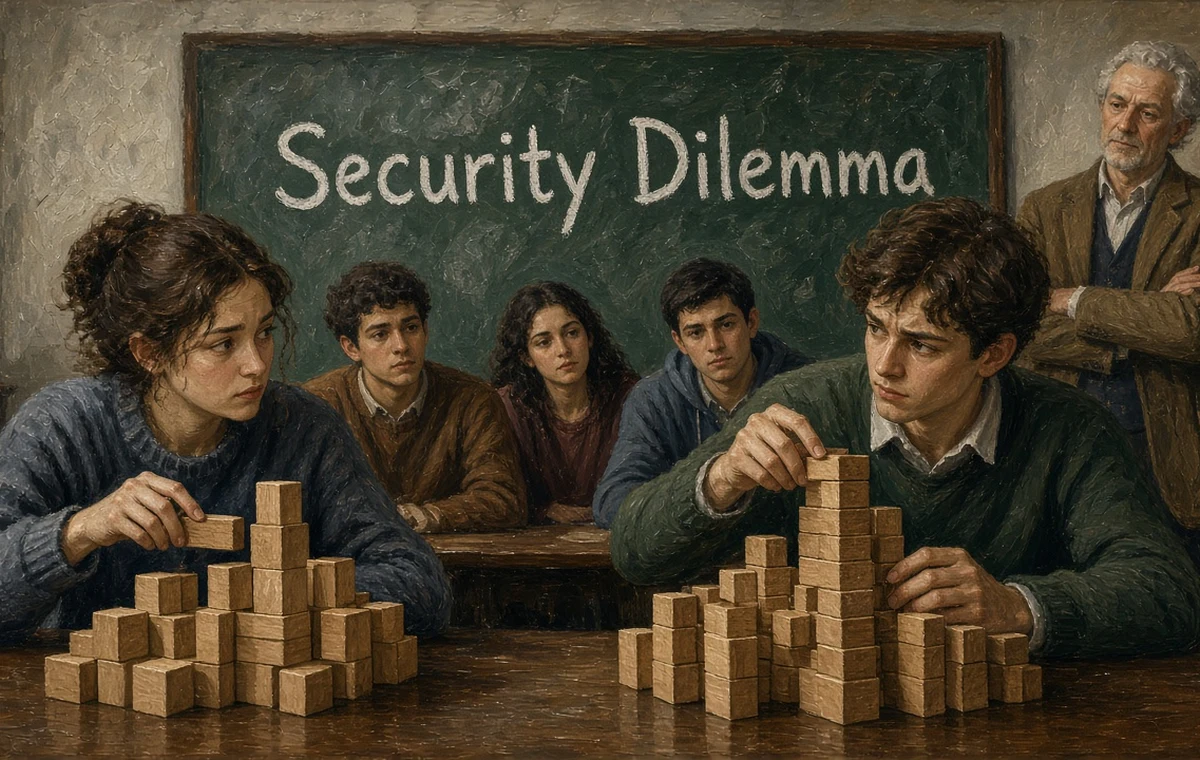
John Herz named this the security dilemma in 1950, and Robert Jervis analysed in 1978 when cooperation could soften it. That is why military security research looks not only at the size of forces but at how intentions are interpreted and how trust is built, with arms control agreements and confidence-building measures as classic topics.
How should you structure a presentation on this topic?
A sequence of how the concept changed, sector definitions and threat examples, the Copenhagen School and securitization, application to current issues, and a conclusion fits a 15 to 20 slide talk. Group cases by theme, such as supply chains, cyber or climate, rather than by country, to keep the argument clear. For the theory behind emergency framing see securitization theory, and for the arms spiral see the security dilemma.
Student money tip on CampusDown Repair Up: Making My Apartment Front Door Feel Less Flimsy.
If time is short, go deep on one sector with a detailed case and summarise the others in a table. Because sector names and divisions vary between scholars, state the framework you are using at the start.
Reviewed by the CampusDown editorial team, November 2026. References: Buzan, B. (1991). People, States and Fear, 2nd ed.; Buzan, B., Wæver, O., and de Wilde, J. (1998). Security: A New Framework for Analysis.
FAQ
What is securitization?
The Copenhagen School's idea that an issue becomes a security issue when a leader presents it as an existential threat and an audience accepts it, which can justify emergency measures.
How many security sectors did Barry Buzan identify?
Five: military, political, economic, societal and environmental, set out in People, States and Fear.
What is the security dilemma?
A spiral in which one state's defensive build-up is seen as a threat by others, who arm in response, leaving all sides less secure. John Herz coined the term in 1950.
How is human security different from national security?
National security focuses on the state, while human security, popularised by the UNDP in 1994, focuses on protecting individuals from threats such as hunger, disease and violence.
Which US and UK bodies handle cyber security?
In the US, the Cybersecurity and Infrastructure Security Agency, created in 2018; in the UK, the National Cyber Security Centre, opened in 2016.