
Merchanting vs Consignment Trade: Entrepôt, Transit Trade, Ricardo's Comparative Advantage and Electronic Trade Explained
- Trade is classified by object (visible vs invisible), actor (private vs state) and method (direct vs indirect).
- Indirect trade includes merchanting, entrepôt and transit trade, while consignment trade pays an agent commission and leaves title with the owner.
- Electronic trade, from US ACE to the UK Electronic Trade Documents Act 2023, moves buyers, contracts, customs and payment online.
Contents
Merchanting (intermediary) trade is when a trader in one country buys goods from a second country and sells them to a third without the goods ever touching home soil; consignment trade is when an owner ships goods to an agent abroad who sells them on commission while ownership stays with the owner until the sale. One earns a margin on the deal, the other earns a fee on the sale. Mix them up on an exam, a customs form or a VAT return and the consequences are very different.
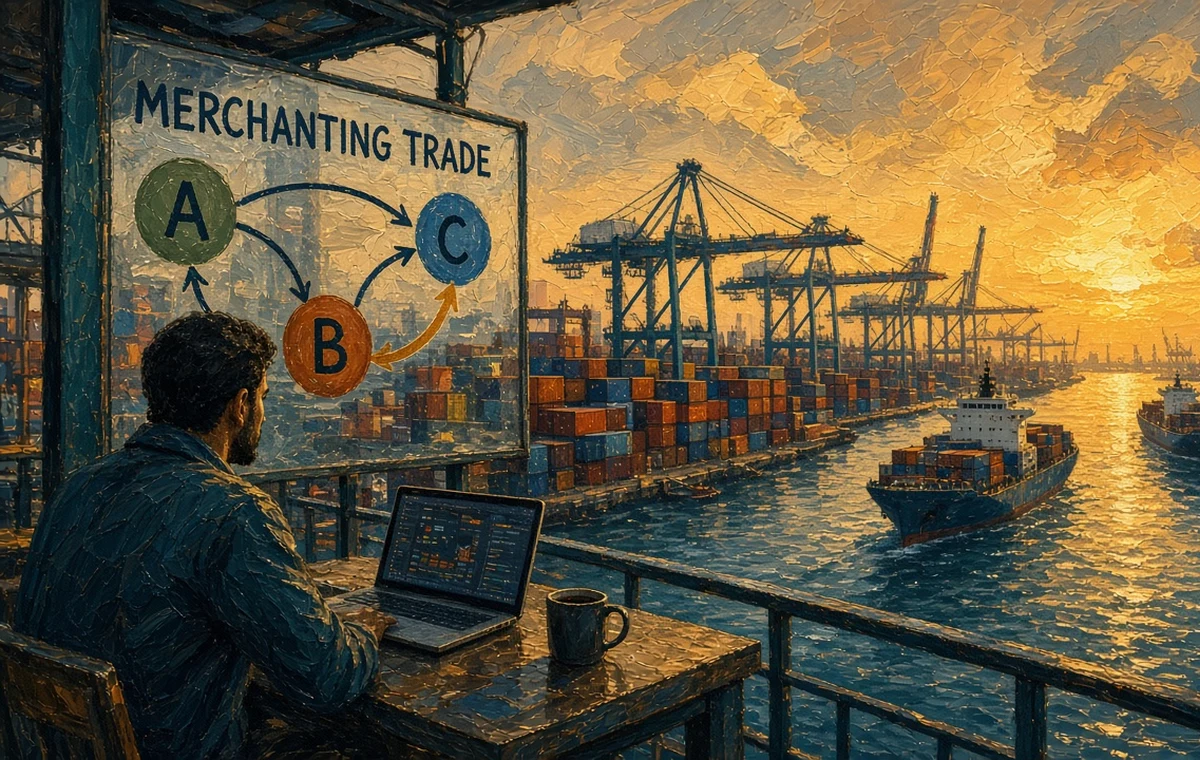
Picture a London commodities desk that buys Brazilian coffee and sells it to a roaster in Japan, while the beans sail straight from Santos to Yokohama. That is trade, but not the kind that shows up neatly in UK import statistics. This guide sorts out how trade is classified, the difference between merchanting, entrepôt, transit and consignment trade, why Ricardo's comparative advantage still explains it all, and how electronic trade is replacing paper in the US and UK.
What counts as "trade" in the first place?
In the broad sense, international trade means every commercial exchange of goods, services and capital between businesses or individuals in countries with different territory and sovereignty. In the narrow sense it means trade in goods only, and most trade-practice courses, Incoterms rules and customs procedures focus on that narrow sense.
Student money tip from CampusDown Life UpHow to search official databases for unclaimed money in your name — free state and federal searches, and how to avoid paid finders and scams.
That is why the word can mean different things in a balance-of-payments table, a customs statute and an export manual. Before you compare figures or argue a definition, check which sense the source is using.

How is trade classified by object and by actor?
| Basis | Type | What it means | US / UK example |
|---|---|---|---|
| Object | Visible trade | Physical goods that cross a border and pass customs, so they appear in trade statistics | Scotch whisky shipped to the US |
| Object | Invisible trade | Services, capital, labor, royalties; often no customs check | City of London insurance sold abroad, Netflix subscriptions |
| Actor | Private trade | Run by private firms | Nearly all US and UK trade |
| Actor | State trading | Run by a government or its enterprises under national plans or agreements | Historically, wheat boards and defense sales |
Visible trade gets its name because the goods physically roll past a customs officer. Services and capital flows are real, too, but they leave much fainter footprints, which is why the UK, a services superpower, often looks weaker in goods-only headlines than it really is.
The same object-versus-actor lens helps when you read news about tariffs: tariffs hit visible trade directly, while invisible trade is shaped more by regulation, data rules and tax treaties.
Skimming the section headings first makes a long guide much easier to map out. Try writing down one question of your own as you read.
Merchanting, entrepôt, transit or consignment: what is the difference?
When two countries deal with each other directly, that is direct trade. When a third-country trader or territory sits in the middle, it is indirect trade. The Korean source groups transit trade and intermediary trade together, then treats consignment trade, in which a third party is paid a fee to handle the sale, as a separate category. English-language textbooks split it a little more finely.
| Type | Do goods enter the middle country? | Who owns the goods in the middle? | How the middle party earns | Classic hubs and examples |
|---|---|---|---|---|
| Merchanting (intermediary) trade | No, shipped directly from seller to buyer | The merchant, briefly, on paper | Price margin | London, Geneva and Singapore commodity traders |
| Entrepôt (re-export) trade | Yes, imported then re-exported, sometimes repacked | The hub trader | Margin plus handling services | Singapore, Rotterdam, historically Hong Kong |
| Transit trade | Passes through under customs transit, not cleared for home use | Still the original seller or buyer | Port, rail and road fees | Goods trucked through Switzerland or rail freight across Poland |
| Consignment trade | Yes, stored at the agent's location abroad | The consignor until sold | Commission | Art auction houses, fresh produce wholesalers, Amazon FBA-style inventory |
The key questions are simple: who holds title, where do the goods physically go, and how does the middle party get paid? For merchanting trade, title passes through the merchant even though the cargo never lands. For consignment, the agent never owns the goods; unsold stock simply goes back to, or stays owned by, the consignor.
Modern e-commerce has quietly revived consignment logic. Under Amazon's Fulfillment by Amazon or a third-party logistics (3PL) contract, the brand still owns the inventory sitting in a warehouse in Kentucky or the Midlands; the platform stores, ships and takes fees. Incoterms 2020 terms such as DAP or DDP then decide who pays freight and duties on the way into that warehouse.
- Triangular and multilateral trade: three or more countries in one chain, such as US design, Vietnamese assembly and EU retail.
- Processing trade: raw materials sent abroad for processing and brought back, often under bonded or inward/outward processing relief.
Getting the label right matters in practice. In the UK, HMRC treats merchanting goods that never enter the UK differently for VAT than goods imported for re-export, and US export controls can still apply to a US person brokering a deal between two foreign countries. The paperwork follows the classification, not the other way around.
Why do countries trade at all? Ricardo's answer
No country can efficiently make everything its people need, and resources, climate and skills differ. In 1817 David Ricardo showed with his famous example of English cloth and Portuguese wine that even if one country is better at making both goods, both still gain when each specializes in what it is relatively best at and trades. That is comparative advantage; being outright better at something is absolute advantage, which the Korean source notes is rare in today's markets.
Global supply chains are comparative advantage sliced thin: chips designed in California, fabricated in Taiwan, assembled in Vietnam, sold in Manchester. Hubs such as Singapore and Rotterdam exist because their comparative advantage is in logistics, finance and trust. For the policy side, see free trade agreements and comparative advantage, and for why rich countries trade similar products with each other, new trade theory.
When goods and services move across borders with no tariffs or quotas, economists call it free trade, though in practice even close partners keep rules of origin, standards and inspections that a trader must handle.
How is electronic trade changing the paperwork?
Information technology moved marketing, negotiation, contracts, shipping documents and payment into digital space. Finding buyers now happens on online B2B marketplaces, and after the contract, logistics, customs and payment can all run online too.
Student money tip on CampusDown Life Up: How to search official databases for unclaimed money in your name.
| System or law | Country | What it does |
|---|---|---|
| ACE (Automated Commercial Environment) | US | CBP's single window for import and export filings, used by brokers and dozens of partner agencies |
| Electronic Trade Documents Act 2023 | UK | In force since September 2023, gives electronic bills of lading and bills of exchange the same legal status as paper |
| CDS (Customs Declaration Service) | UK | HMRC's digital declaration system for imports and exports |
| UNCITRAL MLETR (2017) | International | Model law many countries copy to recognize electronic transferable records |
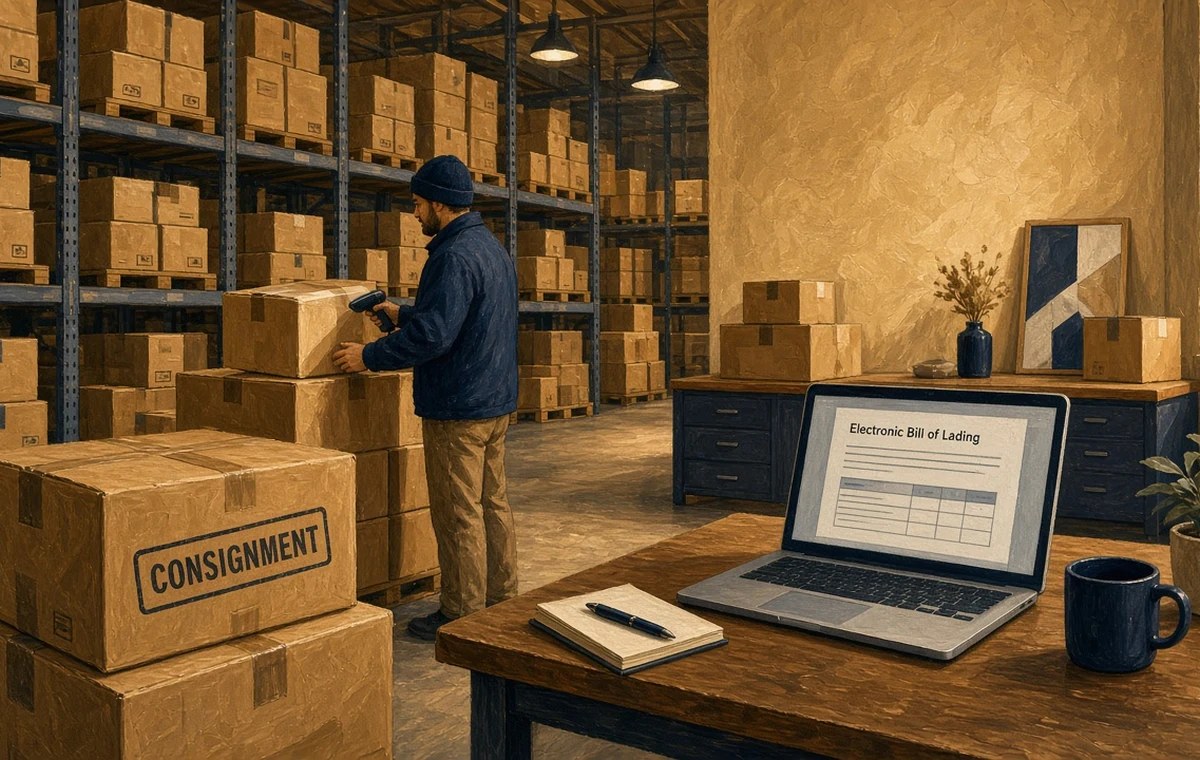
The UK act is a big deal because the paper bill of lading, a document of title that has been couriered around the world for centuries, can now be legally replaced by a secure electronic record. Banks, carriers and insurers can transfer ownership of a cargo in minutes instead of days.
The Korean source predicts that electronic trade will become the normal way to trade as digital products delivered online keep growing. If you are a student preparing for an export job, learn your way around online buyer platforms, electronic document systems such as ACE or CDS, and the basics of Incoterms before your first interview.
Common mistakes
- Assuming merchanting goods must pass through the trader's country.
- Calling a consignment agent the "buyer" when title never passes to them.
- Confusing transit trade (goods only passing through) with entrepôt re-export.
- Explaining trade with absolute advantage instead of comparative advantage.
Quick self-check
- Who owns the goods at each step of a consignment sale?
- Why might merchanting trade barely appear in UK goods statistics?
- What did the Electronic Trade Documents Act 2023 change?
Compiled by the CampusDown editorial team from Krugman, Obstfeld and Melitz, International Economics: Theory and Policy (11th ed., Pearson, 2018), ICC Incoterms 2020, UK legislation and US CBP guidance. Reviewed November 2026. Educational overview, not legal or tax advice.
FAQ
What is merchanting trade?
A trader in one country buys goods from a second country and sells them to a third, with the goods shipped directly between the other two and the merchant earning a margin.
How is consignment trade different from merchanting trade?
In consignment trade the agent abroad sells on the owner's behalf for a commission and never owns the goods; in merchanting trade the merchant buys and resells for a margin.
What is the difference between entrepôt and transit trade?
Entrepôt goods are imported into a hub and re-exported, often after repacking; transit goods only pass through under customs control without being cleared for home use.
Is Amazon FBA a kind of consignment?
It works on consignment-like logic: the seller keeps ownership of inventory in Amazon's warehouses while Amazon stores, ships and charges fees.
What does the UK Electronic Trade Documents Act 2023 do?
It lets electronic trade documents such as bills of lading and bills of exchange carry the same legal effect as paper originals.