
What Do Clothing Stores Really Sell Now? Merchandising, Fashion Retailing and Lessons From Zara, the High Street and Online Hauls
- Retailing covers every activity of selling to the final customer, while merchandising plans the right product, time, place, quantity and price.
- SPA retailers such as Zara control design to sale and rotate stock fast.
- Omnichannel shoppers, online growth, returns and cross-border buying are reshaping stores in the US and UK.
Contents
Merchandising is the planning work of putting the right product in front of shoppers at the right time, place, quantity and price, while retailing is everything involved in actually selling it to the final customer. Why does the same jumper fly off the rails in one shop and gather dust in another? The answer usually lies in those two disciplines. This guide unpacks them, looks at Zara's speed and the art of the shop window, then follows fashion retail from the British high street and American malls to online hauls and the returns mountain.
How are retailing and merchandising different?
The source material defines retailing as the entire selling process up to the moment a product or service reaches its final buyer. Merchandising sits earlier in the chain: it is the advance planning that makes sure the items customers want are ready in the right place, at the right moment, in the right amount and at the right price.
Student money tip from CampusDown Repair UpIs a small leak worth a renters insurance claim? How to decide — compare the loss with your deductible, check who is responsible, and document it either way.
Textbooks often summarize merchandising as the "five rights": the right product, at the right time, in the right place, in the right quantity, at the right price. Get one wrong and the others suffer. A perfect winter coat that arrives in March is simply stock to be marked down.
That is why buyers and merchandisers at big chains spend months on range plans, size curves and markdown calendars long before a single customer walks in.

Why does Zara move so fast?
SPA, short for "specialty store retailer of private label apparel," describes a company that controls the whole journey itself: design, production, distribution and sales. The term was coined by Gap in the 1980s, and the source holds up Spain's Zara as the textbook example of rapid rotation, getting new designs into stores within a few weeks rather than the traditional seasonal cycle.
Because the company owns each step, it produces smaller batches, reads sales data from its shops and reorders what is working. That means fewer unsold garments and the ability to follow a trend while it is still hot. Frequent drops also give customers a reason to come back: if the rails look different every fortnight, popping in on a Saturday becomes a habit.
The flip side is the environmental and labor debate around fast fashion, which UK parliamentary committees and campaigners have raised repeatedly, and which every report on SPA should at least acknowledge.
Skimming the section headings first makes a long guide much easier to map out. Try writing down one question of your own as you read.
What does visual merchandising communicate?
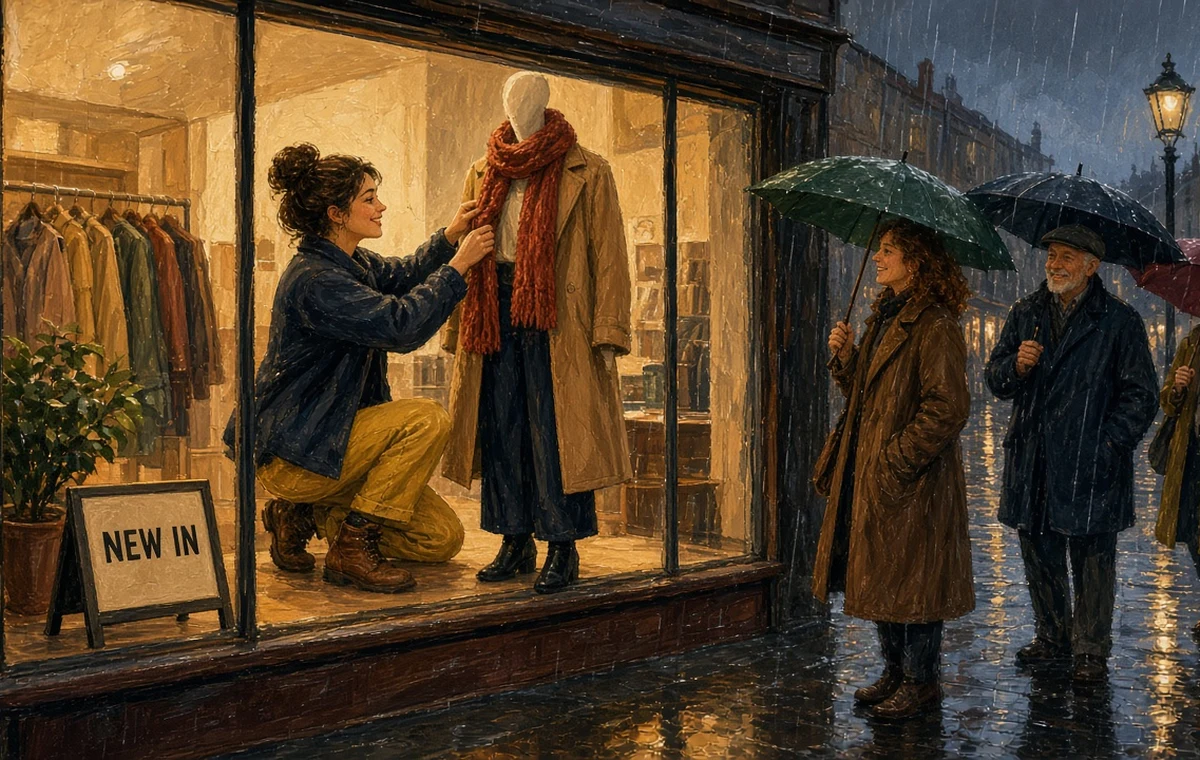
Visual merchandising uses hanging methods, lighting, color blocking, the path shoppers walk and window displays to express what a brand stands for. Britain has a long tradition here: when Harry Gordon Selfridge opened his Oxford Street store in 1909, he treated windows as theater and made browsing itself a pleasure, and New York department stores later turned holiday windows into annual events that draw crowds.
Today many shops go further and design themselves as places to linger, with cafés, events and repair services, so that the visit itself is the attraction. The source starts from the rise of the omnichannel shopper for exactly this reason: when people hop between apps and stores, the shop stops being a warehouse with a till and becomes a place that sells an experience. Our explainer on O2O and omnichannel retail covers the strategy side.
A common Western example is "buy online, pick up in store," which turns a website order into a store visit and often an extra purchase.
How big did online fashion become?
The source material, written around 2009, notes that Korean online shopping kept growing even during the downturn: online mall sales reached about 20 trillion won in 2009, and open marketplaces grew from about 800 billion won in 2003 to roughly 9 trillion won six years later, with two platforms holding over 70 percent of that market. Group-buying social commerce, inspired by Groupon, then added yet another channel.
The same shift reshaped Britain and America. Online-only players such as ASOS and Boohoo grew fast, while famous high-street names struggled: the Arcadia group, owner of Topshop, entered administration in 2020, and Debenhams closed its stores in 2021, with both brands living on mainly online under new owners. In the US, mall vacancies rose as department stores shrank their footprints. Those figures from 2009 are old, but they show that fashion spending had already started migrating to the screen more than a decade ago.
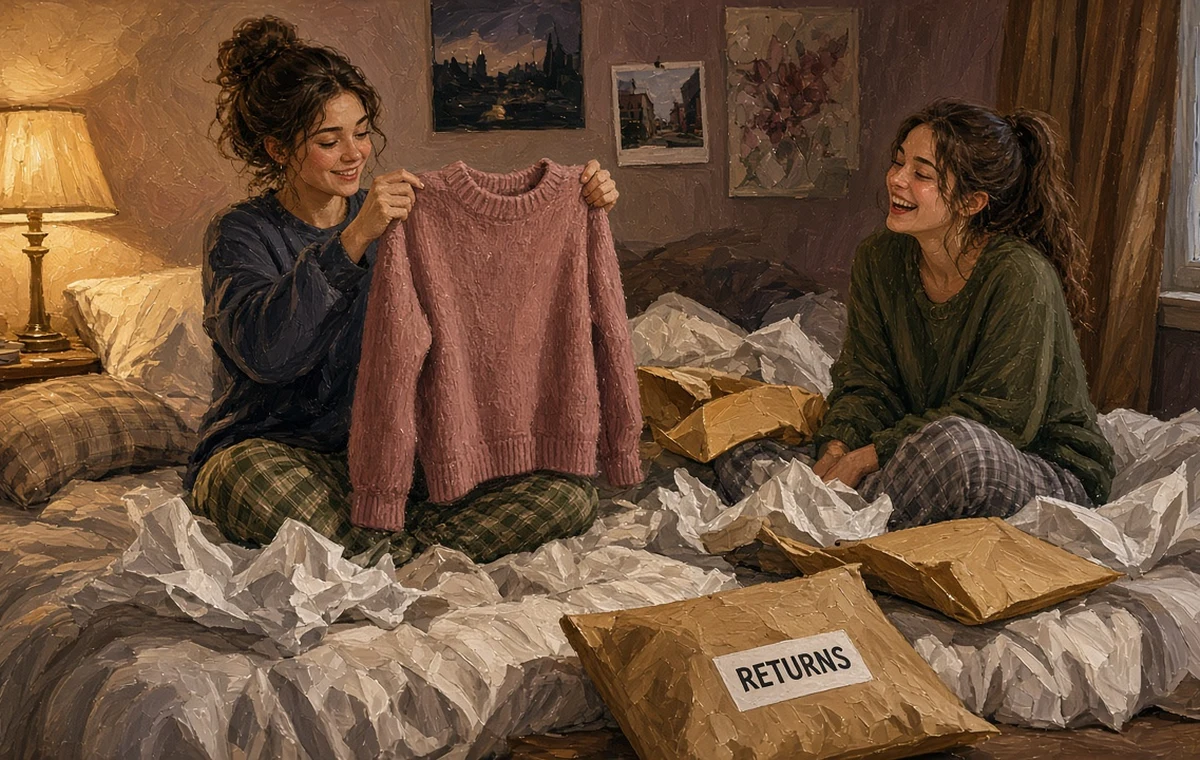
Online fashion brought its own headache: returns. Free returns encourage "bracketing," ordering several sizes and sending most back, and US and UK retailers have increasingly introduced return fees or tighter windows to protect margins. That is why knowing how consumers decide and buy on impulse matters as much as logistics.
What are the big issues in fashion retail now?
| Issue | Background | US / UK example |
|---|---|---|
| Omnichannel shoppers | People switch between stores and apps | Click and collect, experiential flagship stores |
| Fast rotation (SPA) | Short trend cycles | Zara, H&M and Primark on the high street |
| Online growth | Phone shopping becomes routine | Topshop and Debenhams move mostly online |
| Cross-border buying | Easy price comparison, fast shipping | Ultra-cheap marketplaces shipping direct to consumers |
| Cultural influence | K-pop and drama fans follow Korean style | Korean beauty and fashion trends on social media |
Student money tip on CampusDown Repair Up: Is a small leak worth a renters insurance claim? How to decide.
Put together, fashion retail has become an industry that must plan what to sell, how to show it and which channel to deliver it through, all at once. The source closes by setting out the challenges merchandisers must solve, and for Western readers the same checklist applies: tighter buying, stores worth visiting, smarter returns and a clear answer to why a shopper should choose you over an app full of cheaper options.
Reference: Varley, R. (2014). Retail product management: Buying and merchandising (3rd ed.). Routledge, a practical guide to retail buying and merchandising.
FAQ
What is merchandising in simple terms?
It is planning which products to offer, when, where, in what quantity and at what price, before customers arrive.
What are the five rights of merchandising?
The right product, at the right time, in the right place, in the right quantity, at the right price.
What does SPA mean in fashion?
A specialty store retailer of private label apparel, meaning one company controls design, production, distribution and sales.
Why did Topshop and Debenhams struggle?
They faced falling store traffic, heavy costs and fast-growing online rivals, and both brands ended up sold and run mainly online.
Why do online fashion returns matter?
Returns add shipping, handling and waste costs, so many retailers now charge fees or shorten return windows.