
How Will Medical AI and Nanobots Change Care? Diagnosis, Hospitals, Rules and Risks
- Deep learning lets medical AI flag findings on scans and slides, but clinicians make the final call.
- Nanobots that deliver drugs to tumours are promising yet still mostly at the laboratory and animal stage.
- Regulation, data protection, bias checks and clear liability decide whether AI truly helps patients.
Contents
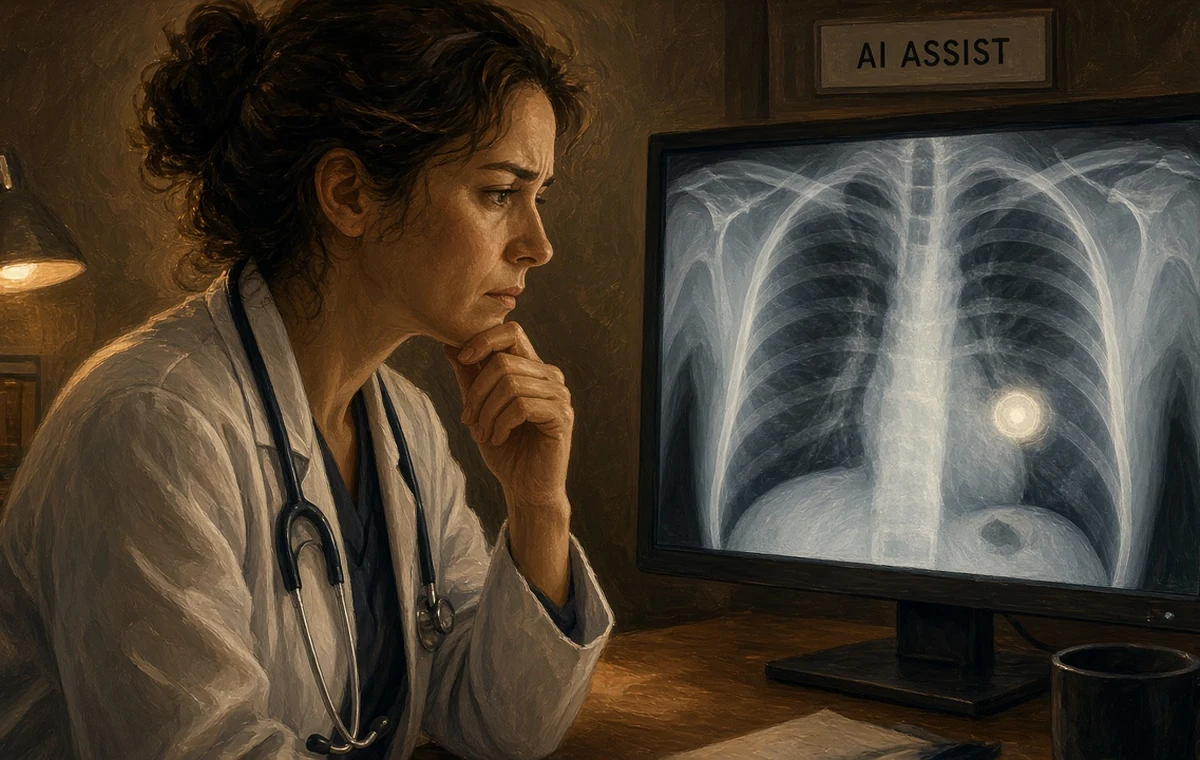
A program that reads an X-ray before the doctor does, and robots smaller than a cell that carry drugs only to cancer cells: science fiction, or something about to arrive on the ward? Artificial intelligence and nanotechnology are two of the most talked-about technologies in medicine. This guide looks at how far they have actually come, how they are regulated in the US, the UK and the EU, and what nurses and patients should watch out for.
Why has AI moved so fast?
Much of the recent leap comes from deep learning, in which many layers of artificial neural networks learn to find patterns for themselves by working through large amounts of data.
Student money tip from CampusDown Law UpSurprise out-of-network ER bill? How to check and challenge it — the No Surprises rules, itemized bills, insurance appeals and where to complain.
Deep neural networks were a key part of AlphaGo, the program that beat a world-class Go champion in 2016, although it also relied on tree search and reinforcement learning rather than deep learning alone. The older question of whether a machine can think like a person goes back to the Turing test. Because medicine generates huge volumes of images and records, it is often described as one of the fields where AI can make the biggest difference.
That combination of big data and pattern-finding is exactly what clinical images and records offer, which explains the rush of new tools.

How is AI used in patient care?
Most current tools work as a second pair of eyes rather than a replacement for clinicians, flagging what a busy human might miss.
| Field | Example |
|---|---|
| Radiology | Marking nodules or abnormal findings on chest X-rays and CT scans |
| Pathology | Finding areas of cancer cells on tissue slides |
| Ophthalmology | Screening retinal photos for diabetic retinopathy |
| Clinical decision support | Analysing records to predict risk and support treatment choices |
In the US, the Food and Drug Administration keeps a public list of AI-enabled medical devices it has authorised; the list has grown quickly, and radiology accounts for the large majority. In 2018 the FDA authorised IDx-DR, described as the first autonomous AI system that can screen for diabetic retinopathy without a specialist reading the images. Even so, the common principle across most uses remains that the final judgement and responsibility rest with clinicians.
Skimming the section headings first makes a long guide much easier to map out. Try writing down one question of your own as you read.
Can AI help run a hospital?
Some of the quickest wins are behind the scenes rather than in the consulting room, where small efficiency gains add up across thousands of patients.
- Predicting outpatient bookings and waiting times to smooth patient flow
- Forecasting admissions to plan beds and staffing
- Managing stocks of medicines and supplies
- Automating clinical notes and billing or coding work
The catch is that a hospital's data must first be standardised and cleaned, and that preparation often decides whether the project works. The NHS AI Lab, set up in England in 2019, was created partly to help with exactly these questions of adoption, evaluation and data.
How far have nanobots come?
Nanobots are devices far thinner than a human hair, designed to travel through blood vessels, deliver drugs to target cells or sense conditions inside the body. Delivering cancer drugs only to tumours could reduce damage to healthy cells.

Researchers are testing several ways to move them, including steering with magnetic fields or ultrasound and designs that propel themselves by reacting with substances in the body. Most work is still at the animal or laboratory stage, and safety inside the body, precise control and clearance after use remain open problems.
Nanomedicine in a broader sense is not new, however. Doxil, a liposome-wrapped cancer drug, was approved by the FDA in 1995, and the mRNA COVID-19 vaccines rely on lipid nanoparticles to carry their genetic instructions into cells. True robots that navigate the body are the next, much harder step.
How does medical AI reach the hospital?
It can sound as if a new algorithm goes straight from the lab to the clinic. In reality, because lives are at stake, it has to pass several rounds of checking first.
Software that reads images or predicts disease risk is legally a medical device. In the US that means FDA clearance or approval; in Great Britain the Medicines and Healthcare products Regulatory Agency (MHRA) regulates software and AI as medical devices; and in the EU, medical device rules now sit alongside the AI Act, adopted in 2024, which treats AI in medical devices as high-risk. The Korean source describes the same logic at home: the first AI medical device there was approved in 2018, a program that estimates a child's bone age from hand X-rays.
Approval is not the end. Someone has to decide how insurers or health systems will pay for it, how clinicians will check results, and how it fits the existing workflow. A highly accurate tool that is awkward to use or unpaid for will struggle. Data is the other big issue: in the US, health data is protected under HIPAA; in the UK and EU, under the GDPR. Korea took its own route in 2020, when amendments to its Personal Information Protection Act allowed pseudonymised data to be used without consent for statistics, scientific research and public-interest archiving, while banning re-identification.
Questions to ask about any medical AI
- Which patients was it trained on, and are they similar to ours?
- Did it perform as well on data from other hospitals?
- Does it show results in a way clinicians can understand and explain?
- When it makes a mistake, who checks and corrects it?
- How is patient information protected?
Bias is a particular worry: an AI trained with too little data on certain ethnic groups, sexes or age groups can be less accurate for them. Performance can also drift when a hospital replaces its scanners or its patient mix changes, which is why regulators increasingly expect monitoring after a product is on the market.
If AI gets it wrong, who is responsible?
Most medical AI is authorised as a tool that supports a clinician, so the usual view is that the clinician who makes the final decision carries the responsibility.
As AI takes on bigger roles, debate continues over how to share liability between developers, hospitals and clinicians. This matters for nurses too. When AI alerts that predict falls or sepsis arrive on a ward, nurses are the ones who check the alert and assess the patient. If alerts go off too often, alarm fatigue sets in, so nurses' input is vital when thresholds are tuned to local reality.
Explaining AI to patients matters as well. Someone who learns that software looked at their scan may feel anxious or, at the other extreme, trust it too much. Saying simply that AI is a tool helping the team, and that a person makes the final decision, builds understanding and trust. For nursing students, it is worth learning what sensitivity and specificity mean and what a risk score is based on, so they can neither blindly trust nor reflexively dismiss the technology.
What are the main issues at a glance?
Putting hopes and challenges side by side shows that the technology works best when rules and people's roles are ready too.
Student money tip on CampusDown Law Up: Surprise out-of-network ER bill? How to check and challenge it.
| Issue | Core question | Response in the US, UK and EU |
|---|---|---|
| Safety and effectiveness | Is it accurate in real clinical settings? | FDA or MHRA authorisation, EU device rules and AI Act, multi-site validation |
| Privacy | How is training data protected? | HIPAA, UK GDPR and EU GDPR, de-identification, access controls |
| Bias | Does it underperform for some groups? | Diverse training data, ongoing monitoring |
| Liability | Who is responsible for errors? | Assistive-tool principle, continuing debate on shared liability |
For a coursework essay on medical AI, mentioning regulation, data protection and liability alongside the exciting possibilities will make the argument far more balanced. The value of any technology is proved at the bedside.
Compiled by the CampusDown editorial team from a Korean article on medical AI and nanobots, adapted with public information on the FDA's list of AI-enabled devices, the 2018 authorisation of IDx-DR, the NHS AI Lab, the MHRA, the EU AI Act, HIPAA and the GDPR, and the approval of Doxil. Reference: Topol, E. J. (2019). High-performance medicine: The convergence of human and artificial intelligence. Nature Medicine, 25(1), 44–56. Reviewed November 2026. General information, not medical or legal advice.
FAQ
Does medical AI replace doctors?
No. Most tools are authorised to assist clinicians by flagging findings, and the final decision and responsibility stay with the clinical team.
Who regulates medical AI in the US and UK?
In the US the FDA treats such software as a medical device; in Great Britain the MHRA does, and the EU adds the AI Act on top of device rules.
Are nanobots used in hospitals yet?
Not as everyday treatment. Most nanorobot research is still in laboratories or animal studies, though simpler nanomedicines such as liposomal drugs are already used.
What is alarm fatigue?
When alerts go off too often, staff can become desensitised and miss important ones, so thresholds need tuning with frontline input.
Why does data bias matter?
An AI trained on too little data from certain groups may be less accurate for them, so diverse data and ongoing monitoring are needed.