
Is Technology Really Neutral? Technological Determinism, Social Shaping and Actor-Network Theory Explained
- Technological determinism says technology changes society from the outside, as Innis argued about media bias.
- Social shaping theory shows how politics, profit and culture are built into designs, from Moses's bridges to QWERTY.
- Actor-network theory, from Latour, Callon and Law, treats people and things as actors in one network, like the speed bump.
Contents
Technology is never a perfectly neutral tool: technological determinism says machines drive social change, social shaping theory says politics, money and culture shape machines, and actor-network theory (ANT) argues that people and things act together in networks where neither side is fully in charge. If that sounds abstract, think of the keyboard under your fingers, the speed bump outside your school or the exam algorithm that once decided British students' grades. Each one carries choices someone made, and each one quietly makes choices for us.
This guide, adapted for English-speaking readers from a Korean study summary, walks through the three big lenses in science and technology studies, the classic cases every sociology and media-studies student meets, and the very current US and UK debates that make these old theories feel brand new.
What does technological determinism actually claim?
Technological determinism treats technology as objective and self-propelled. New inventions arrive from outside society, and society has to reorganize itself around them. The textbook examples are the printing press, the stirrup, gunpowder and the typewriter: each supposedly rewired how people fought, worked, worshipped or wrote. For a side-by-side comparison of this view with its main rival, see our wiki page on technological determinism and the social construction of technology.
Student money tip from CampusDown Life UpHow to Find Unclaimed Money in Your Name — How to find unclaimed money in your name for free: official state databases via NAUPA and MissingMoney.com, federal searches like Treasury…
The idea is everywhere in everyday talk. Headlines that say "smartphones are rewiring teenage brains" or "AI will decide the future of work" are determinist sentences: the machine is the subject of the verb, and humans are the ones being changed. That framing is not always wrong, but it hides the people who design, fund, regulate and refuse technologies.
How did Harold Innis divide civilizations?
The Canadian economic historian Harold Innis, in Empire and Communications (1950) and The Bias of Communication (1951), argued that every medium has a bias. Heavy, durable media such as stone carvings favor control over time and tradition; light, portable media such as papyrus and paper favor control over space and administration. His student-turned-colleague Marshall McLuhan would later compress the idea into "the medium is the message."
| Bias | Example | Typical character of the society |
|---|---|---|
| Time-biased | Egypt's pyramids and stone inscriptions | Durable, religious, focused on preserving tradition |
| Space-biased | Rome governing a vast empire with papyrus | Practical, administrative, expansionist |
| Oral | Debate in the Greek agora | Fleeting but participatory and democratic |
| Written | Written law codes and bureaucracy | Rational, standardized and hierarchical |
The punchline is that the medium a society relies on shapes not just what it says but how it thinks and who holds power, which is why Innis is often read as a sophisticated determinist.

How does society shape technology instead?
Social shaping theory flips the arrow. It says that what gets built, and in what form, depends on politics, profit, culture and community. The so-called war of the currents is a favorite example. In the 1880s Thomas Edison's direct current (DC) competed with the alternating current (AC) backed by George Westinghouse, and Edison's camp went as far as promoting the AC-powered electric chair to brand AC as deadly. Technical merit mattered, but so did publicity, patents and fear.
Other scholars push the same point. Sherry Turkle studied how computing culture was built around a narrow, often male style of mastery, and the philosopher Andrew Feenberg argued that designs carry a "technical code" that quietly encodes the interests of those who commission them. Then there is QWERTY. The economist Paul David popularized it in 1985 as a story of lock-in: a layout designed for 19th-century typewriters stuck around long after its original reasons faded, a textbook case of what economists call path dependence. Other economists dispute how inefficient QWERTY really is, which is itself a reminder that technology stories are contested.
Skimming the section headings first makes a long guide much easier to map out. Try writing down one question of your own as you read.
Can bridges and machines have politics?
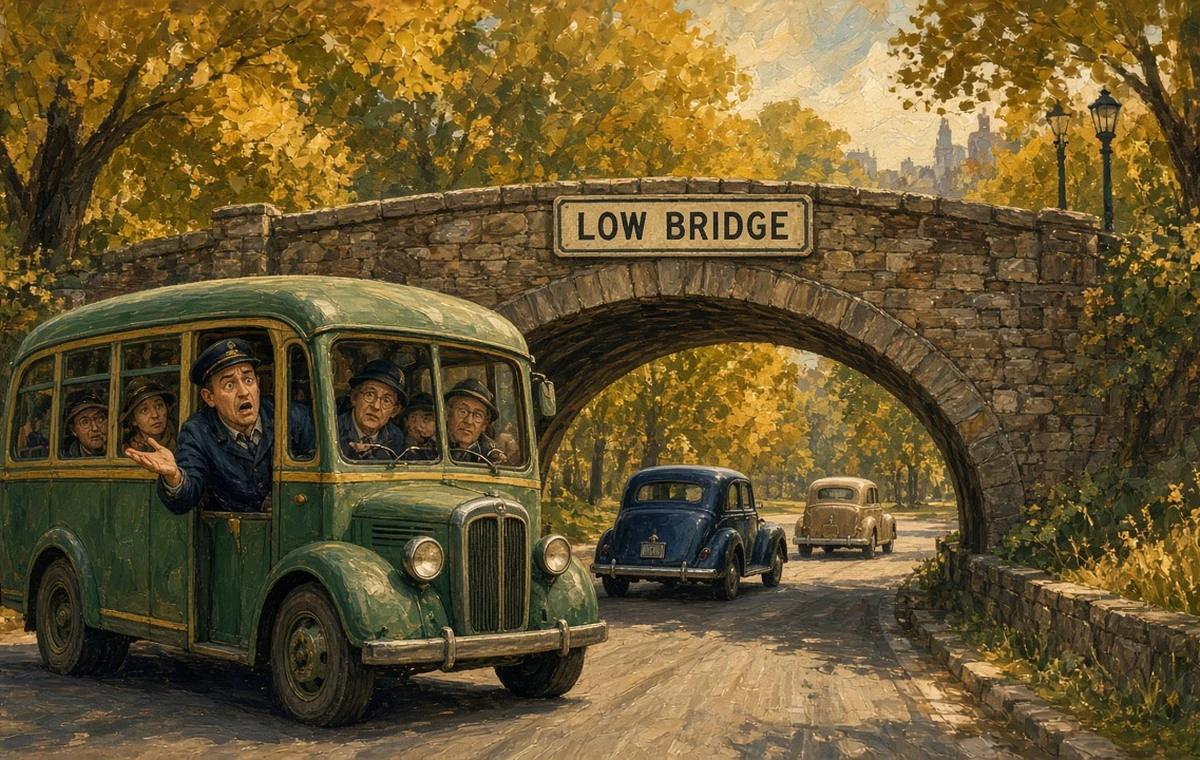
In 1980 the political theorist Langdon Winner published the essay "Do Artifacts Have Politics?" He described how the New York planner Robert Moses built parkway overpasses on Long Island so low that public buses could not pass, which, Winner argued, kept poorer residents who relied on transit away from places like Jones Beach. Later researchers questioned how deliberate this really was, but the story stuck because it captures a truth: a design decision can work like a policy, long after its designer is gone.
The Korean source adds more cases. The historian David Noble showed how General Electric adopted numerically controlled machine tools partly to reduce the power of skilled machinists, even when productivity gains were disappointing. Factory machines and assembly lines were once sized for child workers, and car interiors and crash-test dummies were long based on an average male body. Look further along the supply chain, to cobalt and coltan mining or electronics factories, and it becomes obvious that the benefits and burdens of technology are not shared evenly.
What do recent UK and US cases add?
British readers have two vivid reminders. In 2020, when exams were cancelled during the pandemic, an Ofqual algorithm downgraded many A-level results, and students protested with chants of "the algorithm" until the government reverted to teacher-assessed grades. The Post Office Horizon scandal showed something darker: hundreds of sub-postmasters were prosecuted on the basis of faulty accounting software, partly because courts tended to presume computer evidence was reliable. In the US, debates over facial recognition in policing, automated hiring tools and ride-hailing apps that set drivers' pay raise the same question Winner asked about bridges: who designed this, and who pays the price when it is wrong?
Is democratic technology possible?
The American critic Lewis Mumford, in his 1964 essay "Authoritarian and Democratic Technics," split technology into two traditions. Authoritarian technics are steered by experts, the military and bureaucracies and aim at endless growth; democratic technics are human-scale, involve citizens in decisions and sit closer to an ecologically minded economy. Mumford warned of a "megamachine" in which society becomes one vast mechanism with little room for human judgment.
Today the democratic side shows up in citizens' juries on new technologies, participatory budgeting for city tech, public consultations on AI rules and the "right to repair" movement on both sides of the Atlantic. The core idea of technological democracy is simple: deciding which technologies we build is part of deciding what kind of society we want, so ordinary people deserve a seat at the table.
How is actor-network theory different?
Social construction of technology (SCOT), developed by Trevor Pinch and Wiebe Bijker, showed how the modern bicycle emerged from negotiation between racing young men, cautious riders, women in long skirts and manufacturers. Actor-network theory, associated with Bruno Latour, Michel Callon and John Law, goes one step further: it treats humans and non-humans alike as "actors" that make a difference. Callon's famous 1986 study followed researchers, fishermen and the scallops of St Brieuc Bay, and asked what happens when the scallops refuse to cooperate.
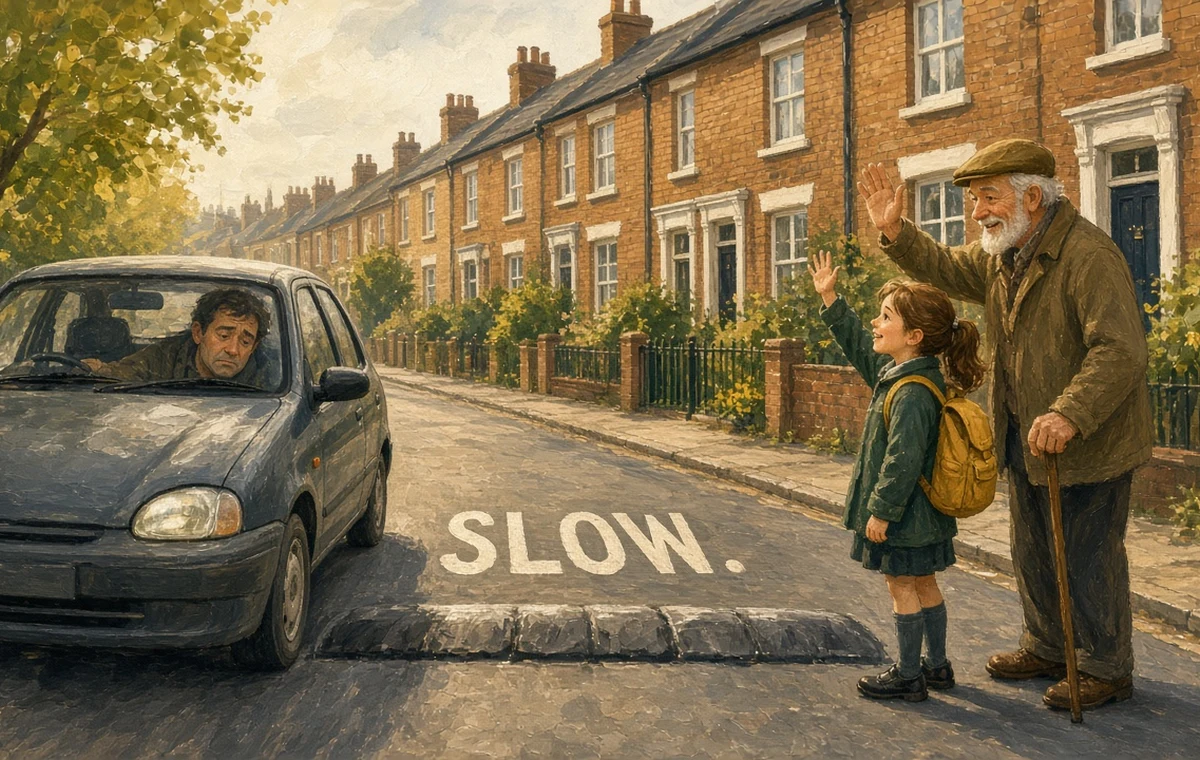
Latour's favorite illustration is the speed bump, which the British call a "sleeping policeman." A traffic rule written in a law book relies on drivers' goodwill; a bump in the road delegates that rule to concrete, so even a driver who does not care about children slows down to protect his suspension. In ANT terms the bump is not a passive object but an actor in a network of councils, engineers, drivers, parents and cars. The Korean source applies the same lens to hotel key cards and argues that technology creates publics, which then reshape the technology in turn.
The source ends with Nam June Paik, the video-art pioneer whose Paik-Abe video synthesizer turned broadcast technology into a playground. It is a cheerful reminder that technology is not only about control or efficiency; it is also a canvas for imagination.
Which lens should you use, and when?
| Lens | Key thinkers | Main question | Classic example |
|---|---|---|---|
| Technological determinism | Innis, McLuhan | How does the technology change society? | Printing press, stirrup |
| Social shaping / SCOT | Winner, Feenberg, Pinch and Bijker | Whose interests shaped the design? | Moses's bridges, QWERTY, the bicycle |
| Actor-network theory | Latour, Callon, Law | Which humans and things hold the network together? | Speed bumps, scallops, key cards |
Student money tip on CampusDown Life Up: How to Find Unclaimed Money in Your Name.
In essays, the strongest answers rarely pick one lens and stick to it. Use determinism to describe broad effects, social shaping to reveal power behind design and ANT to trace the messy chain of people and objects that makes a system work or fail.
Common mistakes
- Treating "technology is neutral" as obvious rather than as a claim to be argued.
- Presenting the Moses bridges story as settled fact without noting later criticism.
- Confusing SCOT, which focuses on human social groups, with ANT, which gives agency to things as well.
- Using ANT to blame objects and let designers or regulators off the hook.
Quick self-check
- Can you explain Innis's time bias and space bias with one example each?
- Can you say why a speed bump is an actor in ANT?
- Can you name one UK or US case where an algorithm acted like a policy?
Compiled by the CampusDown editorial team from a Korean study summary on technology and society, Winner (1980) in Daedalus, Mumford (1964), Pinch and Bijker (1984), Callon (1986), Latour's writing on non-human actors, and public reporting on the 2020 Ofqual grading controversy and the Post Office Horizon scandal. Reviewed November 2026.
FAQ
What is technological determinism?
The view that technology develops on its own logic and drives changes in society and human behavior from the outside.
What did Langdon Winner mean by artifacts having politics?
That designs such as bridges or machines can build in social arrangements, deciding who benefits and who is excluded, much like a policy.
What is actor-network theory in simple terms?
An approach from Latour, Callon and Law that treats both people and things as actors whose links form networks that make systems work or fail.
Why is the speed bump a famous ANT example?
Because it delegates a traffic rule to an object: drivers slow down even if they ignore the law, so the bump acts like a sleeping policeman.
What did the 2020 A-level algorithm row show?
That an apparently technical grading model could act like a political decision, which is why public protest led the UK government to reverse it.