
How Does a Baby Develop Before Birth? Germinal, Embryonic and Fetal Periods and Prenatal Risks
- Prenatal development has germinal, embryonic (about weeks 3 to 8) and fetal periods.
- The embryonic period, when organs form, is most sensitive to alcohol, drugs and infection.
- Folic acid, no alcohol or tobacco, medicine checks and antenatal care reduce risks.
Contents
Prenatal development runs through three periods: the germinal period (fertilisation to about two weeks), the embryonic period (about weeks 3 to 8), when the major organs form, and the fetal period (week 9 to birth), when those organs grow and mature. Why does a single drink taken before someone knew they were pregnant cause so much worry? Because the body of a baby is built at astonishing speed in the first weeks, and that is exactly when it is most sensitive. This guide, adapted from a Korean lifespan development study note, explains the stages, why the embryonic period is the most vulnerable, which genetic and environmental factors can cause problems, what US and UK guidance recommends, and how prenatal health links to lifelong health.
Why does the prenatal period matter for lifespan development?
Human development begins at fertilisation, not at birth. The genetic information inherited from both parents lays the foundation for body structure and temperament, while the environment in the womb, shaped by the mother's nutrition and health, influences how that information is expressed.
Student money tip from CampusDown Law UpMedical bill sent to collections? What to check before you pay — verify the bill, ask about insurance and financial assistance, and dispute errors.
Lifespan development therefore treats the prenatal period as the foundation for every later stage. Protecting health in this period is the first step in supporting a child's health for the rest of their life.

How is prenatal development divided?
| Period | Timing | Main features |
|---|---|---|
| Germinal | Fertilisation to about 2 weeks | Cell division, travel down the fallopian tube and implantation in the uterine wall |
| Embryonic | About weeks 3 to 8 | Heart, neural tube, limbs and other major organs form |
| Fetal | About week 9 to birth | Organs grow and mature; weight gain |
An important clarification the source left out: these weeks are counted from fertilisation. Doctors and midwives date pregnancy from the first day of the last menstrual period, which is about two weeks earlier, so the embryonic period corresponds roughly to weeks 5 to 10 of pregnancy as written in a maternity record.
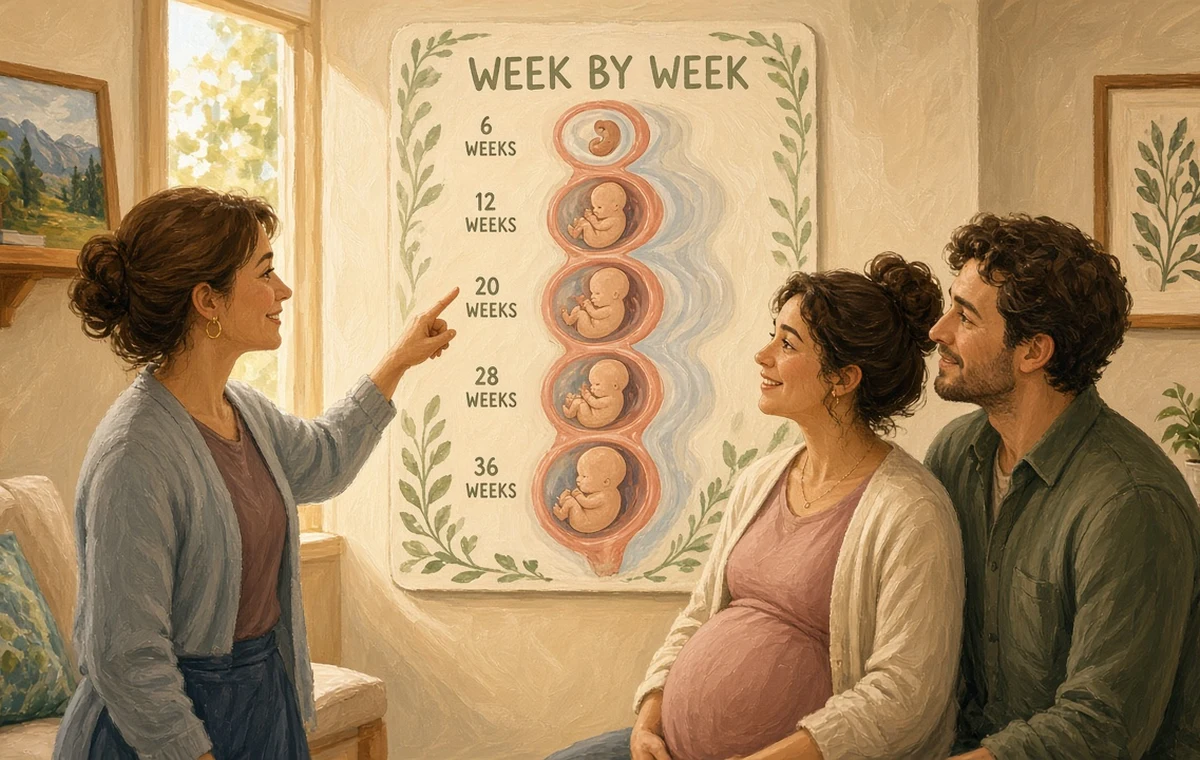
By the end of the embryonic period, the embryo is tiny but already has the basic human form and most of its organs. In the fetal period those organs grow and start to work. Late in pregnancy, the lungs and brain mature quickly and fat is laid down to prepare for life outside the womb.
Development follows two principles: from head to toe (cephalocaudal) and from the centre outward (proximodistal). That is why the head grows large first and the limbs catch up later, a pattern that continues in motor development after birth.
Skimming the section headings first makes a long guide much easier to map out. Try writing down one question of your own as you read.
Why is the embryonic period the most vulnerable?
Teratogens, substances or conditions that can cause birth defects, do the most damage when exposure happens while organs are forming. During the embryonic period the critical periods of many organs overlap, so exposure then carries the highest risk of structural defects. Exposure in the first two weeks after fertilisation is traditionally described as having an all-or-none effect: either the pregnancy is lost, or the embryo recovers fully.

The difficulty is that this sensitive window often falls before a person knows they are pregnant. That is why stopping alcohol and smoking and reviewing any regular medicines with a doctor or pharmacist are recommended from the time a pregnancy is being planned.
Critical periods differ by organ. The heart and central nervous system are sensitive early, while parts such as the palate, ears and genitals keep forming later. Comparing organs side by side is an easy way to see why timing of exposure matters so much.
What problems can arise before birth?
| Factor | Example | Possible effects |
|---|---|---|
| Genes and chromosomes | Down syndrome (trisomy 21) | Intellectual disability, heart and other physical differences |
| Alcohol | Drinking during pregnancy | Fetal alcohol spectrum disorders |
| Smoking | Active or second-hand smoke | Low birth weight, preterm birth |
| Medicines | Thalidomide and some other drugs | Limb and other malformations |
| Infection | Rubella | Congenital heart, eye and hearing problems |
| Nutrition | Folate deficiency | Neural tube defects |
Thalidomide, sold from the late 1950s as a sedative and widely used for morning sickness, caused severe limb malformations in thousands of babies before it was withdrawn in the early 1960s. The disaster changed drug safety rules around the world. The risk of chromosomal conditions rises with maternal age; the wiki entry on Down syndrome explains how trisomy 21 occurs and how it is screened for.
Maternal age, chronic illness such as diabetes or high blood pressure, and severe stress can also play a role. Most problems come from several factors acting together, so it is better to think in terms of interaction than a single cause.
What do US and UK guidelines recommend?
United States
The CDC advises everyone who could become pregnant to take 400 micrograms of folic acid every day, and enriched grain products have been fortified with folic acid since 1998. The CDC also says there is no known safe amount of alcohol during pregnancy. The FDA replaced its old A, B, C, D and X pregnancy letter categories in 2015 with narrative labelling, so it is best to ask a pharmacist or doctor rather than rely on a single letter. The American College of Obstetricians and Gynecologists recommends offering screening for chromosomal conditions, including cell-free DNA tests, to all pregnant patients regardless of age.
United Kingdom
The NHS recommends 400 micrograms of folic acid daily before conception and until 12 weeks of pregnancy, and the UK Chief Medical Officers advise that the safest approach is not to drink alcohol at all when pregnant or planning a pregnancy. From 13 December 2026, non-wholemeal wheat flour in the UK must be fortified with folic acid, a measure the government expects to prevent a significant number of neural tube defects each year. NHS screening programmes offer tests for Down syndrome and other conditions in early pregnancy, with follow-up options if the chance is higher.
| Step | United States | United Kingdom |
|---|---|---|
| Folic acid | 400 mcg daily; fortified grains since 1998 | 400 mcg until week 12; flour fortification from December 2026 |
| Alcohol | No known safe amount | Safest not to drink at all |
| Medicines | Narrative pregnancy labelling since 2015 | Check with GP, midwife or pharmacist |
| Screening | Offered to all, including cell-free DNA | NHS screening in early pregnancy |
The details differ, but the two systems agree on the basics: start before pregnancy, avoid alcohol and tobacco, and use the screening and antenatal care on offer.
What can families do for a healthy pregnancy?
- Start folic acid before conception
- Stop drinking and smoking and avoid second-hand smoke
- Take medicines only after checking with a doctor or pharmacist
- Check vaccinations such as rubella before pregnancy
- Attend regular antenatal visits and screening
Student money tip on CampusDown Law Up: Medical bill sent to collections? What to check before you pay.
The wiki entry on folic acid explains why the timing of folic acid matters so much. Nurses and midwives check lifestyle and medicines at antenatal visits, explain what to watch for at each stage, and offer emotional support to anxious parents-to-be. Involving the whole family in quitting smoking and eating well makes a real difference.
Looking further: screening, gestational diabetes and the Barker hypothesis
Non-invasive prenatal testing (NIPT) analyses fragments of fetal DNA in the mother's blood to estimate the chance of some chromosomal conditions. It carries no miscarriage risk, but it is a screening test, not a diagnosis, so a high-chance result needs confirmation. Gestational diabetes, raised blood sugar caused partly by placental hormones, is usually screened for in the middle of pregnancy and raises the mother's later risk of type 2 diabetes. Movements are first felt around mid-pregnancy, and in late pregnancy any clear drop from the baby's usual pattern should be reported promptly.
British epidemiologist David Barker noticed that people with low birth weight had more heart disease in adulthood and proposed that the womb environment programmes lifelong health. His idea grew into the field known as the developmental origins of health and disease (DOHaD).

A baby's health is not the responsibility of the mother alone. When families and communities share that responsibility, more children start life from a healthy beginning.
FAQ
Which weeks of pregnancy need the most care?
The embryonic period, about weeks 3 to 8 after fertilisation or roughly weeks 5 to 10 counted from the last period.
When should I start folic acid?
Before conception, ideally as soon as a pregnancy is being planned, and continue through the first 12 weeks.
Are all medicines dangerous in pregnancy?
No, but safety varies, so check with a doctor or pharmacist before taking or stopping any medicine.
Is NIPT a diagnosis?
No. It is a screening test; a high-chance result needs a diagnostic test to confirm.
What is the Barker hypothesis?
The idea that conditions in the womb, reflected in birth weight, influence the risk of adult diseases such as heart disease.