
Glasses Hurting Your Nose? How Titanium Frames, Lighter Lenses and Progressives Cut Weight and Eye Strain
- Discomfort comes from frame weight resting on the nose pads, strong prescriptions and heavy materials.
- Progressive lenses cover distance at the top, intermediate in the middle and near vision at the bottom.
- Titanium frames are about half the weight of typical frame materials, and smaller frames mean thinner, lighter lenses.
Contents
If your glasses leave red dents on your nose and give you headaches, the usual culprits are a frame that loads its weight onto the nose pads, thick lenses for a strong prescription and heavy materials; lighter titanium frames, thinner high-index and aspheric lenses, a smaller frame and the right lens design for your age and screen habits can make a dramatic difference. The good news is that most of these fixes are a conversation with your optician, not an expensive gadget.
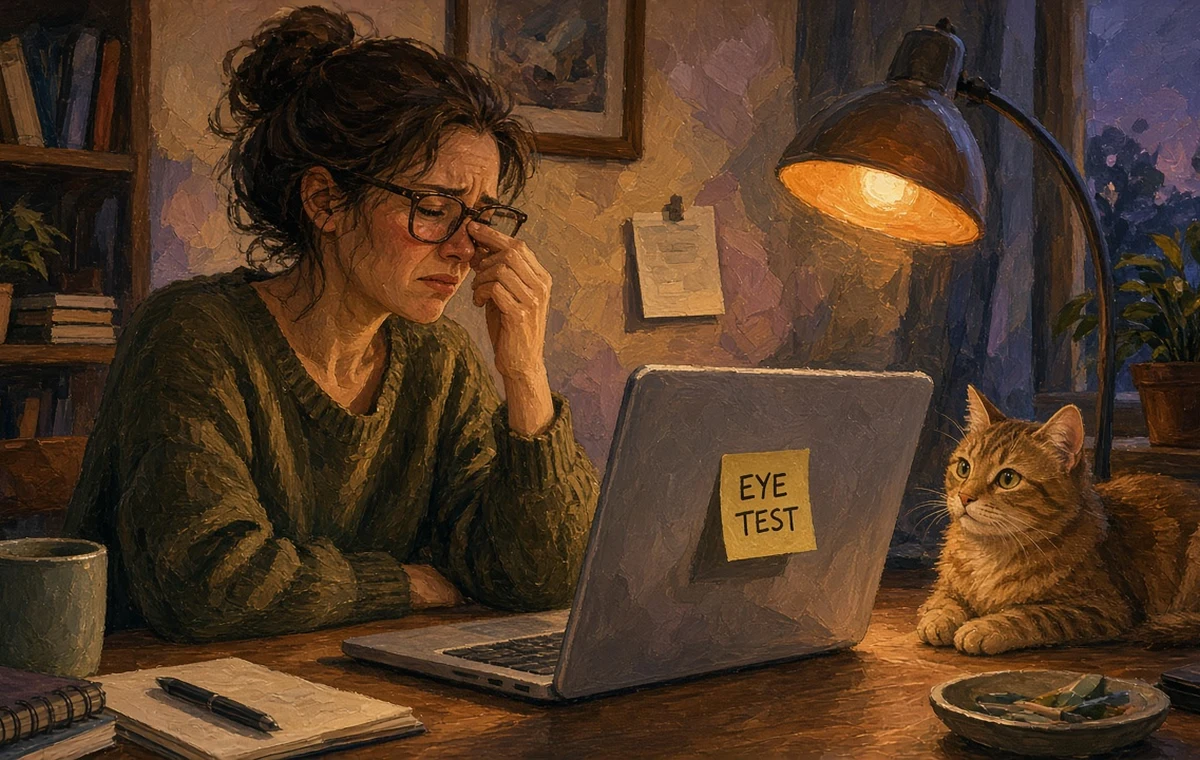
This guide adapts a Korean consumer-health summary for readers in the US and UK. The source argues that eyeglasses are too often treated as a fashion accessory, so comfort, their original purpose, gets neglected. Below we cover frame structure, functional lenses, weight-saving materials and how buying glasses actually works on each side of the Atlantic.
Why do glasses hurt the bridge of your nose?
Glasses are supposed to share their weight between the bridge, the nose pads and the arms resting on your ears. In practice, much of the load often ends up on two tiny pads. The stronger your prescription, the thicker and heavier the lenses, and the more that pressure turns into sore spots, slipping frames and even tension headaches.
Student money tip from CampusDown Life UpHow to Find Unclaimed Money in Your Name — How to find unclaimed money in your name for free: official state databases via NAUPA and MissingMoney.com, federal searches like Treasury…
So before you fall in love with a shape on the display wall, ask two plain questions: where will the weight sit, and how heavy is the whole pair once the lenses are in? A good dispensing optician will check the fit at the bridge, the angle of the lenses and the length of the arms, and these adjustments are usually free when you buy.

What changes when you rethink the frame?
The source describes moving the nose pads lower toward the cheeks, onto skin with less sweat and oil, so frames slip less and people with thick lenses feel less pressure on the nose. It also mentions designs that drop traditional ear arms and nose pads entirely and grip the temples with gentle spring tension, reducing marks and calluses. Rimless and semi-rimless styles can shave off grams too.
Historically, glasses have been getting lighter for a long time: rigid side arms appeared in the 18th century and arms that curve around the ears became common in the 19th century, plastic frames appeared in the late 19th and early 20th centuries, and titanium frames were developed in Japan in the early 1980s. Every step moved weight off the nose.
Skimming the section headings first makes a long guide much easier to map out. Try writing down one question of your own as you read.
How do progressive lenses help with presbyopia?
Presbyopia happens as the eye's natural lens loses flexibility, usually becoming noticeable in your 40s, and the source notes that heavy screen use leads some people to feel symptoms from their late 30s. Progressive lenses, which Americans sometimes call no-line bifocals, are designed for distance through the top, intermediate vision through the middle and close reading through the bottom. Because they look like ordinary glasses, wearers tend to be happy with them once they adapt.
- Adults: occupational or "computer" lenses that widen the intermediate zone for desk work.
- Children: myopia-management lenses designed to slow the progression of short-sightedness.
- Heavy screen users: blue-light filtering coatings, although major eye-health bodies such as the American Academy of Ophthalmology and the UK College of Optometrists say there is no good evidence they prevent eye disease, so treat them as a comfort choice.
Matching the lens to how you actually spend your day, driving, laptop, reading or all three, can relieve a lot of that heavy, dry, tired feeling.
How can you make lenses lighter?
The source stresses that both frame and lenses must be light to avoid nose marks and sore ears. Plastic high-index lenses can be made thin even for strong prescriptions, and switching materials can roughly halve the weight compared with older options. Aspheric lenses flatten the curve toward the edges, so they are thinner at the rim and distort less.
US and UK buyers will also meet polycarbonate and Trivex, which are light and very impact resistant, popular for children and sports. In the US, the FDA has required since the early 1970s that eyeglass and sunglass lenses pass an impact-resistance test, commonly a steel-ball drop, before they reach consumers, which is one reason ultra-thin glass lenses are rare today.
Why is titanium so often recommended?
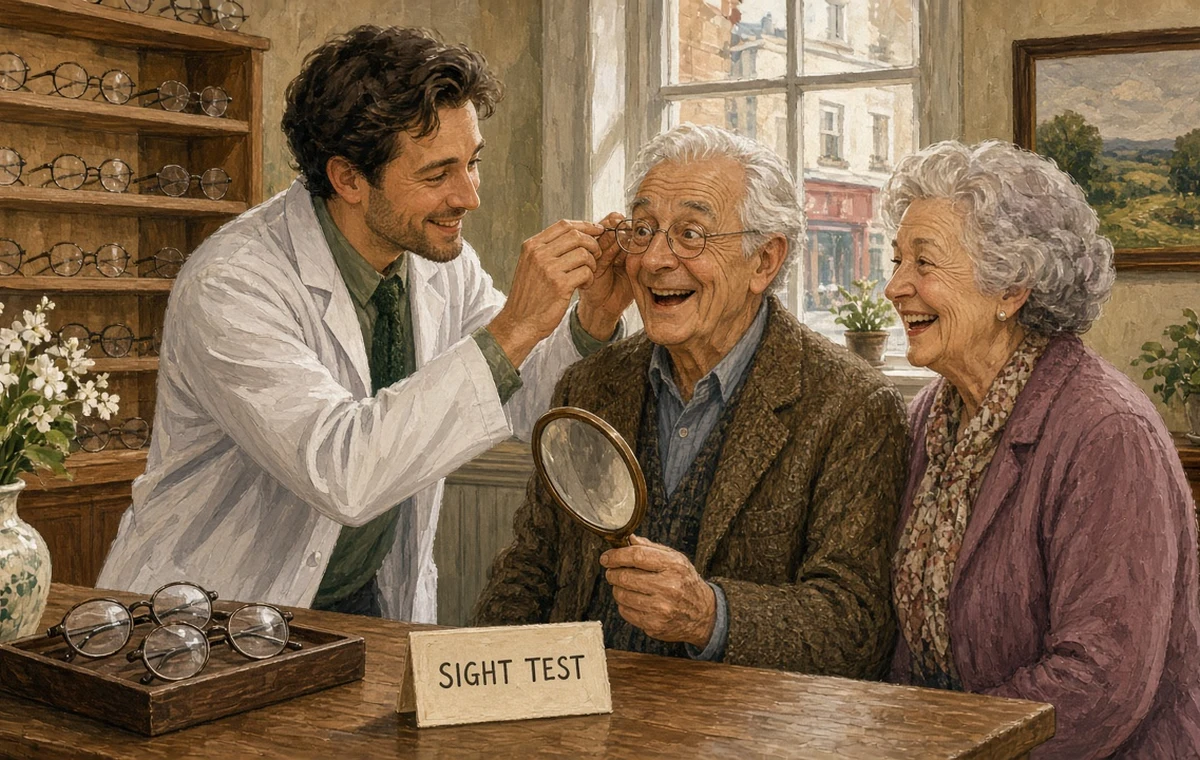
Frames and arms set much of the total weight, so picking thin frames in an ultralight material matters. According to the source, titanium weighs about half as much as typical metal or plastic frame materials, resists corrosion and springs back after bending. It is also generally a good option for people who react to nickel, although cheaper "titanium-look" alloys may still contain nickel, so ask what you are buying.
| Approach | How | Expected benefit |
|---|---|---|
| Change the structure | Lower nose pads, temple-grip or rimless designs, professional fitting | Less nose pressure and slipping |
| Add lens functions | Progressives for presbyopia, occupational lenses, myopia-management lenses for children | Less eye strain and glare |
| Make it lighter | Thin high-index or polycarbonate, aspheric design, titanium frames, smaller frame size | Fewer nose marks and less ear soreness |
Finally, the smaller the frame, the smaller and lighter the lenses, especially with a strong prescription. Compare frame size, lens size and total weight together.
How does buying glasses differ in the US and UK?
In the US, an optometrist (OD) or ophthalmologist (MD) examines your eyes and writes the prescription, while an optician fits and dispenses glasses. Under the FTC's Eyeglass Rule, the prescriber must give you a copy of your prescription after the exam, and since 2024 must also get your signed confirmation that you received it, so you are free to shop around, including online. In the UK, NHS sight tests are free for groups such as children under 16, people aged 60 and over, young people aged 16 to 18 in full-time education and people on certain benefits, and NHS optical vouchers help with the cost of glasses for eligible people. In Scotland, eye examinations are free for everyone.
Student money tip on CampusDown Life Up: How to Find Unclaimed Money in Your Name.
| Step | United States | United Kingdom |
|---|---|---|
| Eye exam | Optometrist or ophthalmologist; often paid by vision insurance or out of pocket | Optometrist; free NHS sight test for eligible groups, free for all in Scotland |
| Prescription | Must be released to the patient under the FTC Eyeglass Rule | Must be given to the patient after the test |
| Help with cost | Vision plans, FSA/HSA funds | NHS optical vouchers for eligible people |
Common mistakes
- Choosing a large fashion frame with a strong prescription and then wondering why the lenses are thick and heavy.
- Skipping the free fitting adjustment after buying.
- Expecting blue-light coatings to protect against eye disease.
- Assuming any "titanium" label means nickel-free.
Quick self-check
- Can you explain how a progressive lens is divided from top to bottom?
- Do you know why aspheric lenses look thinner at the edges?
- Do you know whether you qualify for a free NHS sight test or what the FTC Eyeglass Rule entitles you to?
Compiled by the CampusDown editorial team from a Korean consumer-health summary on eyeglass weight and comfort, Charman (2014) in Ophthalmic and Physiological Optics, public guidance on the FDA impact-resistance requirement (21 CFR 801.410), the FTC Eyeglass Rule, NHS eye-care eligibility and professional body statements on blue-light lenses. Reviewed November 2026. General information, not a substitute for an eye examination.
FAQ
What makes glasses heavy?
Frame material and size together with lens prescription, thickness and material decide the overall weight.
How do progressive lenses work?
They are designed for distance at the top, intermediate vision in the middle and close reading at the bottom, with no visible line.
Are titanium frames worth it?
Often yes: titanium is light, corrosion resistant and flexible, and genuine titanium is generally a good option for people sensitive to nickel.
Do blue-light glasses protect my eyes?
Major eye-health bodies say there is no good evidence they prevent eye disease, though some people find them more comfortable.
Who gets a free NHS sight test?
Eligible groups include children under 16, people aged 60 and over, young people aged 16 to 18 in full-time education and people on certain benefits; in Scotland exams are free for everyone.